

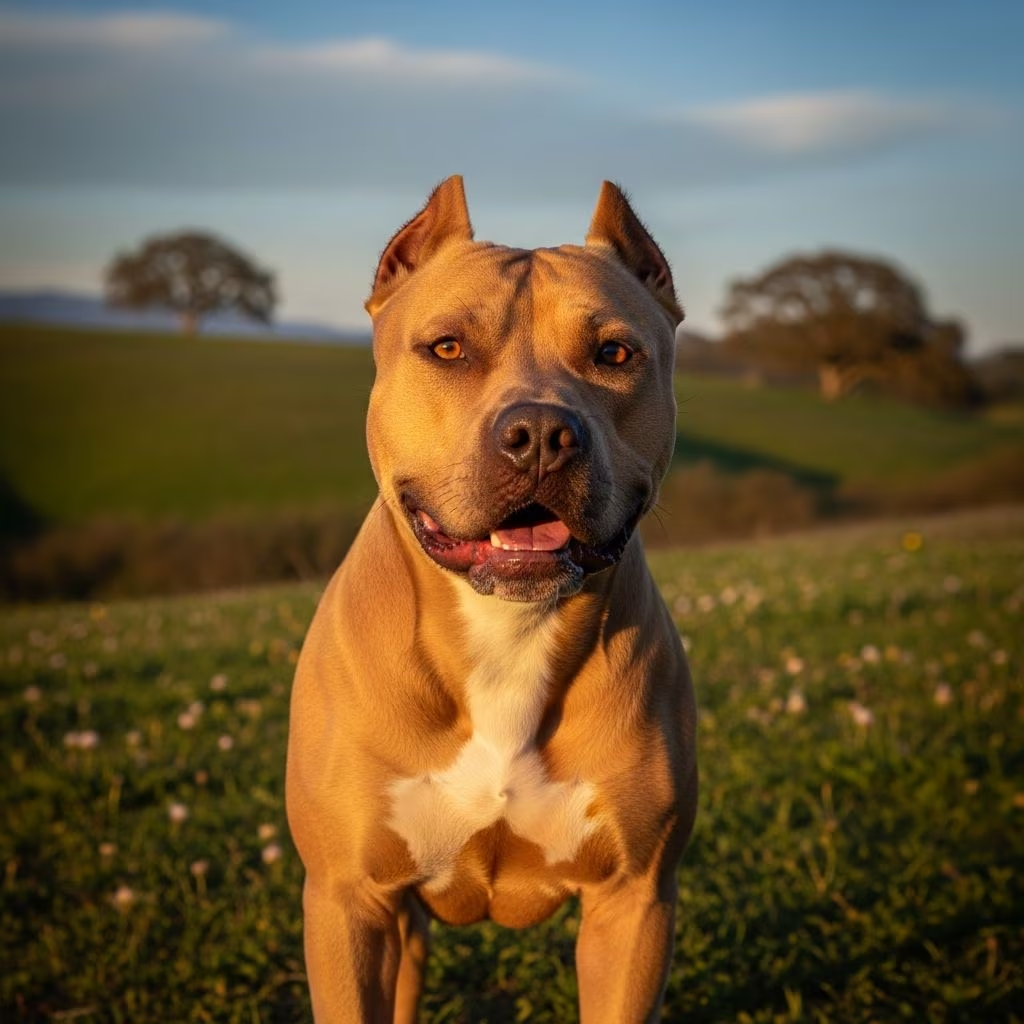
The American Pit Bull Terrier (APBT) stands out as a muscular, energetic breed known for its unwavering loyalty and playful spirit. Despite misconceptions, these dogs excel as affectionate family members when raised responsibly.
Origins and Evolution of the Breed
The roots of the American Pit Bull Terrier trace back to 19th-century England, Ireland, and Scotland, where breeders crossed Old English Bulldogs with various terrier breeds to create versatile working dogs. These early “bull-and-terrier” types combined the bulldog’s strength and the terrier’s agility and tenacity, making them ideal for farm tasks like herding livestock, catching hogs, and pest control.
Blood sports like bull-baiting shaped their development initially, but after bans around 1835, underground dog fighting emerged in “pits,” influencing the breed’s name. Crucially, fighters selected for dogs that remained gentle with humans, culling any that bit handlers to ensure safety during interventions. This bred in a stable temperament toward people.
Immigrants brought these dogs to America in the mid-1800s, where they thrived in ranching roles and as family protectors. Post-Civil War, selective breeding refined the type. In 1898, the United Kennel Club (UKC) registered the first APBT, assigning number one to Bennett’s Ring. John P. Colby formalized breeding in 1889 using imported stock, leading to distinct lines: the UKC/ADBA APBT for performance and the AKC’s American Staffordshire Terrier for conformation in 1936.
Physical Characteristics and Breed Standards
APBTs are medium-sized, solidly built dogs with a smooth coat, expressing power without bulkiness. UKC standards emphasize balance: height 17-21 inches at the shoulder for males (females slightly smaller), weight 30-85 pounds depending on frame, with no height/weight restrictions but proportion key.
| Trait | Male | Female |
|---|---|---|
| Height | 17-21 inches | 17-20 inches |
| Weight | 35-75 lbs | 30-65 lbs |
| Coat | Smooth, short | |
| Colors | Any solid or partial except all-white/merle |
They feature a broad head, strong jaws, rose ears (often cropped historically but natural preferred now), and a muscular neck flowing into wide shoulders. The tail is medium, slightly tapered. Disqualifiers include Dudley nose, long coat, or merle patterns.
Temperament and Personality Traits
Renowned for human affection, APBTs are often called “nanny dogs” for their gentleness with children, stemming from breeding history. They display clownish playfulness, high intelligence, and eagerness to please, but require confident handling due to their strength and drive.
- Loyalty: Deep bonds with family, protective without unprovoked aggression.
- Energy: Athletic and enduring, thriving on activity.
- People-oriented: Friendly to strangers if socialized.
- Prey drive: May chase small animals without training.
Contrary to myths, studies and registries affirm APBTs are not inherently aggressive toward humans; poor ownership contributes to issues.
Training Essentials for Success
Early, positive reinforcement training is vital for this intelligent, strong-willed breed. Start socialization at 8 weeks, exposing to diverse people, sounds, and animals.
- Basic Obedience: Teach sit, stay, come using treats/praise; consistency prevents stubbornness.
- Leash Manners: Use no-pull harnesses to manage power.
- Sports Channeling: Excel in weight pulling, agility, dock diving to satisfy instincts safely.
Never use dominance methods; they respond to firm, loving leadership. Professional classes aid first-timers.
Exercise and Lifestyle Fit
APBTs need 60+ minutes daily vigorous exercise: runs, hikes, fetch, or tug. Mental stimulation via puzzles/toys prevents boredom-induced mischief.
- Mental games: Kongs with kibble, scent work.
- Family role: Great for active homes; apartments possible with commitments.
- Avoid dog parks if reactive; supervised playdates better.
They adapt well but dislike isolation; thrive with human interaction.
Grooming and Daily Care
Low-maintenance coat requires weekly brushing, baths monthly. Check ears weekly, trim nails biweekly, brush teeth daily.
High-protein diet (25-30%) supports muscle; portion per weight/activity. Fresh water always.
Health Considerations and Lifespan
Average lifespan 12-14 years with care. Common issues:
- Hip Dysplasia: Monitor for limping; X-rays screen breeding stock.
- Atopic Dermatitis: Allergies cause itching; vet diets help.
- Heart Conditions: Annual exams detect early.
Spay/neuter reduces cancers; obesity shortens life—maintain lean build. Choose health-tested breeders.
Legal and Adoption Realities
Breed-specific laws (BSLs) restrict APBTs in areas; research local rules. Shelters overflow with mixes; adopt from rescues like UAPBTO emphasizing temperament.
Responsible ownership counters stigma: microchip, license, insure.
Nutrition Guidelines
| Life Stage | Daily Calories | Protein % |
|---|---|---|
| Puppy | 800-1200 | 28-32 |
| Adult | 1000-1500 | 25-30 |
| Senior | 800-1100 | 22-26 |
Feed twice daily; avoid table scraps.
Frequently Asked Questions (FAQs)
Are American Pit Bull Terriers good with kids?
Yes, their gentle nature makes them excellent with supervised children.
Do APBTs turn on their owners?
No, this myth lacks evidence; proper training ensures stability.
How much exercise do they need?
At least 1-2 hours daily of physical/mental activity.
What’s the best food for APBTs?
High-quality kibble with meat first, joint supplements for adults.
Can they live in hot climates?
Short coat helps, but provide shade/AC; brachycephalic risks minimal.
Choosing Your APBT
Seek UKC/ADBA breeders with health clearances, or rescues. Temperament test puppies: seek bold yet calm ones. Avoid backyard breeders fueling stereotypes.
APBTs reward dedicated owners with profound companionship, proving their versatility beyond history.
References
- The history and development of the American Pit Bull Terrier — Vitomalia. Accessed 2026. https://vitomalia.com/en/blogs/hunderassen/die-geschichte-und-entwicklung-des-american-pit-bull-terrier
- History – UAPBTO — United American Pit Bull Terrier Organization. Accessed 2026. https://uapbto.org/our-breed/history/
- American Pit Bull Terrier | United Kennel Club (UKC) — United Kennel Club. Accessed 2026. https://www.ukcdogs.com/american-pit-bull-terrier
- American Pit Bull Terrier – Wikipedia — Wikipedia (informed background). Accessed 2026. https://en.wikipedia.org/wiki/American_Pit_Bull_Terrier
- American Pit Bull Terrier: Breed History, Temperament & Traits — Pawlicy Advisor. Accessed 2026. https://www.pawlicy.com/blog/pit-bull-terrier-dog-breed/
- Position Statement on Pit Bulls – ASPCA — ASPCA. Accessed 2026. https://www.aspca.org/about-us/aspca-policy-and-position-statements/position-statement-pit-bulls



