

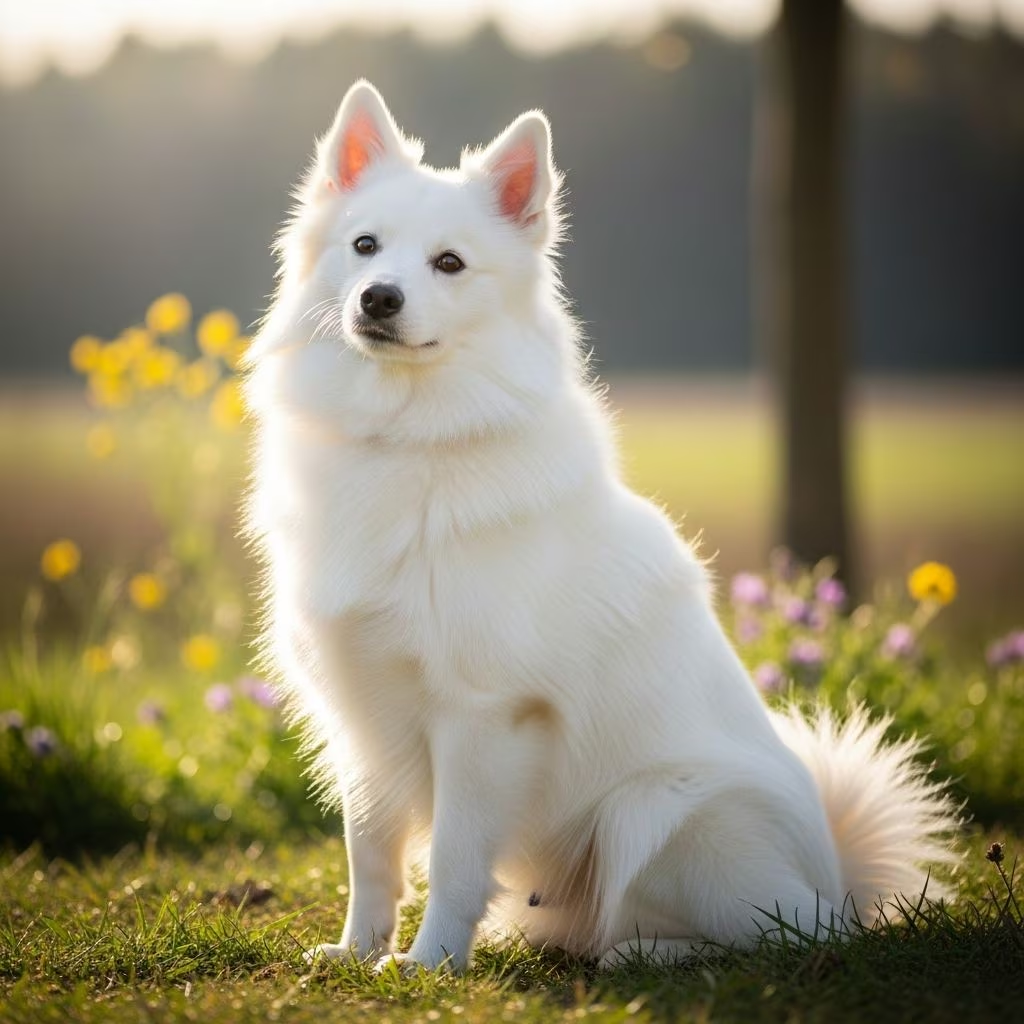
The American Eskimo Dog, affectionately known as the “Eskie,” represents a fascinating blend of European heritage and American adaptation. Despite its name suggesting Arctic origins, this striking white-coated breed actually traces its lineage to German Spitz dogs brought to America by German immigrants in the 19th and early 20th centuries. Today, Eskies have become beloved family companions, circus performers, and versatile working dogs known for their intelligence, loyalty, and distinctive appearance. This comprehensive guide explores everything potential owners need to know about this remarkable breed.
Origins and Historical Development
The American Eskimo Dog’s story begins in Germany, where Spitz-type dogs served as multipurpose farm workers for centuries. These intelligent canines were bred to handle diverse responsibilities on rural properties, from herding livestock to protecting farms from predators and intruders. German settlers who immigrated to the United States during the 19th century brought these valued working dogs with them, establishing populations primarily in the Midwest, New England, and parts of southern Texas—regions that resembled their European homeland.
The breed’s nomenclature reflects a turbulent period in American history. Originally registered with the United Kennel Club (UKC) as “Spitz” beginning in 1913, the breed faced discrimination during World War I due to prevailing anti-German sentiment. In 1924, the UKC renamed the breed “American Spitz,” and by 1925, it became known as “American Eskimo Spitz,” eventually shortened to American Eskimo Dog. This naming shift coincided with efforts to distance the breed from its German roots, and surprisingly, the early breed standard written in 1958 completely omitted the German heritage, instead claiming the breed descended from large sled dogs.
The American Eskimo gained unexpected prominence in circus performances during the early 20th century. The breed’s intelligence, trainability, and striking appearance made them ideal performers, and a remarkable American Eskimo Dog became the first canine to walk a tightrope in a circus act, cementing the breed’s reputation as an exceptionally capable and versatile dog. The founding of the National American Eskimo Dog Association in 1969 marked a significant organizational development, as the association divided the breed into Standard and Miniature sizes for show purposes, creating expanded competition classes.
Physical Characteristics and Appearance
American Eskimo Dogs possess a striking and distinctive appearance that immediately captures attention. The breed’s most recognizable feature is its brilliant white double coat, which stands off from the body and creates an almost cloud-like silhouette. While white is the standard color, the American Kennel Club also accepts white and biscuit combinations, though pure white remains overwhelmingly predominant in the breed.
The physical structure of an Eskie reflects its Nordic heritage and working dog background. Key physical features include:
- Coat: A thick, dense double coat with straight hair and a prominent ruff around the neck and shoulders that creates a lion-like appearance
- Facial Features: A wedge-shaped head with a distinctive appearance enhanced by jet-black nose, lips, and eye rims that provide striking contrast against the white fur
- Eyes and Expression: Dark, alert eyes and an expressive face that often appears to display a characteristic “smile”
- Ears: Erect, triangular ears that stand alert and contribute to the breed’s keen, attentive expression
- Tail: A heavily furred, plumed tail that typically curves over the back
- Build: A compact, well-proportioned, and athletic frame that belies the breed’s strength and agility
The breed exists in three recognized size varieties based on height at the shoulder. The Toy variety stands 9 to 12 inches tall, the Miniature ranges from 12 to 15 inches, and the Standard measures 15 to 19 inches in height. Remarkably, despite their relatively modest size, American Eskimo Dogs possess surprising strength and power, demonstrating capabilities far exceeding what their appearance might initially suggest.
Temperament and Behavioral Characteristics
Understanding the American Eskimo Dog’s temperament is essential for anyone considering this breed as a companion. Eskies are classified as a “primitive breed,” meaning they retain many natural instincts fixed through generations of selective breeding. This characteristic profoundly influences their behavior and suitability as household companions.
Intelligence and trainability represent hallmark traits of the American Eskimo Dog. The breed demonstrates an eager-to-please attitude combined with independence, making them responsive to training while maintaining their own sense of judgment. This balance between compliance and autonomy requires owners who can provide clear leadership and consistent structure.
Like most Nordic breeds, American Eskimo Dogs possess a pronounced pack instinct that influences their social behavior and group dynamics. This inherited trait means they thrive in structured household environments with a clear pack leader and benefit tremendously from understanding their place within the family hierarchy. Without appropriate leadership, Eskies may display behavioral challenges or attempt to assert dominance.
The breed was originally developed as a watchdog, and this protective instinct remains deeply embedded in their nature. American Eskimo Dogs are territorial, courageous, and notably vocal, possessing a sharp, loud bark that they employ liberally to alert their families to perceived threats or unfamiliar visitors. They will bark at strangers who approach their territory, making them excellent alarm dogs. However, despite their watchdog heritage and vocal tendencies, Eskies are not considered an aggressive breed, distinguishing them from dogs bred specifically for protection work.
A notable behavioral characteristic is the breed’s “Velcro” tendency—a strong inclination to remain closely bonded with their human companions. Unlike some more independent Nordic breeds such as Siberian Huskies, American Eskimo Dogs thrive on human companionship and often display clingy behavior, following their owners throughout the home and seeking constant interaction.
Exercise Requirements and Activity Levels
American Eskimo Dogs are classified as a moderately active breed with substantial exercise requirements. These dogs were bred for work that demanded physical stamina and mental engagement, and they maintain these instincts despite their transition to household companions. Without adequate exercise and mental stimulation, Eskies can become destructive, developing behavioral problems that stem from boredom and pent-up energy.
Owners should provide daily physical activity that challenges the breed’s natural athleticism. Activities might include brisk walks, running, agility training, or interactive play sessions. Mental stimulation proves equally important as physical exercise, as the breed’s intelligence demands cognitive engagement. Puzzle toys, training sessions, obedience work, and games that require problem-solving help maintain an Eskie’s mental health and contentment.
The breed’s versatility extends to various canine sports and activities. American Eskimo Dogs excel in agility competitions, obedience trials, tracking events, and service dog work, demonstrating their capacity for focused training and complex task performance.
Grooming and Coat Maintenance
The American Eskimo Dog’s thick double coat requires consistent grooming commitment. This is not a low-maintenance breed for those seeking minimal grooming responsibilities. The breed sheds its undercoat typically twice yearly during seasonal transitions, with these shedding periods producing substantial amounts of loose hair.
Regular grooming practices should include:
- Brushing the coat 2-3 times weekly during normal periods, increasing frequency to daily during heavy shedding seasons
- Using appropriate tools such as slicker brushes and undercoat rakes to manage the dense double coat
- Regular bathing approximately once monthly or as needed
- Checking and cleaning ears regularly, as erect ears can trap moisture and debris
- Maintaining nail care and dental hygiene as part of overall grooming routines
Interestingly, the breed’s coat possesses a self-cleaning property that resists dirt accumulation, a practical feature inherited from the breed’s working dog heritage. Despite this advantage, regular grooming remains essential for coat health, preventing matting, managing shedding, and maintaining the breed’s distinctive appearance.
Health Considerations and Longevity
American Eskimo Dogs are generally considered a healthy breed when compared to many other dog breeds, though they are not without inherited health concerns. The breed is notable for its exceptional longevity, with many individuals living into their middle to late teens, demonstrating both the genetic hardiness of the line and the breed’s overall durability.
Prospective owners should discuss potential health issues with reputable breeders and veterinarians. While the breed maintains good overall health, like all purebreds, American Eskimo Dogs may be predisposed to certain conditions that responsible breeders work to minimize through selective breeding practices.
Suitability as Family Companions
The American Eskimo Dog is not an appropriate breed for every household or lifestyle. Successful ownership requires understanding the breed’s specific needs and ensuring compatibility with the owner’s circumstances.
| Breed Suitability Factor | Requirements and Considerations |
|---|---|
| Leadership Structure | Requires a confident pack leader; not suitable for first-time owners without guidance |
| Exercise Commitment | Needs daily physical activity and mental stimulation; not appropriate for sedentary households |
| Grooming Dedication | Demands regular brushing and seasonal grooming; not a low-maintenance breed |
| Vocalization Tolerance | Naturally vocal breed; may challenge noise-sensitive living situations |
| Social Needs | Thrives on human companionship; not suitable for homes where dogs are left alone for extended periods |
| Training Capacity | Intelligent and trainable but requires consistent, firm guidance |
Distinguishing American Eskimo Dogs from Similar Breeds
Several white-coated or similar-looking breeds exist, and distinguishing characteristics help potential owners select the appropriate breed. American Eskimo Dogs differ significantly from related Nordic breeds in both temperament and care requirements. Unlike the Siberian Husky or Alaskan Malamute, which maintain strong independence and pack-oriented instincts, Eskies display strong attachment to their human families and thrive on close companionship. The German Spitz, while sharing ancestral heritage, remains less common in America and has different breeding focuses. The Samoyed, another white Nordic breed, possesses a gentler temperament and was bred primarily for hauling sleds rather than farm work, resulting in different energy levels and behavioral profiles.
Versatility and Working Abilities
American Eskimo Dogs represent one of the most versatile dog breeds, excelling in numerous roles and activities. Beyond their heritage as farm dogs and circus performers, modern Eskies demonstrate exceptional capability in:
- Herding and livestock management
- Agility and obedience competitions
- Tracking and search activities
- Service dog work and therapy dog programs
- Companion and family pet roles
This versatility reflects the breed’s original purpose as an intelligent, thinking dog capable of assessing situations and making decisions independently. Breeders of American Eskimo Dogs prioritize maintaining this mental stability, sound structure, and capacity for varied work as fundamental breed characteristics.
Frequently Asked Questions
Are American Eskimo Dogs good for apartments?
American Eskimo Dogs can adapt to apartment living if provided with adequate daily exercise and mental stimulation. However, their vocal nature and exercise requirements make them better suited to homes with outdoor space and owners committed to substantial daily activity.
How much do American Eskimo Dogs shed?
The breed sheds moderately year-round but heavily during two seasonal shedding periods annually. Regular brushing helps manage loose hair and maintains coat health.
Are American Eskimo Dogs good with children?
With proper socialization and training, American Eskimo Dogs can be excellent family companions. Their playful nature and loyalty make them suitable for families with children, though supervision is always recommended with young children.
What is the average lifespan of an American Eskimo Dog?
American Eskimo Dogs typically live 12-15 years, with many individuals reaching their late teens, making them one of the longer-lived dog breeds.
Do American Eskimo Dogs require professional training?
While the breed is intelligent and trainable, many owners benefit from professional training guidance, especially first-time owners. Consistent, firm leadership is essential for developing well-behaved adult dogs.
Conclusion
The American Eskimo Dog represents a remarkable breed with deep historical roots and distinctive characteristics that appeal to experienced dog owners seeking an intelligent, loyal, and versatile companion. Their striking white coat, sharp intellect, and spirited personality make them memorable and engaging family members. However, prospective owners must honestly assess their ability to meet the breed’s exercise, grooming, training, and companionship needs. For households able to provide appropriate structure, activity, and care, an American Eskimo Dog can bring decades of devotion, entertainment, and loyal friendship. Understanding and respecting the breed’s inherent characteristics ensures the best outcomes for both dogs and their human families.
References
- AEDCA History of the Breed – American Eskimo Dog Club of America — American Eskimo Dog Club of America. https://aedca.org/aedca_breedhist.php
- History of the American Eskimo Dog — Showsight Magazine. https://showsightmagazine.com/history-of-the-american-eskimo-dog/
- American Eskimo Dog Guide | History, Temperament & Care Tips — Pet City Houston. 2025-09-02. https://petcityhouston.com/2025/09/02/american-eskimo-dog-breed-guide-history-temperament-care-tips/
- What to Know About American Eskimo Dogs — WebMD. https://www.webmd.com/pets/dogs/what-to-know-about-american-eskimo-dogs
- Celebrate the American Eskimo Dog on January 25th in 2025 — The Valley Animal Hospital. https://thevalleyanimalhospital.com/celebrating-the-american-eskimo-dog/
- American Eskimo Dog Dog Breed Information — American Kennel Club. https://www.akc.org/dog-breeds/american-eskimo-dog/



