

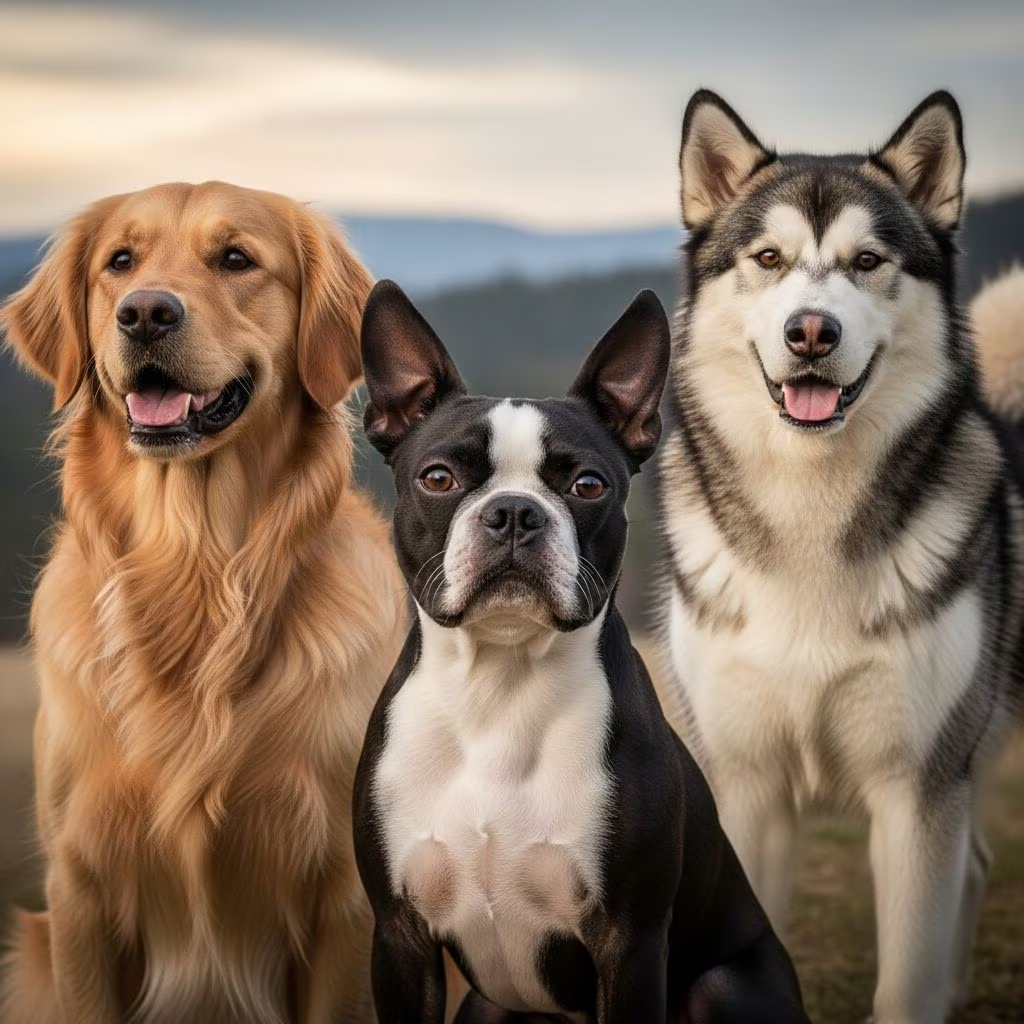
The landscape of American dog breeds reflects centuries of selective breeding, cultural adaptation, and purposeful development. Unlike many ornamental breeds shaped primarily by aesthetic preferences, American dogs emerged from functional necessity—bred to solve real-world problems across diverse geographic regions and climates. These canines have left an indelible mark on American culture and continue to be among the most beloved companion animals in households nationwide.
The Foundation: How American Dog Breeds Developed
American dog breeds didn’t emerge in isolation. Rather, they evolved through a combination of indigenous dog populations and European breeds introduced by settlers, creating unique hybrids adapted to North American conditions. The earliest recognizable American dog breeds began taking shape in the 18th and 19th centuries as breeders intentionally selected for traits suited to specific environmental challenges and tasks.
The formal recognition of American breeds accelerated significantly when the American Kennel Club was established in 1884. This organization provided standardized criteria for breed classification and helped distinguish truly American developments from imported European varieties. Several breeds that originated in the United States during this period have achieved international recognition and remain among the most sought-after dogs globally.
Regional Adaptations: Breeds Built for Specific Environments
One of the most fascinating aspects of American breed development is how regional geography shaped each breed’s physical and behavioral characteristics. Different parts of the continent presented unique environmental challenges, and dog breeders responded by developing specialized breeds.
Northern and Arctic Adaptations
The Alaskan Malamute represents one of the oldest American dog breeds, originally developed by the Mahlemut Inuit tribe in Arctic regions. Unlike racing sled dogs, Malamutes were specifically bred to pull heavy loads across frozen terrain, requiring exceptional strength and endurance to survive in some of North America’s harshest conditions. Their thick double coats, powerful builds, and remarkable stamina make them ideally suited for extreme cold environments.
Southern and Wetland Specialization
Different American regions produced equally specialized breeds. In Louisiana, breeders developed the Catahoula, a versatile hunting dog used to manage wild hogs and navigate rugged terrain. These dogs possess striking coat patterns and intense gazes that reflect their high intelligence and natural problem-solving abilities. Meanwhile, in the southeastern United States, the American Foxhound emerged from English Foxhound stock, refined specifically to suit American hunting terrain and styles. Their exceptional endurance, speed, and scenting abilities make them exceptional working partners.
Urban and Suburban Development
Not all American breeds developed in remote wilderness areas. The Boston Terrier, originating in Boston, Massachusetts during the latter half of the 19th century, represents a distinctly urban American creation. Initially called Roundheads and Bull Terriers before receiving its official name, the Boston Terrier became America’s most popular breed during the 1910s. Some historians suggest that the breed’s clean lines and contrasting markings aligned perfectly with the geometric aesthetics of the Art Deco period.
From Working Dogs to Family Companions
The transition from purely functional working dogs to family pets marks an important shift in American dog breed history. Early American breeds were developed with specific occupational purposes—hunting, herding, pulling, and protecting. However, as American society urbanized and industrialized, many of these breeds successfully transitioned into domestic family settings.
The American Foxhound exemplifies this transition well. Though originally bred for hunting, these dogs possess inherently friendly and social temperaments that make them surprisingly gentle with both humans and other dogs. Similarly, breeds developed for farm work and livestock management adapted to suburban life when their traditional occupations became less common.
This adaptability reflects a broader characteristic of American dog breeds: they were selected not just for physical capabilities but for trainability and social compatibility. Breeders recognized that successful working dogs needed stable temperaments and the ability to take direction from human handlers.
Popularity Trends and Cultural Influence
American dog breed popularity has fluctuated dramatically throughout the 20th and 21st centuries, often reflecting broader cultural trends and significant historical events.
Early 20th Century Preferences
The Collie dominated American preferences during the 1900s, following significant European interest sparked by Queen Victoria’s enthusiasm for the breed. The Collie Club of America, founded in 1886, actively promoted the breed and helped establish its position as “top dog” through the early decades of the century.
The Boston Terrier’s rise to prominence during the 1910s, overtaking the Collie, demonstrated how breed popularity could shift within a single decade. This change coincided with broader cultural shifts away from Victorian aesthetics toward more modern sensibilities.
Post-War and Mid-Century Trends
The German Shepherd reached the number one popularity position during the 1920s, partly due to the breed’s impressive performance and public visibility following World War I. The breed’s success in military and police work created a lasting positive impression that elevated its status in American households.
The Cocker Spaniel’s ascent to top popularity during the 1940s and 1950s provides an interesting case study in how individual animals can influence breed popularity. The black Cocker Spaniel “My Own Brucie” achieved celebrity status following back-to-back Best in Show wins in 1940 and 1941, and was even featured in prominent publications like LIFE magazine. This single dog’s success dramatically increased interest in the entire Cocker Spaniel breed across America.
Key Characteristics of Authentic American Breeds
Several defining characteristics distinguish American dog breeds from imported varieties:
- Function-First Design: Most American breeds were shaped by practical needs before aesthetic considerations
- Regional Specificity: Breeds were adapted to solve specific challenges in particular geographic areas
- Trainability: Selection for human-responsive temperaments made these dogs suitable for directed work
- Versatility: Many American breeds successfully transitioned from specialized occupations to family companionship
- Genetic Documentation: American breeds have clear historical records of their development and selective breeding practices
The Broader Context: Victorian Influence on Breed Development
While American dog breeds developed along their own trajectory, they didn’t exist in complete isolation from broader breeding trends. The Victorian period saw an explosion of dog breeding activity throughout Great Britain, driven partly by fascination with Darwin’s natural selection theories. Victorians became passionate about breeding for specific ideal characteristics within breeds, establishing many of the conformational standards we recognize today.
These Victorian trends influenced American breeding practices and helped formalize breed standards. The establishment of kennel clubs and breed registries in both Britain and America created common frameworks for evaluating and categorizing dogs, though American breeders often continued developing distinctly American variations suited to local conditions.
Comparative Overview of Notable American Breeds
| Breed Name | Original Purpose | Geographic Origin | Key Characteristics |
|---|---|---|---|
| Alaskan Malamute | Heavy load sledding | Arctic North America | Exceptional strength, cold tolerance, endurance |
| Boston Terrier | Companion, sport dog | Boston, Massachusetts | Compact size, friendly temperament, distinctive markings |
| Catahoula | Hog hunting, livestock management | Louisiana | High intelligence, striking coat patterns, intense focus |
| American Foxhound | Hunting in American terrain | United States (various regions) | Speed, scenting ability, endurance, social temperament |
Understanding Breed Standards and Selection Criteria
Modern American dog breed standards reflect the foundational purposes for which these dogs were developed, even when current owners use them primarily as companions. Breed standards—the detailed descriptions of ideal characteristics maintained by kennel clubs—preserve the original functional requirements that shaped each breed.
For example, the Catahoula’s standard emphasizes high intelligence and natural problem-solving abilities because these traits directly relate to its historical function managing livestock in challenging terrain. Similarly, American Foxhound standards highlight endurance, speed, and scenting ability—all practical requirements for hunting pursuits.
Understanding these connections between breed standards and historical function helps modern dog owners appreciate why their pets have certain behavioral tendencies. A Boston Terrier’s compact size and sociable nature aren’t random characteristics; they reflect deliberate breeding choices made more than a century ago in urban Boston environments.
American Breeds in Contemporary Society
Today’s American dog breeds occupy varied roles in society. Some, like the Alaskan Malamute, still occasionally perform their original functions in northern regions and specialized working contexts. Others have transitioned almost entirely to companion animal status while retaining the physical and behavioral traits their ancestors possessed.
Many American breeds maintain strong prey drives and require experienced handling to thrive in modern environments. The Catahoula, for instance, demands experienced owners who understand and can properly channel the breed’s natural instincts. This reality underscores an important principle: understanding a breed’s historical development helps contemporary owners provide appropriate environments and training.
American dog breeds continue attracting devoted followers who appreciate both their historical significance and their practical qualities. Whether as working partners, family companions, or show dogs, these breeds represent uniquely American contributions to global dog diversity.
Frequently Asked Questions
What makes a dog breed truly American?
A breed qualifies as American when it was developed or significantly refined in North America, typically with documented breeding lineage and recognition by organizations like the American Kennel Club. The breed should address specific American environmental or occupational needs.
Why did some American dog breeds become more popular than others?
Popularity often correlates with cultural trends, historical events, and sometimes individual famous dogs. Media exposure, breed success in shows or working competitions, and alignment with contemporary aesthetics all influence popularity cycles.
Can traditional American working breeds adapt to apartment living?
Some American breeds adapt reasonably well to urban environments, though they typically retain the energy and behavioral traits bred into them historically. Success depends on the specific breed, individual dog, and owner commitment to appropriate exercise and training.
How have American dog breeds changed over the past century?
While maintaining their core characteristics, some American breeds have experienced subtle physical changes reflecting evolving show standards and breeding preferences. However, most maintain the functional traits and temperaments that originally defined them.
The Lasting Legacy of American Dog Breeds
American dog breeds embody the historical intersection of human settlement, environmental adaptation, and selective breeding practices. From the Arctic-adapted Alaskan Malamute to the urbane Boston Terrier, these breeds reflect the diverse challenges and opportunities that shaped American development.
Their continued popularity across generations demonstrates that breeds developed for specific functional purposes can successfully transition into modern life while retaining the distinctive characteristics that make them uniquely American. Understanding these breeds’ histories enriches our appreciation for the animals that share our homes and communities.
References
- 10 Best American Dog Breeds: History, Traits, and Love Guide — Peter Journey. Accessed 2026. https://peterjourney.com/10-best-american-dog-breeds-history-traits/
- A Brief History of Dogs in America — History Hub. 2018. https://www.hhhistory.com/2018/02/a-brief-history-of-dogs-in-america.html
- America’s Popular Dog Breeds, 1900-1960 — Library of Congress Headlines and Heroes. 2023-05. https://blogs.loc.gov/headlinesandheroes/2023/05/americas-popular-dog-breeds-1900-1960/
- From Wolves to Pugs and Great Danes – The History of Dog Breeds — Morris Animal Foundation. https://www.morrisanimalfoundation.org/article/evolution-of-dogs



