

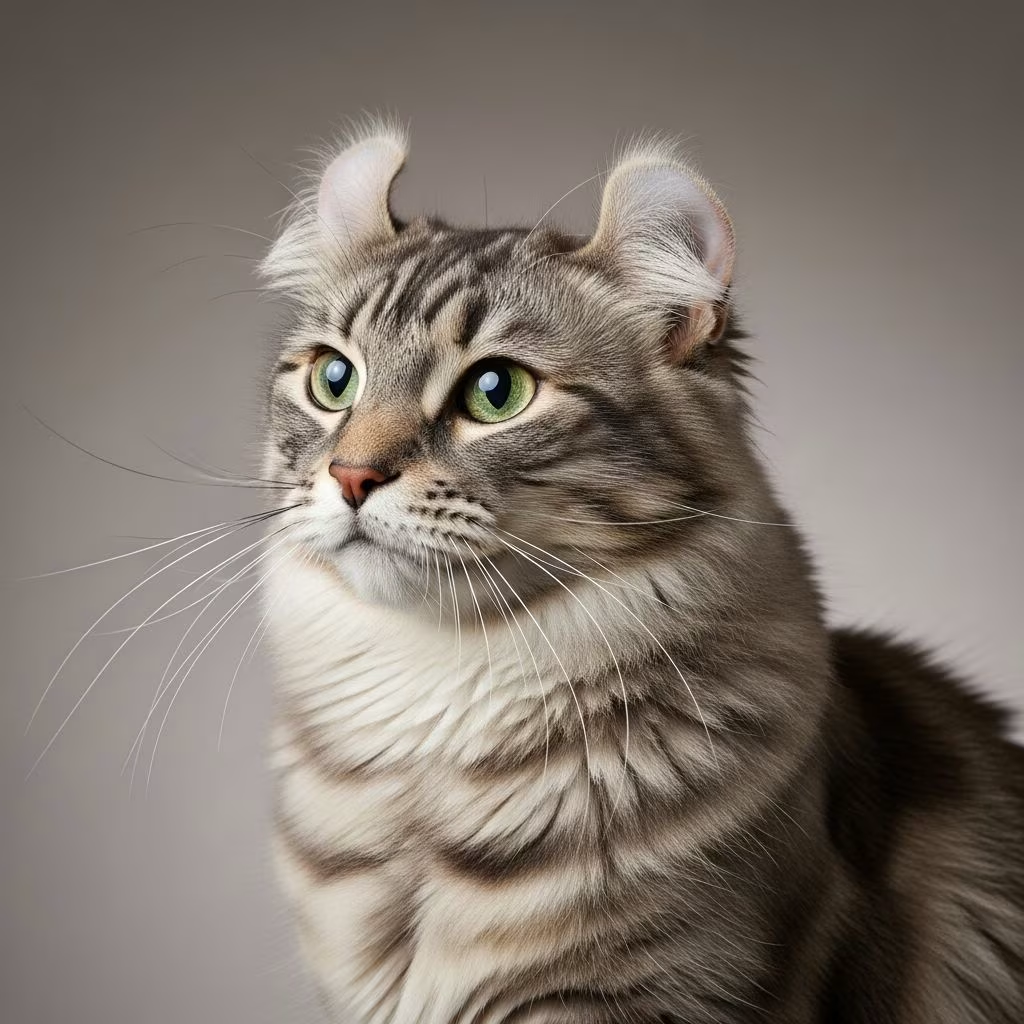
The American Curl stands out as one of the most distinctive cat breeds due to its signature backward-curling ears, which give it a perpetually surprised and alert expression. This breed combines a playful, youthful spirit with adaptability, earning the nickname “Peter Pan of cats” for retaining kitten-like behaviors into adulthood.
Origins and Development of the Breed
The story of the American Curl begins in 1981 when a stray longhaired black kitten appeared at the doorstep of Joe and Grace Ruga in Lakewood, California. Named Shulamith, this kitten possessed straight ears at birth that soon curled backward, marking the start of a new breed through a spontaneous genetic mutation. Breeders recognized the trait’s heritability without associated health issues, leading to rapid development.
Shulamith produced kittens that passed on the ear-curling gene, which geneticist Roy Robinson confirmed as autosomal dominant—meaning even one copy results in curled ears. By the mid-1980s, the breed gained recognition from major cat registries like The International Cat Association (TICA) and the Cat Fanciers’ Association (CFA). Kittens are born with straight ears that begin curling within 3-5 days, fully forming by 4-16 weeks, with ideal show-quality arcs between 90-180 degrees.
Physical Traits and Appearance
American Curls exhibit a balanced, elegant build. They are medium-sized with males weighing 7-10 pounds and females 5-8 pounds. The head is wedge-shaped, longer than wide, featuring walnut-shaped eyes in any color that enhance their inquisitive look. Their tails are long, matching body length, and legs are strong with slightly shorter front legs.
The hallmark is the large ears, curling gracefully backward like a crescent moon, with firm bases, flexible tips, and tufted interiors resembling lynx points. Coats come in short or semi-long varieties, both silky and flat-lying with minimal undercoat, resulting in low shedding. All colors and patterns are accepted, from solid black and white to tabby, tortoiseshell, and pointed shades.
| Feature | Details |
|---|---|
| Size | Small to medium |
| Weight | Males: 7-10 lbs; Females: 5-8 lbs |
| Ears | Curled 90-180 degrees, flexible tips |
| Coat | Short or semi-long, all colors/patterns |
| Eyes | Walnut-shaped, any color |
Temperament and Behavioral Traits
Renowned for their friendly, people-oriented nature, American Curls thrive on human interaction without being overly demanding or vocal. They display dog-like qualities, such as following owners room-to-room, enjoying fetch, and assisting with chores out of curiosity. Their playful energy persists lifelong, making them ideal for families with children or other pets.
These cats are adaptable, adjusting seamlessly to new environments, people, or animals. They love climbing cat trees, perching high, and interactive toys, helping maintain healthy weights with daily exercise. Not strict lap cats, they prefer being nearby, offering affectionate companionship.
- Cheeky and mischievous, always up for play
- Excellent with kids and dogs
- Curious explorers who “help” with daily tasks
- Quiet vocalizers with gentle meows
Grooming and Everyday Care
Low-maintenance coats make American Curls easy to care for. Short-haired varieties need weekly brushing to remove loose fur, while semi-longhaired ones benefit from twice-weekly sessions to prevent mats. Bathing is rare due to self-cleaning efficiency, but occasional wipes suffice for cleanliness.
Nail trims every 2-3 weeks, ear checks (gently, due to sensitivity), and dental care promote health. Provide scratching posts to satisfy natural urges and litter boxes in quiet spots. High-quality diet supporting lean muscle suits their active lifestyle.
Health Considerations and Lifespan
Generally robust, American Curls live 13+ years with proper care. The dominant curl gene avoids inbreeding issues common in recessively bred traits. However, monitor ears for cartilage fragility, narrow canals, or malformations increasing infection risk. Regular vet exams catch issues early.
No breed-specific diseases dominate, but general feline risks like obesity from inactivity or dental problems apply. Spaying/neutering prevents hereditary issues, and vaccinations ensure longevity.
Training and Enrichment Activities
Intelligent and eager, American Curls respond to positive reinforcement training. Teach tricks like fetch, high-fives, or leash walking. Interactive puzzles, laser pointers, and window perches stimulate their minds. Multi-level cat furniture encourages jumping and climbing, mimicking natural behaviors.
Socialize early for confidence around strangers. Their adaptability shines in multi-pet homes, but introduce gradually.
Why Choose an American Curl?
For households seeking a fun, low-shedding companion, the American Curl excels. Their unique appearance draws smiles, while enduring playfulness combats boredom. Ideal for apartments or large homes, they fit busy lifestyles without demanding constant attention.
Adopt from reputable breeders verifying ear genetics or rescues. Prepare for a cat whose youthful vigor brings joy for years.
Frequently Asked Questions (FAQs)
Do American Curl kittens have curled ears from birth?
No, they are born with straight ears that curl within 3-5 days, fully setting by 4 months.
Are American Curls good with children?
Yes, their gentle, playful nature makes them excellent family pets.
How much do American Curls shed?
Minimally, thanks to their silky coat lacking dense undercoat.
Can American Curls be left alone?
They adapt well but prefer company; provide toys for independent play.
What is the personality of an American Curl?
Playful, curious, affectionate—like a perpetual kitten.
References
- American Curl Cat Breed Information — Purina US. 2023. https://www.purina.com/cats/cat-breeds/american-curl
- American Curl Cat Breed — Hill’s Pet Nutrition. 2023. https://www.hillspet.com/cat-care/cat-breeds/american-curl
- American Curl Cat Breed Guide — Scrumbles. 2023. https://scrumbles.co.uk/blogs/news/american-curl-cat
- Sweet but with ear problems: the American Curl — Petrebels. 2023. https://www.petrebels.com/en/cat-breeds-american-curl/
- American Curl — Wikipedia. 2023. https://en.wikipedia.org/wiki/American_Curl
- American Curl Cat Breed Health and Care — PetMD. 2023. https://www.petmd.com/cat/breeds/american-curl



