

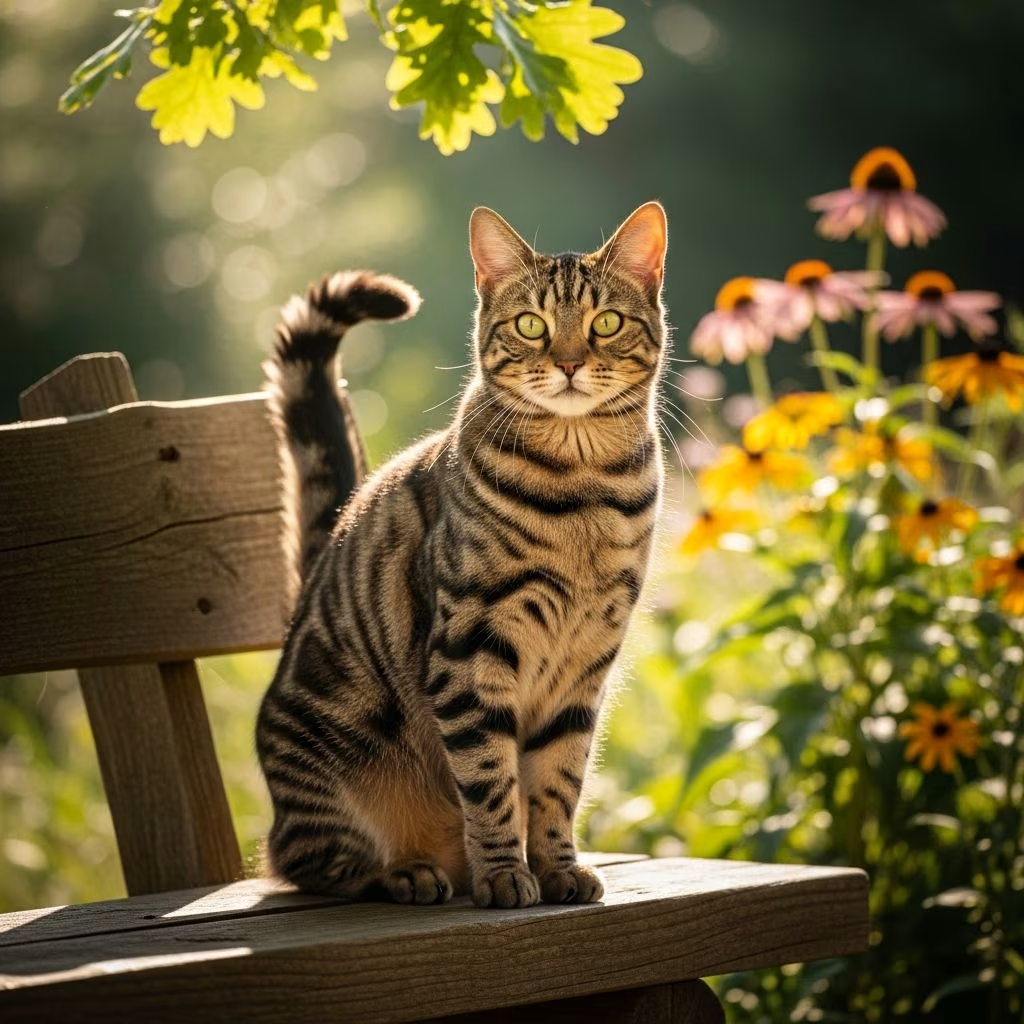
The American Bobtail stands out as a captivating feline breed, blending a rugged, wilderness-inspired look with an exceptionally warm and interactive personality. Known for its naturally short tail and athletic physique, this cat offers the thrill of a wild hunter alongside the loyalty of a devoted friend, making it a top choice for diverse households.
Origins and Development of the Breed
The story of the American Bobtail begins in the mid-20th century in the United States, sparked by the sighting of a distinctive bobtailed feline in Arizona. This unique cat, with its shortened tail, caught the eye of breeders who sought to preserve and refine its traits. Unlike breeds created through selective crossing for specific mutations, the American Bobtail emerged naturally, drawing from domestic shorthairs with inherent bobtail genetics.
Breeding efforts in the 1960s focused on enhancing the breed’s muscular build and sociable demeanor while maintaining its natural bobtail. By the 1980s, it gained recognition from major cat fancier organizations, including the Cat Fanciers’ Association (CFA), which approved it for championship status. Today, the breed embodies resilience from its self-reliant ancestors, cats that thrived in varied environments across North America.
Early development emphasized outcrossing to robust domestic cats, ensuring genetic diversity and hardiness. This approach resulted in a breed that matures slowly—often taking two to three years to fully develop—allowing for a sturdy frame and adaptable nature.
Physical Characteristics and Unique Features
American Bobtails possess a medium-to-large, rectangular body that’s solidly muscled, evoking the power of a wild predator. Their stance is substantial, with a broad chest, prominent shoulders, and hips nearly as wide, supported by legs of good length and large, round paws—often featuring toe tufts in longhaired variants.
The head forms a modified wedge shape, highlighted by prominent cheekbones, a distinctive brow ridge, and a slightly concave profile from nose to forehead. Eyes are large and almond-shaped, set at a medium-wide distance with outer corners tilting upward, contributing to their signature “hunting gaze.” Ears are medium-sized, wide-set with rounded tips and desirable furnishings.
The hallmark trait is the tail: short, flexible, and expressive, typically 1-4 inches long, broad at the base, and possibly straight, curved, kinked, or bumpy. It remains visible above the back when the cat is alert but never extends beyond the hind hock.
| Feature | Description |
|---|---|
| Body Type | Athletic, rectangular, muscular with broad chest and hips |
| Head | Wedge-shaped, prominent brow, fleshy whisker pads |
| Eyes | Large, almond, all colors, hunting gaze |
| Tail | Short (1-4 inches), flexible, expressive |
| Size | Medium-large; 7-16 lbs, ~10 inches tall |
Coat Varieties and Colors
This breed offers versatility in coat length: shorthair (medium, resilient, double-layered with loft) and longhair (shaggy, non-matting). Both shed seasonally but resist tangling, requiring minimal grooming. Colors and patterns span the spectrum—tabby (brown, blue, silver), solid, tortoiseshell, calico, and points—enhancing their wild aesthetic. Preference goes to those mimicking bobcats or ocelots, like dense markings on silver or coppery grounds.
- Shorthair: Semi-dense, hard topcoat over soft undercoat.
- Longhair: Shaggy texture, toe tufts desirable.
- Patterns: Tabbies with brick-red nose leather, black paw pads; all genetic combos allowed.
Temperament and Behavior Traits
American Bobtails are renowned for their dog-like qualities: boldly greeting strangers, forming deep bonds, and thriving in social settings. Affectionate yet independent, they communicate via soft chirps rather than loud meows, preferring proximity to their people without clinginess.
Highly intelligent, they invent games centered on stalking and pouncing, often parading “prey” toys triumphantly. Playful across all ages, they’re energetic as kittens but mellow into adaptable adults, excelling with children, dogs, and other cats. Their tolerance and even-tempered nature make them patient playmates.
Not overly demanding, these cats entertain themselves but light up with interaction. Their adaptability shines in travel; early car exposure turns them into ideal road companions for RVers or truckers.
Health and Wellness Considerations
With a lifespan of 13-18 years, American Bobtails benefit from their diverse genetic background, showing fewer breed-specific issues than more inbred lines. However, monitor for polycystic kidney disease (PKD) or hypertrophic cardiomyopathy (HCM), common in some cats—regular vet checkups and genetic screening are advised.
Maintain dental health, as their strong jaws suit chew toys. Obesity risks arise from their sturdy build, so portion control and activity matter. Slow maturation means juveniles need nutrient-rich diets for muscle development.
Grooming and Daily Care Routine
Grooming is straightforward: weekly brushing prevents mats in longhairs, while shorthairs need less. Bathe rarely, as their coat repels dirt. Nail trims biweekly, ear cleaning monthly, and dental brushing keep them pristine.
Litter training is effortless due to their intelligence; provide scratching posts to channel hunting instincts. Enrichment via puzzle feeders and interactive toys sustains mental sharpness.
Ideal Living Environments and Lifestyle Fit
Versatile enough for apartments or sprawling homes, American Bobtails adapt seamlessly. They flourish in active families, bringing energy without chaos. Outdoor access suits their hunter spirit, but indoor life with safe enclosures works too.
For travelers, their wanderlust-friendly trait—calm in carriers and new spots—sets them apart. Pair with patient kids or dogs for harmonious homes.
Training Potential and Enrichment Activities
Capitalize on their smarts with clicker training for tricks like fetch or leash walking. Hunting games with wand toys mimic natural behaviors, preventing boredom. Vertical spaces and window perches fuel their observant nature.
Frequently Asked Questions (FAQs)
Are American Bobtails good with children?
Yes, their gentle, playful temperament makes them excellent with kids, tolerating handling well.
How do I care for an American Bobtail’s short tail?
No special care needed; keep it clean during baths and watch for flexibility issues.
Do they shed a lot?
Moderate seasonal shedding; brush regularly to manage.
Can they live indoors only?
Absolutely—their adaptability supports fully indoor lifestyles with ample play.
What’s the average cost of an American Bobtail kitten?
Typically $800-$1,200 from reputable breeders, varying by lineage.
Bringing Home Your American Bobtail
Selecting from ethical breeders ensures health-tested kittens. Prepare with sturdy litter boxes, climbing trees, and a high-protein diet. Socialize early for optimal behavior. These cats reward owners with years of companionship, blending wild allure with unwavering loyalty.
References
- American Bobtail Facts – Wisdom Panel™ Cat Breeds — Wisdom Panel. 2023. https://www.wisdompanel.com/en-us/cat-breeds/american-bobtail
- American Bobtail – The Cat Fanciers’ Association — CFA. 2024-01-15. https://cfa.org/breed/american-bobtail/
- American Bobtail Facts: Personality, Size, and Health — ASPCA Pet Insurance. 2024. https://www.aspcapetinsurance.com/resources/american-bobtail/
- American Bobtail — Wikipedia (informed by primary sources). 2025. https://en.wikipedia.org/wiki/American_Bobtail
- All About American Bobtail Cats — World’s Best Cat Litter. 2023-11-20. https://www.worldsbestcatlitter.com/blog/the-great-tale-of-the-american-bobtail-cat/



