

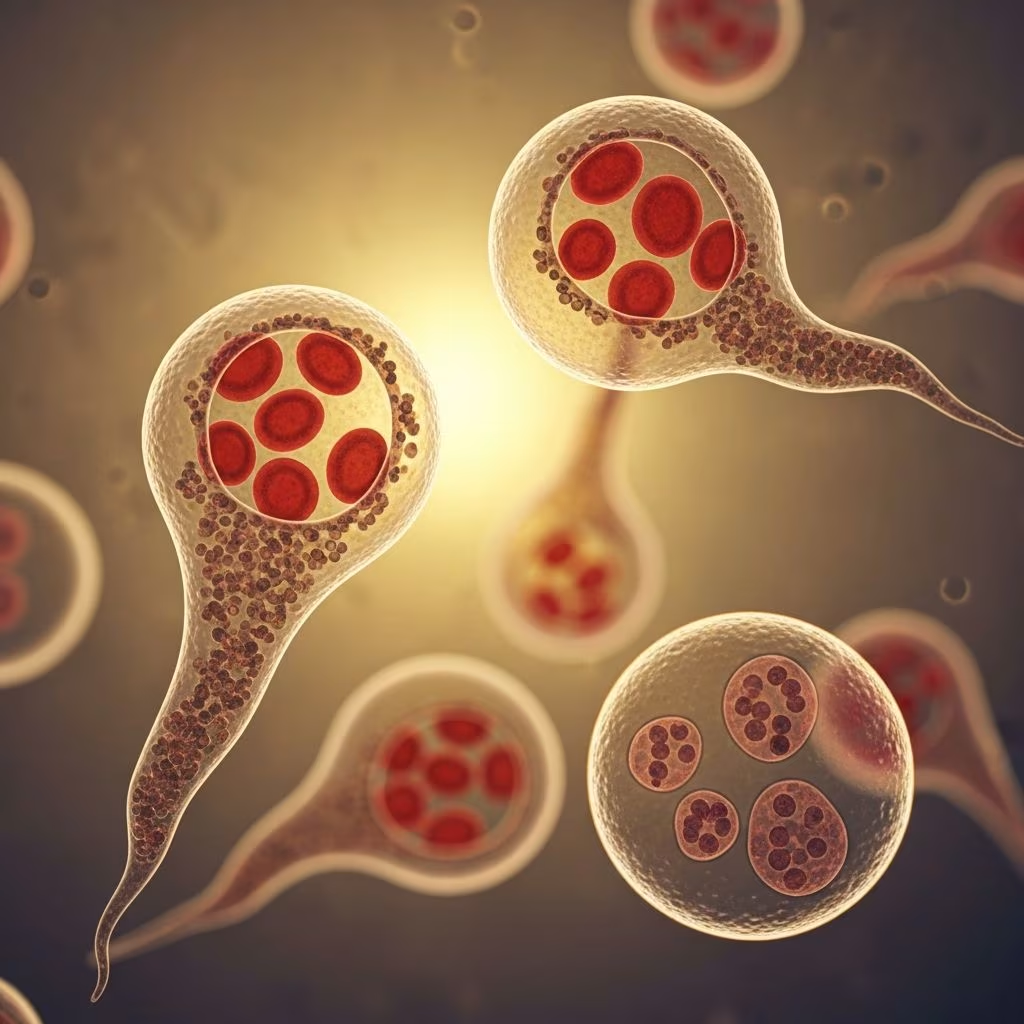
Entamoeba histolytica is a protozoan parasite responsible for amebiasis, a condition that affects the intestines and potentially other organs in various animal species. While primarily discussed in human contexts, its relevance in veterinary medicine stems from zoonotic potential and impacts on livestock health, leading to economic losses in farming.
Understanding the Parasite and Its Life Cycle
The parasite exists in two main forms: the infectious cyst stage, which is environmentally resistant, and the active trophozoite stage, which causes tissue damage. Cysts are shed in feces and contaminate water, food, or surfaces, facilitating transmission via fecal-oral route. In the host gut, cysts excyst into trophozoites that adhere to intestinal mucosa, secreting enzymes that lyse cells and induce inflammation.
Trophozoites multiply in the colon, forming flask-shaped ulcers. Some invade the bloodstream, leading to extraintestinal spread, notably to the liver. This lifecycle underscores the importance of hygiene in animal husbandry to break transmission cycles.
Transmission Pathways in Veterinary Settings
In animals, transmission occurs through ingestion of cysts from contaminated feed, water, or soil. Crowded conditions in farms, poor sanitation, and contact with infected carriers amplify risks. Zoonotic concerns arise when pets or livestock harboring cysts interact with humans, particularly in endemic regions.
- Contaminated water sources in pastures
- Fecal matter in shared environments
- Raw or undercooked contaminated feed
- Direct animal-to-animal contact
Global travel and trade of animals exacerbate spread, making vigilance crucial in veterinary practice.
Clinical Manifestations Across Species
Most infections (80-90%) remain asymptomatic, with carriers shedding cysts unknowingly. Symptomatic cases present 1-4 weeks post-exposure, varying by host immunity and parasite load.
Gastrointestinal Signs
Initial symptoms mimic other enteritis: loose stools, abdominal discomfort, and flatulence. Progression yields dysentery with bloody, mucoid diarrhea, tenesmus, and weight loss. Severe colitis risks perforation and peritonitis.
Extraintestinal Complications
Approximately 5% develop liver abscesses, causing right upper quadrant pain, fever, and hepatomegaly. Rare dissemination affects lungs, brain, or skin. Fulminant colitis carries high mortality, up to 40-89% with abscesses.
| Symptom Category | Common Signs | Severity Level |
|---|---|---|
| Mild Intestinal | Diarrhea, cramps | Low |
| Severe Intestinal | Bloody stools, fever | High |
| Extraintestinal | Liver pain, abscess | Critical |
Diagnostic Approaches in Practice
Diagnosis combines history, clinical signs, and lab tests. Stool microscopy reveals trophozoites (with ingested RBCs) or cysts, but sensitivity is low (60%). Serology detects antibodies in invasive disease, while PCR differentiates pathogenic E. histolytica from non-pathogenic Entamoeba spp.
Imaging like ultrasound or CT aids extraintestinal detection. In veterinary settings, rectal scrapings or colonic biopsies confirm via histopathology showing characteristic ulcers.
- Microscopy: Fresh/warm stool for motility
- Antigen tests: Rapid, specific detection
- Molecular: Gold standard for speciation
Therapeutic Interventions
Treatment targets both luminal (cysts) and tissue (trophozoites) stages. Asymptomatic carriers receive luminal agents; invasive disease requires tissue amebicides followed by luminal drugs.
Pharmacological Options
| Infection Type | Primary Agent | Dosage (Adult Equivalent) | Duration |
|---|---|---|---|
| Asymptomatic | Paromomycin | 25-30 mg/kg/day, 3 doses | 7 days |
| Invasive/Colitis | Metronidazole | 750 mg TID or 2.4 g daily | 10 days |
| Invasive | Tinidazole | 2 g daily | 3-5 days |
| Liver Abscess | Metronidazole + Chloroquine | Variable, aspiration if needed | 10-21 days |
Follow tissue agents with paromomycin to eradicate cysts. Broad-spectrum antibiotics address secondary bacterial overgrowth in severe colitis.
Side effects include GI upset, metallic taste (nitroimidazoles), and avoid alcohol due to disulfiram reaction.
Supportive and Surgical Care
Hydration, electrolytes, and nutrition are vital. Liver abscesses may need drainage; surgery for perforation.
Post-Treatment Monitoring
Confirm cure via repeat stool exams 2-4 weeks post-therapy. Liver imaging tracks abscess resolution, potentially over months. Resistance monitoring is emerging concern.
Prevention and Control Measures
Prevent via sanitation: clean water, proper waste disposal, hand hygiene. Cook food thoroughly; avoid raw sewage exposure. Screen high-risk animals; treat carriers.
- Improved farm biosecurity
- Vaccination research ongoing (preclinical)
- Public health education
- Vector control in endemic areas
No licensed vaccines yet, but candidates show promise in models.
Frequently Asked Questions (FAQs)
What animals are most at risk for amebiasis?
Primarily affects primates, dogs, cats, and livestock like cattle in poor hygiene settings.
Can amebiasis spread between animals and humans?
Yes, zoonotic via shared contaminated sources.
How long do symptoms take to appear?
Typically 2-4 weeks, but variable.
Is treatment always necessary for asymptomatic cases?
Yes, to prevent transmission and progression.
What if antibiotics don’t work?
Switch agents, check compliance, or aspirate abscesses.
Global Burden and Veterinary Implications
Affects millions annually, with higher incidence in tropics. In veterinary medicine, it causes diarrhea outbreaks in herds, reducing productivity. Early detection via molecular tools improves outcomes.
Economic impact includes treatment costs and mortality in young stock. Integrated management combining chemo and hygiene is key.
References
- Entamoeba Histolytica | Diagnosis & Disease Information — Infectious Disease Advisor. 2023. https://www.infectiousdiseaseadvisor.com/ddi/entamoeba-histolytica/
- E. histolytica (true pathogen): symptoms, prevention & treatment — Genetic Signatures. 2024. https://geneticsignatures.com/us/our-products/gastrointestinal-infections/e-histolytica-symptoms-prevention-treatment/
- Amebiasis – entamoeba histolytica symptoms, pathophysiology — YouTube (Medical Video). 2022. https://www.youtube.com/watch?v=hann29Sf6UA
- Amebiasis – CDC — Centers for Disease Control and Prevention (CDC). 2024-02-05. https://www.cdc.gov/amebiasis/about/index.html
- Amebiasis (Amoebic Dysentery): Symptoms & Treatment — Cleveland Clinic. 2023-10-12. https://my.clevelandclinic.org/health/diseases/23531-amoebic-dysentery
- Amebiasis | Red Book — American Academy of Pediatrics. 2021. https://publications.aap.org/redbook/book/755/chapter/14075094/Amebiasis
- Amebiasis | Texas DSHS — Texas Department of State Health Services. 2024. https://www.dshs.texas.gov/foodborne-illness/amebiasis



