

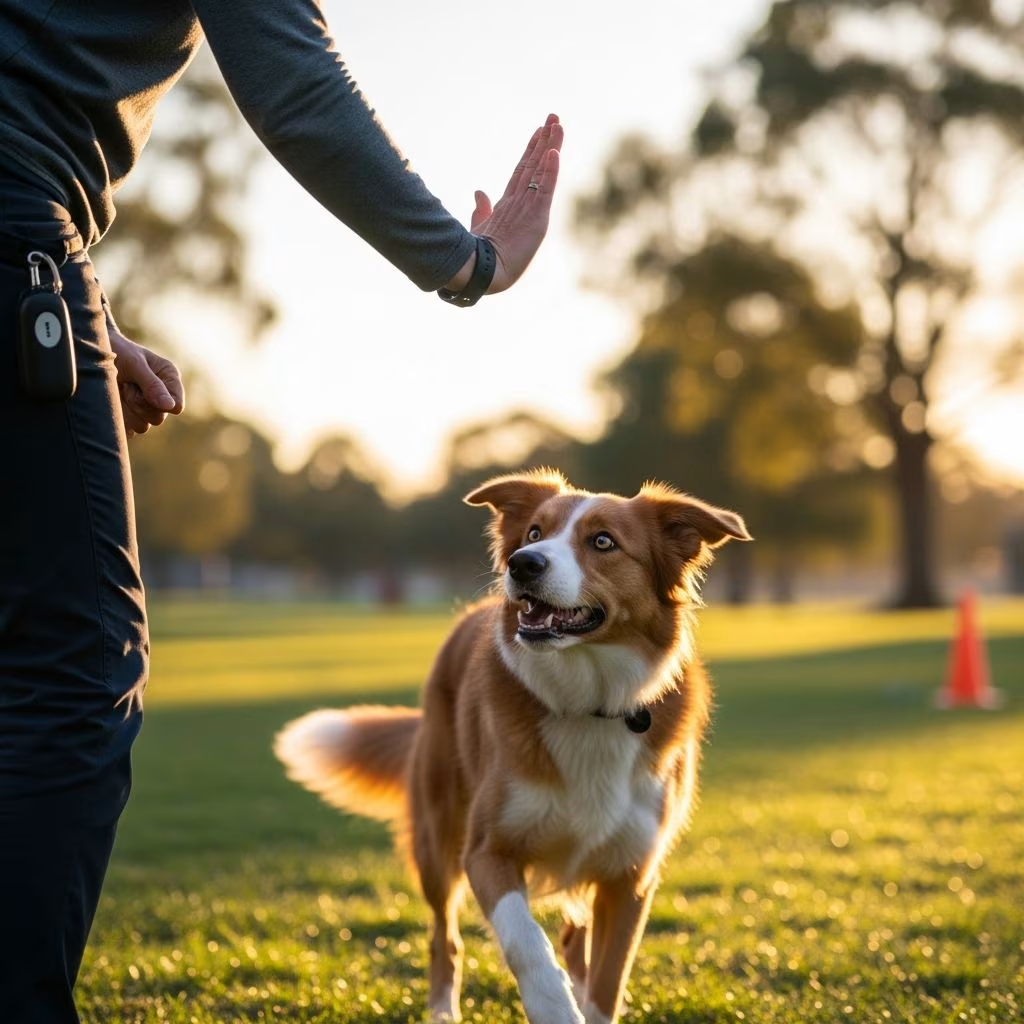
The relationship between dogs and food treats is deeply ingrained in modern training philosophy. Many dog owners assume that without treats, training becomes impossible. However, the reality is far more nuanced. Effective dog training encompasses a broad spectrum of motivational tools and techniques that can produce reliable, consistent behavior without relying on edible rewards. Understanding these alternatives opens new possibilities for owners seeking to develop a well-behaved companion through methods that work in real-world situations.
Understanding the Limitations of Treat-Based Training
While treats serve as valuable training aids, they come with inherent limitations that many trainers and behaviorists overlook. Treat-dependent training often creates a transactional mindset in dogs. Dogs quickly learn to evaluate whether you possess treats before deciding whether to comply with commands. This conditional obedience undermines the goal of achieving reliable behavior in all circumstances.
The fundamental problem emerges when environmental factors change. A dog trained exclusively with food rewards may perform flawlessly during structured training sessions in a quiet environment, yet fail to respond when you’re occupied with other tasks, outdoors with friends, or in stimulating settings. Dogs possess remarkable sensory abilities and develop sophisticated understanding of their surroundings. They recognize the difference between a training session and everyday life, between a hand reaching for a treat pouch and a hand empty of rewards.
Additionally, treating training and daily manners as separate endeavors creates unnecessary complexity. Dogs don’t naturally distinguish between “training time” and “regular life.” A comprehensive approach integrates behavioral expectations throughout the dog’s day, using natural consequences and environmental rewards that exist regardless of whether you’ve brought treats along.
Exploring Natural Reinforcement Through Life Rewards
Life rewards represent the most underutilized yet powerful motivational system available to dog owners. These are inherent privileges and experiences that dogs naturally desire, existing independently of any training setup. Rather than artificially introducing rewards, this approach leverages what your dog already finds rewarding in daily existence.
Common life rewards include:
- Access to outdoor spaces and grounds
- Permission to engage in preferred activities
- Social interaction and companionship
- Physical affection and petting
- Participation in games and play sessions
- Movement and exercise opportunities
- Sensory experiences like sniffing and exploring
- Control over resources and access to family members
The elegance of life rewards lies in their integration into normal routines. These are not special treats reserved for training; they’re the fabric of your dog’s daily experience. By making access to these privileges contingent on appropriate behavior, you create a sustainable system where good conduct becomes a habit rather than a transaction.
Utilizing Play and Toys as Primary Motivators
Interactive toys and play represent exceptionally effective reinforcement for many dogs, particularly those with lower food motivation or those who find social play inherently rewarding. Toys offer tangible, engaging rewards that capture a dog’s attention and enthusiasm.
Different toy types serve distinct training purposes:
| Toy Type | Training Application | Best For |
|---|---|---|
| Squeaky Toys | Luring sits and downs; marking correct behavior with sound and motion | Dogs responsive to sound and movement |
| Tennis Balls | Releasing to reinforce polite behavior; motivating engagement | Fetch-motivated dogs |
| Tug Toys | Building engagement; establishing play-based interaction | Dogs enjoying physical interaction |
| Soft Plush Toys | Gentle luring; comforting rewards for anxious learners | Sensitive or fearful dogs |
Toy training requires strategic implementation. Rather than simply offering toys randomly, employ them intentionally within structured practice sessions. For example, guide your dog into a sitting position using a squeaky toy held above their head in the same manner you would use a treat. Upon sitting, animate the toy with squeaks and tossing to create excitement and engagement. This method combines the luring benefits of food-based training with the interactive enthusiasm that toys naturally generate.
The advantage emerges when you transition from luring to independent performance. As your dog masters the behavior, the toy becomes a reward for successful execution rather than a guide. This shift transforms your dog’s understanding from “follow the object” to “understand the command and earn the reward.”
Leveraging Sensory Experiences and Environmental Rewards
Dogs experience the world predominantly through their senses, particularly through olfaction. Sensory experiences like sniffing represent profound forms of reinforcement that cost you nothing and provide immense value to your dog. Sniffing activities engage cognitive function and provide natural stress relief, making them excellent behavioral rewards.
Practical application involves strategically releasing your dog to sniff as a reward for desired behavior. During leash walks, require your dog to walk politely alongside you for a sustainable distance—short enough that success remains achievable. Once your dog maintains appropriate leash position, deliver a release cue such as “Free sniff” or “Go explore,” allowing them to investigate interesting scents in the environment.
This approach accomplishes multiple objectives simultaneously. First, it rewards polite leash walking without external treats. Second, it provides cognitive stimulation and physical enrichment your dog needs. Third, it creates a pattern where listening to you unlocks access to naturally rewarding experiences. Over time, your dog learns that compliance generates opportunities for preferred activities.
Other sensory rewards include activities like car rides for dogs who enjoy them, water play for enthusiastic swimmers, or access to sunny spots for dogs who appreciate warmth. The key principle involves identifying what your individual dog finds rewarding and making access to these experiences contingent on appropriate behavior.
Building Behavioral Foundations Through Environmental Control
Sustainable behavior change requires establishing clear expectations and consistent consequences within your living environment. Rather than relying on moment-to-moment training sessions, embed behavioral standards into your home structure. This approach creates what trainers call “automatic” or “autopilot” behavior, where your dog responds appropriately without requiring constant management or prompting.
Implement simple rules that precede privileges:
- Before exiting doors: Require a sit or wait command before opening doors to outside or other rooms, teaching impulse control and establishing you as the resource provider
- Before meal service: Have your dog perform a basic obedience command before receiving their food bowl, reinforcing that access to valued resources follows your direction
- Before play sessions: Establish a specific behavior or command that must occur before play begins, making entertainment contingent on appropriate conduct
- Before social interaction: Require acknowledgment of commands before petting or attention, teaching that your interaction is earned rather than demanded
- Before access to spaces: Control entry to specific rooms or areas using obedience commands, establishing your role in regulating environmental access
This systematic approach rewires your dog’s brain. Rather than performing behaviors because treats appear, your dog develops habits where appropriate conduct becomes the default pattern. Your dog learns that listening to you provides access to the things they already want in life. Over weeks and months, these patterns become ingrained, creating reliable behavior that persists across different contexts and circumstances.
Combining Physical Guidance with Verbal Feedback
Physical guidance techniques offer an alternative pathway to teaching position-based commands like sit, down, and stay. Rather than luring your dog into position with treats or toys, you can gently guide their body into the desired configuration. This method works particularly well for dogs who understand positional cues through proprioceptive feedback—sensing where their body moves through space.
Gentle guidance involves using light hand pressure to encourage your dog into position. For a sit, you might use minimal downward pressure on the hindquarters while simultaneously giving the verbal cue. For a down, you guide the front legs forward and downward. The key principle involves gentle persuasion rather than forceful manipulation. Your dog should feel guided, not restrained or forced.
Pair this physical guidance with enthusiastic verbal praise. As soon as your dog achieves the desired position, immediately deliver genuine enthusiasm: “Yes! Good sit!” Your tone and energy matter significantly. Dogs respond to authentic excitement from their handlers. This genuine praise becomes the reward, teaching your dog that correct positioning generates positive emotional feedback from you.
Developing Reliable Off-Leash Behavior Through Foundation Work
Many dogs demonstrate perfect on-leash behavior yet ignore commands when off-leash, particularly in stimulating environments. Building reliable off-leash responsiveness requires addressing the foundational relationship between dog and handler. Your dog must view you as the source of interesting experiences and positive interaction, not as a treat dispenser who appears only during designated training sessions.
Establish yourself as the primary source of entertainment and engagement. During outdoor time, periodically call your dog back to you and engage in interactive play or offer access to a favored activity. This contrasts with many owners who recall their dog only to end the fun by attaching the leash. Your dog learns that returning to you generates more fun, not less. Over time, your dog develops the habit of checking in with you and maintaining awareness of your location and direction.
Additionally, vary your walking routes and activities. Predictable routines create inattention as your dog knows exactly what’s coming. Introducing variability keeps your dog engaged and attentive, checking in with you to determine what happens next. A dog uncertain about the next activity remains more responsive to their handler’s guidance.
Transitioning Established Behaviors From Treat-Based to Treat-Free
If your dog already knows commands but performs them primarily for treats, you can successfully transition to alternative rewards through a gradual process. Abruptly removing treats often results in decreased compliance. Instead, slowly increase the frequency of trials where treats don’t appear while random-interval rewarding maintains interest.
Begin this transition during lower-distraction practice sessions where your dog reliably performs the behavior. Occasionally ask for the command but deliver a life reward (sniff break, toss a toy, offer petting) instead of a treat. Randomly intersperse these non-food rewards with occasional treat rewards, maintaining uncertainty about which reward type will appear. This variable-ratio schedule maintains motivation while reducing treat dependency.
As your dog accepts alternative rewards during calm practice sessions, gradually introduce this variability during real-life situations—at the door, before meals, during walks. Your dog learns that compliance produces rewards, but the specific reward type varies and remains under your control.
Frequently Asked Questions
Can all dogs succeed with treat-free training?
Most dogs can develop reliable behavior without exclusive treat reliance. However, individual temperament matters. Dogs with naturally high food motivation may require more creativity in identifying alternative rewards. The key involves determining what genuinely motivates your specific dog and building your training system around those intrinsic motivators rather than assuming all dogs respond identically to food.
What if my dog shows low enthusiasm for toys and play?
Dogs with minimal toy interest benefit from identifying their unique preferences. Some dogs prefer sensory experiences like sniffing or water play. Others respond strongly to social interaction and physical affection. Environmental rewards—access to outdoor spaces, interaction with other dogs, movement opportunities—provide alternatives. Experiment systematically to discover what your dog actually finds rewarding rather than assuming standard preferences.
How long does transitioning to treat-free training take?
The timeline varies significantly based on your dog’s age, training history, and individual temperament. Dogs transitioned early in training adapt quickly, sometimes within weeks. Dogs with extensive treat-based history may require months to develop alternative motivational patterns. Consistency matters more than speed. Gradual, reliable transition prevents regression and builds lasting behavioral change.
Can I combine treats with other rewards?
Absolutely. Balanced training approaches integrate treats alongside toys, praise, life rewards, and physical guidance. The goal involves creating a versatile system where your dog responds reliably regardless of which reward type appears. This versatility proves especially valuable in real-world situations where you might not always have treats available.
Establishing Long-Term Behavioral Success
The most successful dog training outcomes emerge from consistent environmental structure rather than intense training sessions. By integrating behavioral expectations into daily routines and utilizing natural reinforcement, you create a system where good behavior becomes the path of least resistance. Your dog learns that listening to you, showing self-control, and responding appropriately generates access to the experiences and privileges they naturally desire.
This approach requires patience and consistency but produces behavior that persists across contexts and circumstances. Unlike treat-dependent training that may falter when food isn’t available, this holistic system builds reliable obedience that functions whether you’re holding treats, toys, or nothing at all. Your dog develops genuine respect for your leadership and understanding of behavioral expectations, creating the foundation for a harmonious long-term relationship.
References
- How to Train Your Dog Without Food Treats – And When To Use Food — Dog Matters. Accessed March 2026. https://www.dogmatters.com/train-dog-without-food-treats
- Positive Reinforcement Dog Training Without Treats — Whole Dog Journal. Accessed March 2026. https://www.whole-dog-journal.com/training/positive-reinforcement-training-without-treats/
- How to Train a Dog Without Treats — Best Mate Dog Training. Accessed March 2026. https://www.bestmatedogtraining.co.nz/how-to-train-a-dog-without-treats



