

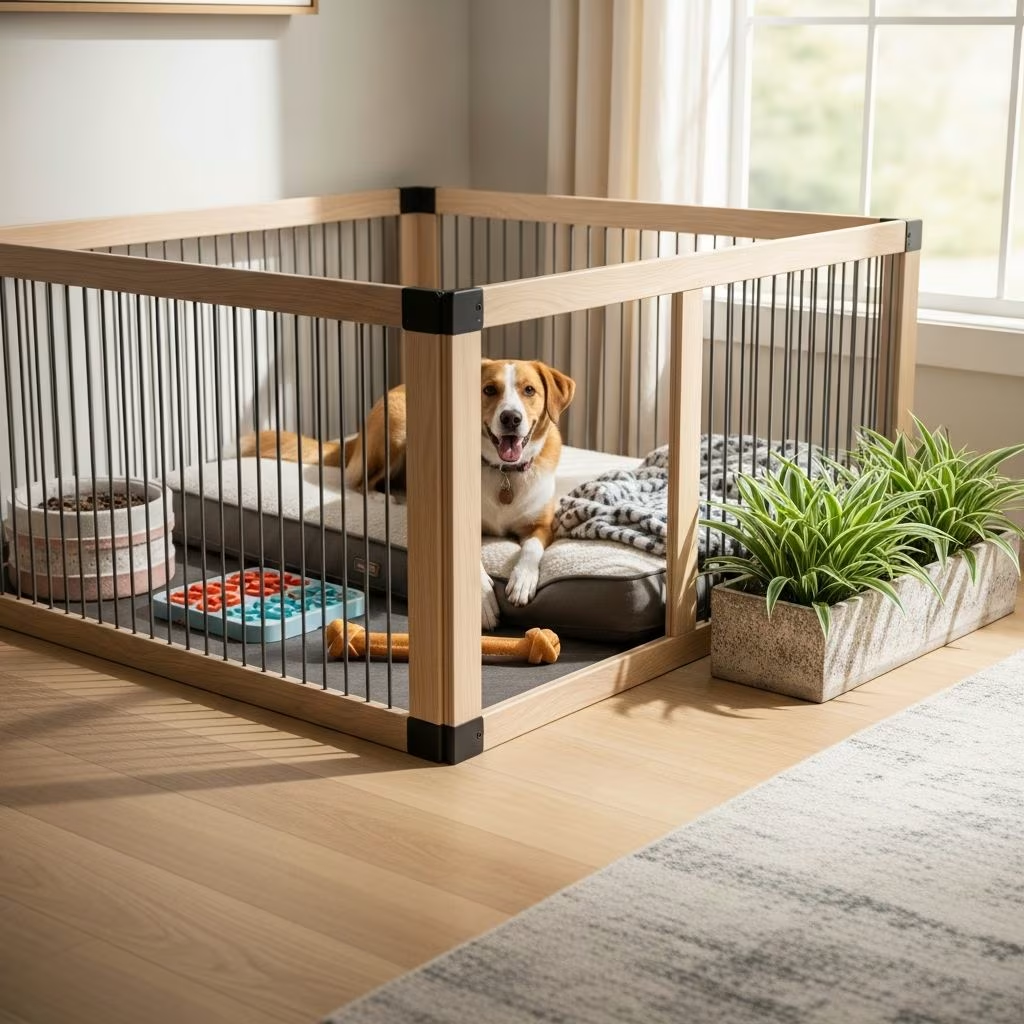
Dog training has evolved significantly over the past decade, with many pet owners questioning whether traditional crate training remains the best approach for their animals. While crates offer undeniable convenience and structure, a growing segment of dog owners are exploring alternative methods that prioritize freedom of movement, emotional development, and strengthened human-animal bonds. Understanding these alternatives requires examining how dogs develop behaviorally when given more autonomy and what practical solutions can replace conventional crating strategies.
The Case for Unrestricted Living Spaces
One of the most compelling arguments against crate-based training involves the psychological impact of confinement on developing puppies and adult dogs. Dogs that aren’t subjected to regular crating experience greater spatial autonomy, allowing them to move freely throughout their living environment. This freedom of movement offers several developmental advantages that contradict traditional assumptions about canine behavior.
When dogs have access to open living spaces, they develop enhanced self-regulation skills more naturally. Rather than being confined and forced into isolation, dogs learn to manage their impulses through gradual exposure to household dynamics and environmental stimuli. Some behavioral experts argue that this organic learning process produces more confident, adaptable adult dogs compared to those who spend significant time in confined spaces during critical developmental periods.
Emotional Development Without Confinement
The emotional trajectory of non-crated dogs differs markedly from their confined counterparts. Dogs raised with unrestricted access to living spaces develop self-soothing mechanisms through natural exposure to varied environmental conditions rather than forced isolation. This distinction matters significantly because it affects how dogs process anxiety, manage transitions, and respond to novel situations throughout their lives.
Research on canine anxiety suggests that dogs benefit from gradual, voluntary exposure to stressful situations rather than enforced separation. When dogs choose to retreat to safe spaces naturally, they build authentic coping mechanisms. This contrasts with crate-trained dogs, who may develop avoidance behaviors or associate confinement with negative experiences, potentially creating psychological barriers that persist into adulthood.
Strengthening Human-Canine Relationships
One of the most frequently cited benefits of non-crate training involves the quality of relationships between dogs and their human families. When dogs aren’t confined for extended periods, they have continuous opportunities for interaction, play, and companionship. This increased contact time naturally strengthens attachment and creates deeper trust between animal and owner.
Dogs are inherently social creatures that thrive on proximity and interaction. By allowing unrestricted access to family members, dogs receive consistent positive reinforcement through natural engagement rather than relying on scheduled playtime following crate sessions. Pet owners who adopt non-crate approaches often report that their dogs display higher confidence, fewer behavioral issues, and stronger bonds with all family members.
Managing Potty Training Without Traditional Crates
A common concern about abandoning crate training involves housebreaking effectiveness. However, numerous alternative methods achieve reliable potty training through different mechanisms. The myth that dogs require crate confinement to learn bathroom habits persists largely due to convenience factors rather than actual training necessity.
Successful non-crate potty training relies on several complementary strategies:
- Frequent outdoor schedules: Taking puppies outside at consistent intervals—upon waking, after meals, before bedtime, and during play sessions—establishes predictable bathroom routines without relying on crate-induced retention.
- Environmental management: Using baby gates, play pens, or designated areas with easy-to-clean flooring allows supervision while maintaining freedom of movement.
- Positive reinforcement: Immediately rewarding outdoor elimination with treats and praise creates strong associations between appropriate bathroom locations and positive outcomes.
- Monitoring techniques: Keeping puppies in constant sight during active periods prevents sneaking away for elimination, addressing the underlying behavior without physical restriction.
Studies on housebreaking timelines show that while crate training may accelerate initial success, non-crated puppies achieve reliable potty habits within similar timeframes when owners implement consistent environmental management and reward protocols. The advantage lies not in speed but in the methodology—one relies on physical limitation, the other on behavioral learning.
Portable Confinement Solutions
Modern dog owners have access to numerous alternatives that provide controlled environments without traditional crate confinement. These solutions offer flexibility while maintaining safety and structure:
| Solution Type | Primary Uses | Key Advantages | Limitations |
|---|---|---|---|
| Expandable Play Yards | Puppies, small breeds, temporary containment | Lightweight, portable, dogs maintain visual contact | Limited for large dogs, requires furniture placement |
| Pet Gates and Barriers | Room separation, preventing access to dangerous areas | Allows unrestricted movement within defined zones, easy installation | Ineffective for dogs that jump or climb |
| Designated Room Setup | Safe spaces during unsupervised periods | Maximum freedom within boundaries, reduces confinement stress | Requires puppy-proofing, potential for destructive behavior |
| Outdoor Secure Pens | Outdoor time, yard containment | Natural environment, exercise opportunities, mental stimulation | Weather dependent, requires secure fencing |
Traveling and Transportation Alternatives
Travel presents legitimate challenges for non-crate-trained dogs, requiring creative solutions and advance planning. While airlines mandate crate use for in-cabin flights, owners have options for car travel and other transportation scenarios that don’t require pre-existing crate training.
Gradual acclimation to vehicles using safety harnesses, car seats, or secured travel barriers can prepare dogs for road trips without crate dependency. Short practice drives, positive associations with car time, and rewarding calm behavior establish travel competence through conditioning rather than confinement familiarity. For dogs requiring air travel, specialized introduction to crates immediately before flights, combined with calming aids and professional guidance, can facilitate compliance without long-term crating practices.
Safety Considerations for Unrestricted Dogs
Abandoning crates requires heightened attention to environmental safety. Pet-proofing becomes more comprehensive when dogs have unrestricted access to household areas. This involves removing toxic substances, securing electrical cords, storing medications safely, and eliminating choking hazards throughout living spaces rather than concentrating safety measures in a confined area.
Emergency preparedness also demands alternative strategies. In fire or evacuation scenarios, unrestricted dogs require reliable recall training and identification systems rather than relying on crate location for responder access. Microchipping, collar identification, and trained emergency responses become essential components of safety planning for non-crated dogs.
Post-Surgery and Medical Recovery
Veterinary situations occasionally necessitate confinement following surgery or injury. Dogs accustomed to unrestricted living spaces can experience significant stress during mandatory crate rest. Introducing temporary confinement specifically for medical purposes, with veterinary guidance on duration and comfort measures, allows dogs to tolerate necessary restriction while minimizing behavioral complications. This targeted introduction differs substantially from lifelong crate training and can be more effective because dogs understand the temporary nature of the situation.
Behavioral Training Without Physical Barriers
Addressing destructive behaviors, excessive barking, and other behavioral challenges doesn’t require crate confinement. Positive reinforcement techniques, appropriate exercise protocols, and environmental enrichment address root causes of problematic behavior rather than managing symptoms through restriction.
For example, chewing behavior improves through appropriate toy rotation, supervised access to safe chewing materials, and consistent redirection rather than preventing access to items. Similarly, excessive barking responds to identification of underlying triggers—boredom, anxiety, or attention-seeking—with targeted interventions addressing each cause.
Logistics and Practical Implementation
Implementing non-crate approaches requires different logistical frameworks than traditional crating. Pet sitting services, dog walkers, and pet care professionals can provide midday supervision and bathroom breaks, eliminating the primary justification for crate confinement during work hours. Additionally, flexible work arrangements and remote work options increasingly allow dog owners to maintain closer supervision without relying on crate-based management.
Baby monitors and pet cameras enable remote supervision during brief absences, allowing owners to verify their dog’s wellbeing and intervene if necessary without maintaining constant physical presence. These technologies support non-crate approaches by providing oversight that traditional methods couldn’t previously facilitate.
Frequently Asked Questions About Crate-Free Training
How long does housebreaking take without crate training?
Timeline varies by individual dog and owner consistency, but most puppies achieve reliable potty habits between 4-6 months with dedicated environmental management and frequent outdoor scheduling. Success depends more on owner commitment than training methodology.
What happens during unexpected situations like power outages?
Unrestricted dogs managed through gates and designated spaces will have access to safe areas during power disruptions. Preparation involves ensuring backup water availability, securing medications, and maintaining secure perimeters to prevent escape during emergencies.
Can non-crate-trained dogs travel safely?
Yes, through harnesses, car seats, and positive conditioning to vehicles. Air travel requires crate introduction specifically for flights, while road trips benefit from alternative safety systems and gradual acclimation.
How do I manage overnight periods without crate confinement?
Dog beds in owner bedrooms or gated areas provide safe sleeping environments. Many dogs naturally gravitate toward comfortable sleep spaces when given options, particularly if they’ve spent daytime hours in owners’ presence.
Synthesis: Creating Balanced Training Approaches
The debate between crate training and alternative methods presents a false dichotomy. Modern dog ownership can incorporate hybrid approaches that utilize temporary confinement for specific situations while prioritizing freedom and bonding for primary living arrangements. Understanding that different dogs, families, and circumstances require tailored solutions allows pet owners to make informed decisions aligned with their values and circumstances rather than following prescribed training dogmas.
References
- Crate Training: A Comprehensive Guide for Puppy Training — American Kennel Club. 2024. https://www.akc.org
- Canine Behavior and Training Methods: Evidence-Based Practices — International Association of Canine Professionals. 2024. https://www.iacp.org
- Dog Behavior and Training: Alternative Methods — Association of Professional Dog Trainers. 2025. https://www.apdt.com
- Puppy Socialization and Development: Behavioral Outcomes — Society for Companion Animal Studies. 2023. https://www.scas.org.uk
- Emergency Preparedness for Pet Safety — Federal Emergency Management Agency (FEMA). 2024. https://www.ready.gov



