

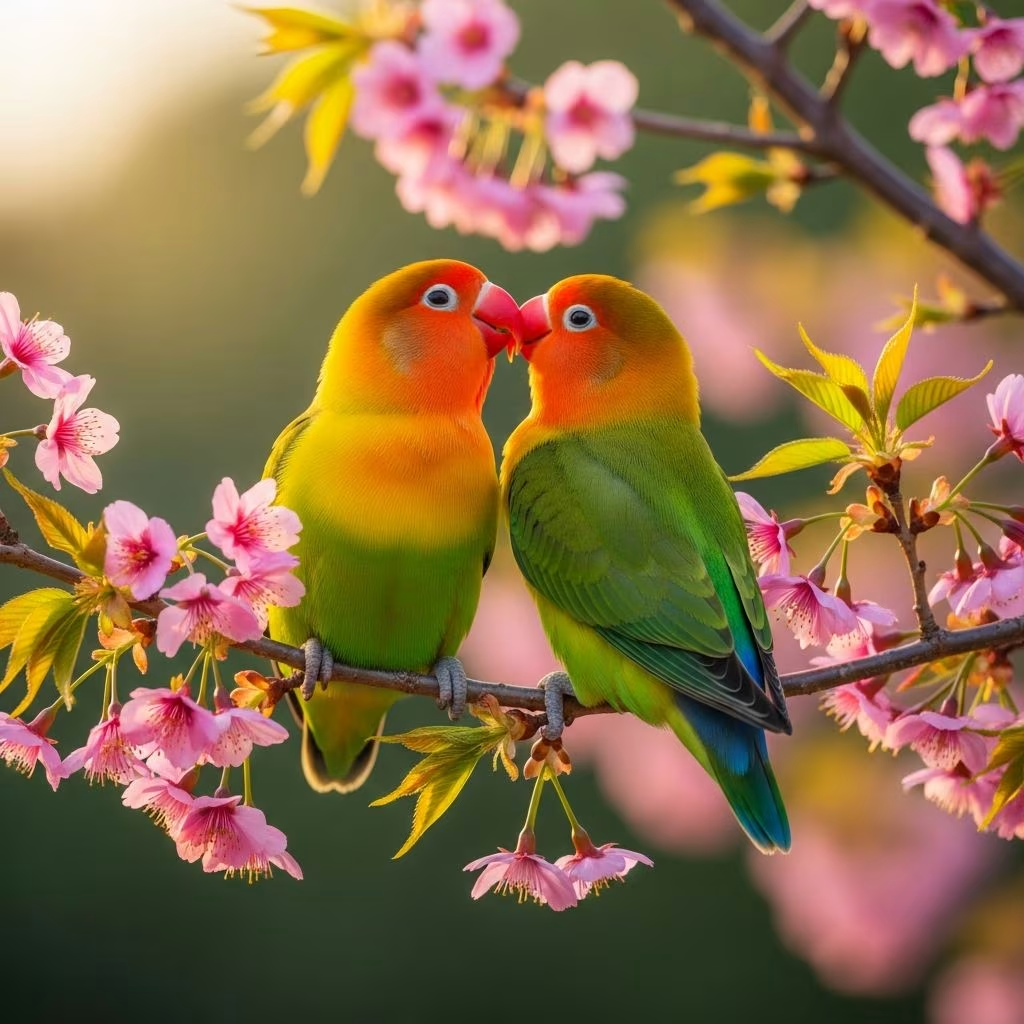
All About Lovebirds
Lovebirds are among the smallest parrot species available as companion pets, yet they pack tremendous personality into their tiny bodies. These beautiful African parrots have become increasingly popular among bird enthusiasts, particularly those living in apartments or smaller spaces. With their vibrant plumage, intelligent nature, and affectionate temperament, lovebirds make excellent companions for the right owner. However, prospective owners should understand that these birds require specific care, attention, and environmental considerations to thrive as pets.
What Exactly Are Lovebirds?
Lovebirds are small parrots that belong to the genus Agapornis within the order Psittaciformes, which encompasses all parrot species. The name “lovebird” derives from the strong pair bonds these birds form with their mates, often displaying affectionate behaviors such as mutual preening, feeding one another, and snuggling together. In the wild, lovebirds are native to sub-Saharan Africa and Madagascar, where they inhabit areas near vegetation, standing water, cultivated fields, and dry woodland regions. Archaeological evidence shows that ancient lovebird species existed nearly 2 million years ago, with fossils discovered throughout South Africa.
Like all parrots, lovebirds possess distinctive anatomical features including a hooked bill and zygodactyl feet, with two toes pointing forward and two pointing backward. What distinguishes lovebirds from other parrot species is their stocky build, short blunt tail feathers (unlike budgies with their long pointed tails), and compact size.
Lovebird Species and Varieties
Nine distinct species of lovebirds exist in nature, each with unique characteristics and appearances. These species are typically divided into two groups based on eye ring patterns: those with prominent white eye rings and those without.
Species With Prominent White Eye Rings:
The masked lovebird, also called the yellow-collared lovebird, features distinctive facial markings that make it easily recognizable. Fischer’s lovebird represents another popular species known for its charming temperament and vibrant coloring. The black-cheeked lovebird displays unique dark facial patches, while the Nyasa or Lilian’s lovebird completes this group with its own distinctive appearance.
Species Without Eye Rings:
The peach-faced or rosy-faced lovebird stands as the most popular species in the pet trade, recognizable by its bright peachy-pink face contrasted with yellow, green, and blue plumage throughout the body. The black-winged or Abyssinian lovebird features a specialized diet in the wild that includes native figs, making them extremely rare in captivity. The red-headed or red-faced lovebird, Madagascar or grey-headed lovebird, and black-collared or Swindern’s lovebird complete this group.
Pet Suitability:
Only three of the nine species are considered ideal for keeping as pets: the peach-faced, Fischer’s, and masked lovebirds. The peach-faced lovebird dominates the pet market due to its beautiful coloration, relatively docile nature, and availability of numerous color mutations through selective breeding. Color mutations in lovebirds include variations like blues, lutinos, orangefaced, and other distinctive patterns created through careful breeding programs.
Physical Characteristics and Size
Lovebirds rank among the smallest parrot species, measuring between 5 and 7 inches in length when measured from the beak to the end of the tail feathers. Despite their diminutive size, they possess surprisingly robust builds with stocky frames that make them appear larger than their actual dimensions. This compact size has contributed significantly to their popularity among apartment dwellers and those seeking pet birds that require less space than larger parrot species such as macaws or cockatoos.
Their physical appearance includes short, blunt tail feathers; a relatively large, sharp beak; and colorful plumage that varies considerably depending on species and color mutations. The stocky, powerful build of lovebirds allows them to be surprisingly acrobatic and energetic despite their small stature.
Lifespan and Longevity
When provided with appropriate care, diet, and environmental conditions, lovebirds can live 15 to 20 years or more in captivity. This substantial lifespan means that acquiring a lovebird represents a long-term commitment spanning decades. Prospective owners should understand that these birds will require consistent care, attention, and resources throughout their entire lives. Factors influencing lovebird longevity include diet quality, exercise opportunities, veterinary care, social interaction, and overall environmental enrichment.
Personality and Temperament
Despite their small size, lovebirds display bold, inquisitive, and curious personalities that make them engaging companions. These birds are extremely active creatures that seem perpetually on the move, investigating their environment and engaging with toys, people, and objects. Their energetic nature means they require ample mental stimulation and physical activity to remain healthy and content.
Social Bonding:
Lovebirds form deep, intense bonds with their human companions when hand-raised as babies. Many become exceptionally cuddly birds that enjoy physical contact and proximity to their owners. However, their intense personalities can occasionally manifest as nipping, territorial aggression, or jealousy, particularly if they feel their bond with a specific person is threatened. Some experts suggest that female lovebirds tend toward greater jealousy and territoriality compared to males, though individual personality variations exist.
Pair Bonding Considerations:
A common misconception exists that lovebirds should be kept in pairs because photographs frequently show two birds cuddled together. However, experts recommend keeping single lovebirds as pets rather than pairs. When two lovebirds bond strongly with each other, they often become focused exclusively on their mate, showing little interest in human interaction and companionship. A single lovebird companion requires abundant social interaction with family members and their primary person to remain emotionally healthy and behaviorally stable. Additionally, lovebird pairs may become aggressive toward other birds or humans.
Activity Level:
These intelligent birds are remarkably active and require regular exercise outside their cage in safe, supervised environments. Mental stimulation through toys, foraging opportunities, and environmental enrichment proves essential for preventing behavioral problems and maintaining psychological well-being. Bored lovebirds may develop destructive habits or behavioral issues.
Vocalizations and Speech Abilities
While lovebirds produce vocalizations, their communication patterns differ from larger parrot species. Their normal chirps and squawks are not excessively loud, though they definitely enjoy chattering with one another. When seeking attention or when multiple lovebirds vocalize simultaneously, they can produce surprisingly loud, high-pitched screeches. Their song is generally considered pleasant compared to many other companion parrot species.
Regarding speech ability, lovebirds are not known for mimicking human speech or sounds in the way larger parrots do. Although some individuals may learn to repeat certain words or sounds, this remains the exception rather than the rule. Some evidence suggests that female lovebirds may be slightly more inclined to mimic sounds than males. In flocks, lovebirds engage in continuous communication with one another through various vocalizations, singing, whistling, and chattering throughout the day.
Diet and Nutrition
In their natural habitat, lovebirds consume a varied diet consisting of fruits, vegetables, grasses, and seeds. Captive lovebirds require a similarly diverse diet to maintain optimal health. A high-quality pellet-based diet should form the foundation of their nutrition, supplemented with fresh fruits, vegetables, and occasional seeds. Providing proper nutrition prevents deficiencies and supports their immune system, feather health, and overall vitality.
Different lovebird species have varying dietary needs. The Abyssinian lovebird, for example, has specialized dietary requirements including native figs in the wild, which explains why this species remains rare in captivity—replicating their natural diet proves challenging.
Housing and Cage Requirements
Appropriate housing represents a fundamental requirement for lovebird well-being. These active birds need spacious cages that allow for movement, exercise, and the installation of various toys and enrichment items. The cage should accommodate perches of varying diameters, branches for climbing, toys for foraging and destruction, and safe spaces for sleeping. Minimal cage sizes recommended by avian specialists provide adequate room for perching, wing-stretching, and general movement.
Beyond the cage, lovebirds benefit greatly from supervised out-of-cage time in safe, bird-proofed spaces where they can exercise, explore, and interact with their human family. These play areas should be free from hazards such as open windows, toxic substances, ceiling fans, or other dangers.
Social Needs and Family Interaction
Lovebirds are extraordinarily social birds that thrive on interaction with their human family members. A single lovebird requires significant daily attention, social engagement, and quality time with the people in their household. These birds have evolved to live in flocks in the wild, so they naturally seek social connection and companionship. Without adequate social interaction, lovebirds may develop behavioral problems, depression, or aggression.
Health and Veterinary Care
Regular veterinary check-ups with an avian veterinarian help ensure lovebirds remain healthy throughout their lives. These specialists can identify potential health issues early, provide nutrition guidance, and offer behavioral counseling. Common health concerns in captive lovebirds include nutritional deficiencies, feather plucking related to stress or boredom, and reproductive issues in female birds.
Frequently Asked Questions About Lovebirds
Q: Are lovebirds good pets for beginners?
A: Lovebirds can make excellent pets for beginners due to their small size and lower space requirements compared to larger parrots. However, they require significant social interaction, mental stimulation, and long-term commitment. Prospective owners should thoroughly research their needs before acquiring one.
Q: Can lovebirds be kept in pairs?
A: While lovebirds naturally form pair bonds, experts recommend against keeping them in pairs as pets. Paired birds often become focused on each other and show little interest in human interaction. A single lovebird makes a better companion pet.
Q: How long do lovebirds live?
A: With proper care, diet, and veterinary attention, lovebirds typically live 15 to 20 years or longer in captivity. This represents a significant long-term commitment for potential owners.
Q: Do lovebirds talk or mimic speech?
A: Lovebirds are not known for talking or mimicking human speech like larger parrots. While some individuals may learn isolated words or sounds, they primarily communicate through chirping, squawking, and chattering with other birds.
Q: How much space do lovebirds need?
A: Lovebirds require spacious cages with perches, toys, and room for movement. They also benefit greatly from supervised out-of-cage time in safe, bird-proofed areas where they can exercise and explore.
Q: What should lovebirds eat?
A: A high-quality pellet-based diet forms the nutritional foundation, supplemented with fresh fruits, vegetables, and occasional seeds. A varied diet supports their health, feather condition, and immune function.
Q: Are lovebirds affectionate?
A: Yes, hand-raised lovebirds often become very affectionate and cuddly with their primary caregiver, forming deep bonds and enjoying physical contact. However, their intense personalities can sometimes lead to territorial behavior or nipping.
References
- Lovebird Personality, Food & Care – Pet Birds by Lafeber Co. — Lafeber Company. Accessed 2025. https://lafeber.com/pet-birds/species/lovebird/
- What to Know About Lovebirds — WebMD Pets. Accessed 2025. https://www.webmd.com/pets/what-to-know-about-lovebirds
- Our Complete Guide To Lovebirds As Pets — Westfield Veterinary Hospital. Accessed 2025. https://westfieldvethospital.com/blog/lovebirds/
- 7 Lovely Facts About the Lovebird — HowStuffWorks Animals. Accessed 2025. https://animals.howstuffworks.com/pets/otherpets/lovebird-facts.htm



