

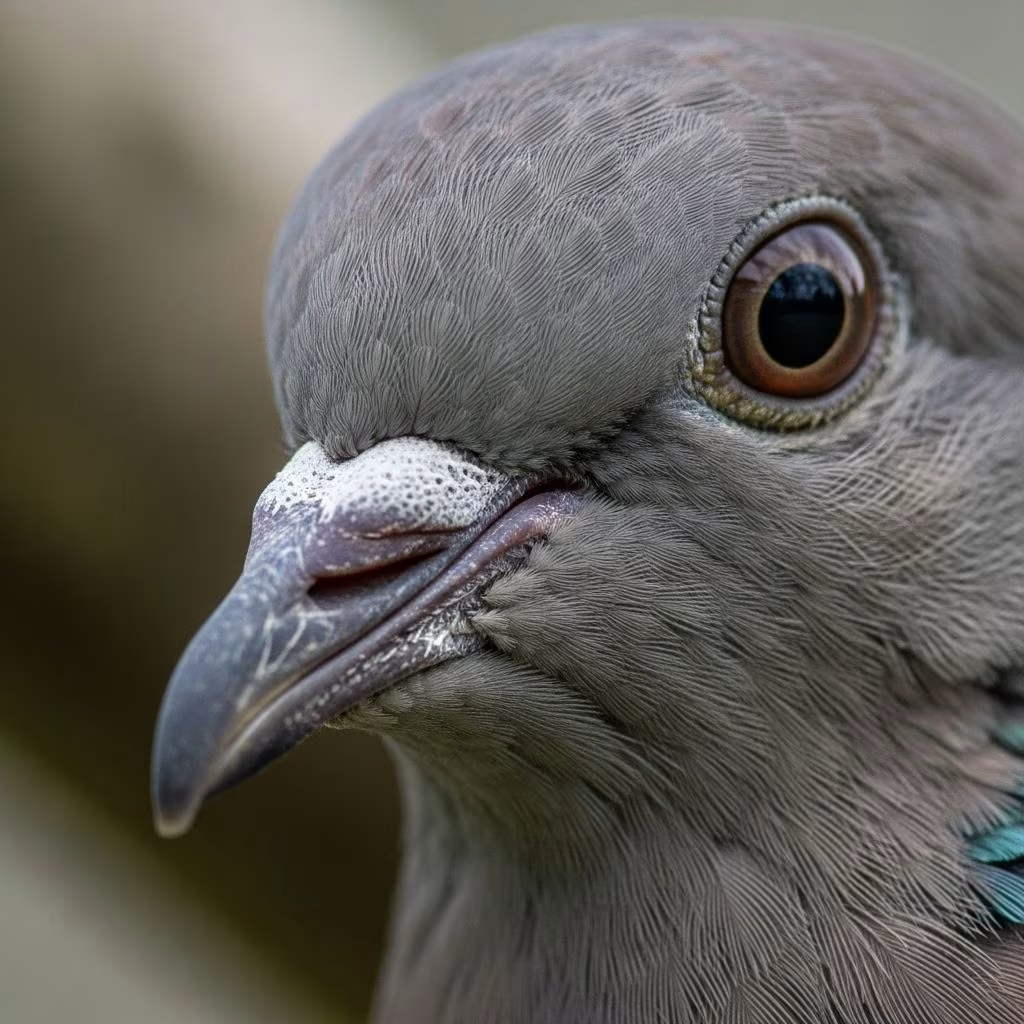
All About Bird Nares
Bird nares are the external openings of your feathered pet’s respiratory tract, commonly referred to as nostrils. Located on the sides of the beak, these tiny but vital structures serve as the gateway to your bird’s breathing system. Understanding bird nares is essential for pet owners who want to ensure their avian companions maintain optimal respiratory health. According to Dr. Katherine Quesenberry, DVM, MPH, DABVP (avian), staff doctor and head of avian and exotic pets at Animal Medical Center in New York City, bird nares function much like human nostrils—they filter the air your bird breathes and play a crucial role in the respiratory process.
What Are Bird Nares?
Bird nares are essentially bird nostrils—the external openings of your pet’s respiratory tract that are found on the sides of the beak. In some parrot species, nares are covered with feathers, making them difficult to see at first glance. This feathering serves a protective function, shielding the delicate nasal passages from debris and environmental contaminants.
The nares are typically small, round or oval-shaped openings that vary in appearance depending on the species. In budgerigars and certain other psittacine species, a section of raised, colored skin called the “cere” surrounds the nares. This distinctive feature can even help bird owners identify the sex of their birds, as the cere color often differs between males and females.
The Anatomy of Bird Nares
The avian nasal cavity is a sophisticated system designed to efficiently process air intake. The structure begins with the external nares and extends through several interconnected chambers. Understanding this anatomy helps pet owners appreciate the complexity of their bird’s respiratory system.
Key Anatomical Components
The avian nasal cavity consists of several important structures working in harmony:
- External Nares: The visible openings on the beak surface
- Opercula: Keratinized vascularized flaps of tissue visible just within the nostril opening
- Nasal Septum: A cartilaginous to bony structure that divides the nasal cavity
- Nasal Conchae: Three structures (rostral, middle, and caudal) that direct airflow and modify the respired air field
- Choana: An opening that connects the nasal cavity to the throat
- Choanal Slit: A narrow midline opening in the hard palate that allows birds to breathe through their nostrils when the beak is closed
How Bird Nares Function
The respiratory pathway through the nares is a carefully orchestrated process. When a bird inhales through its nares, air enters the nasal cavity where it encounters the conchae. These structures have a critical function: they modify and redirect the airflow. The conchae work in succession to ensure air reaches specific portions of the nasal passages, directing it ventrally towards the choanal slit and caudally toward the infraorbital sinus.
One of the most remarkable features of avian respiration is the choanal slit, which opens directly over the glottis when the beak is closed. This anatomical arrangement allows birds to breathe continuously through their nostrils even when their beaks are closed—an advantage not shared by mammals. The nares open into the nasal passages, which in turn communicate with the glottis of the larynx via this midline aperture in the hard palate.
Infraorbital Sinus System
Beyond the nasal cavity lies an intricate system of air-filled chambers. The nasal cavity communicates with the infraorbital sinus through small openings. There is a single infraorbital sinus on each side of the head, but each contains numerous diverticulae, including the rostral, preorbital, infraorbital, postorbital, and mandibular diverticulae. The sinus system serves as an extension of the respiratory tract and connects with the cervicocephalic air sac, which is not involved in gas exchange but plays important roles in thermoregulation.
Species-Specific Adaptations
Different bird species have evolved specialized nare adaptations that suit their unique lifestyles and environments. These variations showcase the remarkable diversity of avian biology.
Peregrine Falcons
Peregrine falcons represent one of the most dramatic examples of nare specialization. These birds are clocked at over 200 mph during their hunting dives—making them the world’s fastest birds. At such extreme speeds, the ram air pressure on typical nostrils would make breathing impossible and could damage the lungs. To solve this problem, peregrine falcons have evolved small protruding cones in the openings of their nostrils called tubercles. These structures function similarly to the inlet cone of a jet engine, reducing air pressure entering the nostrils and allowing the birds to breathe safely even at speeds approaching 200 mph.
Ducks and Waterfowl
In many Anseriformes (the duck family), the nares lie more towards the tip of the beak rather than at the base. This positioning adapts to their feeding behavior in water. The nares themselves are merely openings into sinus chambers, which in turn connect with a branching network of bony chambers throughout the bird’s head. These sinuses vary according to species, but most avian patients have an infraorbital sinus that develops according to species-specific patterns.
Parrots
In parrots, the nares are typically located dorsolaterally at the base of the maxillary beak. In budgerigars and a few other psittacine species, the colored cere surrounding the nares aids in species and sex identification. The choanal slit in psittacine species is rimmed with papillae, which is believed to help prevent food from entering the nasal cavity during eating—an important adaptation for birds that use their beaks manipulatively.
Immune Function and Protection
The nare system does more than just facilitate breathing; it also plays a crucial role in immune defense. Birds have developed specialized immune structures within and around the nasal passages. The nasal-associated lymphoid tissue (NALT) of birds is located in the lamina propria around the rift of the choanae and ventral nasal meatus.
The Harderian gland, found on the inner canthus of the eye, is larger than the lacrimal gland and plays an important role in the local immune system. In chickens, this exocrine gland protects the eye surface and lubricates the eyelid and nictitating membrane in conjunction with the lacrimal gland. This system provides not only a physical barrier but also antibacterial activity that protects against various pathogens.
Air Filtration and Quality Control
The nares serve as the first line of defense in filtering air before it reaches the lungs. Like mammals, birds possess turbinate structures (nasal conchae) that contain branched bones or cartilages. In mammals, these structures warm air on inhalation and remove moisture on exhalation—functions that are similarly important in birds. The mucus layer and cilia within the nasal passages further trap particulates and help maintain respiratory health.
Common Nare Health Issues
Understanding potential health problems affecting the nares helps pet owners recognize when their birds need veterinary attention. The choanal slit is often the area chosen for taking samples when trying to isolate infectious agents for upper airway disease in birds, indicating its importance in respiratory health assessment.
Common nare-related issues include:
- Discharge: Abnormal mucous or crusty buildup around the nares
- Swelling: Inflammation of the nares or surrounding cere
- Obstruction: Blockage from debris, discharge, or infection
- Infection: Bacterial, viral, or fungal infections affecting the nasal passages
- Trauma: Injury to the delicate nasal structures
Caring for Your Bird’s Nares
Proper care of your bird’s nares is essential for maintaining respiratory health. Here are key recommendations for bird owners:
- Maintain clean, dust-free air in your bird’s environment
- Provide proper humidity levels to prevent dry nasal passages
- Avoid aerosols, cooking fumes, and other respiratory irritants
- Monitor your bird’s breathing patterns regularly
- Schedule regular veterinary check-ups with an avian specialist
- Ensure proper nutrition to support immune function
- Keep your bird’s housing clean and well-ventilated
Signs of Respiratory Distress
Pet owners should watch for signs that their bird may be experiencing respiratory problems related to the nares or upper respiratory system:
- Wheezing or rattling sounds during breathing
- Difficulty breathing or rapid breathing
- Discharge from the nares
- Swollen or discolored nares or cere
- Behavior changes such as decreased activity or appetite
- Sleeping with the head tucked in unusual positions
- Tail bobbing while breathing
Frequently Asked Questions (FAQs)
Q: Are bird nares visible on all bird species?
A: While all birds have nares, they are not always easily visible. In some parrot species, feathers cover the nares, making them difficult to see. The cere surrounding the nares in budgerigars and certain psittacines is usually quite visible and colorful.
Q: Can bird nares become blocked, and what should I do?
A: Yes, nares can become blocked by discharge, debris, or infection. If you notice obstruction, consult an avian veterinarian immediately. Do not attempt to clean blocked nares yourself, as the tissue is delicate and easily damaged.
Q: How do birds breathe when eating with their beaks closed?
A: Birds can breathe through their nares even with their beaks closed because the choanal slit in the hard palate opens directly over the glottis. This unique anatomical feature allows continuous respiration regardless of beak position.
Q: What does abnormal nare discharge indicate?
A: Discharge from the nares can indicate infection, inflammation, or disease in the upper respiratory system. It warrants a veterinary examination to determine the underlying cause.
Q: Is the cere only for identification purposes?
A: While the cere does help with species and sex identification in some birds, it primarily serves a protective function for the nares. The colored cere in budgerigars is particularly useful for determining sex, but its main role is protecting the delicate nasal structures.
Q: Why do some birds have tubercles in their nares?
A: Tubercles, like those found in peregrine falcons, are specialized adaptations that reduce air pressure entering the nostrils during high-speed flight. This allows the birds to breathe safely at extreme velocities without lung damage.
Conclusion
Bird nares are far more than simple holes in a bird’s beak. They represent a sophisticated evolutionary adaptation that supports respiration, immune function, and species-specific survival strategies. From the gentle budgerigar to the high-speed peregrine falcon, the diversity of nare structures showcases nature’s remarkable problem-solving abilities. By understanding how these structures function and recognizing signs of health problems, bird owners can better care for their feathered companions and ensure they maintain optimal respiratory health. Regular veterinary check-ups with avian specialists, combined with proper environmental management and keen observation, will help keep your bird’s respiratory system—and those vital nares—healthy and functioning perfectly.
References
- Basic Avian Anatomy and Physiology — Veterinary Key. 2024. https://veteriankey.com/basic-avian-anatomy-and-physiology/
- The Baffling World of Bird Noses — Bourke Lab. 2016-09-13. https://www.bourkelab.com/single-post/2016/09/13/the-baffling-world-of-bird-noses
- Avian Respiratory Medicine (Proceedings) — DVM360. 2024. https://www.dvm360.com/view/avian-respiratory-medicine-proceedings
- Three-Dimensional Analysis of the Nasolacrimal Duct and Nasal Cavity in Chicken — National Center for Biotechnology Information (NCBI). 2020-10-30. https://pmc.ncbi.nlm.nih.gov/articles/PMC7596029/
- Respiratory System & Thermoregulation — Poultry Hub Australia. 2024. https://www.poultryhub.org/anatomy-and-physiology/body-systems/respiratory-system-thermoregulation
- Nostril — Wikipedia. 2024. https://en.wikipedia.org/wiki/Nostril



