

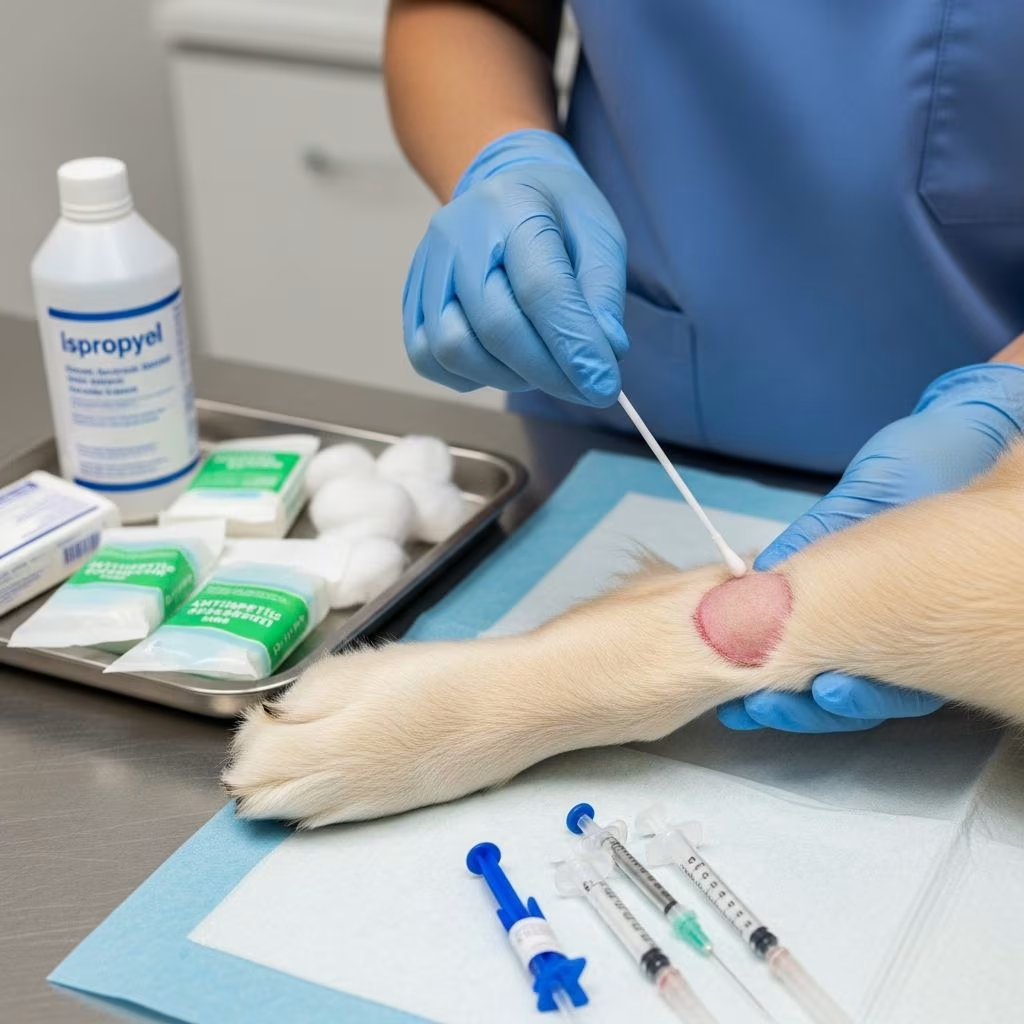
Alcohols, particularly ethyl and isopropyl varieties, play a crucial role in veterinary medicine by providing rapid germicidal action for skin preparation, instrument cleaning, and surface disinfection. These agents disrupt microbial cell structures effectively against many bacteria, viruses, and fungi, though they fall short against spores.
Mechanisms of Microbial Destruction
Primary aliphatic alcohols exert their effects by penetrating and destabilizing microbial cell membranes and viral envelopes. This leads to protein denaturation and coagulation, halting essential cellular processes and causing lysis. The presence of water enhances this denaturation, explaining why diluted solutions often outperform pure forms. Bactericidal efficacy peaks at warmer temperatures, around 30°C to 40°C, compared to cooler ranges.
Isopropyl alcohol demonstrates slightly superior surface tension reduction, enhancing its potency over ethanol in some scenarios. Both types inactivate enveloped viruses efficiently, including those relevant to veterinary outbreaks like feline calicivirus, where ethanol shows particular strength.
Optimal Concentrations and Application Times
For broad-spectrum activity, concentrations between 30% and 90% in water are standard, with 70% ethanol or 40%-60% isopropanol yielding peak results after at least one minute of contact. Higher dilutions paradoxically boost efficacy due to better protein unfolding in moist environments. Exceptions include MRSA control, demanding at least 90% ethanol.
| Alcohol Type | Optimal Concentration | Contact Time | Key Targets |
|---|---|---|---|
| Ethanol | 70% | ≥1 minute | Bacteria, enveloped viruses, fungi |
| Isopropanol | 40%-60% | ≥1 minute | Bacteria, some viruses |
| High-strength Ethanol | ≥90% | Variable | MRSA |
This table summarizes recommended parameters derived from clinical guidelines, ensuring maximal disinfection without residue issues.
Common Formulations in Animal Health
Rubbing alcohol, often a blend dominated by isopropanol (70%-99% ethanol or isopropanol base), serves as a versatile topical agent. It’s routinely applied post-scrub with chlorhexidine or iodine for surgical site prep in animals. Its colorless nature suits instrument disinfection, like thermometers, with rare contamination reports.
- Pre-diluted 70% isopropyl solutions for veterinarians and inseminators as bactericides.
- 99% isopropyl for external antiseptics or hide wetting in branding procedures.
- Full-strength topical use on wounds or for rubefacient effects.
Veterinary Applications Across Scenarios
Surgical and Wound Preparation
In preoperative routines, alcohols finalize skin disinfection after initial scrubs, minimizing transient flora transfer. Post-bite application in dogs or cats drastically cuts infection risks from oral bacteria. Ethanol-based sanitizers curb feline calicivirus spread, vital during outbreaks that could halt clinic operations.
Instrument and Equipment Hygiene
Alcohols excel for non-critical items like stethoscopes, scissors, and transducers, killing vegetative bacteria, mycobacteria, and most viruses swiftly. Oral and rectal thermometers benefit from quick dips, reducing cross-contamination. However, avoid for spore-laden surgical tools due to inefficacy.
Environmental and Hand Hygiene
Clinic surfaces and hand rinses leverage alcohols’ rapid action to stem nosocomial infections. Ethanol outperforms isopropanol against certain animal viruses, while both tackle gram-positive and negative bacteria effectively.
Spectrum of Activity: Strengths and Gaps
Alcohols rapidly eliminate vegetative bacteria (e.g., Staphylococcus aureus, E. coli), fungi like Cryptococcus neoformans, and enveloped viruses (herpes, influenza, HBV). Isopropanol edges out against some gram-negatives, and both handle tubercle bacilli quickly.
Limitations persist: no sporicidal power means unsuitability for sterilizing proteinaceous or spore-contaminated items, risking clostridial infections. Non-enveloped viruses like norovirus or poliovirus resist, and uncleaned semi-critical tools may retain microbes post-disinfection.
- Bactericidal: Vegetative forms in seconds at optimal strengths.
- Virucidal: Strong vs. lipophilic viruses; variable vs. hydrophilic.
- Fungicidal: Effective on tissue and culture phases of dimorphic fungi.
- Sporicidal: Ineffective—do not use for sterilization.
Safety Considerations for Animals and Handlers
Topical use dominates; oral ingestion of concentrates proves lethal due to systemic toxicity. Veterinary products specify external application, storage at 15-30°C, and tight sealing. Volatility demands fresh solutions for immersion, as evaporation alters concentrations.
Flammability necessitates caution near heat or flames. Skin irritation is minimal at recommended dilutions, but prolonged exposure may dry tissues. In intensive care, improper transducer disinfection has linked to outbreaks, underscoring cleaning prerequisites.
Comparative Efficacy in Practice
Studies affirm alcohols’ role in hand hygiene, reducing transient flora and hospital-acquired pathogens. Ethanol’s edge against FCV and MRSA positions it for high-risk settings. For semi-critical items, prior cleaning boosts outcomes, as residual bioburden survives otherwise.
Peer-reviewed data highlight immersion or rubbing methods, with 70% solutions curbing most contaminants but not guaranteeing sterility.
Guidelines for Best Practices
- Combine with mechanical cleaning for soiled surfaces or instruments.
- Apply at optimal dilutions and allow full contact time.
- Select ethanol for viral threats like calicivirus; isopropanol for general bactericidal needs.
- Avoid spore-prone applications; opt for sterilization alternatives.
- Monitor for evaporation in open containers and refresh as needed.
Recent Insights and Research
Updated infection control emphasizes alcohols’ rapid action in dynamic veterinary environments. CDC guidelines reinforce their tuberculocidal and fungicidal prowess while cautioning against overreliance for critical items. Recent reviews on semi-critical disinfection stress pre-cleaning to mitigate resistance concerns.
Frequently Asked Questions (FAQs)
Can alcohols replace sterilization in veterinary clinics?
No, due to lack of sporicidal activity, they suit antisepsis and low-level disinfection only.
What is the best alcohol for cat bite wounds?
Rubbing alcohol applied promptly post-bite effectively prevents bacterial ingress.
Are alcohol hand sanitizers safe for farm use?
Yes, they reduce pathogen transmission, especially ethanol-based for viral control.
How does temperature affect alcohol disinfection?
Warm conditions (30-40°C) accelerate killing rates significantly.
Is 99% alcohol better than 70%?
No, 70% is superior for most microbes due to enhanced protein denaturation.
Choosing the Right Alcohol Product
Veterinary suppliers offer tailored solutions: 70% isopropyl for routine antisepsis, 99% for specific external needs. Always verify animal-use labeling and avoid ingestion.
References
- Alcohols as Antiseptics and Disinfectants for Use With Animals — Merck Veterinary Manual. 2025. https://www.merckvetmanual.com/pharmacology/antiseptics-and-disinfectants/alcohols-as-antiseptics-and-disinfectants-for-use-with-animals
- Vetone Isopropyl Alcohol 70% Gallon — Heritage Animal Health. Accessed 2026. https://www.heritageanimalhealth.shop/products/vetone-isopropyl-alcohol-70-gallon
- Efficacy and effectiveness of alcohol in the disinfection of semi-critical materials — PMC/NCBI. 2015-10-15. https://pmc.ncbi.nlm.nih.gov/articles/PMC4623738/
- Chemical Disinfectants — Centers for Disease Control and Prevention (CDC). Updated 2024. https://www.cdc.gov/infection-control/hcp/disinfection-sterilization/chemical-disinfectants.html
- Ideal Animal Health 70% Isopropyl Alcohol — Tractor Supply Co. Accessed 2026. https://www.tractorsupply.com/tsc/product/ideal-animal-health-70-isopropyl-alcohol-1-gal



