

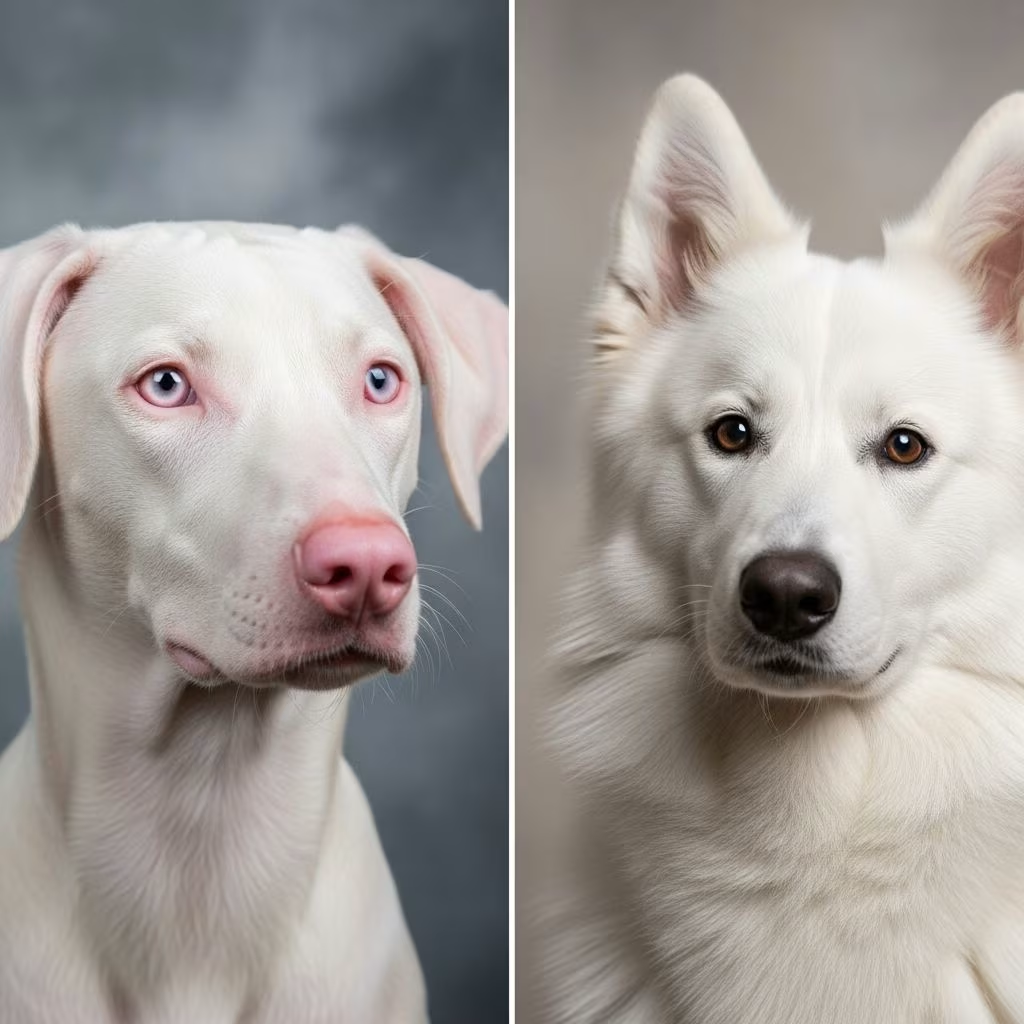
Dogs with completely white fur often spark curiosity among owners and enthusiasts, but not all white dogs are the same. **Albino dogs** lack melanin entirely due to a specific genetic mutation, while white dogs typically have normal pigmentation hidden by coat patterns or dilutions. Understanding these differences is crucial for health management and breeding decisions.
Understanding Pigmentation in Canine Coats
Canine coat colors stem from two primary pigments: eumelanin (producing black, brown, or gray shades) and phaeomelanin (responsible for reds, golds, and creams). White areas occur either from the absence of these pigments or their suppression in certain patterns.
Melanin not only colors fur but also protects skin and supports vision. In albino dogs, a mutation in the TYR gene disrupts tyrosinase, an enzyme essential for melanin production, resulting in no pigment anywhere—including eyes, nose, and skin. White dogs, however, produce melanin normally but express white through genes at loci like A (agouti), E (extension), or K (dominant black).
Genetic Foundations of Albinism
Albinism in dogs is rare and autosomal recessive, meaning a dog must inherit two copies of the mutated gene (one from each parent) to exhibit it. The primary culprit is the TYR gene on canine chromosome 9, where defects halt melanin synthesis entirely.
This contrasts with white coats, governed by multiple loci:
- A Locus (Agouti): Controls pigment distribution, leading to patterns where white dominates if phaeomelanin overrides eumelanin.
- E Locus (Extension): Alleles like ee prevent eumelanin in the coat, allowing phaeomelanin or white expression, but pigment remains in skin and eyes.
- K Locus: Dominant black (K^B) or brindle can interact to suppress color, mimicking white in some combinations.
Over 15 genes influence coat phenotypes, with epistatic interactions (one gene masking another) creating white appearances without true albinism.
How White Coats Form Without Albinism
Many breeds achieve white through selective breeding for extreme phaeomelanin or dilution genes. For example:
| Breed Example | Genetic Basis | Key Traits |
|---|---|---|
| White German Shepherd | Extreme piebald or Irish spotting (S locus) | Blue eyes possible, but pigmented nose/skin |
| Dalmatian | White base with black spots (double merle not involved) | Normal vision, pigmented non-white areas |
| West Highland White Terrier | High phaeomelanin intensity with dilution | Dark nose, healthy pigmentation |
| Samoyed | ee at E locus + other modifiers | Pigmented eyes and skin |
These dogs retain eumelanin in non-fur areas, unlike albinos. Dilution loci like D (MLPH gene) can lighten colors to pale shades resembling white, but pigment production persists.
Physical Characteristics: Spotting the Differences
Albino dogs display uniform white fur, pink skin, pink noses, and striking pinkish eyes due to visible blood vessels behind the retina. White dogs vary: some have black noses (e.g., Boxers), others blue eyes from merle patterns, but rarely all pink features.
- Albino: No pigment in iris (photophobia), translucent skin prone to sunburn.
- White: Pigmented skin/nose, normal eye color or breed-specific variations like heterochromia.
Vision in albinos suffers from nystagmus (eye wobbling) and foveal hypoplasia (underdeveloped central vision), impairing sight. White dogs generally have normal vision unless double merle breeding introduces unrelated issues.
Health Challenges for Albino Dogs
The lack of melanin exposes albino dogs to significant risks:
- Skin Sensitivity: Zero UV protection leads to sunburn, higher skin cancer rates like squamous cell carcinoma.
- Vision Impairments: Photophobia causes squinting in light; reduced acuity affects navigation.
- Hearing: Sometimes linked if albinism overlaps with other mutations, though not universal.
- Thermoregulation: Pale skin may hinder heat dissipation in hot climates.
Owners must provide shade, sunscreen formulated for pets, and UV-protective clothing. Regular vet checks for skin lesions are essential.
Health Considerations for White-Coated Dogs
White dogs face fewer universal issues but breed-specific concerns arise:
- Deafness: Common in white Boxers or Dalmatians due to piebald genes destroying ear pigment cells needed for hearing nerves.
- Merle-Related Problems: Double merle breeding (not true white) causes blindness and deafness—avoided by responsible ethics.
- Skin Cancer: Less severe than albinos, but light skin still needs monitoring in sunny areas.
Overall, white dogs enjoy better resilience thanks to retained melanin.
Breeding Implications and Ethical Choices
Breeding albinos is discouraged due to welfare concerns—homozygous offspring suffer health deficits. Carriers (heterozygous) show no symptoms but pass the gene 50% of the time. Genetic testing via labs like UC Davis identifies risks at loci including TYR for albinism and others for white patterns.
For white coats, calculators predict outcomes based on parental genotypes (e.g., Bb at B locus for chocolate dilution). Responsible breeders prioritize health over color, avoiding double recessives that amplify issues.
Caring for Your Pale-Furred Companion
Tailor care to type:
For Albino Dogs:
- Apply pet-safe sunscreen daily on exposed skin.
- Use tinted goggles or keep indoors during peak sun (10 AM-4 PM).
- Provide antioxidant-rich diets to support eye health.
- Monitor for unusual moles or eye redness.
For White Dogs:
- Regular ear checks for infection-prone breeds.
- Sun protection if skin is thin.
- Balanced exercise to maintain hearing-related nerve health.
Both benefit from hypoallergenic shampoos to protect sensitive skin.
Popular Breeds and Their White Variations
Breeds showcasing white without albinism include:
- Bichon Frise: Fluffy white from phaeomelanin extremes.
- Maltese: Pure white silk via selective dilution.
- American Eskimo Dog: White with pigmented points.
- Bull Terrier (White): Extreme piebald, alert black eyes.
These thrive with standard care, proving white beauty need not mean fragility.
Frequently Asked Questions (FAQs)
Can albino dogs live normal lives?
With dedicated care—sun protection, vision aids—they can enjoy good quality of life, though not without adaptations.
Are all white dogs deaf?
No, only certain breeds/genotypes like piebald whites carry higher risk; many hear perfectly.
Is breeding for white coats safe?
Yes for most, if avoiding albinism or double merle; genetic screening ensures health.
Do albino dogs have blue eyes?
No, their eyes appear pink/red from visible vessels, unlike piebald blue-eyed whites.
How to test for albinism risk?
DNA tests from vet labs analyze TYR and coat loci for precise predictions.
Conclusion: Informed Ownership Matters
Distinguishing albino from white dogs empowers better care. While albinos demand extra vigilance, white-coated breeds offer stunning aesthetics with minimal drawbacks. Prioritize genetics and health for happy, healthy pups.
References
- Dog coat genetics — Wikipedia. 2023-10-01. https://en.wikipedia.org/wiki/Dog_coat_genetics
- Dog Coat Color and Type — Veterinary Genetics Laboratory, UC Davis. 2024-01-15. https://vgl.ucdavis.edu/resources/dog-coat-color
- Dog Color Genetics Calculator — Supreme Dog Garage. 2023-05-20. https://www.supremedoggarage.com/dog-color-genetics-calculator/
- Genetics Basics: Coat Color Genetics in Dogs — VCA Animal Hospitals. 2023-11-10. https://vcahospitals.com/know-your-pet/genetics-basics-coat-color-genetics-in-dogs
- Understanding Dog Colour Genetics — MyDogDNA. 2022-08-05. https://mydogdna.com/blogs/news/understanding-dog-colour-genetics
- Dog Coat Colour Genetics — DogGenetics.co.uk. 2024-02-12. http://www.doggenetics.co.uk
- Science Corner: Coat Color Genetics 101 — Embarkvet. 2023-07-18. https://embarkvet.com/resources/science-corner-coat-color-genetics-101-2/



