

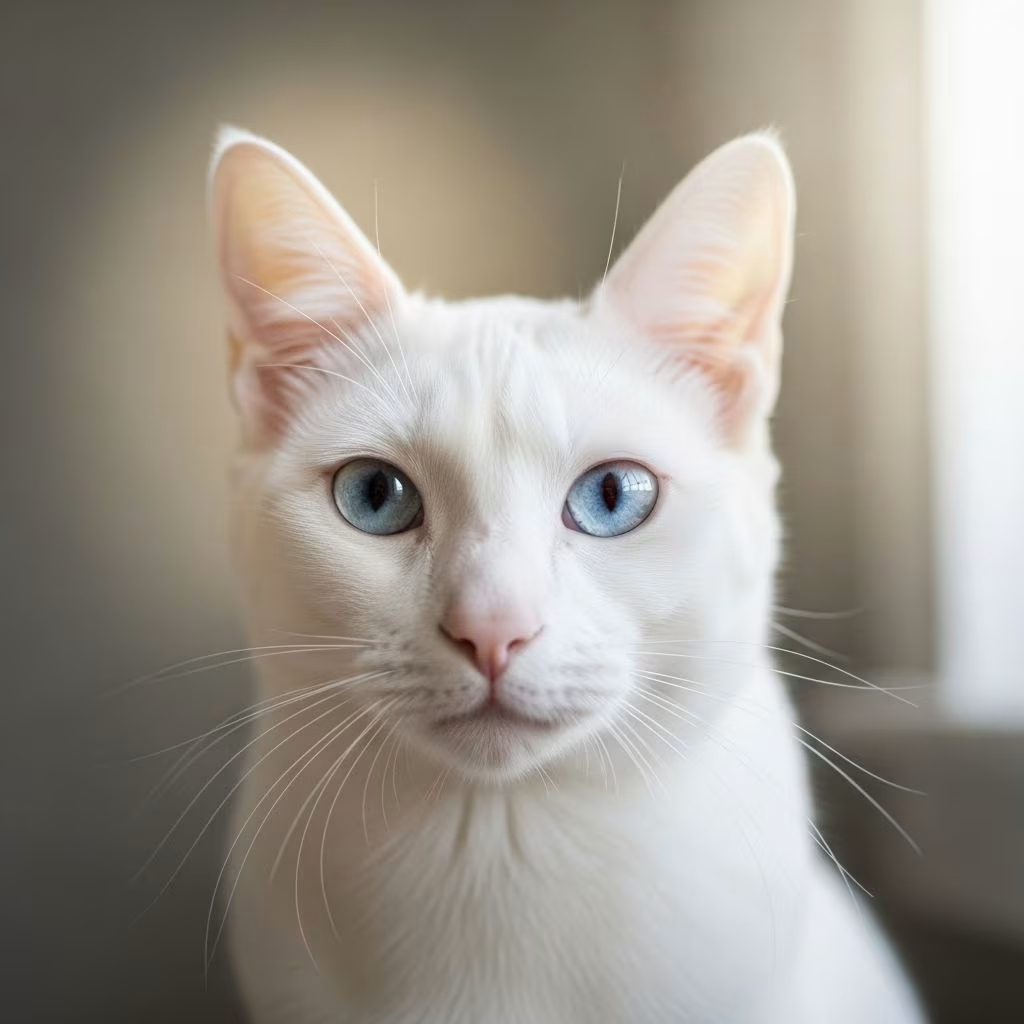
Albino cats captivate with their pristine white coats, pink skin, and striking blue or pinkish eyes, resulting from a rare genetic lack of melanin pigment. Unlike common white cats, albinism stems from specific mutations making these felines truly unique but vulnerable.
What Is an Albino Cat?
An **albino cat** suffers from a hereditary genetic disorder causing complete lack of pigmentation in fur, skin, and eyes. This stems from mutations in the **tyrosinase (TYR) gene**, which produces enzymes essential for melanin creation—the pigment responsible for color in mammals. Without melanin, albino cats exhibit stark white fur, pinkish skin and noses, and eyes that appear pale blue or pinkish due to visible blood vessels.
Albinism is **autosomal recessive**, meaning a kitten must inherit the mutated gene from both parents to express the phenotype. Carriers (with one mutated gene) appear normal but can pass it on. Feline albinism often links to the TYR gene’s c.936delC mutation, producing a shortened protein and full albino traits. This rarity distinguishes albino cats from the more prevalent white-coated varieties.
Albino Cat Genetics: The Science Behind the White Coat
Cat coat colors are governed by the **C locus** (color gene) allelic series: C (full color, dominant) > cb (Burmese/sepia) = cs (Siamese/point) > ca (temperature-sensitive albino) > c (true albino, recessive). True albinism requires **c/c** genotype, yielding pink-eyed or blue-eyed whites.
- N/N genotype: Normal pigmentation; cannot produce albino offspring.
- A/N (or ca/N, c/N): Carrier, non-albino but transmits mutation to 50% offspring. Carrier-carrier matings yield 25% albinos.
- A/A (c/c): Full albino; all offspring carry or are albino.
Siamese and Oriental breeds carry higher risks due to historical inbreeding of colorpoint alleles (cs, cb), sometimes introducing ca or c. A UC Davis test detects the TYR mutation for $44, aiding breeders. Pointed patterns like Siamese are partial albinism forms—melanin activates only in cooler body areas (ears, tail)—but true albinos lack it everywhere.
Health Issues in Albino Cats
Absence of melanin heightens **sun sensitivity**; UV exposure risks severe sunburns, skin cancer (squamous cell carcinoma), and eye damage on pink skin. Owners must limit outdoor time, using high-SPF cat-safe sunscreens.
**Vision problems** are common: photophobia (light sensitivity), nystagmus (involuntary eye movement), or strabismus due to underdeveloped retinas. Blue eyes lack pigment protection, increasing squinting and glare issues.
Albinos face **higher cancer rates**, especially skin tumors, and potential **immune weaknesses** from melanin-deficiency links to broader health vulnerabilities. No deafness association exists, unlike dominant white cats. Regular vet checks for skin/eye cancers are vital; life expectancy matches normals with proper care.
| Health Risk | Cause | Management |
|---|---|---|
| Sunburn/Skin Cancer | No melanin protection | Indoor living, sunscreen, hats |
| Vision Impairment | Pigment-lacking eyes | Dim lighting, vet eye exams |
| Photophobia | Light sensitivity | Shaded environments |
| Immune Issues | Genetic factors | Balanced diet, vaccinations |
Albino Cat Care Guide: Keeping Your Feline Safe
Provide **indoor-only habitats** to shield from sun; install UV-blocking window films. Use **broad-spectrum sunscreens** formulated for pets on ears, nose, and sparse-fur areas.
For **eye comfort**, maintain dim, consistent lighting; avoid direct sunlight or bright bulbs. High-antioxidant diets support eye health; omega-3 supplements may aid.
**Diet and grooming:** Feed premium foods rich in taurine and antioxidants for skin/immune support. Gentle brushing prevents matting on fine white fur; monitor for skin irritations. Annual vet visits include skin scrapes, eye exams, and cancer screenings. Hydration and parasite control are crucial, as albinos may be more susceptible.
Enrichment through toys, scratching posts, and play combats boredom in indoor settings. With diligent care, albino cats thrive as loving companions.
Breeds and Types of Albino Cats
Albinism appears sporadically, not tied to specific breeds, but higher in **Siamese, Tonkinese, Orientals** from colorpoint ancestry. Rare “albino Siamese” often trace to inbred Chocolate Points introducing recessive white.
- True (c/c) Albinos: Pure white, pink/blue eyes; rarest.
- Temperature-Sensitive (ca/ca): White with faint points; pink-eyed.
- Recessive White Mimics: Blue-eyed whites from spotting genes, not true albinos.
Breeds like American Shorthair or mixed cats occasionally produce albinos via carrier parents. Genetic testing confirms status.
Albino Cat vs. White Cat: Key Differences
Many confuse albinos with white cats, but genetics differ sharply.
| Feature | Albino Cat | White Cat |
|---|---|---|
| Genetics | TYR mutation (recessive albinism) | Dominant white (W gene) or spotting overrides color |
| Skin/Nose | Pink (no pigment) | Pigmented (pink or dark) |
| Eyes | Pale blue/pinkish (unpigmented) | Any color, often blue with deafness risk |
| Sun Sensitivity | High (cancer risk) | Low-moderate |
| Vision | Often impaired | Normal |
White cats’ W gene masks colors but retains melanin elsewhere; albinos lack it entirely. Blue-eyed whites may deafen (up to 80% if homozygous), unlike albinos.
Fun Facts About Albino Cats
- Rarest domestic cat type; incidence under 1%.
- Siamese points darken post-shave due to cooler skin.
- Historical ‘Chinese White’ imports spread genes.
- Not blind—eyes function, just light-sensitive.
- Can be any personality; not fragile by nature.
Frequently Asked Questions (FAQs)
Are albino cats rare?
Yes, extremely rare due to recessive inheritance needing both parents as carriers.
Do albino cats have health problems?
Primarily sun sensitivity, skin cancer risk, and vision issues from no melanin.
Can albino cats go outside?
Avoid direct sun; supervised shaded time only with protection.
Are albino cats blind?
Not blind, but often photophobic with potential nystagmus.
How to test for albino carrier status?
UC Davis Veterinary Genetics Lab offers TYR gene test for $44.
What’s the difference between albino and white cats?
Albinos lack all melanin (pink skin/eyes); whites have it but masked.
References
- Albino | Veterinary Genetics Laboratory — UC Davis. Accessed 2026. https://vgl.ucdavis.edu/test/albino-cat
- Albinism in Cats: How It Can Affect Your Feline Friend — PetCareRx. Accessed 2026. https://www.petcarerx.com/article/albinism-in-cats-how-it-can-affect-your-feline-friend/6472
- RECESSIVE WHITE / ALBINO IN CATS — MessyBeast. Accessed 2026. http://messybeast.com/recessive-white.htm
- The Difference Between an Albino Cat & a White Cat — Catster. Accessed 2026. https://www.catster.com/lifestyle/albino-cat/
- Cat coat: Siamese, point coloration, and albino cats! — The Little Carnivore. Accessed 2026. https://thelittlecarnivore.com/en/blog/cat-coat-siamese-point-coloration-and-albinos
- Cat Genetics for Writers & Artists part 7: Albino & Colorpoint — YouTube (Video). Accessed 2026. https://www.youtube.com/watch?v=ImTEC7CQniU
- Albinism in cats — Memorial University of Newfoundland. Accessed 2026. https://www.mun.ca/biology/scarr/Albinism_in_cats.html



