

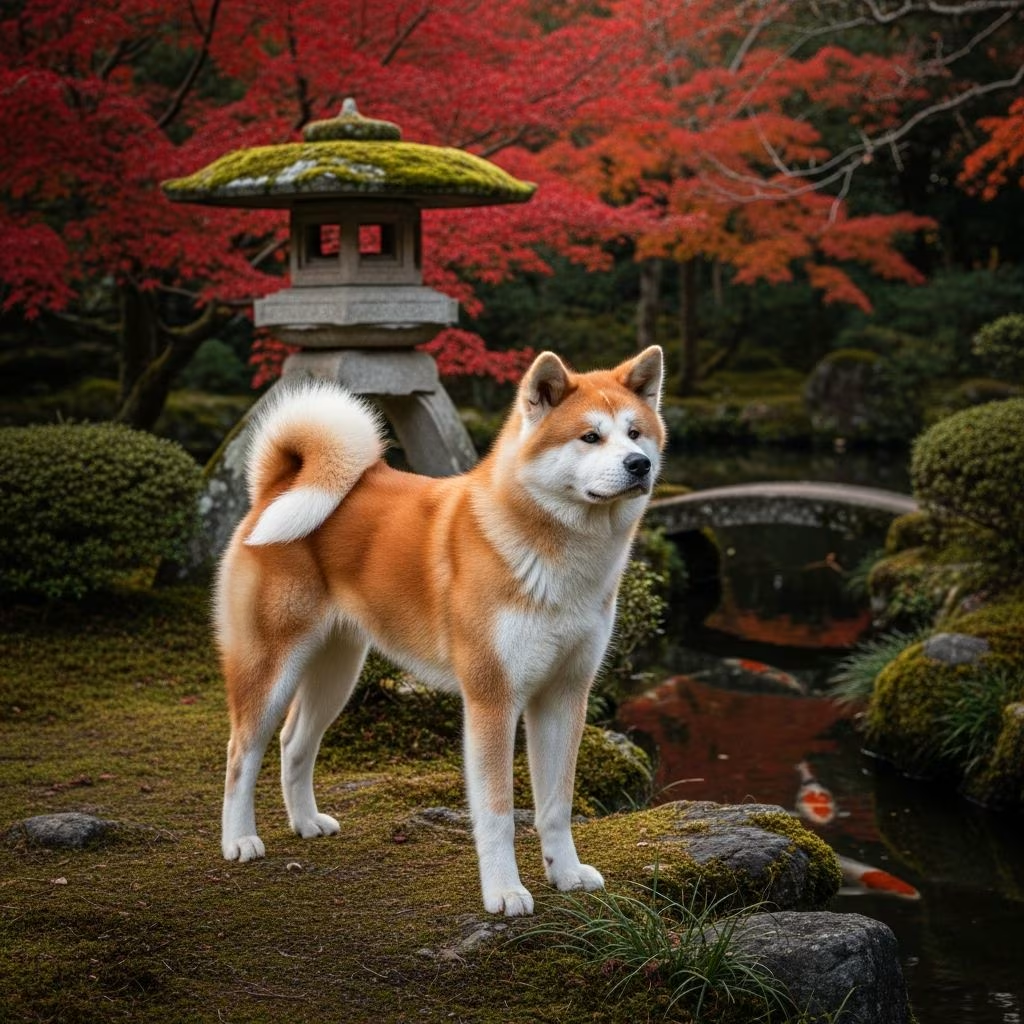
The Akita stands as one of the most iconic dog breeds, embodying the spirit of ancient Japan through its majestic presence, unyielding loyalty, and protective nature. Originating from the rugged mountains of northern Japan, this powerful working dog has evolved from a fierce hunter to a cherished family companion worldwide.
Ancient Roots in the Japanese Mountains
The story of the Akita begins over a thousand years ago in the Akita region of Japan, where early ancestors known as Matagiinu served as essential hunting partners. These medium-sized dogs were bred for their fearlessness, tracking large game like bears and wild boars through treacherous terrain. Hunters valued their independence, as they could pursue prey autonomously while using bow and arrow from a distance.
During the Edo period (1603-1867), regional unrest led nobility to repurpose these dogs for guarding properties, selectively breeding them larger for intimidation. This era also saw the rise of dogfighting among warriors, further shaping the breed’s robust physique.
Evolution Through Crossbreeding and Challenges
As Japan opened to Western influences in the Meiji (1868-1912) and Taishō (1912-1926) eras, breeders crossed Matagiinu with larger foreign breeds like Tosa Inu, St. Bernard, Great Dane, Mastiff, and Bull Terrier to enhance size for fighting and guarding. These “Shin Akitainu” (new Akita dogs) developed heavier builds but lost traditional spitz features such as erect ears and curled tails.
Nationalism in the early 1900s prompted efforts to restore pure Nihonken traits, rejecting foreign influences like drop ears and wrinkled faces. World War II nearly eradicated the breed; food shortages and military use of their fur for uniforms decimated populations.
| Era | Key Developments | Challenges |
|---|---|---|
| Edo Period | Guarding, early fighting | Civil unrest |
| Meiji/Taishō | Crossbreeding for size | Loss of native traits |
| Post-WWII | Breed revival efforts | Near extinction |
The Legendary Hachikō and Global Recognition
No tale captures the Akita’s devotion like Hachikō, who waited daily at a Tokyo station for his deceased owner from 1925 to 1935. This story sparked national pride, leading Japan to declare the Akita a Natural Monument in 1931 and establish a breed standard in 1934.
Post-war, figures like Morie Sawataishi bred pure lines, saving the breed. The American Kennel Club (AKC) recognized it in 1972 as a Working Group member, distinguishing Japanese Akita Inu from American Akitas, which retained some larger influences.
Physical Characteristics and Breed Standards
Akitas are large, muscular dogs with a dignified stature. Males stand 26-28 inches tall, weighing 100-130 pounds; females are slightly smaller at 24-26 inches and 70-100 pounds. Their double coat comes in colors like brindle, pinto, and solid shades, with a thick undercoat for harsh winters and erect, triangular ears framing almond-shaped eyes.
- Head: Broad with a fox-like face, minimal wrinkles.
- Tail: Curled over the back, a hallmark trait.
- Coat: Short to medium, weather-resistant.
- Gait: Powerful and alert.
Disqualifications in standards include drop ears or uncurled tails, preserving the breed’s noble silhouette.
Temperament: Dignified Protectors
Akitas exude calm dignity but remain vigilant guardians. Deeply loyal to family, they can be aloof with strangers, reflecting protective instincts honed over centuries. Their intelligence demands consistent leadership; without it, dominance issues may arise.
They bond strongly, often choosing one primary person, and show gentleness with children in their household. However, early socialization is crucial due to potential dog aggression, especially same-sex pairings.
Training and Socialization Essentials
Training Akitas requires patience and firmness. Positive reinforcement works best for their sensitive nature, starting from puppyhood. Obedience classes build impulse control vital for their strength.
- Expose to diverse environments early.
- Use short, frequent sessions to leverage high focus.
- Teach boundaries to channel protective drive.
- Prevent resource guarding through structured feeding.
Advanced roles include therapy, agility, and Schutzhund, showcasing versatility beyond companionship.
Health Considerations and Lifespan
Akitas live 10-12 years but face breed-specific issues like hip dysplasia, progressive retinal atrophy, and autoimmune disorders. Regular vet checks, balanced diet, and moderate exercise mitigate risks.
- Common Conditions: Hip/elbow dysplasia, hypothyroidism, bloat.
- Preventive Care: Annual screenings, weight management.
Grooming and Daily Care Routine
The dense coat sheds heavily twice yearly; weekly brushing prevents matting. Bathe sparingly to preserve oils. Check ears weekly, trim nails monthly, and maintain dental hygiene.
Exercise needs 30-60 minutes daily: walks, hikes, or play. Secure fencing is essential, as their hunting heritage sparks escape artistry.
Akita in Modern Life: Roles and Lifestyle Fit
Today, Akitas thrive as family protectors, therapy dogs, and competitors in shows, tracking, and weight pulling. They suit active owners with space, not apartments, and adapt well to cold climates.
Adopting requires commitment to training; rescues often have adults suited for experienced homes.
Comparing Akita Inu and American Akita
| Trait | Akita Inu (Japanese) | American Akita |
|---|---|---|
| Size | Slightly smaller, refined | Larger, bear-like |
| Coat Colors | Limited (red, white, brindle) | More variety (pinto, black mask) |
| Temperament | More reserved | Bolder, dominant |
| Recognition | FCI Foundation Stock | AKC Working Group |
Frequently Asked Questions (FAQs)
Are Akitas good with children?
Yes, with proper socialization; they are gentle but supervise due to size.
Do Akitas get along with other pets?
Often not with same-sex dogs; introduce carefully.
How much exercise do Akitas need?
1-2 hours daily to prevent boredom.
Is the Akita hypoallergenic?
No, heavy shedding.
What’s the best food for Akitas?
High-protein kibble for large breeds, portion-controlled.
References
- History & Characteristics of Akita Dog Breed — Japan Fans. 2023. https://japanfans.nl/en/history-and-characteristics-of-akita-dog-breed/
- Breed History — Japanese Akitainu Club of America. 2024. https://akita-inu.com/breed-history/
- Akita History: Hachikō & the Revival of the Devoted Japanese Breed — American Kennel Club. 2023-05-15. https://www.akc.org/expert-advice/dog-breeds/akita-history-hachiko-japanese-breed/
- Akita Inu History: Origins, Culture, and Evolution — The Akita Inu. 2024. https://theakitainu.com/the-akita-inu-history/
- History of the Akita Breed — Akita Club. 2023. https://akitas.org/the-akita-breed/akita-breed-history/
- Akita Breed Guide: History, Characteristics & Care — Pawlicy Advisor. 2025-01-10. https://www.pawlicy.com/blog/akita-dog-breed/
- Akita (dog breed) — Wikipedia (citing primary sources). 2026-01-20. https://en.wikipedia.org/wiki/Akita_(dog_breed)



