

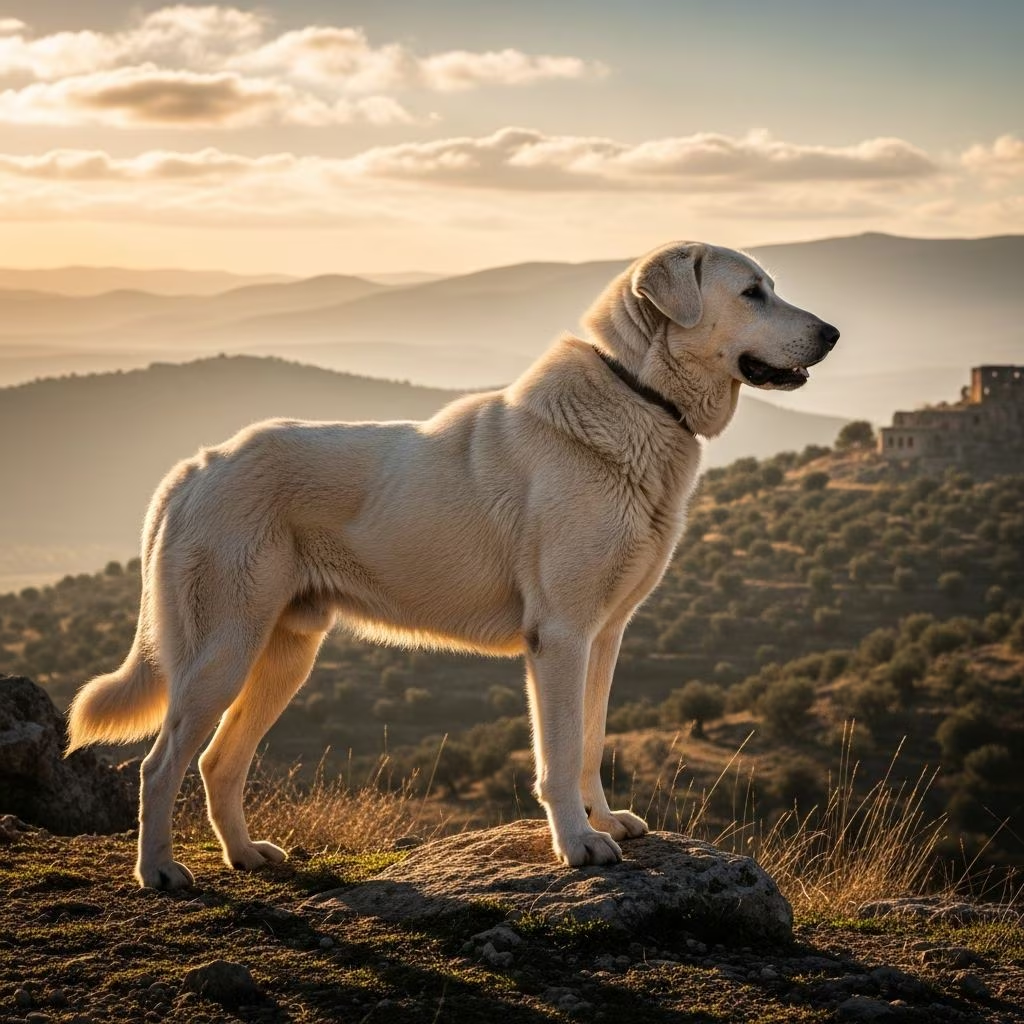
The Akbash Dog represents one of the world’s most distinctive and ancient livestock guardian breeds, originating from the mountainous and plains regions of western Turkey. These imposing white dogs embody a rare combination of physical and behavioral characteristics that have made them invaluable to shepherds for centuries. Today, while still serving their traditional role in protecting flocks, Akbash Dogs have gained recognition as exceptional family companions and estate guardians in Western countries. Understanding this remarkable breed requires examining its historical background, distinctive physical attributes, temperament characteristics, and care requirements.
Ancient Origins and Historical Development
The Akbash Dog possesses one of the most obscure yet fascinating histories among modern dog breeds. According to Turkish historical sources, the breed dates back at least 3,000 years, making it one of the oldest continuously developed livestock guardian breeds in the world. The exact origins of the Akbash remain unclear, but breed experts believe that the dogs were intentionally developed to blend visually with white sheep flocks, thereby avoiding becoming the primary targets of predators. This strategic coloration represents a deliberate breeding choice rather than coincidence, reflecting the sophisticated understanding ancient Turkish shepherds possessed regarding predator behavior and canine genetics.
The Akbash Dog remained relatively isolated within Turkey until the twentieth century, with the breed concentrated primarily in the provinces of Afyon, Ankara, Eskişehir, and Manisa. This geographic limitation meant that breeding lines developed independently across different regions, with dogs traveling only as far as their flocks moved seasonally. The lack of transportation between villages and mountain pastures ensured that distinct bloodlines emerged, each adapted to the specific environmental and predatory challenges of their region.
International recognition of the Akbash as a distinct breed came through the efforts of Americans David and Judy Nelson, who encountered the dogs while stationed in Turkey as part of the diplomatic corps in the 1970s. The Nelsons’ fascination with these white guardians led them to conduct extensive documentation, observation, and even breeding of test litters within Turkey to confirm that the Akbash represented a genuinely separate breed from other Turkish guardian dogs. When the Nelsons returned to the United States, they brought the first Akbash Dog in 1978, followed by dozens more, establishing the foundation stock for breeding programs in North America.
Establishing the Breed in Western Countries
The importation of Akbash Dogs to North America led to the establishment of formal breed organizations. In 1979, following the arrival of the first Akbash puppies from Turkish breeding stock, the Akbash Dog Association International (ADAI) and its North American affiliate, the Akbash Dog Association of America (ADAA), were founded. These organizations took careful measures to maintain breed purity by importing dogs from different Turkish villages and unrelated bloodlines, recognizing that genetic diversity among these regional populations contributed to the breed’s distinctive characteristics.
A pivotal moment in the breed’s American history occurred in the early 1980s when the United States Department of Agriculture (USDA) recognized the Akbash Dog’s exceptional capabilities and incorporated the breed into its Predator Control Program. This official acknowledgment by a government agency validated what livestock producers had already begun to appreciate: that Akbash Dogs possessed unique traits and predictable behaviors that set them apart from other guardian breeds. The USDA’s adoption of Akbash Dogs for predator control purposes provided scientific credibility to the breed’s guardian abilities and contributed to its growing recognition among agricultural professionals.
Physical Characteristics and Distinctive Appearance
The Akbash Dog presents a striking and memorable appearance that immediately distinguishes it from other large breeds. These are large, long-legged, lean, and muscular dogs characterized by an alert and regal bearing. The breed standard describes the Akbash as slightly longer in proportion than tall, with males typically standing taller and weighing more than females. One of the most consistent breed features is the all-white or cream-white coat color, combined with dark eyes, nose, and skin pigmentation that provides visual contrast.
The head structure of the Akbash exemplifies the breed’s unique genetic heritage. The dogs possess a wedge-shaped head with pendant ears that hang naturally alongside the skull. The long tail, typically carried in a curl over the back during movement or excitement, contributes to the breed’s distinctive silhouette. The chest is deep and moderately wide, with well-sprung ribs that flatten to form a deep body extending almost to the elbows. The back features a slight but definite arch over the loin, blending into a long, well-muscled, sloping croup with a tucked-up flank that reveals gazehound influence.
| Physical Characteristic | Description |
|---|---|
| Size | Large, imposing frame with considerable strength |
| Coat Color | White or cream-white throughout |
| Head Shape | Wedge-shaped with pendant ears |
| Body Proportion | Slightly longer than tall with deep chest |
| Leg Structure | Long legs enabling speed and agility |
| Tail Carriage | Long, typically curled over back when moving |
Genetic Heritage: Mastiff and Gazehound Blend
One of the most scientifically interesting aspects of the Akbash Dog breed is its remarkable combination of genetic traits from two seemingly incompatible ancestral groups. The breed exhibits a unique mixture of Mastiff and gazehound characteristics that breed experts have worked diligently to maintain. The gazehound influence manifests in the breed’s long legs, deep chest, arched loin, shallow lower jaw, tucked-up flank, speed, and agility. These features suggest that ancient Akbash breeders valued the pursuit capabilities and athleticism necessary to chase fleet-footed predators across mountainous terrain.
Conversely, the Mastiff contribution appears in the breed’s overall height, weight, broader head structure, and impressive impression of power. This genetic balance creates dogs capable of challenging large predators like wolves, bears, and cougars while maintaining the speed necessary to pursue lighter, faster prey. According to breed standards, preference should be given to Akbash Dogs who exhibit perfect balance between these two ancestral types, as this equilibrium is fundamental to the breed’s ability to perform its traditional guardian function.
Temperament and Behavioral Characteristics
The temperament of the Akbash Dog reflects generations of selective breeding for specific behavioral traits essential to livestock guardian work. These dogs are characterized by calm, quiet, and steady temperaments combined with the independence necessary to make autonomous decisions regarding potential threats. Unlike herding dogs that require constant direction from handlers, Akbash Dogs possess the cognitive capacity to assess changing circumstances and respond appropriately without human direction.
Within their family units, Akbash Dogs display remarkable gentleness and affection. These dogs are loyal, gentle, and quietly affectionate with their own families, including children and other family pets. This dual nature—fierce protector to outsiders, gentle companion to family members—represents a deliberate breeding goal that distinguishes the Akbash from some other guardian breeds. The dogs demonstrate an exceptional ability to bond with their charges, whether sheep in a pastoral setting or family members in a domestic environment. This bonding capacity means that Akbash Dogs rarely abandon their responsibilities by wandering away from the flock or home.
However, prospective owners should understand that Akbash Dogs remain aloof and suspicious toward strangers and may react aggressively to unfamiliar dogs entering their territory. This protective instinct, while valuable in a guardian context, requires thoughtful management in domestic settings. Early socialization and proper training are essential to ensure that these powerful dogs develop appropriate responses to normal household interactions. When properly socialized and trained, the Akbash Dog transforms into an ideal family pet and home guardian, combining protective instincts with reliable behavior in varied situations.
Livestock Guardian Capabilities
The primary purpose for which the Akbash Dog was developed—protecting livestock from predators—remains one of the breed’s defining characteristics. These dogs possess the physical and psychological attributes necessary to challenge predators ranging from coyotes to bears and cougars. The Akbash Dog’s effectiveness as a livestock guardian stems from multiple factors working in concert:
- Adequate size, strength, and courage to confront large predators directly
- Speed and agility enabling pursuit of fleet predators across varied terrain
- Strong bonding ability with livestock, preventing wandering behavior
- Innate dislike of stray dogs that might injure vulnerable animals
- Capacity to assess threats independently and respond appropriately
Early experiences with Akbash Dogs in the USDA Predator Control Program confirmed that the breed possessed unique traits setting it apart from other guardian breeds. Livestock producers recognized that while some common guardian breeds were prone to leaving their stock during heat of the day, Akbash Dogs demonstrated remarkable dedication to their protective responsibilities. Additionally, while not typically friendly to strange humans, Akbash Dogs proved less aggressively inclined toward people than some competing guardian breeds, making them more manageable for ranch operations.
Care Requirements and Considerations
Potential owners considering an Akbash Dog should understand the breed’s specific care needs and environmental requirements. These large, athletic dogs require adequate space and regular exercise to maintain physical health and mental well-being. The breed’s heritage as a free-roaming guardian suggests that Akbash Dogs thrive best with access to outdoor space where they can patrol and oversee their family or property.
Given the breed’s independent nature and protective instincts, training and socialization must begin early and continue throughout the dog’s life. Professional guidance from trainers experienced with guardian breeds can prove invaluable in channeling the Akbash Dog’s natural instincts appropriately. The breed responds well to basic training when approached with consistency and respect for their independent decision-making capabilities.
Health considerations for the Akbash Dog are generally positive, as the breed was developed through natural selection in demanding environments rather than artificial breeding for exaggerated traits. However, prospective owners should work with reputable breeders who maintain detailed pedigree records and prioritize genetic health through careful breeding practices.
Suitability as Family Companions
Beyond their traditional role as livestock guardians, Akbash Dogs have proven remarkably suitable as home companions and estate guardians. The breed’s inherent loyalty, combined with their gentle nature when properly socialized, makes them exceptional family pets for households seeking a protective yet affectionate companion. Families with children often find that Akbash Dogs demonstrate remarkable patience and tolerance, though supervision remains appropriate given the dogs’ large size and strength.
The Akbash Dog’s quiet, calm temperament distinguishes it from more vocal guardian breeds, making it a more acceptable addition to suburban or semi-rural homes where excessive barking might concern neighbors. This behavioral restraint, combined with the dogs’ devotion to their family members, has contributed to increasing popularity among Western dog enthusiasts.
Preserving Breed Integrity and Diversity
One of the ongoing challenges facing Akbash Dog breeders involves maintaining breed purity while ensuring genetic diversity. Early breed club efforts focused on importing dogs from different Turkish villages, recognizing that geographic separation had created distinct but compatible bloodlines. This approach contrasts with some other breeds where extreme inbreeding within small founder populations has created genetic bottlenecks and health problems.
Responsible breeders affiliated with the Akbash Dog Association maintain detailed pedigree records, carefully tracking genetic relationships to prevent problematic inbreeding while preserving the breed’s distinctive characteristics. This commitment to both purity and diversity represents a valuable model for breed preservation in the modern era.
Frequently Asked Questions
How large do Akbash Dogs typically grow?
Akbash Dogs are large dogs with males typically standing taller and weighing more than females. The exact size varies based on individual dogs and breeding lines, but they are imposing dogs capable of commanding respect through their physical presence alone.
Are Akbash Dogs good with children?
Yes, Akbash Dogs are gentle and affectionate with their own family members, including children. However, early socialization and supervised interaction remain important given the dogs’ large size and strength.
Do Akbash Dogs require professional training?
While Akbash Dogs respond well to basic training, their independent nature means that professional guidance from trainers experienced with guardian breeds can be particularly valuable.
How much exercise do Akbash Dogs need?
These athletic dogs benefit from regular exercise and access to outdoor space where they can engage in natural patrol and guardian behaviors.
Are Akbash Dogs suitable for apartment living?
The breed’s size and outdoor heritage suggest that Akbash Dogs are better suited to homes with adequate outdoor space rather than apartment environments.
References
- The First Akbash Dogs in the U.S. — Akbash Club. https://www.akbashclub.com/history
- Breed Standards: Akbash — United Kennel Club (UKC). https://www.ukcdogs.com/akbash
- Akbash Dog Facts — Wisdom Panel. https://www.wisdompanel.com/en-us/dog-breeds/akbash
- What Is the History of the Akbash? — Dog Academy. https://dogacademy.org/breeds/akbash
- Akbash — Wikipedia. https://en.wikipedia.org/wiki/Akbash



