

Airlines That Will Let You Fly With A Pet Bird
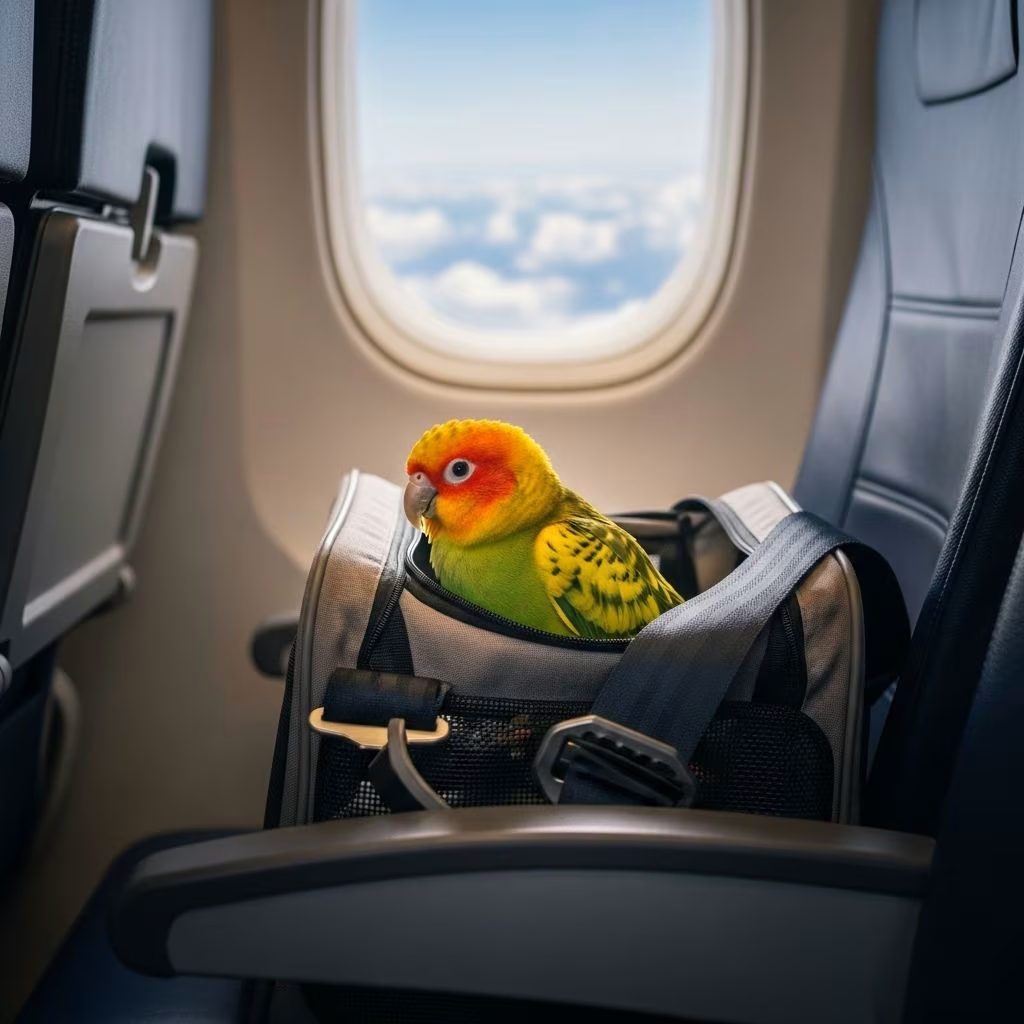
Nothing beats airline travel for its speed and convenience. So it’s not surprising that many pet parents are choosing to bring their birds along with them. The good news is that it’s absolutely safe to fly with your pet bird, according to avian veterinary experts. However, if you’re flying with your pet bird, you need to prepare thoroughly. Not every airline allows parrots to come onboard with their parents. And even when you can carry on your bird, all airlines have restrictions on when and where you can travel.
Plus you’ll have to pay—many airlines charge extra fees that can set you back on average $100 per flight per pet. Here is everything you need to know about flying with your pet bird so both of you can have a safe and happy trip.
Preparing Your Pet Bird for Air Travel
Schedule a Veterinary Checkup
Before you pack your bags and head to the airport with your feathered companion, make an appointment with your avian veterinarian. One of the most important reasons to take your pet for a checkup is to make sure your bird is travel-ready. Many airlines require recent health certificates when you’re flying with your pet bird—even on domestic flights. Your veterinarian will assess your bird’s overall health and ensure they’re fit for the stress of air travel.
During your visit, discuss your travel plans with your vet. They can provide guidance on any medications your bird might need, signs of travel stress to watch for, and any specific concerns related to your bird’s breed or health status. Additionally, if you’re traveling internationally, your vet can help you obtain the necessary documentation, including CITES certificates if your bird species requires them.
Review Airline Regulations
Even airlines that allow parrots onboard may have blackout dates where no pets are allowed (like holidays) or strict rules about the size of carriers and how many pets you can bring onboard. If you already looked at the airline’s policies when you booked your flight, double-check before you go to make sure the rules haven’t changed. Each airline has its own specific requirements regarding carrier dimensions, bird size, and cabin location restrictions.
Contact your airline directly to confirm their current pet policies. Ask about their first-come, first-served booking system for pets, as many airlines limit the number of birds allowed on each flight. Confirm whether your bird meets their size and age requirements, and inquire about any breed-specific restrictions.
Flying With Your Pet Bird In Cargo
If you can’t bring your bird onboard with you, they’ll have to fly cargo. And that’s where it gets tricky, because you must work with the airlines to make sure your pet is safe. First, make sure the cargo is temperature controlled, and check the temperature for the hold area, where most pets fly. Temperature regulation is absolutely critical for bird safety during air travel.
Temperature Control and Loading Procedures
Next, check to see what the airline’s rules are for transporting your parrot to the plane. Some airlines will load pets last—and unload them first—so they’re not waiting around on the tarmac while baggage is being loaded and unloaded. This minimizes stress and reduces exposure to extreme temperatures.
No matter when your pet is loaded, try not to travel during the hottest or coldest months. Some airlines will even refuse to transport your pet bird in cargo during those times. If you must travel during summer, book early morning or late evening flights when the weather is cooler. This precaution can mean the difference between a safe journey and a medical emergency for your feathered friend.
Flight Selection
Last, but not least, take a direct flight. Your pet bird will thank you. Direct flights eliminate the stress of transfers, layovers, and multiple climate changes that your bird would experience on a connecting flight. The shorter the flight duration, the better for your bird’s overall well-being and stress levels.
Airlines That Allow Pet Birds to Fly in the Cabin
Several major airlines permit pet birds to travel in the cabin with their owners. However, all pet-friendly airlines have restrictions for the size of the carrier and the size of your bird—most allow small household birds only. Certain routes might be off-limits, and blackout dates might exist. Please consult with the airline before you book your flight.
Pet-Friendly Airlines
The following airlines allow pet birds to fly in the cabin on most of their routes:
- Alaska Airlines — Offers in-cabin pet travel for small birds on domestic flights
- Delta Air Lines — Allows household birds in cabin on domestic flights within the contiguous U.S., with specific kennel requirements
- Frontier Airlines — Permits pets in the cabin on all domestic flights
- Spirit Airlines — Allows small household birds in cabin travel
- United Airlines — Permits up to 2 pets per person on most flights
Each of these airlines has its own specific requirements regarding carrier size, bird age, health documentation, and seating restrictions. For example, Delta requires that birds fit in a soft-sided ventilated pet kennel that fits underneath the seat directly in front of you. United Airlines allows up to 2 pets per person but requires you to purchase a second seat if bringing 2 pets.
Airlines That Don’t Allow You to Fly With Your Pet Bird
Unfortunately, not all airlines welcome feathered passengers. If your preferred airline isn’t pet-friendly, you’ll need to explore alternative carriers or cargo options:
- Southwest Airlines — Does not allow pet birds in cabin
- Jet Blue Airways — Does not permit pet birds
- American Airlines — Does not allow pet birds in the cabin on most routes
If you must fly with one of these airlines, contact them to inquire about cargo options or check if they have any special exceptions for specific routes or circumstances.
Understanding Pet Bird Travel Requirements
Health Certificates and Documentation
Most airlines require recent health certificates for pet bird travel. For domestic travel within the United States, a health certificate from a federally accredited avian veterinarian is typically necessary. If you’re traveling internationally, additional documentation may be required, including:
- Health certificates from a USDA-accredited veterinarian
- CITES (Convention on International Trade in Endangered Species) certificates for certain bird species
- Import permits from your destination country
- Microchip documentation for identification purposes
- Vaccination records if required by your destination
Certain countries require quarantine of birds for a period of days to weeks after arrival to prevent the spread of potential disease. Always research your destination’s specific requirements well in advance of your travel date.
Behavior and Compatibility
Most, if not all, airlines state that birds must be quiet and odorless. If your bird is “a talker” or tends to vocalize frequently, the cargo hold might be your best option. Similarly, if your bird produces strong odors, airlines may not permit cabin travel. This requirement exists to ensure comfort for other passengers and crew members.
In-Cabin Travel Restrictions by Airline
Delta Air Lines
Delta allows household birds in the cabin on domestic flights within the contiguous U.S., including flights to Canada, U.S. Virgin Islands, Puerto Rico, and Guam. However, birds cannot travel in Delta First class cabins with flat-bed seats. For destinations outside these areas—such as Australia, Brazil, Hawaii, Hong Kong, Iceland, Jamaica, New Zealand, South Africa, United Kingdom, and United Arab Emirates—pet birds must travel as cargo and are not permitted in the cabin.
The pet fee for checked birds is $95 USD/CAD for tickets issued before April 8, 2025, and $150 USD/CAD for tickets issued on or after that date.
American Airlines
American Airlines has specific cabin pet limits based on aircraft type. For most aircraft types, a maximum of 20 pet carriers are allowed across all cabins (excluding service animals). However, certain aircraft types, such as Boeing 777 and 787 models, do not permit carry-on pets in premium cabins due to lack of under-seat storage space.
Additional restrictions apply to certain Caribbean destinations. For example, you cannot travel with a carry-on pet when traveling to Jamaica. Additionally, when traveling with a pet to Trinidad and Tobago, you cannot arrive on a flight before 8 a.m. or after 4 p.m.
Frontier Airlines
Frontier Airlines allows pets in the cabin on all domestic flights. However, you may not sit in row one or an exit row when traveling with a pet for safety reasons. Frontier also permits dogs and cats in cabin to and from the U.S. Virgin Islands, with the same standard domestic requirements applying.
Booking Your Pet’s Flight
Once you’ve confirmed your airline allows pet birds and verified all requirements, it’s time to book. Most pet-friendly airlines operate on a first-come, first-serve policy for in-cabin pets, with a limit on the total number allowed on each flight. This means you should contact the airline’s reservations department as soon as you’ve booked your own ticket.
Have your bird’s carrier dimensions (length, width, and height) ready when you call. Be prepared to provide information about your bird’s age, health status, and any behavioral considerations. If your airline offers online booking options for pets, complete this process as early as possible to secure your bird’s spot.
Essential Tips for Smooth Air Travel With Your Bird
- Acclimate your bird to their carrier — Spend several weeks before travel helping your bird become comfortable in their travel carrier
- Pack familiar items — Bring toys, perches, and food your bird is accustomed to eating
- Maintain hydration — Offer water frequently, as air travel can be dehydrating for birds
- Minimize stress — Keep your bird in a quiet, calm environment at the airport
- Keep medical records accessible — Have all health certificates and documentation easily available for inspection
- Plan ahead for layovers — If your destination requires a connecting flight, understand how your bird will be cared for during the layover
- Arrange for climate control — If flying cargo, verify temperature monitoring throughout the journey
Frequently Asked Questions
Q: Can all bird species fly on airplanes?
A: No, not all birds qualify as pets under airline regulations. Chickens, doves, ducks, geese, grouse, and guinea fowl are subject to different regulations and typically cannot fly as pets. Consult your airline about whether your specific bird species is permitted.
Q: What size carrier do I need for my pet bird?
A: Carriers must meet specific airline requirements, which typically include soft-sided, well-ventilated designs that fit under the seat in front of you. Each airline has different dimensions; contact your airline for exact specifications.
Q: How much does it cost to fly with a pet bird?
A: Costs vary by airline but typically range from $95 to $150 per flight per bird. Some airlines may charge additional fees for oversized carriers or special accommodations.
Q: Can my bird fly in cargo if they’re too large for the cabin?
A: Yes, many airlines offer cargo transport for birds. However, you must ensure the cargo hold is temperature controlled and verify all airline safety requirements. Direct flights are strongly recommended for cargo travel.
Q: What documentation do I need for international bird travel?
A: International travel typically requires a health certificate from a USDA-accredited veterinarian, CITES certificates for certain species, import permits, and microchip documentation. Research your destination’s specific requirements with your veterinarian.
Q: Should I sedate my bird before flying?
A: Never sedate your bird without veterinary guidance. Discuss any concerns about flight anxiety with your avian veterinarian, who can recommend appropriate solutions based on your bird’s individual health and needs.
Q: What’s the best time of year to fly with my pet bird?
A: Avoid traveling during the hottest or coldest months. Spring and fall typically offer the most comfortable temperatures for bird travel. Additionally, avoid peak holiday periods when many airlines have pet blackout dates.
References
- Pet Travel Overview — Delta Air Lines. 2025. https://www.delta.com/us/en/pet-travel/overview
- Traveling with pets — United Airlines. 2025. https://www.united.com/en/us/fly/travel/traveling-with-pets.html
- Family & Pets — Frontier Airlines. 2025. https://www.flyfrontier.com/travel/travel-info/family-pets/
- Transporting Your Bird – Car and Air Travel — VCA Animal Hospitals. 2024. https://vcahospitals.com/know-your-pet/transporting-your-bird
- Domestic and International Travel With a Pet — USDA APHIS. 2025. https://www.aphis.usda.gov/pet-travel



