

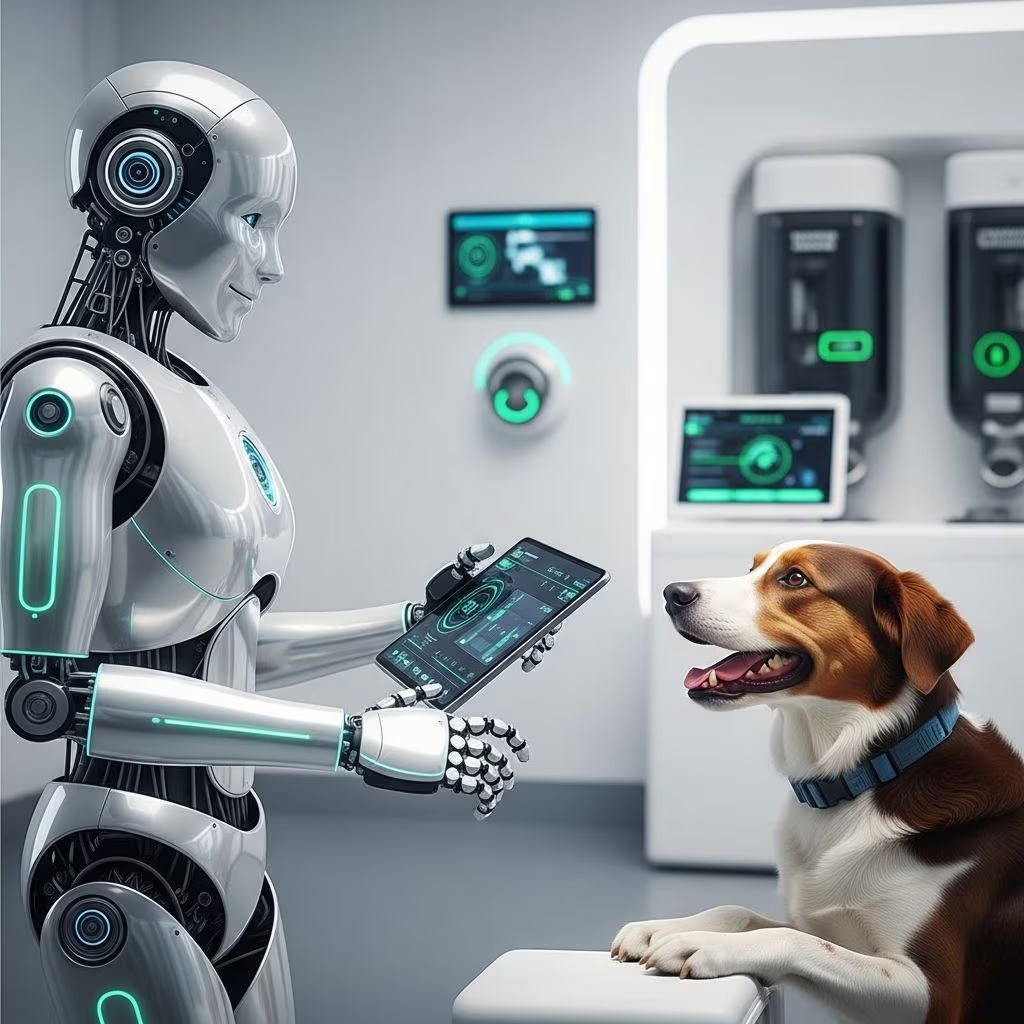
Would You Let A Robot Train Your Dog? The Future of AI-Powered Canine Training
The landscape of dog training is undergoing a significant transformation, thanks to advances in artificial intelligence and pet technology. One groundbreaking innovation is Companion, an AI-powered device that’s changing the way pet owners approach training and behavioral development. Unlike traditional training methods that rely solely on human interaction, this device offers a new paradigm: automated, consistent, and scientifically-informed training that works whether you’re home or not.3
The concept of letting a machine train your dog might sound futuristic or even unsettling to some, but companies like Companion are building sophisticated systems designed to enhance—not replace—the human-animal bond. These devices leverage artificial intelligence to recognize behaviors, adapt to individual dog personalities, and deliver training in ways that were previously impossible for even the most dedicated pet owners.
Understanding the Companion AI Training Device
Companion has developed an innovative AI device that automatically trains and engages with your dog, analyzing behavior in real-time and adapting to each animal’s specific needs.3 According to Companion founder and CEO John Honchariw, the goal is straightforward: “We basically want to give you superpowers with all of the behaviors that make living with your loved one as safe, convenient, and fun as possible.”3
What sets Companion apart from other pet tech solutions is its holistic approach. The company doesn’t rely solely on automation; instead, it combines AI technology with access to professional trainers through an accompanying app. This hybrid model ensures that dogs benefit from both machine consistency and human expertise.3
How AI Recognizes and Responds to Dog Behavior
The core technology behind Companion and similar AI training systems involves sophisticated behavior recognition and analysis. Using machine learning algorithms, these systems can identify specific canine actions in real-time, such as sitting, jumping, barking, or chewing, and understand the context in which they occur.2 For instance, AI can distinguish between a dog barking at a stranger versus barking out of boredom or anxiety—a differentiation that requires genuine understanding of behavioral nuance.2
This contextual awareness is crucial because the same behavior can require entirely different training responses depending on its underlying cause. An anxious dog jumping on guests requires a different approach than an excited, energetic dog exhibiting the same behavior. AI systems can learn these distinctions and adjust their training protocols accordingly.2
The Power of Consistency and Patience in Dog Training
One of the most compelling advantages of AI-powered training devices is their ability to provide perfect consistency—something even the most dedicated human trainers struggle to achieve. According to Honchariw, “The unfair advantage that devices generally have is that they are perfectly consistent and they’re infinitely patient.”3
This consistency is particularly valuable for fundamental skills like teaching dogs to sit. A device can execute 10,000 practice sessions over six to nine months without fatigue, frustration, or variation in technique—feats that would be nearly impossible for a human trainer alone.3 Repetition at this scale, delivered with unwavering consistency, can dramatically accelerate the learning process for dogs struggling with specific commands or behaviors.
However, consistency alone isn’t sufficient for long-term success. Dogs must eventually transfer learned behaviors from the AI device to real-world interactions with their human owners. This is where the coaching aspect becomes essential. Professional trainers work with owners to help “generalize” behaviors, transferring them from the machine to the human, and providing fun exercises that build up the owner’s ability to maintain and reinforce these behaviors.3
Personalized Training Plans Adapted to Individual Dogs
Not all dogs learn the same way or at the same pace. Some dogs are naturally food-motivated, while others respond better to play or praise. Some have anxiety issues that complicate learning, while others are naturally confident and eager to please.2
AI-powered platforms can create customized training plans based on a dog’s unique behavioral patterns, temperament, and learning pace.2 These plans aren’t static; they adapt over time as the dog progresses, ensuring that training remains effective and relevant. If a dog struggles with a particular command or shows signs of stress during training, the AI system can pivot, introducing alternative methods or breaking down complex tasks into smaller, more manageable steps.2
This personalization serves a dual purpose: it improves training outcomes while simultaneously enhancing the bond between dog and owner by fostering a deeper understanding of the dog’s unique needs and learning style.2
Addressing Anxiety and Managing Trigger Behaviors
Dogs with anxiety or trigger-based reactivity present special challenges for trainers. Traditional training methods sometimes struggle with these cases because they require careful monitoring, detailed trigger identification, and gradual desensitization protocols.2
AI systems excel at this type of precise work. They can monitor a dog’s reactions to various stimuli—loud noises, unfamiliar environments, approaching strangers, other dogs—and identify the specific triggers causing distress.2 With this information, AI-driven systems can develop desensitization protocols that gradually expose the dog to the trigger in a controlled, safe manner, helping to reduce associated anxiety over time.2
This data-driven approach ensures that anxiety management is conducted systematically rather than through trial-and-error, reducing unnecessary stress for both dog and owner.
The Professional Team Behind Companion’s Technology
Companion’s credibility in the pet behavior space comes not just from technology but from the experts guiding its development. The company’s advisory team includes Dr. Marty Becker, DVM and Founder of Fear Free; Erica Feuerbacher, Assistant Professor of Companion Animal Behavior and Welfare at Virginia Tech; and Ken Ramirez, Executive Vice President and Chief Training Officer of Karen Pryor Clicker Training.3 These specialists ensure that the AI device incorporates the latest research and best practices in behavioral science and animal welfare.
Positive Reinforcement: The Foundation of AI Training
A critical aspect of Companion’s philosophy is its commitment to positive reinforcement only. The device provides treats or rewards when a dog executes a desired action and withholds rewards while they learn, never using punishment or negative reinforcement.3
According to Honchariw, this approach isn’t just philosophically sound—it’s pragmatic: “We are squarely in the camp of positive reinforcement only because we do think consistency is kindness.”3 This principle reflects modern understanding of animal behavior and welfare, emphasizing that training should be a positive experience that strengthens the human-animal bond rather than creating fear or anxiety.
Improving Socialization Through Technology
Socialization—exposing dogs to various people, animals, and environments—is critical for healthy development, but it can be challenging to manage systematically, especially for naturally shy or reactive dogs.2 AI can assist significantly in this process by tracking interactions between dogs and other animals or humans, providing detailed feedback on the dog’s progress.2
AI-powered apps can analyze play sessions between dogs and identify signs of stress or aggression in real-time.2 Based on this analysis, the system can suggest adjustments to environmental factors or interaction styles to create more positive experiences. This data-driven approach ensures that socialization is conducted safely and effectively, protecting the dog while building confidence.2
Balancing Technology With the Human-Animal Bond
Despite the powerful capabilities of AI training systems, there’s an important balance to maintain. Technology should enhance human connection, not diminish it. Companion recognizes this, which is why the device is positioned as a training aid that works in conjunction with human oversight and professional guidance, not as a replacement for human interaction or traditional training.3
The role of human coaches becomes even more important in this context. They help owners understand their dogs’ behaviors, maintain consistency in real-world settings, and ensure that the benefits of AI-assisted training translate into everyday life. This partnership between machine consistency and human insight creates a more comprehensive training approach than either could provide alone.
Key Benefits of AI-Powered Dog Training
- 24/7 Training Availability: AI devices can work with your dog whether you’re home or not, providing continuous reinforcement and learning opportunities.
- Behavioral Consistency: The device delivers identical training methodology every session, eliminating human variability.
- Personalized Adaptation: Training plans adjust based on individual dog needs, learning pace, and progress.
- Trigger Identification: AI can precisely identify anxiety triggers and gradually desensitize dogs through controlled exposure.
- Data-Driven Insights: Detailed analytics help owners understand their dog’s behavior patterns and progress.
- Positive Reinforcement Only: No punishment-based methods, ensuring dog welfare and psychological safety.
- Professional Support Access: Connection to certified trainers and behaviorists through accompanying apps.
Frequently Asked Questions About AI Dog Training
Q: Will an AI trainer completely replace the need for human trainers?
A: No. AI training devices work best in conjunction with professional trainers and hands-on human interaction. While the device provides consistent practice and skill development, human trainers offer personalized behavioral assessment, address complex issues, and help transfer learned behaviors to real-world settings.4
Q: Is it ethical to use a robot to train my dog?
A: Yes, when implemented responsibly. AI training devices like Companion emphasize positive reinforcement and animal welfare. They’re designed to enhance the human-animal bond by improving communication and understanding, not to replace human connection or cause stress to the animal.
Q: How does the AI know what my dog’s personality type is?
A: AI systems learn your dog’s personality through continuous behavioral observation. They analyze how your dog responds to different stimuli, commands, and situations over time, building a profile that informs training customization.2
Q: Can AI handle dogs with serious behavioral problems?
A: AI is excellent for managing trigger-based anxiety and reactivity through systematic desensitization, but severe behavioral issues often require expert human intervention. AI works best as part of a comprehensive approach that includes professional behavioral consultation.
Q: What if my dog doesn’t respond to the AI trainer?
A: AI systems are designed to adapt. If a dog isn’t responding to one training method, the system adjusts and tries alternative approaches. Professional trainers can also intervene to reassess the situation and recommend modifications.
Q: How much does an AI training device like Companion cost?
A: Pricing varies by device and service tier. Most AI training devices operate on a hardware purchase plus subscription model for access to professional trainers and training programs. Contact manufacturers for current pricing.
The Future of Canine Training
As artificial intelligence continues to advance, its role in dog training and pet behavior management will likely expand. However, experts emphasize that this technology’s greatest potential lies in complementing human expertise, not replacing it. The future of dog training appears to be fundamentally collaborative: machines providing consistency and data, humans providing understanding and adaptation.
Companion and similar technologies represent a meaningful step forward in how we approach canine education and behavior management. By combining AI’s precision with professional expertise and the irreplaceable value of human connection, these systems offer pet owners new tools to ensure their dogs are well-trained, confident, and happy. The robot isn’t training your dog instead of you—it’s giving you the superpowers to train more effectively than ever before.
References
- AI Discovers 5 Different Dog Personalities—Which One is Your Pup? — Kinship. Accessed January 15, 2026. https://www.kinship.com/dog-behavior/ai-discovers-dog-personalities-news
- From Barks to Bytes: How Artificial Intelligence is Revolutionizing Canine Training and Behavior Modification — Pettsie. Accessed January 15, 2026. https://www.pettsie.com/blogs/blog/from-barks-to-bytes-how-artificial-intelligence-is-revolutionizing-canine-training-and-behavior-modification
- Would You Let A Robot Train Your Dog? — Kinship. Accessed January 15, 2026. https://www.kinship.com/dog-behavior/companion-ai-trainer
- 5 Ways AI Could Change the Relationship With Your Pet in 2026 — Kinship. Accessed January 15, 2026. https://www.kinship.com/uk/pet-lifestyle/ai-artificial-intelligence-relationship-pet-tech
- AI and the Future of Dog Training — Victoria Stilwell Academy. Accessed January 15, 2026. https://www.vsdogtrainingacademy.com/blog-posts/ai-and-the-future-of-dog-training/



