

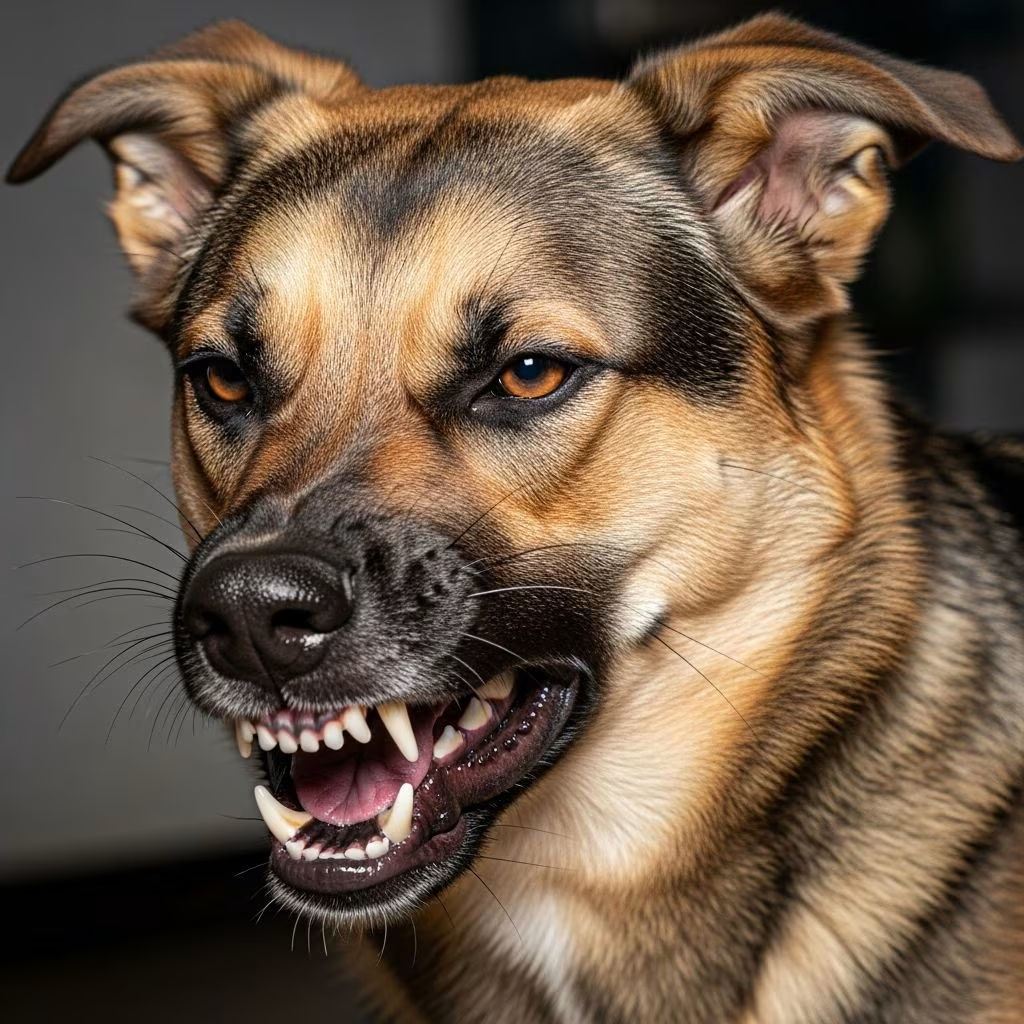
Dogs communicate primarily through body language, and recognizing signs of aggression can prevent dangerous situations. Misinterpreting these signals often leads to bites or conflicts, as dogs use nonverbal cues to warn before escalating.
Are they taking an aggressive stance?
The term “aggressive” is frequently misused for normal behaviors like playful nipping in puppies or excited barking. True aggression involves specific body postures signaling intent to defend or attack, not just vocalization. A barking dog isn’t necessarily aggressive; context matters, including stiffness, stare, and ear position.
Dogs prefer to avoid fights due to the high energy cost and injury risk. They issue escalating warnings—stare, growl, snarl, snap—before biting, often with inhibited force to minimize harm.
Signs of Aggressive Dog Body Language
Aggressive dogs appear stiff and forward-leaning, contrasting with relaxed, wiggly friendly dogs. Key indicators include:
- Forward-leaning stance: The dog leans toward the perceived threat, weight on front legs, ready to lunge.
- Stiff body: Tense muscles, rigid posture, no wiggly movement; body freezes in alertness.
- Tail above the horizon, possibly stiff or wagging: High tail signals arousal; stiff wags or tip-only movement indicate threat, not happiness.
- Ears up and forward: Erect ears show focus and potential aggression (check base for cropped ears).
- Wrinkles or ridges around eyes and lips: Facial tension, wrinkled muzzle, or offensive pucker with C-shaped mouth corner.
- Direct stare: Hard, intense eye contact as a challenge; whale eye (whites showing) mixes fear-aggression.
- Raised hackles: Piloerection along neck and back from arousal or aggression.
- Bared teeth or curled lips: Snarling reveals teeth, often with growling.
A comfortable dog has soft eyes, loose wag below horizon, relaxed ears, and open mouth. Aggressive dogs look large, head above shoulders, tense and quiet.
Subtle Warning Signals
Dogs start with mild signals to deter without fighting. Ignoring these escalates to overt aggression. Watch for:
- Previously open mouth suddenly closes
- “Dandruff” or dander from stress-shaking fur
- Tail rises above horizon
- Yawning (stress, not tiredness)
- Tongue flicks like lip-licking
- Turns body/head/eyes away (avoidance)
- Starts scratching or sniffing (displacement)
These appeasement or displacement behaviors signal discomfort. A puppy groveling—low body, back ears, averted gaze—acknowledges warnings. Defensive dogs may cower while growling or raise a paw.
Defensive vs. Offensive Aggression
Aggression types differ in posture:
| Type | Body Language | Example |
|---|---|---|
| Offensive | Forward lean, high stiff tail, direct stare, lips forward, hackles up | Dominance display over resource |
| Defensive | Low body, pinned ears, low tail, hard eyes but leaning back/forward conflicted | Fear-based when cornered |
| Fear-Aggressive | Whale eye, wrinkled nose, growl/snap, frozen body | Escalation from ignored fear |
Offensive dogs stand tall; defensive ones shrink but warn. Conflicted dogs (e.g., post-attack) show mixed signals like pinned ears with hard lips.
Common Misconceptions
- Tail wagging always means friendly: Stiff high wags signal threat.
- Play bow is always play: Stiff body ruins it.
- Barking is aggression: Often arousal; check full posture.
How to Respond Safely
If spotting aggression:
- Don’t approach or make eye contact.
- Give space; back away slowly without turning fully.
- Avoid punishing—escalates fear.
- Seek professional trainer/behaviorist.
Early intervention prevents bites; 80% of bites follow ignored warnings per behavior studies.
Frequently Asked Questions (FAQs)
What does a stiff tail mean in dogs?
A stiff tail high over the back or staccato wagging signals threat, not joy.
Is growling always bad?
Growling is a warning to back off; punishing it removes communication, risking silent bites.
How to tell if a dog is about to attack?
Look for freeze, lip curl, intense stare, forward lunge, raised hackles.
Can puppies show aggression?
Rarely true aggression; often play or fear. Socialize early.
What if my dog shows these signs at home?
Consult a vet to rule out pain; then certified behaviorist.
Understanding these cues fosters safer interactions. Dogs signal clearly if we listen.
References
- How a Dog’s Body Language Can Indicate a Coming Attack — Steven Titus Law. 2023-05-15. https://www.steventituslaw.com/blog/how-a-dogs-body-language-can-indicate-a-coming-attack/
- Canine Body Language Danger Signs — Whole Dog Journal. 2024-08-12. https://www.whole-dog-journal.com/behavior/canine-body-language-danger-signs/
- Aggressive Dog Body Language: What Is Your Dog Really Saying? — Kinship. 2025-01-10. https://www.kinship.com/dog-behavior/aggressive-dog-body-language
- Watch for Warning Signs of an Aggressive Dog — American Kennel Club (AKC). 2024-11-20. https://www.akc.org/expert-advice/training/warning-signs-aggressive-dog-fight-bite-barking/
- Body Language in Dogs — Wisconsin Humane Society. 2023-09-05. https://www.wihumane.org/dog-body-language
- Aggression — ASPCA. 2024-03-18. https://www.aspca.org/pet-care/dog-care/common-dog-behavior-issues/aggression
- Dog Communication and Body Language — Tufts University Cummings School of Veterinary Medicine. 2024-06-22. https://sites.tufts.edu/collaborativeforshelterdogs/dog-behavior/dog-communication-and-body-language/



