

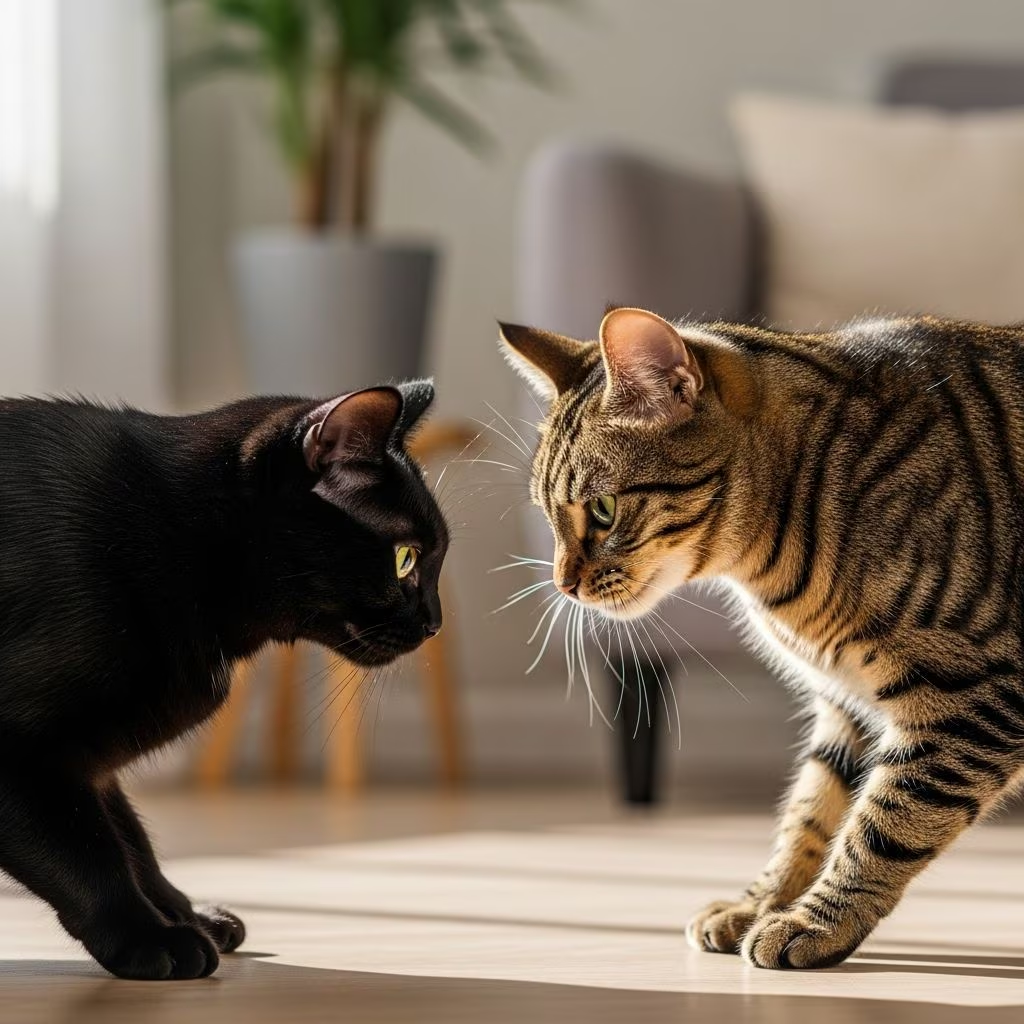
Cats are often seen as independent and solitary creatures, but when living together in a household, conflicts can arise. Aggression between cats in your home can range from subtle posturing to outright fights, disrupting the peace for both pets and owners. Common triggers include fear of the unknown, territorial disputes, and changes in social dynamics. Understanding these behaviors is key to resolving them effectively.
This comprehensive guide explores the reasons behind feline aggression, specific types like maternal aggression, and proven strategies for management and reintroduction. By following structured steps, many cat owners successfully restore harmony without resorting to permanent separation.
Why Won’t They Just Get Along?
Cats may not get along due to several underlying factors rooted in their natural instincts and life experiences. The most prevalent cause is **undersocialization**, where a cat lacks early positive interactions with other felines. Cats raised as only children often view new housemates as threats, reacting with fear, lack of social skills, and resentment over disrupted routines.
Another frequent issue is **personality clashes**. Cats don’t choose their companions, and mismatched temperaments can lead to ongoing tension. What starts as tolerance may erode if one cat matures into adolescence (ages 1-3), asserting dominance or reacting to environmental stressors like loud noises or vet visits, which get associated with the other cat.
Additionally, intact males exhibit heightened aggression due to hormonal drives, making neutering a critical first step. Territorial instincts can flare when resources feel scarce, prompting chasing, swatting, or ambushing. These behaviors mimic wild feline interactions, where establishing hierarchies prevents injury but can escalate in confined homes.
Owners often overlook subtle signs: the aggressor stiffens and stares, while the victim cowers or flees. Over time, this can lead to chronic stress, affecting appetite, litter box use, and overall health. Early intervention prevents escalation.
Other Types of Aggression to Consider
Beyond general household tension, specific aggression types require tailored approaches. Recognizing these helps pinpoint solutions.
Maternal Aggression
A mother cat fiercely protects her kittens, hissing, growling, chasing, swatting, or biting even familiar cats. This instinctual defense peaks during nursing and typically fades post-weaning. To prevent recurrence, spay the queen promptly—reducing future litters and hormonal triggers.
During this phase, provide separate spaces for the mother and litter, ensuring ample resources. Avoid forcing interactions, as stress can prolong aggression.
Territorial Aggression
Cats stake claims on spaces, food, or resting spots. New arrivals, maturing adolescents, or outdoor intruders spark chasing and ambushing. Selective targeting—one cat attacked, another tolerated—is common. Minimize by enriching environments with vertical space and multiples of essentials.
Intermale Aggression
Intact males challenge rivals for mating rights or status, involving threats, fights, and posturing. Neutering dramatically reduces this, as hormones fuel the behavior. In multi-male homes, monitor hierarchies, which remain fluid but tense during peak seasons.
Suggestions for Managing Your Cats
Immediate action prevents injury and worsening dynamics. Never allow cats to “fight it out”—fights intensify without resolution. Instead, interrupt safely with claps, water sprays, or barriers like blankets/cardboard.
- Neuter all cats: Especially males, to curb hormone-driven aggression.
- Separate resources: Offer identical multiples (bowls, beds, boxes) in varied locations to eliminate competition.
- Add perches and hiding spots: Vertical territory reduces confrontations.
- Avoid comforting aggressors: They may redirect onto you; give space.
- Reward positives: Treats/praise for calm interactions reinforce peace.
For mild cases, gradual desensitization works: Separate into rooms with separate amenities, allowing scent exchange. Feed on opposite sides of doors to build positive links. Swap rooms daily for novel scent exposure. Progress to cracked doors if relaxed, monitoring for hisses/swats.
Reintroduction Process Step-by-Step
If aggression persists or cats never coexisted peacefully, a structured reintroduction is essential. This mirrors protocols from animal welfare experts and can take days to weeks.
- Complete separation: Confine to isolated areas—no visual/olfactory contact initially. Use towels under doors if needed. Rule out medical issues via vet checks first.
- Scent swapping: Exchange bedding/toys daily. Reward calm responses.
- Feeding exercises: Place bowls near (but not at) doors, gradually closer over 2-3 weeks.
- Supervised sessions: Use crates, harnesses/leashes, or barriers. Start distant, distract with food/play. Keep short (5-10 mins).
- Gradual proximity: Only advance if no aggression. Supervise short unsupervised trials once they eat/play nearby.
- Monitor triggers: Note patterns (e.g., attention-seeking, outdoor cats) and mitigate.
Pro Tip: Mild post-separation hissing is normal communication; intervene only for physical contact. Behavioral meds from vets can ease severe cases by reducing fear/dominance.
When Reintroduction Fails
Not all cats reconcile. Chronic stress harms health—consider permanent separation (e.g., baby gates) or rehoming one to a suitable home. Prioritize welfare over forced cohabitation. Multi-cat success hinges on ample resources: Aim for n+1 litter boxes/bowls (n=cats), plus perches.
| Resource | Recommended Quantity | Purpose |
|---|---|---|
| Litter Boxes | n+1 (e.g., 3 for 2 cats) | Prevents competition/toileting issues |
| Food/Water Bowls | Multiple, spaced out | Reduces guarding |
| Scratching Posts | 1 per cat + extras | Satisfies marking needs |
| Perches/Beds | Multiple levels | Offers escape routes |
Frequently Asked Questions (FAQs)
Why do my cats suddenly fight after years of peace?
Social maturation, stressors, or health issues can shift dynamics. Vet check first, then reintroduce gradually.
Is neutering enough to stop aggression?
It helps greatly, especially for males, but combine with resource separation and management.
How long does reintroduction take?
Weeks for mild cases; months for severe. Patience is key—rush it, and setbacks occur.
Can medication resolve cat fights?
Vet-prescribed anti-anxiety meds aid reintroduction by curbing extremes, but aren’t standalone fixes.
What if one cat bullies the other constantly?
Separate permanently or rehome the aggressor if safe management fails. Bullying causes victim stress.
Implementing these strategies fosters a balanced multi-cat environment. Consult behaviorists for complex cases. With consistency, most households achieve coexistence.
References
- Aggression Between Cats in Your Household — ASPCA. 2023. https://www.aspca.org/pet-care/cat-care/common-cat-behavior-issues/aggression-between-cats-your-household
- Cat Aggression Toward Cats — SPCA of Wake County. 2023. https://spcawake.org/services/pet-behavior/cat-aggression-toward-cats/
- Feline Social Behavior and Aggression Between Family Cats — Spokane County Regional Animal Protection Service. 2018-10-01. https://spcasc.org/wp-content/uploads/2018/10/cataggres.pdf
- Aggression in Cats — ASPCA. 2023. https://www.aspca.org/pet-care/cat-care/common-cat-behavior-issues/aggression-cats
- Aggression Between Cats — SPCA. Accessed 2023. https://spca.org/file/Aggression-Between-Cats.pdf



