

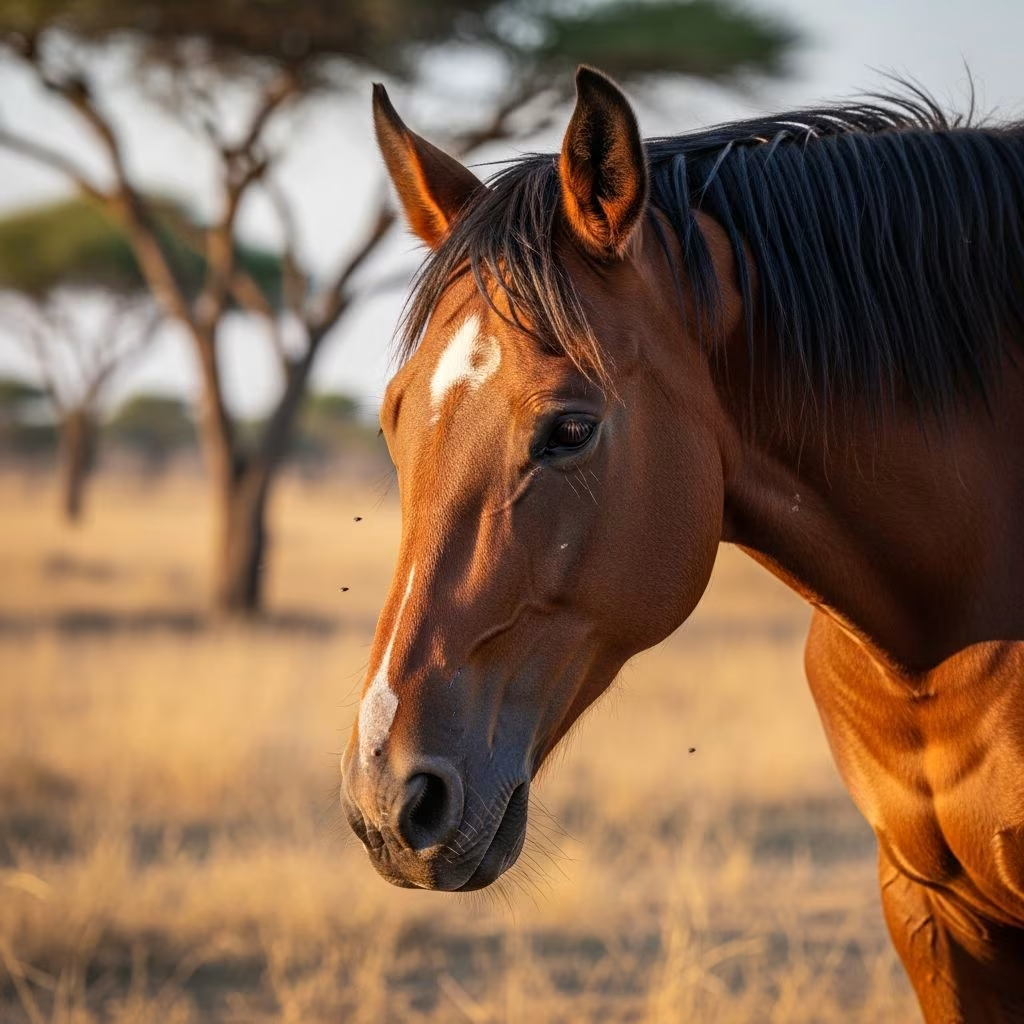
African Horse Sickness (AHS) represents one of the most significant infectious diseases impacting equine populations, particularly in sub-Saharan Africa where it remains endemic. This life-threatening hemorrhagic condition affects all species of equids, including horses, donkeys, mules, and zebras, causing severe respiratory and circulatory complications that frequently result in fatal outcomes. The disease’s high mortality rate, combined with its potential for rapid geographic spread, has led the World Organisation for Animal Health (OIE) to classify it as a notifiable disease requiring mandatory reporting and monitoring.
The Nature and Causative Agent of Equine Hemorrhagic Infection
African Horse Sickness is caused by the African Horse Sickness Virus (AHSV), a member of the genus Orbivirus within the family Reoviridae. This pathogen is a segmented, nonenveloped, double-stranded RNA virus measuring approximately 55-70 nanometers in diameter. To date, researchers have identified nine distinct serotypes of AHSV, each capable of causing clinical disease in susceptible equine hosts. The existence of multiple serotypes has significant implications for vaccination strategies and disease control measures, as immunity to one serotype does not provide cross-protection against the others.
The virus demonstrates selective host pathogenicity that remains incompletely understood. While both horses and zebras can carry AHSV, only horses typically develop clinical signs of disease, whereas zebras often remain asymptomatic or exhibit subclinical infection despite viral replication. This differential susceptibility suggests that host genetic factors play a crucial role in determining whether an infected animal will manifest overt clinical disease or mount sufficient innate immunity to prevent symptom development.
Transmission Dynamics and Vector Epidemiology
The transmission of AHSV occurs exclusively through the bite of infected Culicoides midges, commonly known as biting midges or no-see-ums. These tiny arthropod vectors, measuring only 1-3 millimeters in length, serve as biological vectors for viral replication and transmission between equine hosts. At least two species of Culicoides have been confirmed as competent vectors capable of maintaining the virus in nature. The geographic distribution of these midge species directly correlates with AHS prevalence patterns, with the disease remaining endemic in sub-Saharan Africa where suitable climatic conditions support year-round or seasonal midge populations.
Environmental factors significantly influence transmission dynamics. Warmer temperatures, adequate moisture, and specific breeding habitat availability create ideal conditions for Culicoides proliferation. Recent research indicates that climate change and global warming are expanding the geographic range of competent midge vectors, potentially extending AHS distribution beyond traditionally endemic regions. This expansion poses serious threats to equine populations in previously disease-free areas, necessitating enhanced surveillance and preparedness protocols.
Importantly, AHS is classified as a noncontagious disease, meaning direct contact between infected and susceptible horses does not result in viral transmission. The virus can only be transmitted through the saliva of infected vectors during blood meals. This characteristic distinguishes AHS from highly contagious equine diseases and influences containment and management strategies in outbreak situations.
Clinical Presentation and Disease Manifestations
The clinical expression of AHS varies considerably, ranging from peracute fatal infections to subclinical viral circulation without overt signs. The incubation period typically spans 5-7 days following midge transmission, after which clinical signs become apparent. The viremic period, during which infectious virus circulates in the bloodstream, generally coincides with fever onset and can persist for 2-14 days or potentially longer. This extended viremia period creates a window of opportunity for continued midge-to-horse transmission if vectors are present.
African Horse Sickness manifests in three primary clinical forms, each with distinct presentation patterns and prognostic implications:
Pulmonary Form: Acute Respiratory Compromise
The pulmonary form, locally known as “dunkop” in South Africa, represents the most severe acute presentation. Affected animals develop pyrexia (elevated body temperature), severe congestion, and profound dyspnea (difficulty breathing). The cardinal feature is acute pulmonary edema with massive accumulation of fluid within lung tissues, resulting in copious frothy, serofibrinous discharge from the nostrils and airways. Horses display forced expiration, profuse sweating, and spasmodic coughing as respiratory distress escalates. Death frequently occurs within hours of respiratory sign onset due to severe hypoxemia and pulmonary compromise. The case fatality rate for this form approaches 95%, with recovery being exceptionally rare even with aggressive supportive care.
Cardiac Form: Circulatory and Edematous Manifestations
The cardiac form, referred to as “dikkop” in South Africa, manifests distinctly different pathophysiology focused on circulatory dysfunction and edema formation. Initial clinical signs include fever and mucous membrane congestion, followed several days later by characteristic supraorbital swelling of tissues surrounding the eyes, giving the head a notably thickened, swollen appearance. Subcutaneous edema develops in the head and neck regions, sometimes progressing to severity that significantly distorts facial anatomy. Petechiae (pinpoint hemorrhages) frequently appear on mucous membranes, representing a poor prognostic indicator suggesting severe vascular compromise. Colic, conjunctival swelling, and periorbital edema accompany the systemic inflammatory response. The case fatality rate for cardiac form averages approximately 50%, with some affected animals recovering if supportive care sustains them through the acute phase.
Mixed Form: Combined Respiratory and Circulatory Involvement
The mixed or acute form represents a combination of pulmonary and cardiac manifestations, featuring both lung involvement and externally visible subcutaneous edema with supraorbital swelling. This form probably represents the most commonly observed presentation in affected populations. The mixed presentation reflects simultaneous respiratory and circulatory system dysfunction, typically resulting in intermediate case fatality rates between the purely pulmonary and cardiac forms.
Subclinical and Mild Presentations
Horse sickness fever represents a mild clinical syndrome characterized by brief fever lasting several days accompanied only by depression, followed by complete recovery. This form occurs most frequently in previously immunized animals and occasionally in donkeys and zebras. Additionally, subclinical AHSV infection has been confirmed in zebras, donkeys, and increasingly in horses within endemic areas. These animals carry infectious virus without displaying obvious clinical signs, creating important epidemiological and control challenges regarding animal movement and disease transmission prevention.
Pathological Changes and Necropsy Findings
African Horse Sickness produces characteristic gross and microscopic pathological changes reflecting the disease’s hemorrhagic and edematous nature. Necropsy examination typically reveals pulmonary edema with fluid accumulation in lung tissues and pleural cavities, frothy fluid in airways, and widespread petechial and ecchymotic hemorrhages on serosal surfaces. The lungs may appear severely congested and edematous. Subcutaneous and subcapsular tissues display edematous infiltration and hemorrhage. The pleura, peritoneum, and other serosal membranes show petechial hemorrhages. Splenic subcapsular hemorrhages are common findings. Renal cortical congestion and edematous infiltration around major vessels characterize abdominal changes. The gastrointestinal tract demonstrates hyperemia and petechiae in both small and large intestine components. These pathological signatures, while characteristic, require differentiation from other equine diseases producing similar lesions.
Diagnostic Approaches and Laboratory Methods
Laboratory confirmation of AHS is essential for definitive diagnosis, as clinical signs and lesions can be confused with other serious equine diseases including anthrax, equine infectious anemia, equine viral arteritis, trypanosomosis, and equine encephalosis. Real-time PCR assay represents the diagnostic test of choice in endemic countries, providing rapid identification of AHSV genetic material in blood and tissue samples. This molecular approach offers superior sensitivity and specificity compared to older diagnostic methods. Antigen detection strategies form the diagnostic foundation, with real-time PCR serving as the gold standard for confirmation.
Serological testing, detecting antibodies against AHSV, provides information about prior exposure and vaccination status. In European Union surveillance programs, at least 60 identified unvaccinated horses distributed throughout designated zones undergo monthly serological testing for AHSV detection. Local regulations typically mandate reporting of all suspected AHS cases to state veterinary authorities, with official necropsy examination required for all equine deaths potentially attributable to AHS.
Disease Control and Prevention Strategies
Control of African Horse Sickness centers on three interconnected approaches: vaccination, vector management, and movement restrictions. Vaccination remains the primary prevention strategy, with polyvalent live attenuated vaccines (LAV) produced by established institutions providing protection against multiple AHSV serotypes. The Onderstepoort Biological Products organization manufactures widely-used LAV vaccines. In regions with surveillance infrastructure, vaccination of at-risk horses requires official permission before administration.
Vector control measures attempt to reduce Culicoides exposure through environmental management and barrier protection. Housing horses in screened enclosures during peak midge activity periods provides physical protection. Insect repellents and strategic pesticide applications may reduce vector populations in limited areas, though large-scale vector eradication remains impractical. Movement restrictions prevent transport of potentially infected animals from endemic to disease-free regions, with quarantine and testing protocols forming critical components of international trade regulations.
Prognostic Factors and Recovery Outcomes
Mortality rates for African Horse Sickness depend primarily on two critical variables: the virulence of the particular AHSV strain involved and the immune status and innate susceptibility of the affected host. In naive equine populations lacking prior exposure or vaccination, mortality may reach 90% during epidemics, with some serotypes demonstrating even higher lethality. Animals previously infected with specific AHSV serotypes develop complete protection against reinfection with the same strain, though subsequent exposure to heterotypic serotypes may cause milder disease limited to fever or cardiac manifestations.
Host factors including age, breed, previous exposure history, and individual genetic susceptibility significantly influence disease severity and outcome. Young animals that have lost colostral immunity and completely naive, unvaccinated horses suffer the highest mortality rates. Recovered animals develop serotype-specific immunity but remain susceptible to other circulating serotypes, necessitating polyvalent vaccination for comprehensive protection.
Frequently Asked Questions About African Horse Sickness
Does African Horse Sickness affect humans?
No, African Horse Sickness does not affect human health, though the disease may affect dogs under rare circumstances. The virus demonstrates strict specificity for equine species.
Is there a cure for African Horse Sickness?
No specific antiviral cure exists for AHS. Treatment remains largely supportive, focused on maintaining vital functions and managing respiratory or circulatory complications while the immune system combats viral infection. Prevention through vaccination and vector control represents the only effective strategy.
How long does it take for symptoms to appear after infection?
The incubation period typically ranges from 5-7 days following midge transmission before clinical signs become apparent. However, individual variation exists, and subclinical infections may never manifest obvious symptoms.
Can vaccinated horses still contract African Horse Sickness?
Properly vaccinated horses receiving polyvalent vaccines gain protection against the serotypes included in the vaccine formulation. However, exposure to non-vaccine serotypes may cause breakthrough infections, though typically milder than in unvaccinated animals.
Is movement of infected horses ever permitted?
International regulations generally prohibit movement of potentially infected animals from endemic to disease-free regions. Strict quarantine and testing protocols apply to any equine transport from endemic areas, with mandatory serological and molecular testing required before movement authorization.
References
- African Horse Sickness – Asia and the Pacific — World Organisation for Animal Health (WOAH). Accessed February 2026. https://rr-asia.woah.org/en/projects/african-horse-sickness/
- African Horse Sickness — Merck Veterinary Manual, University of Pretoria Onderstepoort. 2024. https://www.merckvetmanual.com/generalized-conditions/african-horse-sickness/african-horse-sickness
- African horse sickness — European Commission Food Safety. 2024. https://food.ec.europa.eu/animals/animal-diseases/diseases-and-control-measures/african-horse-sickness_en
- African Horse Sickness: A Review of Current Understanding and Future Research Needs — PubMed Central (PMC6783979). National Center for Biotechnology Information. 2019. https://pmc.ncbi.nlm.nih.gov/articles/PMC6783979/
- African Horse Sickness Factsheet — College of Veterinary Medicine, Iowa State University. 2020. https://www.cfsph.iastate.edu/Factsheets/pdfs/african_horse_sickness.pdf
- African Horse Sickness — Texas A&M College of Veterinary Medicine. 2021. https://vetmed.tamu.edu/fadr/wp-content/uploads/sites/101/2021/01/African-Horse-Sickness.pdf



