African Grey Parrot Feeding Guide: Complete Nutrition
Learn proper nutrition and feeding guidelines for African Grey parrots.
African Grey Parrot Feeding Guide
African Grey parrots are highly intelligent and social birds that require a carefully balanced diet to maintain optimal health, vibrant plumage, and cognitive function. Proper nutrition is essential for these long-lived companions, as dietary deficiencies can lead to serious health complications including feather plucking, behavioral problems, and nutritional diseases. Understanding the specific nutritional needs of African Greys and implementing a varied feeding regimen is fundamental to providing excellent care for these remarkable birds.
Understanding Your African Grey’s Nutritional Needs
African Grey parrots have complex nutritional requirements that differ from many other pet birds. These birds evolved in the rainforests of West and Central Africa, where they consumed a diverse array of fruits, nuts, seeds, vegetation, and leafy matter throughout the year. In captivity, replicating this dietary diversity is crucial for maintaining their physical and mental well-being.
The foundation of a healthy African Grey diet consists of high-quality commercial pellets that are specifically formulated to provide essential vitamins, minerals, and nutrients in appropriate proportions. However, pellets alone are insufficient for meeting all of their dietary needs, which is why supplementing with fresh foods is absolutely necessary.
The Foundation: Pellets and Complete Foods
Pellets should comprise approximately 60-80% of your African Grey’s daily diet. These specially formulated foods are designed to meet the nutritional standards established for parrot species and provide a consistent foundation of essential nutrients. When selecting pellets for your African Grey, choose products specifically formulated for large parrots or African Grey parrots, as these will contain the appropriate balance of proteins, fats, vitamins, and minerals.
Quality pellets contain carefully measured amounts of:
– Proteins essential for muscle development and feather growth- Calcium and phosphorus for bone strength and egg production- Vitamin A for immune function and eye health- B-complex vitamins for energy metabolism- Essential fatty acids for cognitive function and skin health
It is important to rotate between different reputable pellet brands occasionally to ensure your bird receives a broader spectrum of nutrients. Store pellets in airtight containers to maintain freshness and prevent oxidation of vitamins.
Fresh Vegetables: Nutritional Powerhouses
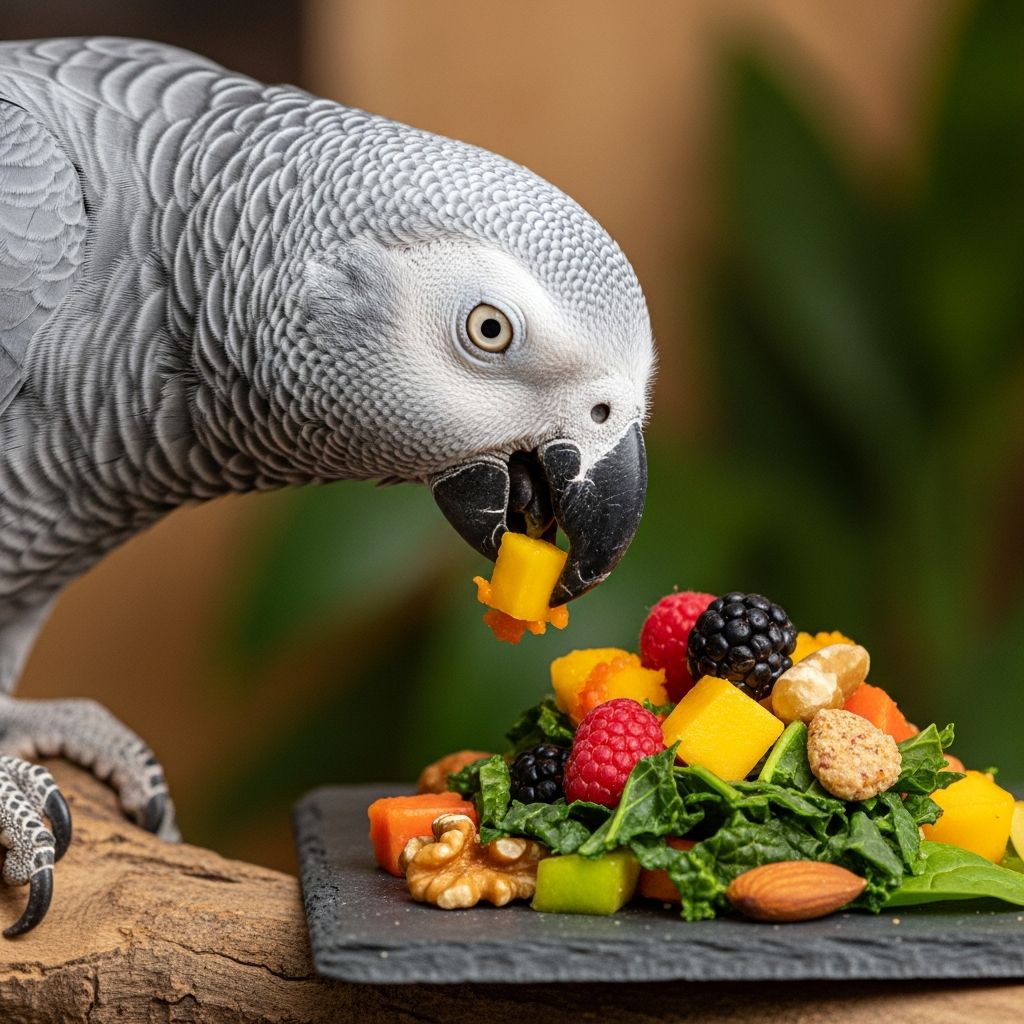
Fresh vegetables should make up approximately 15-25% of your African Grey’s daily diet and should be offered daily. These foods provide essential vitamins, minerals, fiber, and phytonutrients that complement the pellet foundation. Select a diverse range of vegetables to ensure comprehensive nutrient intake.
Recommended vegetables include:
– Leafy greens such as kale, spinach, Swiss chard, and collard greens- Cruciferous vegetables including broccoli, Brussels sprouts, and cauliflower- Beta-carotene rich vegetables such as carrots, pumpkin, and sweet potatoes- Bell peppers in various colors- Green beans and peas- Corn on the cob
Wash all fresh produce thoroughly to remove pesticides and chemical residues. When possible, select organic vegetables to reduce pesticide exposure. Remove any uneaten vegetables after two to three hours to prevent bacterial growth and spoilage. Never feed avocado, as it contains persin, a toxin that can be fatal to birds.
Fruits: Natural Treats with Nutritional Value
Fruits provide natural sugars for energy along with beneficial vitamins and antioxidants. Fruits should comprise approximately 10-15% of your African Grey’s diet and should be offered daily in moderate portions. The high sugar content of fruits means portion control is important to prevent obesity and blood sugar imbalances.
Safe fruit options for African Greys include:
– Apples (remove seeds, which contain cyanogenic compounds)- Pears- Berries including blueberries, raspberries, and blackberries- Grapes- Melons and cantaloupe- Papayas- Mangoes- Pomegranates- Bananas (in moderation due to high sugar content)
You can offer fresh fruit cut into appropriately sized pieces in a food bowl or fastened to a fruit skewer, which also provides enrichment and encourages foraging behavior. For convenience, dried fruits that retain nearly the same nutritional content as fresh can be offered occasionally, though fresh fruits are preferred when available. Remove any uneaten fruit after two to three hours to prevent fermentation and bacterial contamination.
Seeds, Nuts, and Legumes: Protein-Rich Supplements
Seeds and nuts are high-fat foods that should be limited to 10-20% of your African Grey’s daily diet, offered no more than two to three times per week. These foods provide valuable proteins, healthy fats, and essential minerals but can contribute to obesity if overfed.
Safe nut and seed options include:
– Almonds (unsalted)- Walnuts- Pecans- Macadamia nuts (occasionally, as they are high in fat)- Sunflower seeds (limit quantity due to high fat content)- Safflower seeds- Pumpkin seeds- Hemp seeds
Always ensure nuts and seeds are fresh, unsalted, and free from mold or rancidity, which can be toxic to birds. Store nuts in airtight containers in cool, dry locations to maintain quality.
Legumes such as cooked lentils and chickpeas are excellent protein sources that can be incorporated two to three times weekly. These foods support digestive health and provide sustained energy without excessive fat content.
Sprouting Seeds and Soaking Seeds
Sprouting seeds represent one of the most nutritious foods you can offer your African Grey. During the sprouting process, seeds develop significantly higher concentrations of vitamins, minerals, enzymes, and amino acids compared to dry seeds. Sprouted seeds are also lower in fat and higher in digestible protein.
To prepare sprouting seeds:
– Rinse seeds thoroughly under clean water- Place seeds in a clean jar or sprouting container- Cover with water and soak for 24-48 hours- Drain and rinse thoroughly- Store in a cool location, rinsing twice daily- Serve when small sprouts appear (typically 2-3 days)
Sprouted seeds should be offered fresh and any uneaten portions should be removed within a few hours to prevent bacterial growth. This nutritious food can be offered several times weekly as part of a well-rounded diet.
Grains and Starches
Cooked grains provide fiber and complex carbohydrates that support digestive health and sustained energy. Safe grain options for African Greys include brown rice, quinoa, oatmeal, and whole wheat pasta. Prepare all grains without added salt, seasonings, or oils. These foods can be offered several times weekly and mixed with vegetables for added nutrition and variety.
Foods to Avoid Completely
Certain foods are toxic or inappropriate for African Greys and must never be offered:
– Avocado (contains persin, a cardiotoxin)- Chocolate (contains theobromine, which is toxic to birds)- Salt and heavily salted foods- Caffeine and caffeine-containing beverages- Fatty or fried foods- Alcohol- Onions and garlic- Apple seeds and other fruit pits- Artificial sweeteners, particularly xylitol- Moldy or spoiled foods
Water and Hydration
Fresh, clean water must be available at all times. Change water daily to prevent bacterial contamination and algae growth. Use filtered or bottled water if your tap water is heavily chlorinated. Some African Greys enjoy occasional baths or misting, which encourages natural preening behaviors.
Feeding Schedule and Portion Control
Establish a consistent daily feeding routine. A typical feeding schedule includes providing pellets in the morning, offering fresh vegetables and water throughout the day, and providing pellets again in the evening. Adult African Greys typically consume approximately 1/2 to 3/4 cup of food daily, though individual requirements vary based on body size and metabolism.
Monitor your bird’s weight regularly to ensure it remains within healthy parameters. Overweight birds are prone to fatty liver disease, joint problems, and reduced lifespan. Conversely, underweight birds may be experiencing malnutrition or underlying health issues requiring veterinary attention.
Transitioning to a Healthy Diet
If your African Grey has been consuming an inappropriate diet, transition gradually to a healthier feeding regimen. Birds can be resistant to dietary changes, so introduce new foods slowly over several weeks. Place new foods near familiar foods to encourage exploration and acceptance. Avoid forcing your bird to eat new foods, as this can create negative associations.
Seasonal Feeding and Dietary Variation
Rotate foods seasonally to maintain interest and ensure comprehensive nutrient intake. Incorporate seasonal produce when available, and vary protein sources between nuts, seeds, legumes, and sprouted seeds throughout the week. This rotation ensures your African Grey receives a broad spectrum of micronutrients and prevents boredom-related behavioral issues.
Nutritional Supplements
A properly formulated diet of quality pellets and fresh foods should provide adequate nutrition without additional supplementation. However, consult with an avian veterinarian about whether your specific bird requires vitamin supplements. Excessive supplementation can lead to vitamin toxicity, particularly with fat-soluble vitamins like A and D.
Frequently Asked Questions
Q: How much should I feed my African Grey daily?
A: Adult African Greys typically consume approximately 1/2 to 3/4 cup of food daily. Monitor your bird’s weight and adjust portions accordingly to maintain ideal body condition. Individual requirements vary based on size, age, and activity level.
Q: Can African Greys eat pellets exclusively?
A: While pellets provide essential nutrition, they should not be the sole food source. Fresh vegetables, fruits, nuts, seeds, and legumes are crucial for providing variety, enrichment, and additional micronutrients that complement pelleted diets.
Q: How often should I offer nuts and seeds?
A: Nuts and seeds should be limited to 10-20% of daily intake and offered no more than two to three times per week due to their high fat content and potential to contribute to obesity.
Q: What vegetables should I avoid feeding my African Grey?
A: Avoid avocado, which is toxic to birds. Additionally, use spinach sparingly due to its oxalate content, which can interfere with calcium absorption. Always avoid moldy or spoiled vegetables.
Q: How can I encourage my African Grey to eat fresh vegetables?
A: Introduce new foods gradually alongside familiar favorites. Offer vegetables at different times of day and in different presentations such as chopped pieces or on skewers. Be patient, as some birds require multiple exposures before accepting new foods.
Q: Is it safe to feed my African Grey organic produce?
A: Yes, organic produce is preferable when available as it contains lower pesticide residues. However, thoroughly wash all produce, whether organic or conventional, before offering it to your bird.
References
- African Grey Parrot Feeding Guide — Northern Parrots. 2024. https://www.northernparrots.com/blog/african-grey-parrot-feeding-guide/
- African Grey Parrot Safe Foods & Healthy Diet Tips — Jungle Aquatics. 2024. https://jungleaquatics.com/blogs/news/african-grey-parrot-safe-foods-to-enjoy
- The Best Food for African Grey Parrots: A Complete Guide — Parrot Essentials. 2024. https://parrotessentials.co.uk/blog/the-best-food-for-african-grey-parrots-a-complete-guide
- Feeding Tips for African Greys Improve Your Parrot’s Diet — BirdSupplies.com. 2024. https://birdsupplies.com/pages/feeding-your-african-grey-parrot
- African Grey Parrot Diet: The Complete Guide to Feeding for Health — The Aviary Parrot Food. 2024. https://theaviaryparrotfood.com/blogs/parrot-diet-and-nutrition/african-grey-parrot-diet-the-complete-guide-to-feeding
Similar Articles







Read full bio of Sneha Tete