

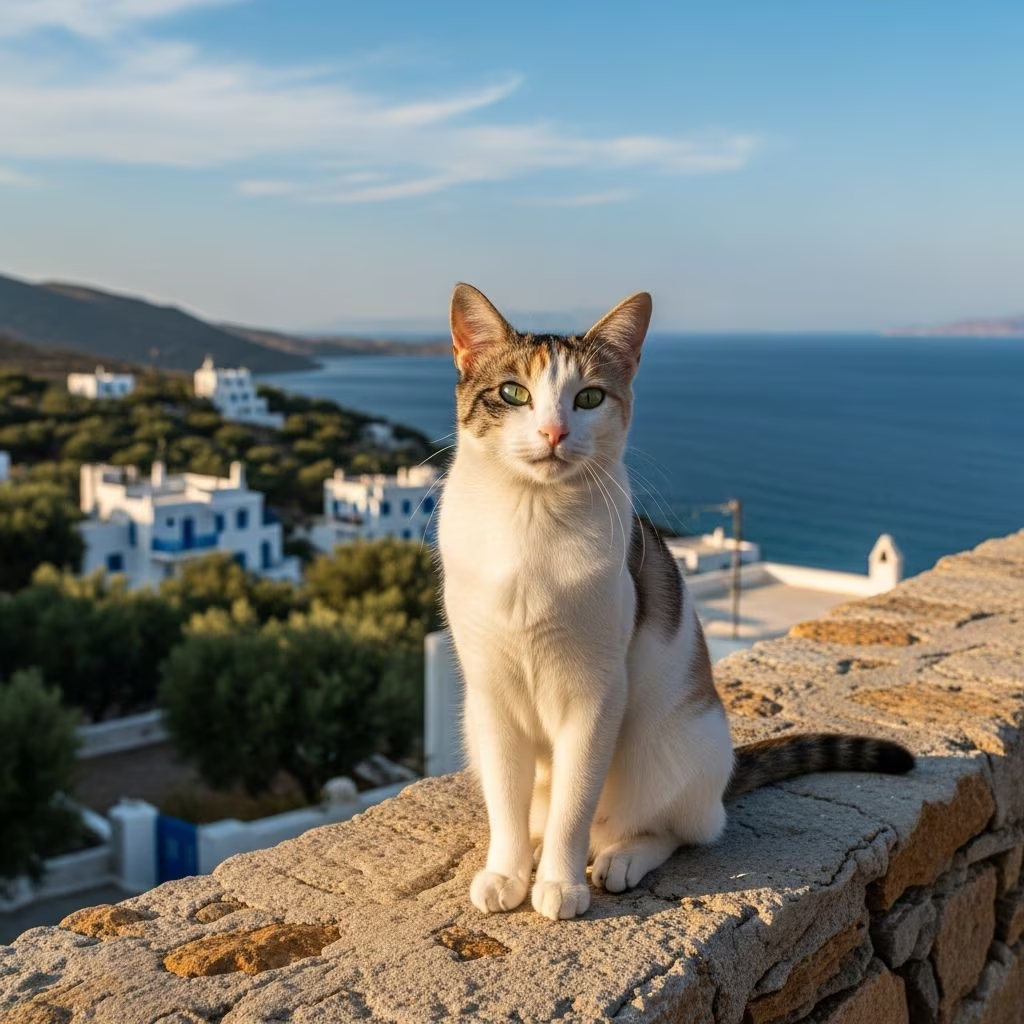
The Aegean cat represents one of the world’s most ancient and least-known feline lineages, originating from the picturesque Cycladic Islands nestled within the Aegean Sea. Unlike many modern cat breeds that have been meticulously developed through selective breeding programs, the Aegean cat emerged naturally over millennia, adapting to the unique environmental conditions of the Greek islands without deliberate human intervention. This breed stands as a living testament to the enduring relationship between humans and felines throughout recorded history, embodying centuries of island culture and Mediterranean heritage.
Tracing the Ancient Roots: Historical Development and Cultural Significance
Archaeological investigations suggest that Aegean cats have inhabited their native islands for more than 10,000 years, making them among the world’s oldest domesticated cat breeds. Evidence indicates that cats were initially introduced to the Cycladic Islands during the Bronze Age, likely arriving aboard trading and fishing vessels that traversed Mediterranean waters. These early felines found an ideal environment in the fishing communities, where their exceptional hunting abilities made them invaluable for controlling rodent populations that threatened grain stores and food supplies.
Throughout centuries of cohabitation with island residents, Aegean cats developed a unique relationship with human settlements. Rather than remaining entirely wild, they adapted to living alongside people while maintaining much of their independent nature. They became fixtures at fishing ports, market squares, and village centers, where locals appreciated their practical contributions to pest management. The breed’s reputation as an exceptional mouser spread throughout Greece and Turkey, regions where feral populations of Aegean cats remain prevalent today.
Formal recognition of the Aegean cat as a distinct breed occurred relatively recently. During the early 1990s, enthusiasts within the emerging Greek cat fancy community began systematic breeding efforts to establish and standardize the breed’s characteristics. Despite these contemporary developments, the Aegean cat remains unrecognized by major international fancier and breeder organizations, contributing to its status as an exceptionally rare and exclusive breed outside its native region. In Greece, however, the Aegean cat has achieved the distinction of being recognized as a national treasure, reflecting its profound cultural importance and historical significance.
Physical Characteristics and Distinctive Appearance
The Aegean cat presents a striking combination of athletic muscularity and elegant refinement. These felines maintain a medium-sized frame that typically weighs between 10 and 12 pounds, featuring a long, sturdy body supported by medium-sized, rounded paws. The overall build conveys strength and agility without any indication of excess weight, reflecting the breed’s heritage as an active hunter across rocky island terrain.
One of the most distinctive features of the Aegean cat is its semi-long coat, which exhibits remarkable adaptability to seasonal variations. During summer months, the coat appears noticeably shorter as the cat sheds its denser winter fur to accommodate the intense Mediterranean heat. Conversely, as temperatures drop in winter, the coat thickens and lengthens, providing excellent insulation against harsh coastal weather conditions. This seasonal transformation represents a natural thermoregulation mechanism developed through countless generations of island living.
The Aegean cat’s coat pattern follows a consistent bicolor or tricolor scheme, with white invariably serving as the dominant color, typically covering between 25 and 90 percent of the body. Secondary colors frequently include black, blue, cream, red, or tabby markings, creating visually striking combinations that vary considerably among individual cats. This particular coloration pattern likely developed as a form of natural camouflage, allowing cats to blend seamlessly into the whitewashed villages and sun-bleached stone structures characteristic of Cycladic island architecture.
The tail deserves special attention as a defining characteristic, often appearing noticeably long, thick, and sometimes hooked at the tip. Even during periods of intensive shedding, the tail maintains its fluffy, luxuriant appearance, contributing to the breed’s distinctive silhouette. The ears feature a wide base with rounded tips, generously covered in protective hair, while the face displays striking almond-shaped eyes that range in color from green to blue to yellow, creating a captivating expression that captures the breed’s intelligent nature.
Temperament, Personality Traits, and Social Behavior
Despite their origins as independent feral cats, Aegean cats demonstrate a remarkable capacity for social interaction and human companionship. These felines have spent nearly 10,000 years in close proximity to human populations, resulting in a breed that genuinely enjoys human presence while maintaining a degree of independent spirit. They display obvious affection toward their owners and demonstrate genuine interest in family activities, yet they retain enough autonomy to pursue their own interests without becoming overly dependent.
Aegean cats are exceptionally intelligent animals that showcase curiosity about their environment and the activities of those around them. They derive considerable enjoyment from interactive play, often engaging enthusiastically with toys and games that stimulate their hunting instincts. These natural predators take evident pride in demonstrating their catching abilities, whether through elaborate play sessions or by presenting their human companions with evidence of their prowess. Their hunting heritage remains deeply ingrained in their behavioral patterns, making them excellent choices for households seeking active, engaged companions.
The breed exhibits a fascinating duality in temperament, seamlessly transitioning between periods of vigorous activity and complete relaxation. After engaging in energetic play or exploration, Aegean cats readily shift into leisure mode, basking contentedly in sunny locations or lounging beneath shaded areas with their feline companions. This balanced approach to daily life reflects their adaptation to island living, where both activity and rest serve essential purposes in maintaining health and well-being.
Grooming Requirements and Coat Maintenance
Maintaining an Aegean cat’s semi-long coat requires moderate commitment and consistent attention. Weekly brushing sessions prove essential for preventing the formation of tangles and mats, particularly during seasonal transitions when shedding intensifies. The semi-long texture, while relatively manageable compared to fully long-haired breeds, benefits greatly from regular grooming that removes loose fur and distributes natural oils throughout the coat.
The breed’s water-resistant coat properties, likely developed through generations of exposure to Mediterranean coastal conditions, mean that Aegean cats generally tolerate occasional bathing reasonably well, though most prefer to avoid water. During heavy shedding seasons, particularly in summer, daily brushing may become necessary to manage the increased volume of loose hair. Proper grooming practices not only maintain coat health and appearance but also provide opportunities for bonding between cats and their human companions while allowing owners to monitor for any potential skin issues or health concerns.
Health Considerations and Longevity
The Aegean cat’s development through natural processes, without intensive selective breeding programs, has resulted in a breed with relatively few genetic health predispositions compared to many heavily bred domestic varieties. This natural heritage contributes to robust overall health and fewer hereditary conditions typically associated with artificially selected traits. The typical lifespan for a healthy Aegean cat ranges from 9 to 15 years, reflecting the breed’s inherent vitality and adaptability.
While comprehensive documentation of breed-specific health conditions remains limited, responsible Aegean cat ownership involves maintaining regular veterinary check-ups to monitor overall wellness and address any emerging concerns. Parasite prevention programs, appropriate vaccinations, and balanced nutrition form the foundation of preventive health care. Owners should maintain awareness of their cat’s behavior, appetite, and physical condition, reporting any changes to veterinary professionals promptly. The breed’s natural lineage and less intensive breeding history mean that many health issues remain rare, making the Aegean cat a relatively hardy choice for those seeking a healthy, long-lived companion.
Environmental Adaptation and Special Considerations
Aegean cats display remarkable adaptation to outdoor environments, particularly in warm, Mediterranean climates where they originated. Their semi-long, water-resistant coat provides adequate protection against both intense sun exposure and unexpected weather changes. However, these cats can adapt successfully to various climate conditions when provided with appropriate shelter, shade, and environmental modifications to ensure comfort and safety.
These felines possess strong prey drives and exceptional hunting abilities, making them particularly well-suited to households where rodent control might be desired. At the same time, their predatory nature means that households with small pets such as rabbits, guinea pigs, or birds require careful consideration and appropriate safeguards to prevent unfortunate incidents. Indoor housing with supervised outdoor access often represents the optimal arrangement for Aegean cats living outside their native Mediterranean environment.
Breeding Availability and Acquisition Challenges
Prospective owners interested in Aegean cats face significant practical challenges in acquiring a specimen outside Greece and Turkey. The breed remains virtually unknown beyond Mediterranean regions, with breeding programs concentrated exclusively within Greece. Finding registered Aegean cat breeders outside their native territory requires extensive research and international connections, as these cats have not achieved recognition from major international breeding organizations.
For those determined to share their lives with an Aegean cat, travel to Greece or Turkey to connect with local breeders represents a realistic option. Alternatively, some rescue organizations and feline sanctuaries within Greece occasionally assist with international adoptions of Aegean cats, though these opportunities remain rare. The breed’s extreme rarity and limited availability outside its native region contribute to its exotic appeal and exclusivity.
Comparison with Related Mediterranean Breeds
| Characteristic | Aegean Cat | Cyprus Cat | Turkish Van |
|---|---|---|---|
| Origin | Cycladic Islands, Greece | Cyprus | Van Region, Turkey |
| Coat Type | Semi-long, water-resistant | Semi-long to long | Semi-long to long |
| Primary Color | White (dominant) | Varied | White (often) |
| Weight Range | 10-12 pounds | 8-10 pounds | 10-16 pounds |
| Lifespan | 9-15 years | 10-15 years | 13-17 years |
| Breed Recognition | Not officially recognized | Limited recognition | Fully recognized |
Frequently Asked Questions About Aegean Cats
Are Aegean cats suitable for apartment living?
While Aegean cats can adapt to apartment environments, they thrive best in settings providing ample space for active play and exploration. Their hunting heritage and intelligence require environmental enrichment through interactive toys, climbing structures, and mental stimulation. Apartments with access to secure balconies or windows offering external views prove most satisfactory for this active breed.
Do Aegean cats get along well with other pets?
Aegean cats typically coexist peacefully with other felines and may develop close bonds with appropriate canine companions. However, their strong predatory instincts make them potentially risky companions for smaller pets such as rodents, birds, or rabbits. Careful introductions and ongoing supervision help ensure successful multi-pet households.
How much does an Aegean cat typically cost?
Pricing information for Aegean cats remains difficult to establish due to their extreme rarity outside Greece. Acquiring a cat through legitimate breeders in Greece typically involves costs associated with international travel, transportation arrangements, and veterinary documentation. Some sources suggest costs ranging from several hundred to over a thousand dollars when accounting for all associated expenses.
What dietary requirements do Aegean cats have?
Aegean cats benefit from high-quality, balanced nutrition supporting their active lifestyle and muscular build. Commercial cat foods formulated for active cats or high-protein diets generally meet their nutritional needs. Individual dietary requirements may vary, and consultation with veterinary professionals helps ensure optimal nutrition tailored to specific cats’ needs and health status.
Can Aegean cats be kept as indoor-only pets?
Yes, Aegean cats can adapt to indoor-only living when provided with adequate environmental enrichment, interactive toys, climbing structures, and mental stimulation. However, many owners find that providing supervised outdoor access or secure outdoor enclosures better accommodates their natural instincts and behavioral preferences.
References
- Aegean Cat Breed Guide — Holistapet. Accessed January 2026. https://www.holistapet.com/blogs/cat-breeds/aegean
- Aegean cat — Wikipedia. Accessed January 2026. https://en.wikipedia.org/wiki/Aegean_cat
- All about the Aegean Cat: Origins, Care & Personality — Pets4Homes. Accessed January 2026. https://www.pets4homes.co.uk/pet-advice/all-about-the-aegean-cat.html
- About Aegean Cats: Breed Facts and Personality — ASPCA Pet Insurance. Accessed January 2026. https://www.aspcapetinsurance.com/resources/aegean/
- All about Aegean cat breed — Animalia. Accessed January 2026. https://animalia.bio/pets/aegean-cat



