

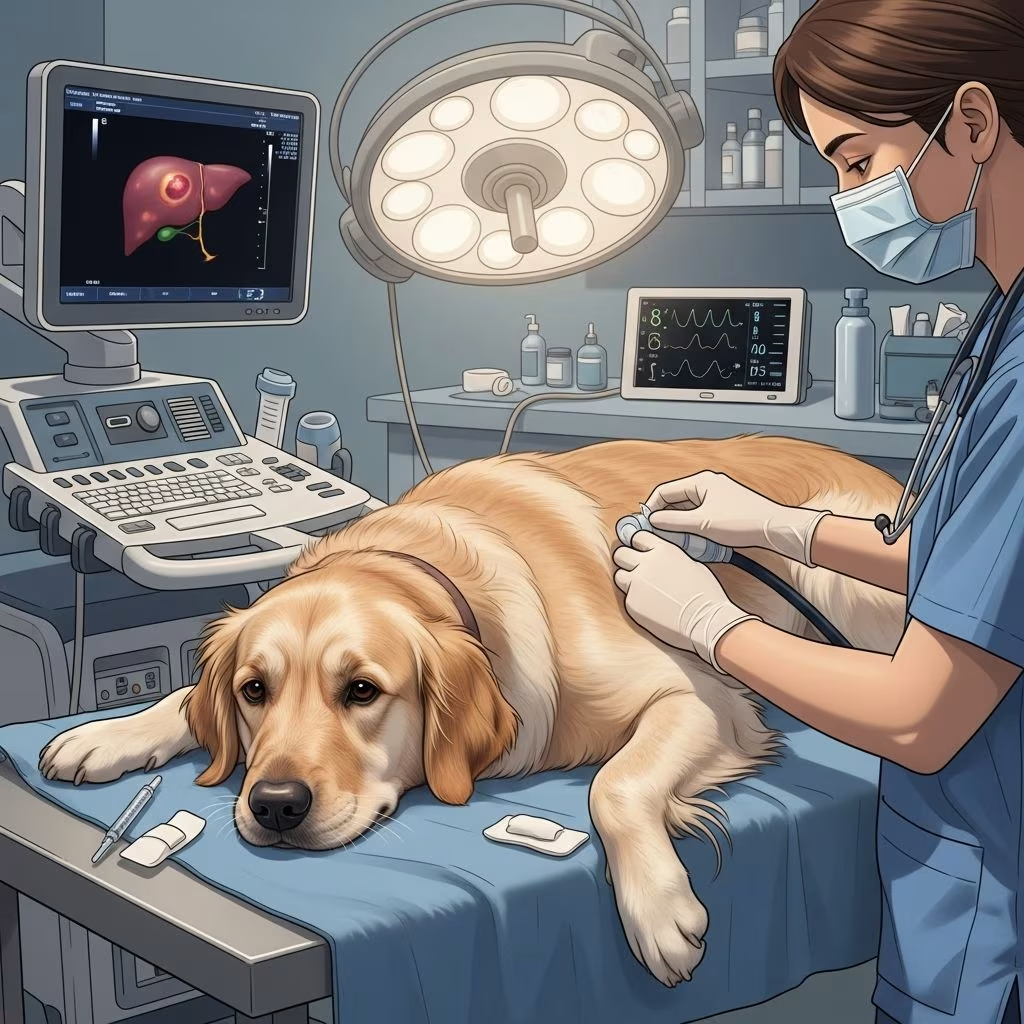
Advanced liver cancer, often referred to as stage 4, represents a critical phase where the disease has typically spread beyond the liver, posing significant challenges for treatment and management in canine patients. This condition, primarily hepatocellular carcinoma (HCC), demands prompt veterinary intervention to optimize quality of life.
Understanding the Nature of Liver Tumors in Canines
The liver, a vital organ responsible for detoxification, protein synthesis, and metabolism, is susceptible to neoplastic growths. Primary liver tumors originate within the liver tissue, while secondary ones metastasize from elsewhere. In dogs, HCC is the predominant primary form, classified into massive (single large mass), nodular (multiple discrete nodules), and diffuse (widespread infiltration) types. Massive tumors confined to one lobe offer better surgical prospects, whereas nodular and diffuse variants, common in advanced stages, complicate therapy due to multi-lobe involvement or metastasis.
Older dogs, particularly breeds like German Shepherds, Golden Retrievers, and Labrador Retrievers, show higher incidence. Risk factors include chronic hepatitis, toxin exposure, and genetic predispositions, though exact causes remain multifactorial.
Recognizing Symptoms of Progressive Liver Disease
Early detection is rare due to the liver’s regenerative capacity, masking initial signs. As cancer advances to stage 4, symptoms intensify:
- Appetite loss and weight reduction: Dogs may refuse food, leading to cachexia.
- Lethargy and weakness: Reduced energy from metabolic disruptions.
- Abdominal distension: Fluid accumulation (ascites) from portal hypertension.
- Jaundice: Yellowing of gums, skin, and eyes due to bilirubin buildup.
- Vomiting and diarrhea: Impaired digestion and toxin processing.
- Neurological issues: Hepatic encephalopathy causing disorientation or seizures from ammonia accumulation.
These signs overlap with other hepatic disorders, underscoring the need for professional evaluation.
Diagnostic Approaches for Confirming Advanced Cases
Veterinarians employ a multi-modal strategy to stage liver cancer accurately. Initial bloodwork reveals elevated liver enzymes (ALT, AST, ALP), bilirubin, and low albumin or clotting factors. Abdominal ultrasound identifies tumor size, location, vascular invasion, and metastasis. Fine-needle aspiration or biopsy provides cytological or histopathological confirmation, distinguishing benign from malignant growths. Advanced imaging like CT or MRI assesses resectability and spread to lungs or lymph nodes.
| Test | Purpose | Key Findings in Stage 4 |
|---|---|---|
| Blood Chemistry Panel | Assess liver function | Elevated enzymes, hypoalbuminemia, coagulopathy |
| Abdominal Ultrasound | Visualize masses | Multi-lobe involvement, ascites, metastases |
| CT/MRI Scan | Staging and planning | Extrahepatic spread, vascular thrombosis |
| Biopsy | Definitive diagnosis | Malignant hepatocytes, poor differentiation |
Conventional Treatment Strategies
Surgery remains the cornerstone for resectable massive tumors, with dogs tolerating up to 70% hepatectomy due to regenerative prowess. Perioperative survival exceeds 90%, and post-operative survival can span years for solitary lesions. However, stage 4 cases with diffuse or metastatic disease often preclude surgery.
Chemotherapy, using agents like doxorubicin or carboplatin, aims to slow progression in unresectable tumors. Metronomic protocols (low-dose continuous) minimize toxicity while targeting tumor vasculature. Palliative care addresses symptoms via diuretics for ascites, anti-nausea drugs, and nutritional support.
Supportive therapies include hepatoprotectants like SAMe and silymarin (milk thistle), which bolster liver function without curing cancer.
Emerging and Experimental Therapies
Innovations offer hope for advanced cases. Targeted therapy with sorafenib, a multikinase inhibitor, blocks oncogenic pathways (VEGFR, RAF). A 2020 study of 13 dogs with unresectable HCC showed median survival of 361 days versus 32 days with metronomic chemo, with some exceptional responders exceeding 4 years post-debulking.
Stereotactic radiation at Michigan State University delivers precise high-dose beams, sparing healthy tissue and potentially stimulating immunity via antigen release.
Histotripsy, FDA-approved for human liver tumors in 2023, uses focused ultrasound to mechanically ablate tissue non-invasively. Virginia Tech trials combine it with surgery, evaluating immunostimulatory effects.
Immunotherapies like Immunocidin (bacterial lysate) and trials at University of Wisconsin (ICI, ISV, RPT) harness the immune system against metastatic disease.
Prognosis Across Tumor Types
Outcomes vary by type and stage:
- Massive HCC: Post-surgery median survival 1-3 years.
- Nodular/Diffuse: Untreated survival 6-12 months; chemo extends modestly.
- Stage 4/Metastatic: Palliative focus; targeted therapies improve to 1+ years in responders.
Factors influencing prognosis include tumor burden, patient age, concurrent diseases, and treatment response. Regular monitoring via imaging and labs guides adjustments.
Holistic Care and Quality of Life Considerations
Beyond medical interventions, palliative strategies enhance well-being. High-quality diets with medium-chain triglycerides support energy without overloading the liver. Acupuncture and herbal supplements may alleviate pain. Euthanasia discussions arise when suffering outweighs joy, guided by humane endpoints like uncontrolled seizures or severe cachexia.
Owners should track daily metrics: appetite, mobility, stool quality. Multidisciplinary teams involving oncologists, nutritionists, and palliative specialists optimize outcomes.
Frequently Asked Questions (FAQs)
What is the survival rate for dogs with stage 4 liver cancer?
Survival varies; untreated cases average months, while targeted therapies like sorafenib can extend to a year or more in responsive dogs.
Can liver cancer in dogs be cured?
Cure is possible only for resectable massive tumors; advanced stages focus on palliation and extension.
Are there home remedies for canine liver cancer?
No remedies cure it, but vet-approved supplements like milk thistle support liver health alongside treatments.
How much does treatment cost?
Surgery: $3,000-$6,000; chemo cycles: $500-$2,000; trials may be subsidized.
Which breeds are prone to liver tumors?
Common in large breeds like German Shepherds and retrievers.
Navigating Clinical Trials for Hope
Enrollment in trials offers access to cutting-edge options like histotripsy or immunotherapy at reduced cost. Sites include NC State, Michigan State, and Virginia Tech. Eligibility requires confirmed diagnosis without prior local therapy.
References
- Treatments for Dogs with Liver Cancer — CCR Alliance. 2024. https://www.ccralliance.org/post/treatments-for-dogs-with-liver-cancer
- Noninvasive Treatment of Liver Tumors in Dogs — Virginia Tech Veterinary Medicine. 2024. https://research.vetmed.vt.edu/clinical-trials/current-studies/noninvasive-treatment-of-liver-tumors-in-dogs.html
- Liver and Gallbladder Cancer in Dogs — PetMD. 2024. https://www.petmd.com/dog/conditions/cancer/liver-and-gallbladder-cancer-dogs
- Medical Brief: Sorafenib in Dogs — FidoCure. 2020. https://blog.fidocure.com/fidocure-blog/veterinary-oncology/blog/medical-brief
- Liver Cancer in Dogs: Types, Treatment, and Prognosis — ToeGrips. 2024. https://toegrips.com/liver-cancer-in-dogs/
- Liver Cancer in Dogs – Symptoms, Causes, Types & Treatment — Carolina Veterinary Specialists. 2024-05-30. https://www.greensboro.carolinavet.com/site/greensboro-specialty-veterinary-blog/2024/05/30/dog-liver-cancer
- Management of Hepatic Neoplasia in Humans and Dogs — PMC – NIH. 2022. https://pmc.ncbi.nlm.nih.gov/articles/PMC9505178/



