

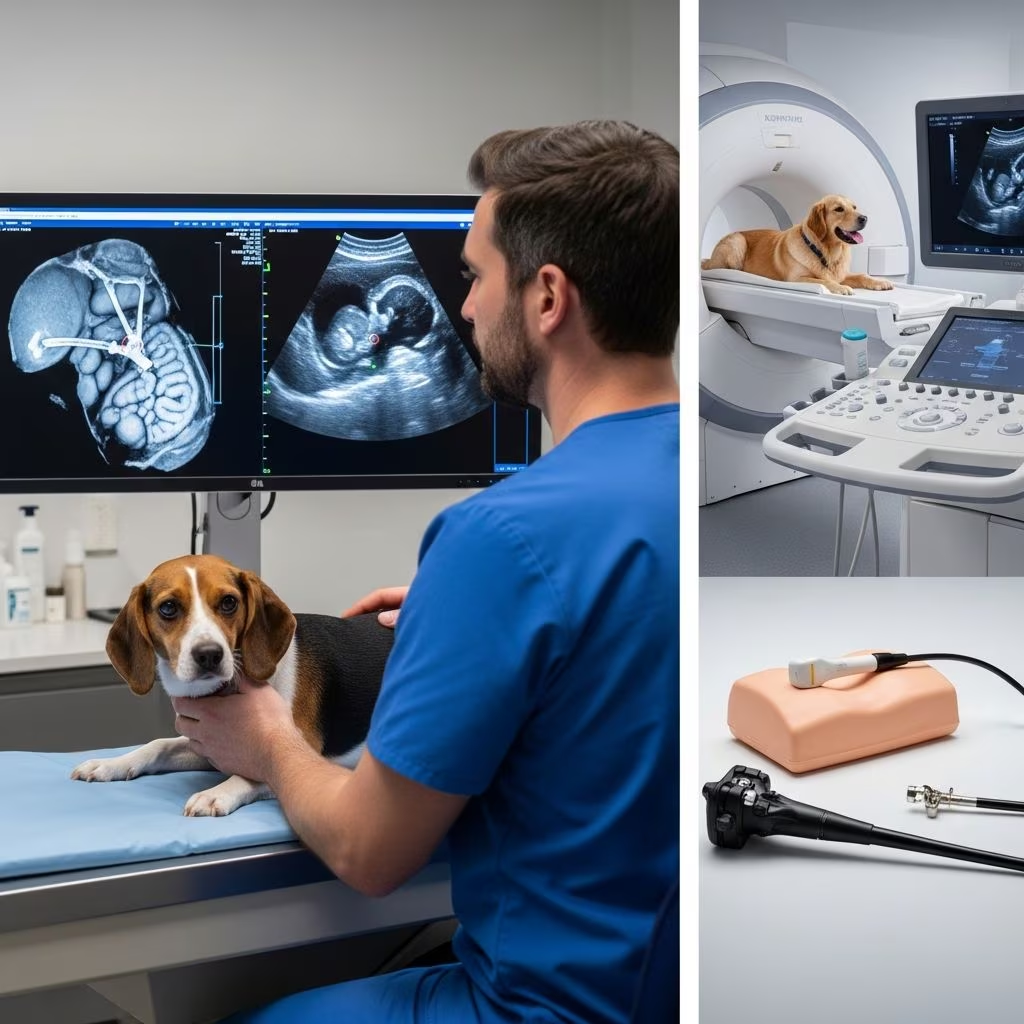
Computed tomography represents one of the most significant technological advances in veterinary medicine over the past several decades. This imaging modality has fundamentally transformed how veterinarians approach complex diagnostic challenges, enabling detection of conditions that were previously difficult or impossible to identify with conventional imaging methods. As animal healthcare continues to evolve, understanding the capabilities and applications of CT scanning has become essential for veterinary professionals and informed pet owners alike.
The Evolution of Cross-Sectional Imaging in Animal Medicine
The introduction of CT technology to veterinary practice marked a watershed moment in diagnostic capabilities. While the first commercially available CT scanner was developed in 1972, veterinary applications didn’t emerge until the 1980s, when researchers began exploring its potential for investigating central nervous system diseases and neoplastic conditions in canines. This relatively recent adoption has revolutionized the field, with CT now considered one of the most valuable diagnostic tools available to veterinary professionals.
Modern CT scanners have evolved significantly since their initial introduction to veterinary medicine. Contemporary facilities now commonly employ multi-slice scanners with 8 to 64 slice capabilities, capable of imaging animals across a wide spectrum of sizes and anatomical complexities. These advanced systems can acquire up to 620 images simultaneously and complete comprehensive abdominal or thoracic scans in approximately 10 seconds, representing a dramatic improvement over the extended scanning times required just decades ago.
Understanding the Technical Foundations of CT Imaging
Computed tomography operates on a fundamentally different principle than conventional radiography. Rather than producing a single two-dimensional projection image, CT utilizes rotating X-ray beams that circumnavigate the patient’s body, creating detailed cross-sectional data of internal structures. This approach provides several distinct advantages over traditional imaging methods.
The technical superiority of CT stems from its ability to generate axial slices of the region being examined, allowing significantly greater differentiation of soft tissue structures compared to conventional radiography. Additionally, CT scanning substantially reduces scatter radiation, resulting in enhanced image contrast and improved diagnostic clarity. Modern helical CT technology has enabled innovative techniques including spiral CT angiography and high-resolution imaging applications, expanding the diagnostic possibilities available to veterinary practitioners.
Clinical Applications Across Different Animal Species
Small Animal Diagnostics
In small animal practice, CT has established itself as the standard imaging modality for numerous conditions and anatomical regions. Veterinarians frequently employ CT to evaluate intracranial and extracranial lesions, spinal pathology, appendicular skeletal disorders, and thoracic and abdominal diseases. The modality’s rapid acquisition capabilities prove particularly valuable in emergency and critical care situations where minimizing anesthesia duration is essential.
One particularly significant application involves the diagnostic evaluation of skull anatomy and pathology. CT scans of the skull provide substantially more diagnostic information than conventional radiographs because the complex overlapping structures visible on traditional images are clearly differentiated on CT images, leading to more accurate and specific diagnoses and improved treatment outcomes. This capability extends to detection of various cranial pathologies that would be obscured on conventional films.
Equine and Large Animal Applications
Equine veterinary medicine represents another area where CT has become particularly valuable, especially for evaluating skull diseases, cervical vertebral column conditions, and appendicular skeletal structures. In equine dental and sinus disease diagnosis, CT provides unparalleled detail for identifying conditions contributing to head pain and performance problems—critical considerations in the competitive equestrian environment.
To accommodate the challenges of imaging large animals, some equine facilities have developed specialized standing CT configurations where horses remain conscious on a platform with their head passing through the scanner gantry, minimizing the anesthetic risks associated with general anesthesia. This innovation demonstrates how veterinary medicine continues to adapt imaging technology to species-specific needs.
Exotic and Zoo Animal Imaging
Beyond traditional companion animals, CT technology has proven instrumental in diagnosing and managing diseases in exotic and wild animals. Case examples demonstrate CT’s diagnostic power—such as identifying nodal masses, pulmonary granulomas, and gastric foreign objects in sea turtles with failure to thrive. Portable CT systems, such as battery-powered 32-slice scanners, have enabled imaging of large exotic animals, including rhinoceroses weighing over 2,300 pounds.
Specialized Imaging Techniques and Therapeutic Applications
Image-Guided Interventional Procedures
Beyond diagnostic applications, CT has become invaluable for guiding invasive procedures including biopsy and aspirate collection from anatomically challenging locations such as the lungs, spine, and brain—areas inaccessible to ultrasound-guided approaches. This image-guided capability enables precise sampling with minimal tissue trauma and eliminates the need for exploratory surgical procedures, significantly reducing the impact of diagnostic intervention on patient recovery.
The same image-guided technology supports therapeutic applications, particularly in radiation oncology. CT has become the principal planning and monitoring tool for tumor staging, assessment of treatment response, and radiation therapy guidance. This integration of diagnostic imaging with therapeutic planning represents a paradigm shift in comprehensive cancer management for veterinary patients.
Detection of Structural and Functional Pathology
CT’s versatility extends to identifying a broad spectrum of pathological conditions. The modality readily detects structural abnormalities including tumors, abscesses, vascular anomalies, occult fractures, and hematomas. Beyond static structural changes, modern high-speed CT systems can evaluate dynamic physiological processes including blood flow patterns, respiratory volume changes, cardiac function, and intestinal dynamics.
Anatomical Systems Commonly Evaluated with CT Imaging
| Anatomical Region | Primary Applications | Diagnostic Advantages |
|---|---|---|
| Skull and Brain | Cranial pathology, intracranial lesions, sinusitis, dental disease | Superior differentiation of overlapping structures compared to radiography |
| Spine | Vertebral fractures, myelopathy, disk disease, trauma | Clear visualization of small bones and surrounding soft tissues |
| Thorax | Lung nodules, mediastinal masses, rib fractures, cardiac assessment | Rapid acquisition in emergency situations; enhanced soft tissue contrast |
| Abdomen | Organ pathology, vascular abnormalities, abdominal masses | Comprehensive visualization of hepatic abnormalities and organ disorders |
| Extremities and Joints | Fracture evaluation, arthropathy, bone neoplasia, ligamentous injury | Detailed assessment of complex joint structures and occult fractures |
Technical Advances Enabling Broader Clinical Application
Micro-Computed Tomography
Beyond conventional CT, micro-computed tomography (μCT) has emerged as a valuable tool particularly suited for smaller animals and research applications. Micro-CT maintains the fundamental principles of conventional CT while operating at enhanced spatial resolution and reduced cost. The modality demonstrates particular sensitivity for skeletal and pulmonary imaging, making it valuable for detecting conditions such as osteopenia—a state of reduced bone density—in cats, rats, and guinea pigs.
Three-Dimensional Reconstruction Capabilities
An increasingly important capability involves creating three-dimensional reconstructions from CT datasets. These reconstructions provide significant value for surgical planning, allowing surgeons and medical personnel to develop comprehensive pre-operative strategies. Additionally, three-dimensional reconstructions serve as valuable educational tools for teaching advanced animal anatomy and physiology to veterinary students and professionals.
Clinical Considerations and Patient Factors
Anesthetic Implications
The rapid acquisition capabilities of modern CT systems provide distinct advantages for patients in which prolonged anesthesia poses significant risks. In certain situations, particularly with critically ill or physiologically compromised animals, the speed of CT scanning enables diagnostic imaging without the extended anesthetic exposure required by other modalities. This represents a crucial capability in emergency medicine and critical care contexts.
Species and Size Considerations
While CT technology has become increasingly accessible across species, practical limitations remain based on animal size and gantry dimensions. Thoracic and abdominal CT examinations in horses are generally limited to neonates or small breed animals, depending on the dimensions of available equipment. Conversely, specialized standing CT setups now allow imaging of conscious adult horses, demonstrating how veterinary medicine continues expanding technological applications.
The Future of CT Technology in Veterinary Medicine
Ongoing research and technological development continue expanding CT’s capabilities and accessibility in veterinary practice. Current advancement efforts focus on developing movement-restricting devices and advanced technology integration that enables CT image acquisition without requiring general anesthesia, thereby reducing morbidity associated with anesthetic protocols. Such innovations promise to make CT imaging safer and more accessible across a broader range of veterinary patients.
The integration of CT imaging with other advanced technologies and techniques continues to enhance diagnostic accuracy and therapeutic planning. As veterinary practices increasingly adopt this advanced imaging modality, CT is becoming the new standard of care for numerous conditions that were previously managed with less precise diagnostic approaches.
Frequently Asked Questions About Veterinary CT Imaging
What makes CT imaging superior to conventional radiography?
CT provides cross-sectional images with significantly enhanced soft tissue contrast, eliminates overlapping anatomical structures, reduces scatter radiation, and enables three-dimensional reconstruction—capabilities unavailable with conventional two-dimensional radiography. This is particularly valuable for complex anatomical regions such as the skull.
Can all animals undergo CT imaging?
While CT technology has become increasingly versatile, limitations exist based on animal size and the CT gantry dimensions. Small animals and exotic species benefit from standard CT protocols, while large animals like adult horses may require specialized standing configurations. Modern portable CT systems have expanded imaging possibilities across diverse species.
Is anesthesia always required for veterinary CT scanning?
Anesthesia requirements depend on the animal’s ability to remain still during scanning. Modern rapid acquisition protocols sometimes enable diagnostic imaging in critically ill or unstable patients without extended anesthetic exposure. Specialized standing CT configurations allow some large animals to be imaged while conscious.
How does CT imaging assist in cancer treatment?
CT serves as the principal tool for tumor staging, assessment of treatment response, and radiation therapy planning and guidance. This integration of diagnostic imaging with therapeutic planning enables precise treatment delivery and monitoring of therapeutic effectiveness.
Conclusion: Transforming Veterinary Diagnostics
Computed tomography has fundamentally transformed veterinary diagnostic medicine, enabling detection and characterization of diseases that were previously difficult or impossible to identify. From small companion animals to large equine patients and exotic wildlife, CT imaging provides detailed, accurate diagnostic information that enhances clinical decision-making and improves treatment outcomes. As technology continues to advance and becomes increasingly accessible to veterinary practices, CT imaging will likely become even more central to comprehensive veterinary healthcare delivery. The continued evolution of CT technology promises further expansion of its applications while improving safety, speed, and accessibility across diverse animal populations.
References
- Modern CT applications in veterinary medicine — National Center for Biotechnology Information (NCBI). 2002. https://pubmed.ncbi.nlm.nih.gov/11796898/
- Computed tomography in small animals—basic principles — National Center for Biotechnology Information (NCBI). 2006. https://pubmed.ncbi.nlm.nih.gov/16516508/
- Use of CT Scanner in Veterinary Medicine — Neurologica. Accessed February 2026. https://www.neurologica.com/blog/ct-scanner-veterinary
- How do veterinarians use CT — Imaginalis Imaging / Epica Animal Health. Accessed February 2026. https://www.imaginalisimaging.com/post/how-do-veterinarians-use-ct
- Computed Tomography in Animals – Clinical Pathology and Procedures — Merck Veterinary Manual. Accessed February 2026. https://www.merckvetmanual.com/clinical-pathology-and-procedures/diagnostic-imaging/computed-tomography-in-animals
- Computed Tomography (CT) — UC Davis Veterinary Medicine. Accessed February 2026. https://www.vetmed.ucdavis.edu/hospital/diagnostic-imaging/small-animal/ct
- What are the clinical indications for a CT? — DiploVets. Accessed February 2026. https://www.diplovets.com/en/news-room/detail/article/what-are-the-clinical-indications-for-a-ct.html



