

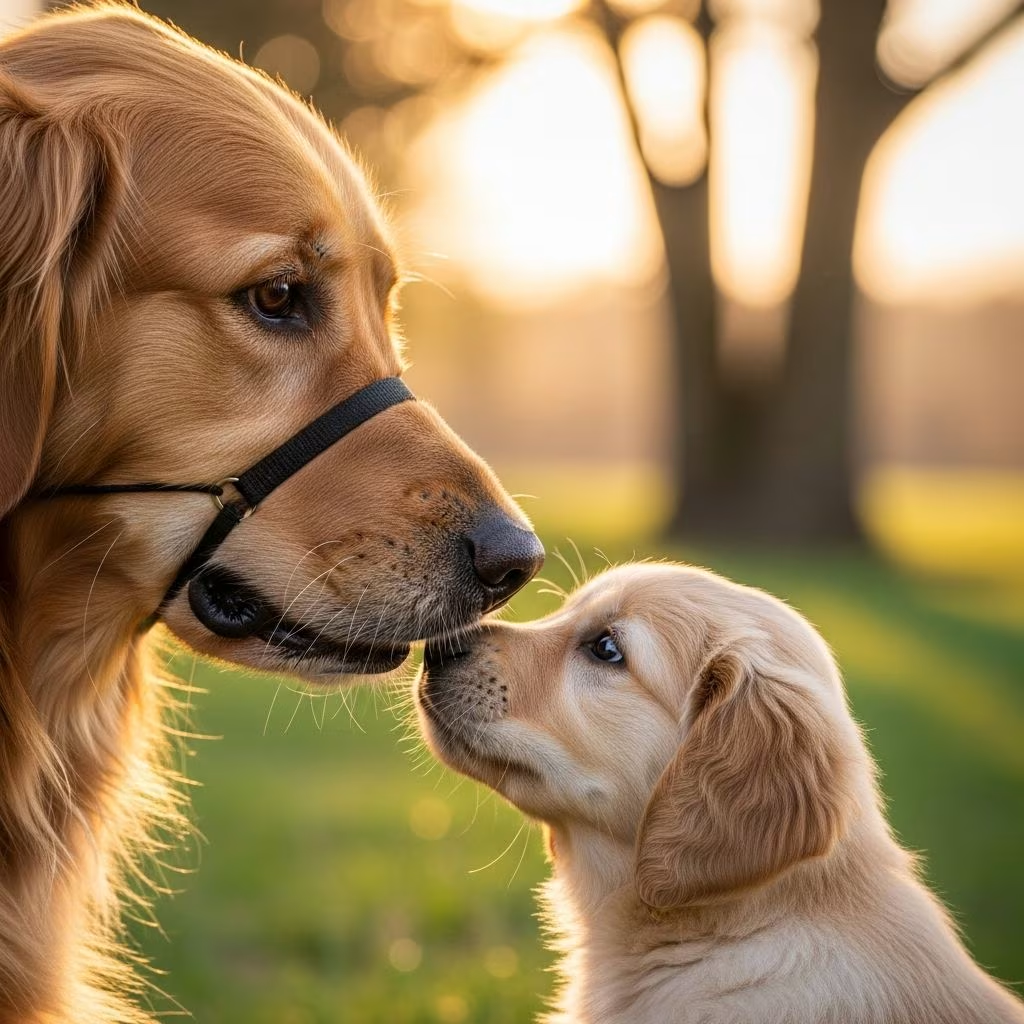
This gentle yet intriguing action, where an adult dog takes a puppy’s muzzle softly in its jaws, is a cornerstone of canine social life. Far from aggression, it serves as a vital communication tool that reinforces hierarchies, builds trust, and maintains pack cohesion. Rooted in the evolutionary history shared with wolves, this behavior helps puppies learn boundaries while assuring them of their place in the family.
The Evolutionary Roots of Muzzle Grasping in Canines
Muzzle grasping traces back to ancestral canid behaviors, emerging as both a parental correction mechanism and playful interaction among young. In wild canid packs, such as wolves, mothers use this to wean pups by deterring suckling, often around five to seven weeks of age. Pups initially react with whimpers, interpreting the grasp as a firm but harmless signal to pause.
Over generations, natural selection favored this non-violent touch because it fostered survival advantages. Cubs practicing it during play, typically from six to nine weeks, refine bite inhibition—learning to grasp without clamping down. This prevents escalation into fights, cultivating mutual trust: ‘We handle each other carefully’. Field studies, like those by Packard, Mech, and Ream in 1992, observed wolves using muzzle contact during play and weaning, confirming its role as a ritualized signal rather than attack.
In domestic dogs, this trait persists, adapted to home environments. Puppies solicit it from adults, rolling belly-up in voluntary submission, seeking reassurance of acceptance.
How Muzzle Grasping Functions in Puppy-Parent Dynamics
Mothers initiate most early instances to manage litters. A light grasp, sometimes with a low growl, interrupts nursing or rough play without injury. Contrary to old beliefs, dams rarely pin pups; most yield immediately, exposing their underside in passive submission. This teaches self-control and respect for elders.
As litters mature, fathers or pack leaders—often the alpha male—join in. Pups actively invite these figures, nuzzling forward to prompt the grasp. It symbolizes, ‘Demonstrate your strength gently; I yield,’ affirming the adult’s dominance and the pup’s security. Such interactions are most common among familiars, never strangers, underscoring its relational purpose.
| Context | Purpose | Puppy Response |
|---|---|---|
| Weaning | Stop suckling | Whimper, then submit |
| Play correction | Interrupt bullying | Freeze or roll over |
| Social affirmation | Confirm rank | Nose lick, yawn |
Social Bonding: Why Adults Target Puppies Specifically
Adult dogs direct muzzle grabs toward puppies to reaffirm roles post minor squabbles, like resource access. It’s not punitive but reconciliatory, akin to ‘You’re still my little one’. Confident adults grasp insecure youngsters, who respond submissively, solidifying pack structure without violence.
Puppies benefit immensely, gaining confidence through predictable, gentle dominance displays. This mirrors wild packs where adults model restraint, essential for group harmony. In multi-dog homes, observe adults using it sparingly on bold pups overstepping during meals or toys.
- Strengthens trust: No biting involved, just hold.
- Teaches inhibition: Pups learn pressure control via reciprocity.
- Reduces future conflicts: Establishes clear, non-aggressive hierarchies.
Play Among Peers: Early Lessons in Gentle Control
Littermates muzzle grasp from six weeks, turning roughhousing into controlled fun. A pup halts another’s pounce by softly seizing the muzzle, practicing future adult roles. Mistakes prompt yelps, enforcing soft mouths—a lifelong skill.
This peer practice builds resilience. Grasp recipients learn tolerance, rarely retaliating harshly if playmates are known. It evolves from maternal origins into a versatile tool for all ages, always among trusted companions.
When Adult Dogs Muzzle Human Family Members
Dogs may nudge owners’ hands, inviting reciprocal grasp. Gently holding their muzzle mimics pack reassurance, prompting licks or yawns—signs of calm. Owners doing this demonstrate leadership akin to alphas, saying ‘I control safely; you’re secure.’ Avoid force; release after seconds for relaxation.
Benefits include de-escalating stress, but only with relaxed dogs. Tense animals may misinterpret as threat.
Spotting Normal vs. Problematic Muzzle Grasps
Healthy grabs last seconds, with relaxed jaws and puppy compliance—no screams or wounds. Post-grasp, pups relax or play on.
Red flags: Prolonged holds, shaking, growls with tension, blood, or puppy panic. These signal poor socialization, pain, or dominance fights. Intervene by distracting, separating if needed.
- Normal: Soft mouth, quick release, puppy rolls over happily.
- Concerning: Hard bite, dragging, fear in puppy eyes.
Health Checks Before Allowing Interactions
Ensure puppies are vaccinated, parasite-free. Adults need clean bills—no dental issues causing grumpiness. Age matters: Pups under 8 weeks need dam supervision; older ones handle more. Monitor for resource guarding triggering grabs.
Fostering Positive Multi-Dog Introductions
Introduce slowly: Neutral turf, leashed walks first. Reward calm, supervise closely. If grabbing occurs naturally and gently, let it proceed—it’s education. Train ‘leave it’ for control.
Enrich environments: Toys, puzzles reduce tensions. Positive reinforcement trumps punishment, preserving trust.
Expert Insights on Long-Term Benefits
Ethologists like Roger Abrantes note its persistence across canids, from wolves to dingoes, as adaptive social glue. Regular mild grabs yield confident adults, less prone to bites.
FAQs
Is muzzle grabbing by adults harmful to puppies?
No, when gentle and brief, it’s a natural, reassuring signal building bite inhibition and bonds.
Should I stop my adult dog from doing this?
Only if aggressive; otherwise, supervised normalcy aids socialization.
Can I muzzle grab my dog?
Yes, softly on calm dogs for bonding, mimicking pack leaders.
Why do puppies invite it?
To confirm acceptance and elder control, feeling secure.
How does it differ from biting?
Grasping is open-mouthed hold without pressure; biting inflicts pain.
Conclusion
Understanding muzzle grasping empowers owners to nurture thriving multi-dog families. Embrace this instinct thoughtfully for harmonious homes.
References
- Why Do Dogs Muzzle Grab One Another? — Dog Star Daily. Accessed 2026. https://www.dogstardaily.com/blogs/why-do-dogs-muzzle-grab-one-another
- Why Dogs and Wolves ‘Muzzle Grab’ & Why I Do it to My … — YouTube (Roger Abrantes). Accessed 2026. https://www.youtube.com/watch?v=6bUWvIRwelE
- Muzzle Grasp Behavior in Canids — Roger Abrantes, Ethology.eu. 2025-11-10. https://rogerabrantes.com/2025/11/10/muzzle-grab-behavior-in-canids/
- Canine Muzzle Grasp Behavior—Advanced Dog Language — Ethology.eu. Accessed 2026. https://ethology.eu/canine-muzzle-grasp-behavior-advanced-dog-language/
- The Muzzle Grab — Wolfdog Project (PDF). Accessed 2026. https://wolfdogproject.com/uploads/tmg.pdf



