

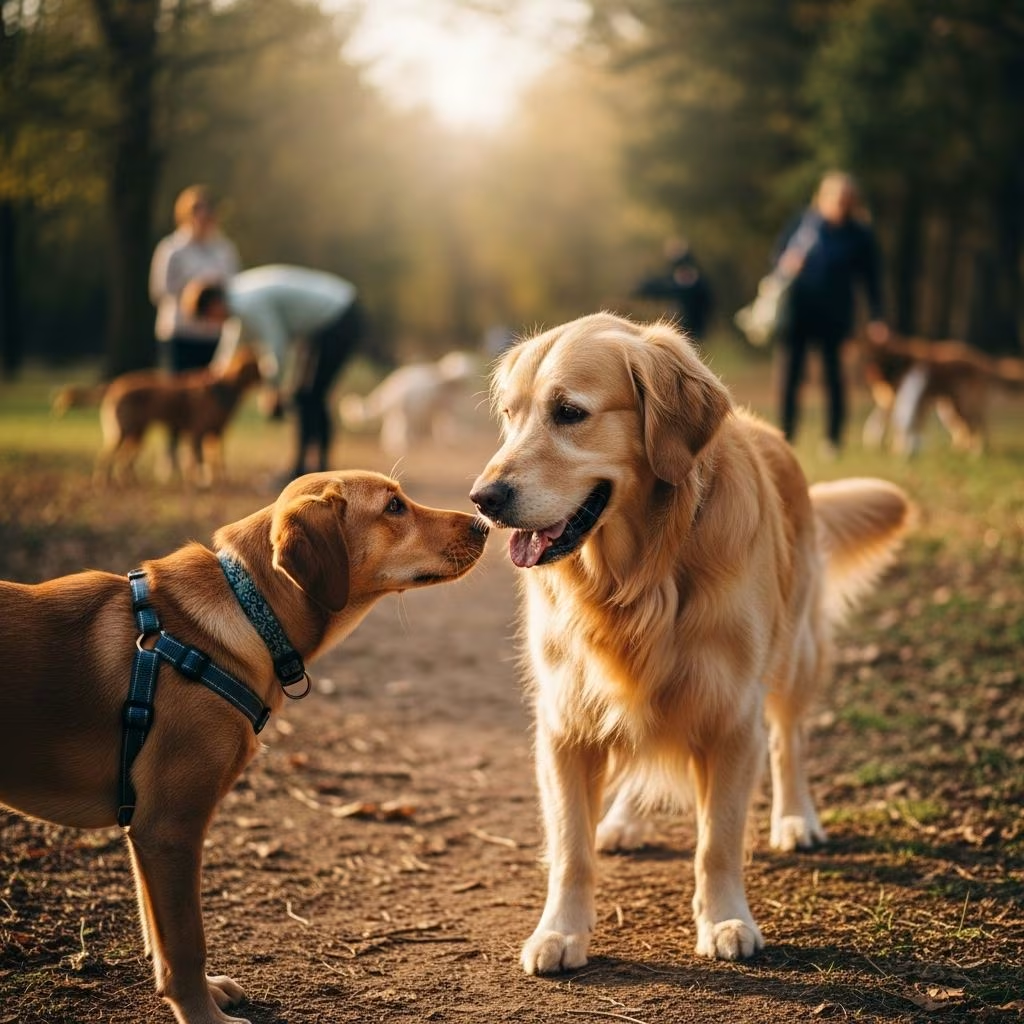
Many dog owners assume that socialization is exclusively a puppy endeavor, completed during the first few months of a dog’s life. However, this misconception leaves countless mature dogs struggling with anxiety, fear, and behavioral challenges that could be significantly improved through thoughtful, age-appropriate socialization. Whether you’ve recently adopted a rescued adult dog or are working with a longtime family pet who has had limited social experiences, the path to greater confidence and well-adjusted behavior is absolutely achievable.
The journey of socializing an older dog differs substantially from introducing a young puppy to the world. Adult dogs often carry ingrained behavioral patterns, possible trauma from previous experiences, and a more cautious approach to novel situations. Yet this reality should not discourage you—patience, consistency, and a structured approach can unlock meaningful improvements in your dog’s ability to navigate their environment with greater ease and enjoyment.
Understanding Why Mature Dogs Need Socialization
Socialization is fundamentally about helping dogs develop comfort and confidence across a variety of situations, environments, people, and other animals. While early socialization during puppyhood creates an important foundation, dogs of any age benefit from continued exposure to new experiences. An adult dog who has missed these foundational experiences faces distinct challenges: they may have developed ingrained fear responses, may have had negative encounters that created lasting associations, or simply lack the baseline familiarity with everyday stimuli that puppies naturally acquire.
The behavioral manifestations of insufficient socialization in adult dogs can vary widely. Some dogs may display excessive barking at unfamiliar sounds, become defensive around other animals, show anxiety during car rides, or exhibit reluctance to interact with visitors. Others might freeze in new environments, display resource-guarding behaviors, or become overly reactive to routine changes. Understanding that these behaviors stem from a lack of exposure—rather than inherent defects in the dog’s personality—is the first step toward productive intervention.
Establishing Your Dog’s Current Comfort Baseline
Before implementing any socialization strategy, invest time in honestly assessing your dog’s current comfort level across different domains. Create a comprehensive inventory of situations, environments, and interactions that trigger stress, anxiety, avoidance, or excessive excitement in your dog. This might include specific locations (veterinary clinics, crowded streets, pet stores), types of people (children, uniformed individuals, people with distinctive appearances), environmental sounds (fireworks, thunderstorms, vacuum cleaners), or other dogs and animals.
Once you’ve identified these trigger points, rank them in order of severity and frequency. This prioritization becomes your roadmap. Rather than attempting to address every anxiety simultaneously, you’ll focus your efforts where they matter most—on the situations your dog encounters regularly or that cause the most significant distress.
Within this assessment, also identify your dog’s baseline comfort zone. Perhaps your dog feels secure in the backyard but becomes tense walking through the front yard. Maybe they’re comfortable around specific family members but anxious around strangers. These existing comfort zones serve as your starting point, allowing you to build confidence incrementally rather than asking your dog to make impossible leaps.
Mastering the Foundation: Building Essential Skills First
Before expanding your dog’s social world significantly, establish fundamental communication tools that will serve as anchors throughout the socialization process. These foundational skills include reliable name recognition, understanding the “touch” command, basic sit and stay behaviors, and strong leash manners. These aren’t arbitrary requirements—they provide you with practical mechanisms to redirect your dog’s attention, reward positive behavior, and maintain safety during potentially challenging situations.
A dog who responds reliably to their name has an immediate way to re-engage with you when they become overwhelmed. The touch command, where a dog learns to nose or paw your hand on cue, creates an interactive game that builds confidence while strengthening your bond. These foundational skills transform you from a passive observer of your dog’s anxiety into an active problem-solver who can guide their behavior productively.
Spend several weeks reinforcing these basics in your dog’s existing comfort zone before moving forward with expanded socialization efforts. This investment yields significant returns throughout your socialization journey.
The Progressive Exposure Strategy: Meeting Your Dog Where They Are
The cornerstone of successful adult dog socialization is the principle of proceeding at your individual dog’s pace rather than adhering to a predetermined timeline. This approach, often called gradual desensitization, involves slowly exposing your dog to triggers at a distance or intensity where they feel safe, then incrementally increasing the challenge as comfort builds.
Consider a dog who becomes anxious around other dogs. Rather than immediately enrolling in a group training class, begin by walking past other dogs from a considerable distance while your dog remains calm and rewarding that calm state generously. As weeks pass, gradually decrease the distance or increase the duration of exposure. This measured approach prevents your dog from becoming so overwhelmed that they create additional negative associations.
The principle is straightforward: move at a pace that allows your dog to succeed and feel rewarded, never at a pace that induces panic or excessive anxiety.
Leveraging Daily Walks as Socialization Opportunities
Regular walks offer accessible, repeated exposure to environmental stimuli without requiring special arrangements or significant time investments. Each walk presents opportunities to encounter different sights, sounds, smells, people, and potentially other animals. Importantly, walks provide a structured routine that helps your dog develop increasing familiarity and comfort with familiar routes and locations.
Vary your walking routes periodically to expose your dog to different neighborhoods, different times of day, and different weather conditions. Weekday morning walks may present different stimuli than weekend afternoon walks. A quiet suburban street offers vastly different experiences than a busier commercial area. By strategically varying your walks, you’re gradually expanding your dog’s comfort zone in a manageable way.
During walks, carry high-value treats to reward your dog for calm behavior in the presence of novel stimuli. When your dog encounters something potentially anxiety-inducing but remains settled, that moment of calm is precisely what you want to reinforce. If your dog becomes overly stressed during a walk, recognize this as valuable information about their current comfort limits and adjust accordingly—turning around and returning to familiar territory is a perfectly valid response that respects your dog’s emotional state.
Introducing Canine Companions: Strategic Meetings Between Dogs
Many adult dogs benefit from positive interactions with other canines, yet these introductions require careful planning to ensure success. Begin by selecting an appropriate canine companion for your dog’s first or early socialization experiences. Ideally, this should be a calm, well-socialized adult dog whose temperament complements your dog’s personality rather than amplifying their anxiety.
Orchestrate initial meetings in environments where both dogs feel relatively comfortable. A familiar walking route works better than a dog park for a first meeting. Keep both dogs on appropriately secured leashes to maintain control should the interaction become uncomfortable. The initial goal isn’t robust play but rather calm coexistence and successful sniffing without tension.
If the initial meeting proceeds positively, reward both dogs generously for their calm behavior. Plan regular follow-up meetings with the same canine companion, gradually extending playtime and increasing the complexity of interactions as both dogs become more comfortable together. This repetition with a consistent partner builds confidence more effectively than exposing your dog to numerous different dogs simultaneously.
Human Socialization: Building Comfort With People
Dogs who struggle with people anxiety require a different approach than those who fear other animals. Rather than imposing contact, create situations where your dog controls the interaction’s pace. Invite friends to your home and ask them initially to completely ignore your dog—no eye contact, no attempts at petting, no direct communication. This removes the pressure your dog might feel and allows them to approach on their own terms.
As your dog shows increased comfort, your guest can begin tossing occasional treats without direct interaction. Eventually, your guest might offer a treat directly from their hand, building positive association between new people and rewarding experiences. Only after your dog demonstrates genuine comfort should typical petting interactions occur.
Progress systematically from meeting individual people in controlled home environments to meeting additional individuals. Expand gradually to brief public interactions, then small group settings, reserving large social gatherings for later stages of your dog’s socialization journey. This incremental approach prevents overwhelming your dog while building their confidence progressively.
Managing Exposure to Puppies and Children
Dogs with limited socialization history often respond unpredictably to puppies and children, whose behavior is inherently less predictable than that of calm adults. Approach these interactions with particular care and consistent supervision. Apply the same gradual exposure principles used with adults, ensuring your dog experiences success at each stage before progressing.
Maintain control during all interactions with children and puppies—these shouldn’t be unsupervised situations until your dog has demonstrated consistent comfort and appropriate behavior over extended periods. Keep the environment calm, reward positive interactions richly, and be prepared to end the interaction if your dog shows signs of increasing stress or if the young person’s behavior becomes erratic.
Desensitization Techniques for Specific Anxieties
Beyond social interactions, many adult dogs struggle with specific environmental stimuli: loud noises, vehicle travel, veterinary visits, or novel objects and equipment. Systematic desensitization provides a structured approach to these challenges. Identify the specific trigger, determine the distance or intensity at which your dog can remain calm, and repeatedly expose your dog to the trigger at that safe level.
For example, a dog anxious about thunderstorms might begin by listening to recordings of distant thunder at very low volume while receiving treats and praise for calm behavior. Over weeks, gradually increase the volume while maintaining your dog’s calm state. This approach retrains your dog’s automatic response from anxiety to calm through repeated positive associations.
Professional Support and Training Classes
While many socialization efforts can occur independently, professional guidance offers significant value, particularly when your dog’s anxiety or behavioral challenges seem particularly entrenched. Group training classes designed for adult or fearful dogs provide controlled environments where your dog experiences managed exposure to multiple people and dogs simultaneously. These classes offer the additional benefit of professional instruction to help you recognize subtle signals of stress and adjust your approach accordingly.
Some situations warrant one-on-one professional support: if your dog shows signs of aggression, displays extreme anxiety that impedes progress, or has traumatic history you’re uncertain about managing safely. A qualified trainer or behaviorist can develop a customized plan addressing your specific dog’s needs and challenges.
The Critical Role of Positive Reinforcement and Patience
Throughout every stage of socialization, positive reinforcement—through treats, praise, play, or toys—teaches your dog that new experiences and unfamiliar stimuli lead to rewarding outcomes. This retraining of your dog’s emotional response happens gradually and requires consistency. Every interaction is an opportunity to strengthen the association between novel situations and positive consequences.
Equally important is patience with the process itself. Adult dogs with limited socialization history cannot be rushed. Behavioral patterns that developed over months or years require time to shift. Progress may feel slow and sometimes imperceptible, but consistency compounds over weeks and months into meaningful change. Expecting rapid transformation sets yourself up for frustration; expecting gradual improvement keeps you motivated and realistic.
Monitoring Progress and Adjusting Your Approach
Socialization isn’t a linear process with a clear finish line. Rather, it’s an ongoing practice of gradually expanding your dog’s comfort zone. Monitor your dog’s responses to evaluate what strategies are working effectively and where additional effort might be needed. A dog who began walks shaking with anxiety but now walks calmly has made genuine progress—even if they’re not yet ready for busy downtown streets.
Record specific behavioral improvements: reduced barking at doors, calmer responses to visitors, increased comfort during car rides, or willingness to approach new people. These concrete observations help you recognize success that might otherwise go unnoticed when measuring against an idealized endpoint.
Common Obstacles and Solutions
Setbacks and Regression: Occasionally, a single negative experience or period without consistent practice can result in apparent regression. This is normal and doesn’t erase previous progress. Resume your structured approach without frustration, recognizing that progress may require reinforcement.
Excessive Speed: Pushing your dog too quickly toward socialization goals backfires, creating additional anxiety and resistance. Slower, more consistent progress yields better long-term outcomes than rapid exposure that overwhelms your dog.
Inconsistent Implementation: Socialization requires consistent practice and messaging from everyone interacting with your dog. Family members or caregivers who accidentally reinforce anxious behavior through comfort or coddling can undermine your progress.
The Long-Term Benefits of Adult Dog Socialization
Investing time and effort in socializing your adult dog yields rewards extending far beyond simple behavioral improvements. Dogs who develop greater comfort and confidence in varied situations experience reduced stress across their daily lives, potentially leading to improved physical health outcomes. More confident dogs are safer dogs—they’re less likely to react unpredictably or aggressively when encountering novel situations. Perhaps most importantly, socialization expands your dog’s world, enabling them to participate more fully in your life and activities.
The timeline for meaningful improvement varies individually, but most dogs show noticeable progress within several months of consistent effort. Many continue improving over years, their confidence deepening with continued positive experiences. It’s genuinely never too late to help your dog become more comfortable, more confident, and more capable of enjoying the world around them.
References
- How to Socialize a Dog: Proven Tips for Adult Dogs — Hounds Lounge. https://www.houndslounge.com/blog/how-to-socialize-an-adult-dog-and-why-its-never-too-late/
- The Importance of Socialization in Puppies and Adult Dogs — Precision Dog Trainer. https://precisiondogtrainer.com/the-importance-of-socialization-in-puppies-and-adult-dogs/
- 5 Tips to Socialize Your Adopted Adult Dog — Dogtopia. https://www.dogtopia.com/blog/5-tips-to-socialize-your-adopted-adult-dog/
- How To Socialize An Adult Dog — Guide Dog Foundation. https://www.guidedog.org/gd/events-and-news/How_To_Socialize_An_Adult_Dog.aspx



