

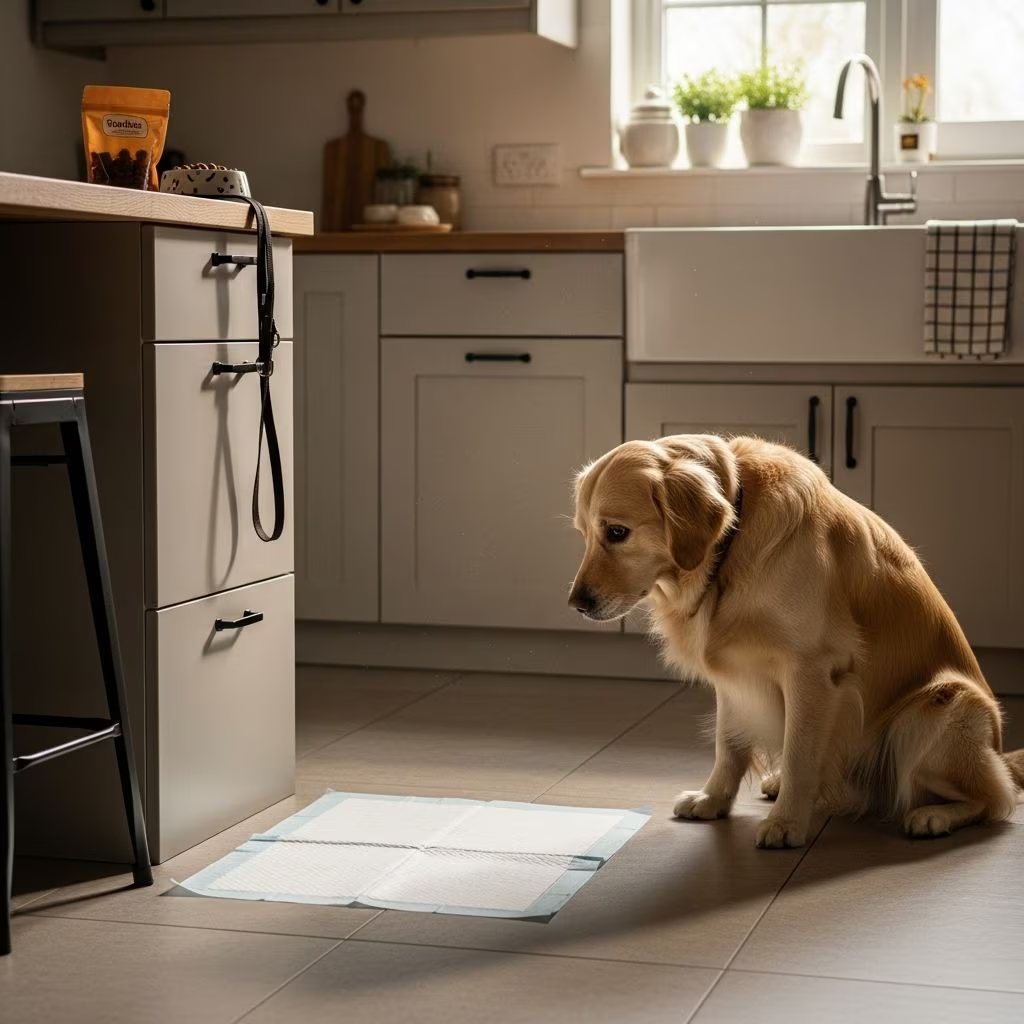
Many dog owners assume that adult dogs cannot learn new behaviors or break established habits. However, research on canine learning and development demonstrates that mature dogs possess distinct advantages over puppies when it comes to acquiring new skills. While puppies require frequent potty breaks due to their developing bladders, adult dogs can control their elimination for extended periods, making them capable of understanding and following structured routines. This physiological advantage, combined with their ability to concentrate for longer durations, positions adult dogs as surprisingly apt candidates for remedial housetraining programs.
The challenge of retraining an adult dog typically arises when a dog has developed unwanted elimination habits, whether due to a change in living environment, lack of initial training, or underlying behavioral or medical issues. The remedial process requires a systematic approach that combines environmental management, behavioral modification, and positive reinforcement to replace established patterns with desired behaviors.
Understanding Why Adult Dogs Develop Soiling Issues
Before implementing a remedial training program, it is essential to understand the root causes of inappropriate elimination in adult dogs. Dogs that have not been properly housetrained, or those transitioning to new homes, often struggle with understanding where elimination is appropriate. Additionally, changes in routine, stress, anxiety, or medical conditions can trigger regression in previously housetrained dogs. Identifying whether the issue stems from incomplete training, behavioral anxiety, or health concerns will inform the most effective intervention strategy.
Many adult dogs adopted from shelters or rescue organizations may have experienced inconsistent training or lived in environments where indoor elimination was unavoidable. These dogs have not learned the fundamental distinction between appropriate outdoor elimination sites and indoor living spaces. Others may have been housetrained in their previous homes but lose this understanding when relocated to a new environment with unfamiliar routines and spatial layouts.
The Foundation: Establishing Predictable Daily Routines
The cornerstone of successful remedial housetraining is the establishment of a consistent, predictable daily routine. Dogs are creatures of habit and thrive when their environment follows predictable patterns. Consistency in meal times, potty breaks, exercise, and play sessions creates a framework within which dogs can reliably control their elimination and anticipate opportunities to relieve themselves outdoors.
Structuring Your Dog’s Daily Schedule
Begin by creating a comprehensive daily schedule that incorporates all major activities. This schedule should include:
- First thing in the morning potty break immediately upon waking
- Feeding at consistent times, with food bowls removed 10 to 15 minutes after being placed down
- Potty breaks following meals within 10 to 20 minutes of eating
- Breaks after your dog wakes from extended naps or sleep periods
- Breaks following prolonged play sessions or exercise, as physical activity stimulates the bowels and bladder
- Breaks after your dog drinks water, typically 10 to 20 minutes following consumption
- Regular midday bathroom breaks, spaced approximately one hour apart during the initial training phase
- Evening potty break before bedtime to prevent overnight accidents
This structured approach ensures that your dog has regular, predictable opportunities to eliminate in the designated outdoor area. By adhering strictly to this schedule, you create conditions where your dog learns to anticipate potty time and develops reliable control over elimination urges.
Prevention Through Environmental Management
A critical aspect of remedial housetraining involves preventing opportunities for accidents to occur. Prevention is substantially more effective than attempting to correct mistakes after they happen. The goal is to arrange the home environment and the dog’s daily experience so that inappropriate elimination becomes nearly impossible.
Confinement Strategies
When you cannot actively supervise your dog, confinement to a restricted area is essential. Dogs instinctively avoid soiling their immediate living and sleeping space. By limiting your dog’s access to a smaller area when unsupervised, you leverage this natural behavior to prevent accidents.
Effective confinement options include:
- Crate training: A properly sized crate—large enough for the dog to stand, turn around, and lie down comfortably, but not so large that the dog can eliminate in one corner and sleep in another—serves as a powerful housetraining tool. Dogs naturally resist soiling their sleeping area.
- Gated rooms: Using baby gates or barriers to restrict access to a single room or small area of the home prevents your dog from wandering into bedrooms, carpeted areas, or furniture where accidents are more likely to occur.
- Pen enclosures: Portable exercise pens create a defined space that contains your dog while allowing more room than a crate. These can be equipped with comfortable bedding, water, and engaging toys.
- Leash tethering: When you are home but cannot maintain constant visual supervision, attaching your dog to a leash that tethers them near you prevents unsupervised wandering and allows you to monitor their behavior closely.
Initially, confinement should be used whenever you cannot directly supervise your dog. As your dog demonstrates consistent success with outdoor elimination over a period of several days to weeks, you can gradually expand the confined area and increase periods of unsupervised freedom. This expansion should occur incrementally, with careful observation for regression.
Home Environment Modifications
Beyond confinement, modify your home to remove temptations and opportunities for accidents. Block off access to carpeted areas, bedrooms, and rooms with valuable furnishings or delicate flooring. Temporarily reduce your dog’s access to the full home environment until reliable outdoor elimination is established. This is not punishment; rather, it is thoughtful environmental design that supports your dog’s success.
Direct Supervision and Vigilant Observation
During housetraining, direct supervision is as important as confinement. When your dog is indoors with you, maintain visual contact at all times. This allows you to recognize warning signs that your dog needs to eliminate and respond immediately by taking them outside.
Recognizing Pre-Elimination Signals
Dogs typically display recognizable behaviors before eliminating. These warning signs include:
- Pacing or walking in circles
- Sniffing the ground or walls intensely
- Whining or barking
- Scratching at doors or surfaces
- Becoming suddenly restless or anxious
- Circling around a particular area
When you observe these signals, immediately take your dog outside on a leash to the designated elimination area. By catching your dog before an accident occurs and redirecting them to the appropriate location, you prevent reinforcement of the inappropriate behavior while providing the opportunity for proper elimination.
The Power of Positive Reinforcement
Positive reinforcement is the most effective mechanism for teaching desired behaviors. When your dog eliminates in the correct location, immediate reward teaches them to associate outdoor elimination with desirable outcomes. The reward must be substantial and delivered within seconds of the behavior to be effective.
Choosing Appropriate Rewards
The most effective rewards for housetraining are high-value incentives that your dog receives only for successful outdoor elimination. These might include:
- Small pieces of high-quality meat or cheese
- Special treats reserved exclusively for successful elimination
- Enthusiastic verbal praise combined with physical affection
- Brief periods of free play or running in a safe area after elimination
- Access to a favorite toy or activity
The reward timing is critical. Your dog must receive the reward within one to two seconds of completing elimination to create the neurological association between the behavior and the positive outcome. Rewards delivered later, such as a treat offered after bringing your dog back inside, will not establish the desired connection.
Pairing Multiple Reinforcers
Combining different types of reinforcement enhances learning. Pair treats with verbal praise and physical affection. For some dogs, the opportunity to play or explore the yard after eliminating serves as sufficient reinforcement. Varying the specific reward occasionally prevents habituation and maintains motivation.
Handling Accidents: What Not to Do
Mistakes and accidents are an inevitable part of the remedial training process. How you respond to accidents significantly impacts the trajectory of training success. Punishment-based approaches—including scolding, physical correction, or forcing the dog’s nose into waste—are counterproductive and harmful.
Punishment does not teach dogs to eliminate outdoors; instead, it typically teaches them to fear you or to hide when eliminating. Dogs punished for accidents often develop anxiety around elimination in their owner’s presence, leading to increased indoor soiling or a fear-based relationship with their owner. Additionally, unless you catch your dog in the act of eliminating, they cannot connect the punishment to their behavior.
The Appropriate Response to Accidents
If you witness your dog eliminating indoors, calmly interrupt them with a neutral verbal marker like “outside” and immediately take them outside on a leash to complete elimination in the appropriate location. Reward them for finishing outside. This teaches the correct location without creating fear or confusion.
If you discover an accident after the fact, simply clean the area thoroughly and move forward. Your dog cannot understand punishment for something that occurred in the past. Focus instead on preventing future accidents through better supervision and confinement.
Thorough Cleanup: Removing Scent Markers
When accidents occur, thorough cleanup is essential. Dogs rely heavily on olfactory cues and will be drawn to areas where they have previously eliminated. Use enzymatic cleaners specifically designed to eliminate pet urine and feces completely. Standard household cleaners may mask the smell to humans but fail to eliminate the scent entirely, leaving olfactory markers that encourage repeated accidents in the same location.
Training Protocols for Different Living Situations
The specific housetraining approach may vary depending on your living situation and the dog’s intended elimination location.
Fenced Yard Elimination
If your goal is for your dog to eliminate in a fenced yard while off-leash, the training process requires both leashed and off-leash practice. Initially, use a leash to guide your dog to the designated area, wait for elimination, reward, and then allow freedom to play. This sequence teaches your dog to eliminate first, then enjoy recreational time. Over time, your dog learns that the yard is an appropriate elimination location, and you can gradually increase off-leash freedom.
Leashed Walk Elimination
For dogs that will eliminate during leashed walks, take your dog on leash to a designated area, wait for elimination, and then reward. Allow some sniffing and exploration before and after elimination to make walks enjoyable. With repetition, your dog learns to anticipate potty time during walks and reliably eliminates on schedule.
Apartment and Urban Living
Apartment dwellers and urban residents face unique challenges, as they cannot always accompany their dogs to an outdoor area. For these situations, puppy pads can serve as an intermediate step. Gradually move pads closer to the door and eventually outdoors to transition from indoor elimination to outdoor elimination. Alternatively, create a designated potty area on a patio using artificial grass or sod, allowing your dog to develop a consistent elimination routine without requiring frequent outdoor trips.
Monitoring Progress and Making Adjustments
Remedial housetraining is not a linear process, and progress may fluctuate. Keeping a detailed log of all outdoor eliminations, accidents, times, and any patterns can help you identify when your dog is ready for increased freedom and alert you to any regression that requires renewed confinement.
When your dog consistently goes several days without accidents, you can begin gradually expanding confinement areas and increasing unsupervised time. However, if regression occurs, return to more intensive supervision and confinement immediately. Patience and flexibility are essential throughout the process.
When to Seek Professional Guidance
While most cases of remedial housetraining respond to the strategies outlined above, some situations warrant professional intervention. If your adult dog continues to have frequent accidents despite consistent implementation of these techniques, consult a veterinarian to rule out medical issues such as urinary tract infections, incontinence, or gastrointestinal disorders. Additionally, a certified professional dog trainer or veterinary behaviorist can assess your dog’s specific situation and provide tailored guidance.
Conclusion: Building Success Through Consistency
Remedial housetraining of adult dogs is achievable through systematic application of prevention, routine, positive reinforcement, and patience. By establishing predictable daily routines, managing your home environment to prevent accidents, maintaining direct supervision, rewarding successful outdoor elimination immediately and generously, and avoiding punishment-based responses to mistakes, you create the optimal conditions for your dog to learn and develop reliable housetraining. While the process requires commitment and consistency, most adult dogs demonstrate reliable outdoor elimination within weeks of beginning a structured program.
References
- How to Potty Train an Adult Dog — Purina US. Accessed March 2026. https://www.purina.com/articles/dog/behavior/training/how-to-potty-train-adult-dog
- Housetraining an Adult Dog — American Kennel Club. Accessed March 2026. https://www.akc.org/expert-advice/training/how-to-housetrain-an-adult-dog/
- Housetraining for Adult Dogs — Wisconsin Humane Society. Accessed March 2026. https://www.wihumane.org/housetraining-adult-dogs
- Re-Housetraining Your Adult Dog — PAWS (Progressive Animal Welfare Society). Accessed March 2026. https://www.paws.org/resources/re-housetraining-your-adult-dog/
- Housetraining Survival Guide — Animal Humane Society. Accessed March 2026. https://www.animalhumanesociety.org/resource/housetraining-survival-guide



