

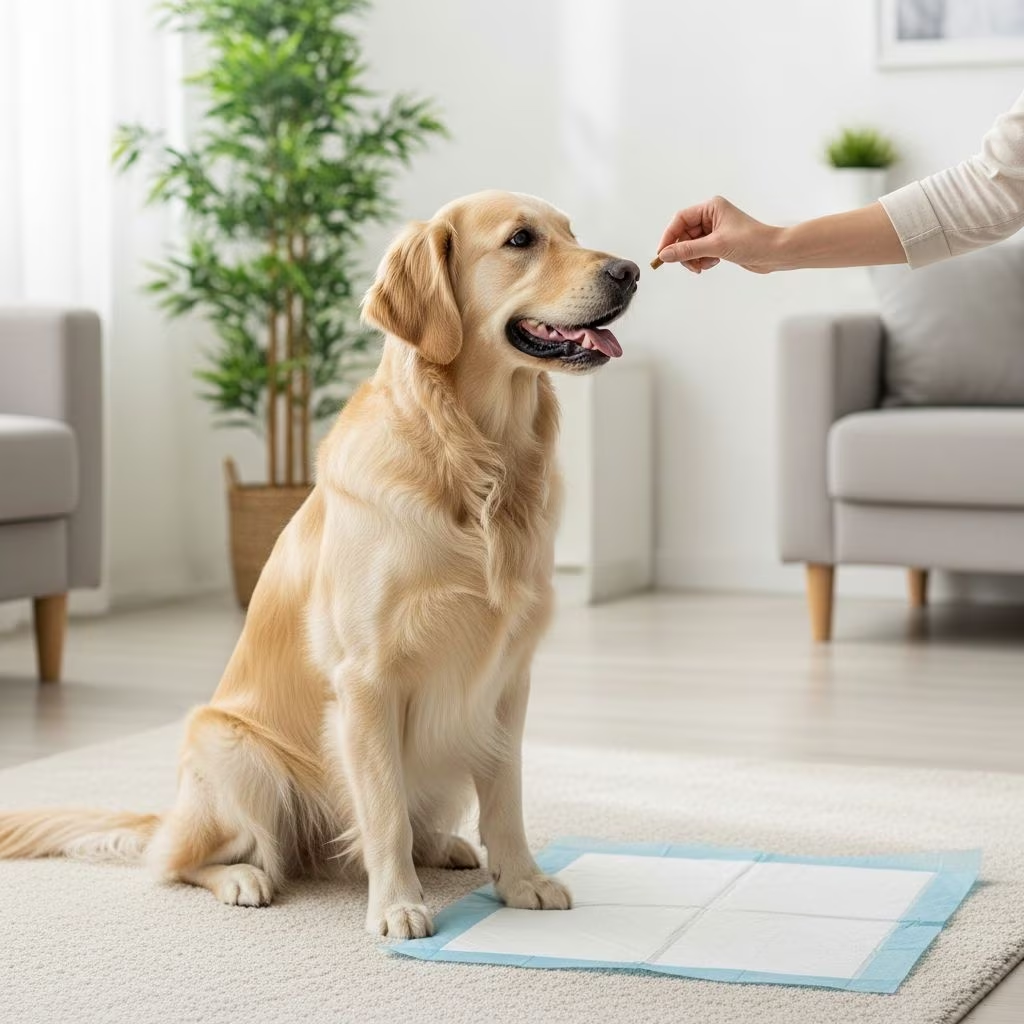
Teaching an adult dog to maintain bathroom habits indoors presents a unique set of challenges that differs significantly from puppyhood training. While mature dogs may possess shorter attention spans and more ingrained habits than younger animals, they also bring advantages that shouldn’t be overlooked. Adult canines demonstrate superior focus capabilities and can sustain longer periods of concentration, making them capable learners despite their reputation for resistance to new behavioral patterns. The key to success lies in understanding that older dogs can absolutely learn new routines when presented with the right combination of consistency, patience, and motivation.
Understanding Your Mature Dog’s Learning Capacity
Many pet owners mistakenly believe that adult dogs cannot adapt to new environments or behavioral expectations. This misconception often stems from comparing them to puppies, who seem to absorb information more rapidly. However, adult dogs possess cognitive abilities that enable them to comprehend complex instructions and maintain behavioral changes over extended periods. Their capacity for obedience training and crate training demonstrates that age is not a barrier to learning—it’s merely a different learning context.
Older dogs transitioning to new homes or those who never received proper bathroom training may exhibit anxious behaviors stemming from dementia, environmental stress, or lack of prior guidance. Understanding these underlying factors helps owners approach the training process with appropriate empathy and realistic expectations. Success depends not on the dog’s age but on the owner’s commitment to establishing clear boundaries and maintaining consistency throughout the training journey.
Building a Predictable Daily Structure
The foundation of successful bathroom training rests upon establishing a predictable, consistent schedule that governs your dog’s daily activities. This structure encompasses far more than simply letting your dog outside at random intervals—it requires deliberate planning and unwavering adherence to the established timeline.
Essential Scheduling Components
- Feeding meals at identical times each day, removing the dish 10-15 minutes after placement regardless of consumption
- Outdoor bathroom breaks immediately upon waking in the morning
- Potty trips following each meal, typically 10-20 minutes after eating concludes
- Bathroom opportunities when your dog wakes from extended naps
- Breaks following water consumption, particularly after prolonged drinking sessions
- Potty breaks during or immediately after active play sessions, as physical activity stimulates elimination
- Evening outdoor time before your dog settles for sleep
- Additional midday breaks depending on your dog’s individual needs and age
By eliminating the free-choice feeding method—where food remains available throughout the day—you establish predictability in your dog’s digestive system. This regulated schedule allows you to anticipate when your dog needs bathroom access with significantly greater accuracy, reducing accidents and reinforcing successful outdoor elimination patterns.
The Critical Role of Physical Confinement
Preventing indoor elimination represents the most fundamental aspect of bathroom training. Dogs naturally resist soiling their immediate living environment, making strategic confinement a powerful training tool rather than punishment. When you cannot maintain active supervision, your dog should occupy a space sufficiently compact that eliminating indoors becomes genuinely uncomfortable—yet spacious enough for the dog to turn around and lie down comfortably.
Establishing Your Confinement Strategy
Effective confinement approaches include utilizing appropriately-sized crates, smaller rooms secured with baby gates, or designated pen areas. The crucial distinction involves ensuring the space is small enough to discourage bathroom accidents but never so restrictive as to cause distress or injury. Some owners maintain dogs near them using leashes, creating a portable confinement system that allows supervision while preventing unsupervised wandering.
As your dog demonstrates consecutive accident-free days, gradually expand the available space. This incremental approach prevents regression while building your dog’s confidence in maintaining bathroom control throughout larger areas. If accidents recur during the expansion phase, temporarily reduce the confinement area before attempting expansion again.
Implementing Positive Reinforcement Techniques
The most effective approach to adult dog bathroom training employs positive reinforcement rather than punitive measures. Rewarding desired behaviors consistently proves far more effective than attempting to discourage accidents through punishment, particularly for dogs experiencing anxiety or transitioning to unfamiliar environments.
Reward Delivery Strategies
Timing represents the critical element in reward delivery. Rewards must arrive within 1-2 seconds of successful outdoor elimination, as dogs require immediate feedback to forge the connection between the behavior and the positive consequence. A bone or treat offered after returning indoors fails to create the intended association and may inadvertently reward coming back inside rather than the elimination itself.
Select reward items that generate genuine excitement for your dog—premium meats, cheese chunks, or specially reserved treats reserved exclusively for bathroom success. The reward intensity should feel substantial and special, reinforcing that successful outdoor elimination represents the best possible outcome. If nutritional concerns arise from treat frequency, reduce regular meal portions proportionally to maintain appropriate caloric intake.
Always remain present during bathroom breaks to deliver immediate rewards. Standing outside with your dog during elimination allows you to provide instantaneous positive reinforcement rather than hoping for success and rewarding it indirectly afterward.
Managing the Environment Post-Success
How you handle the period immediately following successful outdoor elimination significantly impacts your dog’s motivation and future bathroom habits. While many owners instinctively bring dogs back indoors immediately after elimination, this approach can inadvertently teach dogs to hold their bathroom needs longer to extend outdoor time, leading to accidents shortly after re-entry.
Instead, allow your dog to enjoy outdoor time after successful elimination if he demonstrates interest in remaining outside. Dogs uninterested in extended outdoor time may return inside immediately if that option appeals to them. This flexible approach prevents the development of negative associations with bathroom breaks while maintaining the dog’s desire to eliminate when given the opportunity.
Teaching Verbal Communication Cues
Many owners find value in establishing a specific verbal cue that signals bathroom time. Commands like “go potty” or “do your business” repeated consistently can help your dog understand the purpose of outdoor time. However, proper technique involves stating the cue only once, immediately before the dog begins eliminating—never repeating it throughout the process, as excessive repetition creates confusion rather than clarity.
Upon completion of successful elimination, deliver enthusiastic praise and substantial rewards. Importantly, avoid praising or treating the dog during active elimination, as this distraction can interrupt the process and create confusion about whether the behavior or the praise represents the desired outcome.
Recognizing Elimination Signals
Understanding your individual dog’s pre-elimination behavior patterns enables proactive bathroom access before accidents occur. While dogs communicate urgency through various signals, not all dogs exhibit the same indicators.
Common Pre-Elimination Behaviors
| Behavioral Signal | What It Indicates | Appropriate Response |
|---|---|---|
| Pacing or circling | Your dog is seeking an appropriate elimination location | Immediately move to outdoor bathroom area |
| Whining, barking, or vocalization | Active communication of bathroom urgency | Proceed directly outside on leash |
| Ground sniffing or purposeful sniffing | Your dog is investigating potential bathroom spots | Redirect to designated outdoor location |
| Pawing or scratching at doors | Clear indication of request for outdoor access | Respond immediately to reinforce communication |
| Restlessness or sudden movement away from group | Your dog is actively seeking private elimination space | Offer immediate outdoor access before accident occurs |
Not all dogs naturally develop pronounced elimination signals. However, when you respond immediately to subtle pre-elimination behaviors by providing outdoor access, your dog learns that these signals effectively communicate his needs. Dogs quickly understand that demonstrating these behaviors results in getting what he needs, leading to increasingly clear and consistent signaling over time.
Addressing Accidents Strategically
Accidents during the training process represent normal occurrences rather than failures. The approach taken when accidents happen significantly impacts your dog’s emotional response to the training process and his comfort with eliminating in your presence.
When You Discover Accidents
Never punish your dog for accidents discovered after the fact. Your dog cannot connect past behavior with present consequences, and punishment only creates fear of your reaction or anxiety about eliminating around you. This fear response often leads dogs to hide while eliminating, creating more challenging behavioral problems than the original accident.
If you catch your dog in the process of having an accident, make a noise to interrupt attention—but avoid loud, startling sounds that create fear. Immediately take your dog outside to complete elimination in the appropriate location, then reward this outdoor completion. This approach teaches your dog that interruption leads to outdoor opportunity rather than punishment.
Cleaning Protocol
Thoroughly clean accident areas with enzymatic cleaners specifically designed for pet urine and feces. Regular household cleaners fail to eliminate the scent markers that encourage dogs to use the same location repeatedly. These enzymatic products break down the biological compounds responsible for odor, genuinely removing rather than merely masking the scent.
Establishing Leash Protocols
Taking your dog outside on a leash during bathroom breaks—rather than simply opening the door to an unsupervised yard—provides multiple advantages. Leash walks maintain your presence during elimination, ensuring immediate reward delivery. Additionally, they prevent your dog from becoming distracted by play opportunities before successfully eliminating.
If your goal includes teaching your dog to eliminate reliably both on leash during walks and off-leash in your yard, practice both scenarios regularly. Dogs don’t automatically transfer bathroom behaviors between contexts; they require specific practice in each situation to develop comfort and reliability.
Creating Priority Elimination Time
When outdoors, prioritize bathroom elimination before engaging in play, sniffing exploration, or other enjoyable activities. This establishes a clear behavioral hierarchy where successful elimination precedes reward activities. Once your dog has successfully eliminated, he can then enjoy extended outdoor time for play, exploration, and exercise.
This sequential approach prevents dogs from associating returning inside with the end of fun, which sometimes encourages them to delay elimination to extend outdoor time and then have accidents immediately after re-entry.
Handling Special Circumstances
Some situations require modification of standard training approaches. Dogs experiencing dementia-related incontinence may need more frequent breaks and additional patience. Dogs from challenging backgrounds or rescue situations may exhibit anxiety-related accidents despite proper training. Consulting with veterinary professionals ensures that medical conditions aren’t contributing to apparent behavioral issues.
New dogs transitioning to homes may initially demonstrate anxiety-related behaviors. These dogs often benefit from slightly extended confinement periods and additional reassurance as they acclimate to their environment.
Troubleshooting Common Challenges
Q: How long does adult dog bathroom training typically require?
A: Timeline varies based on individual circumstances, prior training history, and consistency level. Most adult dogs show significant progress within 2-4 weeks of consistent training, though complete reliability may require 6-8 weeks or longer for dogs with extensive prior accidents.
Q: What should I do if my adult dog regresses after showing progress?
A: Regression often indicates changes in routine, medical issues, or insufficient supervision. Return to more frequent outdoor breaks and closer confinement temporarily. Consult your veterinarian to rule out urinary tract infections or other medical conditions.
Q: Should I use puppy pads with adult dogs?
A: Puppy pads can create confusion about acceptable elimination locations. Most training experts recommend skipping this step with adult dogs and focusing instead on establishing outdoor elimination as the sole acceptable behavior.
Q: How do I handle bathroom training in apartments or small spaces?
A: Establish a designated outdoor bathroom spot immediately outside your door if possible. Consistent visits to this specific location help establish the routine. Alternatively, establish a bell system where your dog learns to signal urgency, enabling rapid access to outdoor facilities.
References
- How to Potty Train an Older Dog: 10 Tips From a Vet — Dr. Julie Buzby, Toe Grips. Accessed March 30, 2026. https://toegrips.com/how-to-potty-train-older-dog/
- Housetraining for Adult Dogs — Wisconsin Humane Society. https://www.wihumane.org/housetraining-adult-dogs
- How to Potty Train an Older Dog: Housetraining Adult Dogs — American Kennel Club. https://www.akc.org/expert-advice/training/how-to-housetrain-an-adult-dog/
- Dog Training: How to Potty Train an Adult Dog — Purina US. https://www.purina.com/articles/dog/behavior/training/how-to-potty-train-adult-dog
- Housetraining an Adult Dog (Potty Training for the “Stubborn” Dog) — Dog Spring Training. https://www.dogspringtraining.com/tips/housetraining-adult-dog/
- Housetraining Survival Guide — Animal Humane Society. https://www.animalhumanesociety.org/resource/housetraining-survival-guide



