

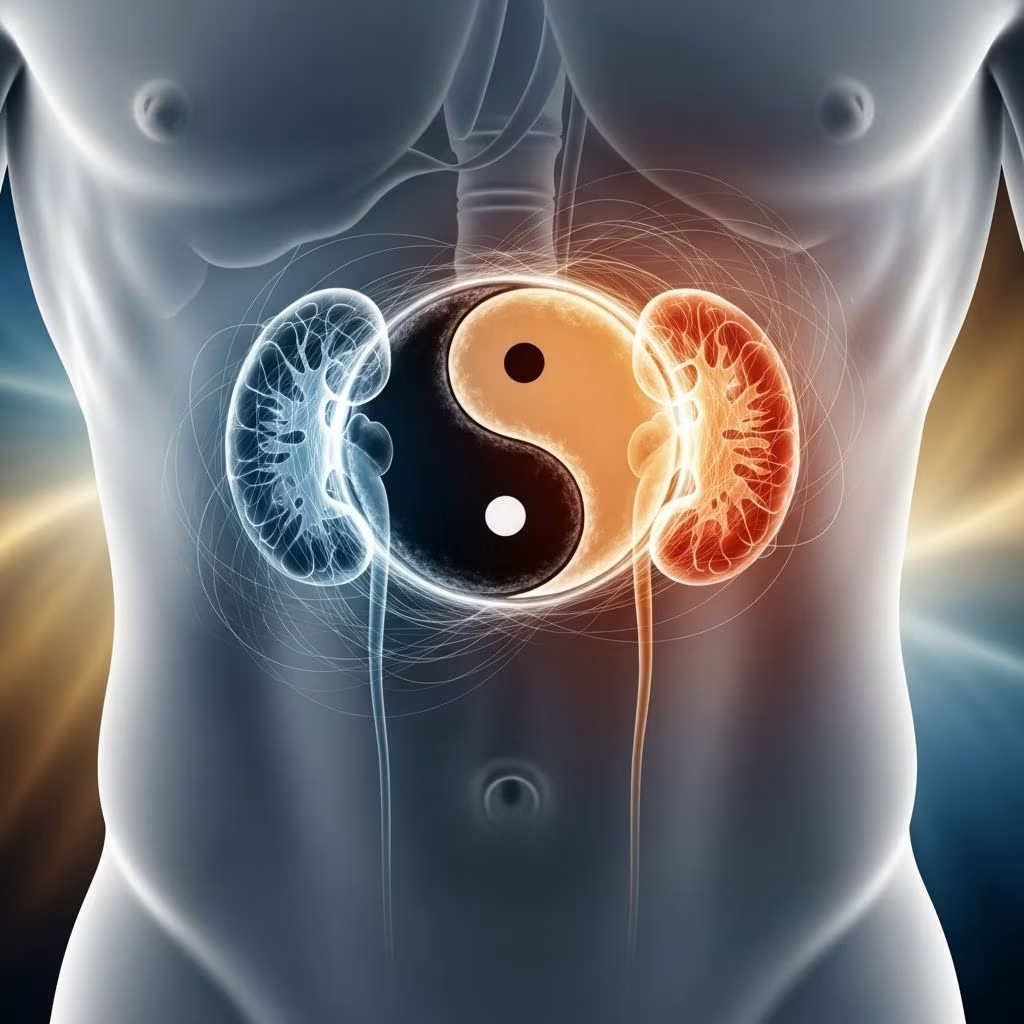
The adrenal glands, small yet mighty organs perched atop the kidneys, embody a profound duality in human physiology, much like the yin-yang symbol of harmony in opposites. These endocrine powerhouses produce a spectrum of hormones that regulate stress responses, metabolic processes, blood pressure, and electrolyte balance. Comprising an outer cortex and inner medulla, they ensure the body adapts seamlessly to internal and external demands.
Anatomy and Location of the Adrenal Glands
Situated on the superomedial aspect of each kidney, the adrenal glands are triangular in shape, roughly the size of the top of a thumb. Each weighs about 4-5 grams and is encased in a fibrous capsule. The right gland typically adopts a pyramidal form, while the left is more crescent-shaped to conform to the kidney’s contour.
Histologically, the glands divide into two primary regions: the adrenal cortex, making up 80-90% of the gland’s mass, and the adrenal medulla, comprising the central core. The cortex features three distinct zones, each specialized for steroid hormone production derived from cholesterol. Blood supply arrives via superior, middle, and inferior adrenal arteries, with venous drainage through a central vein.
| Zone | Location | Key Cells | Main Hormones |
|---|---|---|---|
| Zona Glomerulosa | Outermost | Columnar cells with staining nuclei | Aldosterone (mineralocorticoids) |
| Zona Fasciculata | Middle, thickest | Vacuolated cells with lipid droplets | Cortisol (glucocorticoids) |
| Zona Reticularis | Innermost cortex | Irregular cords of dark cells | DHEA (androgens) |
| Medulla | Central core | Chromaffin cells | Epinephrine, Norepinephrine |
This zonal organization underscores the glands’ yin-yang nature: the cortex governs long-term homeostasis (yin), while the medulla drives acute survival reactions (yang).
Hormonal Symphony: Functions of the Adrenal Cortex
The adrenal cortex synthesizes steroid hormones critical for sustaining life. These lipid-soluble messengers influence nearly every tissue, modulating inflammation, immunity, metabolism, and fluid dynamics.
Zona Glomerulosa: Guardians of Electrolyte Equilibrium
The outermost zona glomerulosa secretes aldosterone, the principal mineralocorticoid. Aldosterone promotes sodium reabsorption and potassium excretion in the kidneys’ distal tubules, maintaining extracellular fluid volume and blood pressure. Its release is primarily triggered by the renin-angiotensin-aldosterone system (RAAS). Low blood pressure or serum sodium prompts juxtaglomerular cells to release renin, converting angiotensinogen to angiotensin II, which stimulates aldosterone synthase.
Hyperkalemia directly activates the zona glomerulosa, ensuring potassium homeostasis. Dysregulation here can lead to conditions like primary aldosteronism (Conn’s syndrome), causing hypertension and hypokalemia.
Zona Fasciculata: Cortisol’s Mastery Over Metabolism
Comprising the bulk of the cortex, the zona fasciculata produces glucocorticoids, predominantly cortisol. This ‘stress hormone’ elevates blood glucose by stimulating hepatic gluconeogenesis, inhibiting peripheral glucose uptake, and mobilizing amino acids from muscle proteins. In adipose tissue, it induces lipolysis for energy.
Cortisol regulation involves the hypothalamic-pituitary-adrenal (HPA) axis. Corticotropin-releasing hormone (CRH) from the hypothalamus prompts adrenocorticotropic hormone (ACTH) release from the pituitary, which binds melanocortin-2 receptors on fasciculata cells. A negative feedback loop prevents excess: high cortisol suppresses CRH and ACTH. Circadian rhythms peak cortisol in the early morning, tapering nocturnally.
Zona Reticularis: Androgen Precursors for Vitality
The innermost cortical layer yields weak androgens like dehydroepiandrosterone (DHEA) and androstenedione, precursors to potent sex steroids. These contribute to libido, muscle mass, and bone density, particularly in females where adrenals provide 50% of androgens. ACTH primarily regulates this zone, linking it to stress modulation.
The Adrenal Medulla: Igniting the Fight-or-Flight Response
Derived from neural crest cells, the medulla functions as a sympathetic ganglion, populated by chromaffin cells that secrete catecholamines: epinephrine (80%) and norepinephrine (20%). These water-soluble hormones prepare the body for immediate threats via alpha and beta adrenergic receptors.
During acute stress, preganglionic sympathetic fibers release acetylcholine, prompting catecholamine surge. Effects include increased heart rate, bronchodilation, glycogenolysis, and redirected blood flow to muscles and brain—hallmarks of the ‘fight-or-flight’ response. Norepinephrine also acts locally as a neurotransmitter.
Interplay of Yin and Yang: Integrated Regulation
The cortex (yin: sustained balance) and medulla (yang: dynamic action) harmonize under stress. Chronic stressors overactivate the HPA axis, elevating cortisol, which can suppress immunity, promote visceral fat, and induce anxiety. Acute bursts from the medulla complement this for survival.
Disruptions manifest as Addison’s disease (cortex insufficiency: fatigue, hypotension) or Cushing’s syndrome (cortisol excess: weight gain, osteoporosis). Pheochromocytoma, a medullary tumor, causes paroxysmal hypertension from catecholamine overproduction.
Modern Stress and Adrenal Resilience
In today’s high-pressure world, prolonged cortisol elevation contributes to metabolic syndrome, insomnia, and immune dysregulation. Strategies for adrenal support include balanced nutrition (B-vitamins, magnesium), sleep hygiene, and adaptogens like ashwagandha, though evidence varies. Regular exercise modulates the HPA axis without exhaustion.
- Nutrition Tips: Prioritize whole foods rich in vitamin C (adrenal synthesis cofactor) and omega-3s to counter inflammation.
- Lifestyle Hacks: Practice mindfulness to blunt HPA overdrive; aim for 7-9 hours sleep aligning with cortisol rhythm.
- Warning Signs: Persistent fatigue, salt cravings, or blood pressure fluctuations warrant medical evaluation.
Diagnostic Approaches and Clinical Insights
Assessing adrenal function involves serum cortisol (morning peak: 6-23 mcg/dL), ACTH stimulation tests, and 24-hour urinary free cortisol. Imaging like CT/MRI visualizes masses; renin/aldosterone ratios screen for primary hyperaldosteronism.
| Condition | Symptoms | Key Test |
|---|---|---|
| Addison’s Disease | Hyperpigmentation, weakness, low BP | Low cortisol, high ACTH |
| Cushing’s Syndrome | Moon face, buffalo hump | Elevated urinary cortisol |
| Pheochromocytoma | Episodic headaches, palpitations | Plasma metanephrines |
Frequently Asked Questions (FAQs)
What do adrenal glands do daily?
They maintain blood sugar, pressure, and stress readiness through cortisol, aldosterone, and adrenaline.
Can stress damage adrenal glands?
Chronic stress leads to dysregulation, not ‘adrenal fatigue’—a non-medical term—but HPA axis exhaustion.
How to support healthy adrenals?
Emphasize sleep, stress reduction, and nutrient-dense diet; consult physicians for symptoms.
Difference between cortisol and adrenaline?
Cortisol handles prolonged stress (metabolism); adrenaline manages acute threats (heart rate).
Are adrenal supplements effective?
Limited evidence; focus on lifestyle over unproven remedies.
Conclusion: Harmonizing Adrenal Forces
The adrenal glands’ yin-yang duality sustains life’s rhythms. By understanding their roles—from aldosterone’s fluid guardianship to epinephrine’s surge—we empower proactive health stewardship. Balance fosters resilience amid modern demands.
References
- Adrenal glands: Anatomy, location and function — Kenhub. 2023. https://www.kenhub.com/en/library/anatomy/adrenal-glands
- Anatomy and Physiology of the Adrenal Glands, Animation — Alila Medical Media (YouTube). 2018-01-29. https://www.youtube.com/watch?v=-d-9gRgz9pY
- Function of the Adrenal Glands and the Hormones They Produce — Adrenal.com. Accessed 2026. https://www.adrenal.com/adrenal-gland/function
- Adrenal Gland: What It Is, Function, Symptoms & Disorders — Cleveland Clinic. 2023-05-10. https://my.clevelandclinic.org/health/body/23005-adrenal-gland
- Physiology, Adrenal Gland — StatPearls, NCBI Bookshelf. 2023-08-28. https://www.ncbi.nlm.nih.gov/books/NBK537260/
- Adrenal Glands — UF Health. Accessed 2026. https://ufhealth.org/conditions-and-treatments/adrenal-glands
- The Adrenal Glands – Location – Structure — TeachMeAnatomy. Accessed 2026. https://teachmeanatomy.info/abdomen/viscera/adrenal-glands/



