
Adrenal Glands In Animals: A Comprehensive Guide For Vets
Discover the vital roles of adrenal glands in animal physiology, from stress response to hormone regulation across species.
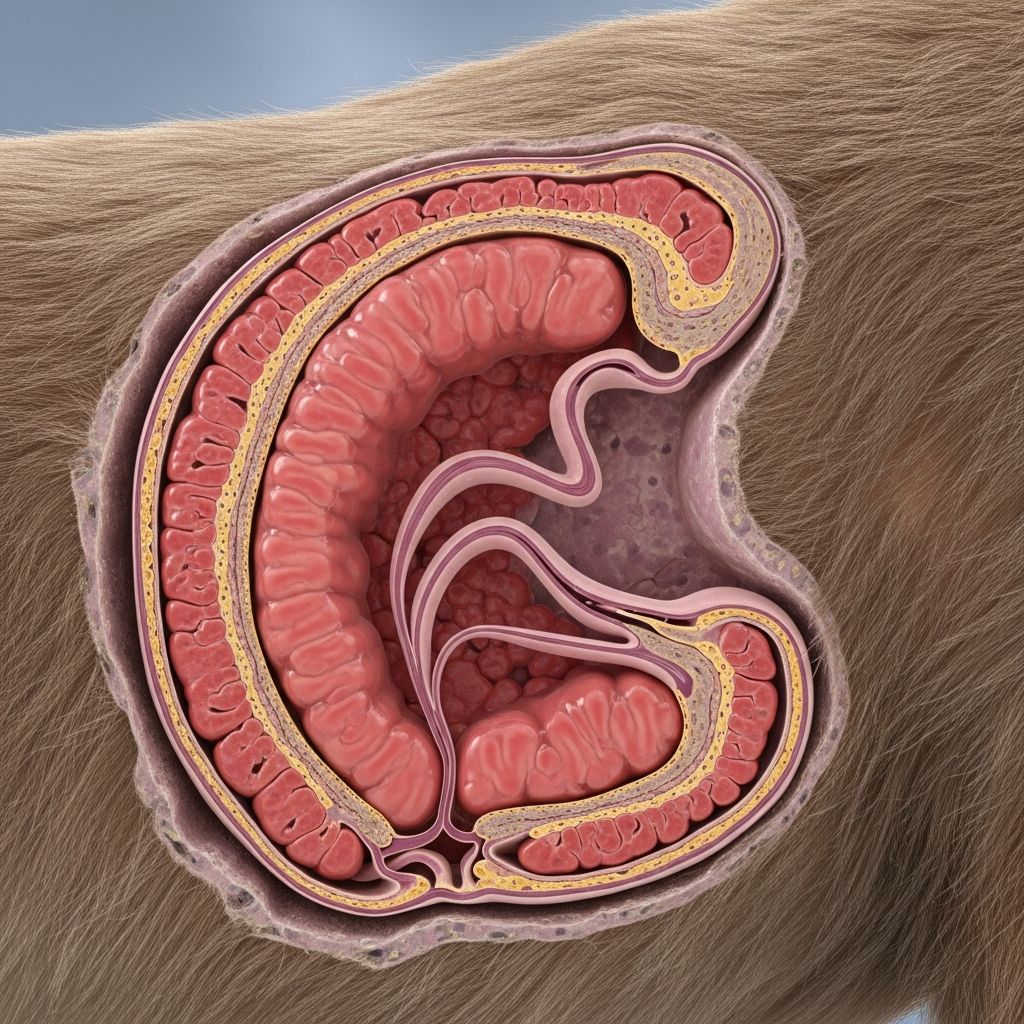
The adrenal glands are essential endocrine organs in animals, perched atop the kidneys and playing pivotal roles in stress management, metabolism, and electrolyte balance. These small but mighty structures consist of an outer cortex and inner medulla, each producing distinct hormones that influence nearly every bodily system.
Anatomy and Location Across Species
In mammals, the adrenal glands are paired and embedded in the retroperitoneal space near the kidneys. The left gland typically measures larger than the right, situated craniomedially to the left kidney, while the right one hugs the renal hilus. A fibrous capsule encases them, and they boast an exceptionally rich vascular supply from arteries like the suprarenal and renal branches, ensuring rapid hormone delivery via suprarenal veins.
Birds present a variation: their adrenal cortex and medulla cells intermingle rather than form distinct layers, yet retain similar cellular traits to mammals. This intermixing supports efficient hormone synthesis tailored to avian physiology.
- Mammalian features: Distinct cortex-medulla division, high blood flow rate.
- Avian features: Intermingled cortical and medullary cells.
- Common traits: Fibrovascular capsule, proximity to kidneys.
Embryonic Origins and Development
The adrenal cortex arises from mesodermal cells near the genital ridges in early embryos, differentiating into lipid-rich polygonal or columnar cells organized into functional zones. Neural crest ectoderm later invades this mass, forming the medulla’s chromaffin cells. This dual origin underscores their glandular and neural characteristics.
Developmental timing varies slightly by species but follows a conserved pattern: cortical cells proliferate outward as the medulla centralizes, creating the classic laminar architecture by birth or hatching.
The Adrenal Cortex: Zonal Organization and Steroidogenesis
The cortex, comprising 80-90% of gland mass, features three zones from outer to inner: zona glomerulosa, zona fasciculata, and zona reticularis. Each zone’s cells are packed with lipid droplets serving as cholesterol precursors for steroid hormones synthesized via mitochondrial hydroxylation.
| Zone | Cell Morphology | Main Hormones | Key Functions |
|---|---|---|---|
| Zona Glomerulosa (Outermost) | Polygonal cells, trabecular arrangement, moderate vacuolated cytoplasm | Aldosterone (mineralocorticoid) | Sodium retention, potassium excretion, blood pressure regulation |
| Zona Fasciculata (Middle, Thickest) | Linear trabeculae, abundant lipid vacuoles, eosinophilic cytoplasm | Cortisol, corticosterone (glucocorticoids) | Metabolism of carbs/fats/proteins, immune suppression, stress adaptation |
| Zona Reticularis (Innermost) | Reticular network, less lipid, more cytoplasm | Androgens, minor glucocorticoids | Sex hormone precursors, minor metabolic roles |
Steroid production starts with cholesterol, converted through enzymatic steps into corticosteroids. Zona glomerulosa cells lack 17α-hydroxylase, directing output to mineralocorticoids, while inner zones possess it for glucocorticoids and androgens.
Functions of Cortical Hormones
Mineralocorticoids: Electrolyte Guardians
Aldosterone, the chief mineralocorticoid, acts on kidney distal tubules to boost sodium reabsorption and potassium secretion, maintaining fluid volume and blood pressure. It also supports gastrointestinal motility and vascular tone.
Glucocorticoids: Metabolic Orchestrators
Cortisol dominates here, promoting gluconeogenesis, lipolysis, and protein breakdown during stress. It dampens inflammation and modulates immunity, crucial for chronic stress like illness.
Androgens: Reproductive Influences
Though minor compared to gonads, adrenal androgens contribute to secondary sexual traits and libido, especially in females or spayed animals.
The Adrenal Medulla: Stress Response Hub
Contrasting the cortex, the medulla comprises chromaffin cells—modified postganglionic sympathetic neurons—that release catecholamines: epinephrine (adrenaline, ~80%) and norepinephrine into systemic blood.
These tyrosine-derived hormones trigger ‘fight-or-flight’: increased heart rate, bronchodilation, glycogenolysis, and vasoconstriction for rapid energy mobilization during acute stress.
- Stimulation: Hypothalamic signals via thoracic spinal cord to preganglionic fibers.
- Ratio: Epinephrine:norepinephrine ≈ 4:1, epinephrine more potent.
- Regulation: Sympathetic nervous system, not ACTH like cortex.
Regulation Mechanisms
Cortical function hinges on the hypothalamic-pituitary-adrenal (HPA) axis: stress prompts hypothalamic CRH release, stimulating pituitary ACTH, which drives cortisol and androgen production. Aldosterone responds mainly to angiotensin II and potassium levels.
Medullary output bypasses HPA, activated directly by sympathetic preganglionic nerves in the sympathomedullary pathway for instant response.
Species Variations in Adrenal Function
While conserved, adrenal traits differ: dogs show pronounced zona fasciculata for glucocorticoids; horses emphasize mineralocorticoids for sweat regulation; birds’ intermingled structure aids compact stress responses.
| Species | Cortex-Medulla Arrangement | Notable Adaptations |
|---|---|---|
| Dogs/Cats | Distinct layers | High cortisol for metabolism, aldosterone for electrolytes |
| Horses | Distinct layers | Enhanced mineralocorticoids for fluid balance during exercise |
| Birds | Intermingled | Efficient catecholamine release for flight stress |
Clinical Relevance and Disorders
Adrenal dysfunction manifests as hyper- or hypo-secretion. Hyperadrenocorticism (Cushing’s) from excess cortisol causes polyuria, potbelly, and immunosuppression. Hypoadrenocorticism (Addison’s) lacks cortisol/aldosterone, leading to collapse and electrolyte crises.
Pheochromocytoma, a medullary tumor, overproduces catecholamines, mimicking acute stress. Diagnostics involve ACTH stimulation tests, imaging, and hormone assays.
Diagnostic Approaches
- Low-dose dexamethasone suppression: Assesses Cushing’s.
- ACTH stimulation: Evaluates reserve capacity.
- Ultrasound/MRI: Visualizes gland size/masses.
- Catecholamine assays: For medullary issues.
Therapeutic Interventions
Treatments range from trilostane for Cushing’s to desoxycorticosterone for Addison’s, alongside supportive care. Surgical adrenalectomy suits unilateral tumors.
FAQs
What are the main hormones from animal adrenal glands?
Cortex: aldosterone, cortisol, androgens; Medulla: epinephrine, norepinephrine.
How do adrenal glands respond to stress?
Cortex handles chronic via glucocorticoids; medulla acute via catecholamines.
Do all animals have the same adrenal structure?
Mammals have layered cortex-medulla; birds intermingled.
What causes adrenal insufficiency in pets?
Immune destruction, infections, or metastases leading to cortisol/aldosterone deficits.
Can adrenal issues be hereditary?
Yes, certain breeds like Standard Poodles prone to Addison’s.
Research Frontiers
Ongoing studies explore gene therapies for congenital adrenal hyperplasia and targeted inhibitors for tumors, promising better outcomes.
References
- 12.6 The Adrenal Glands – The organ-ised life of animals — Open Text CSU. Accessed 2026. https://opentext.csu.edu.au/organisedlifeofanimals/chapter/the-adrenal-glands/
- Adrenal Glands | Veterian Key — Veterian Key. 2016-10-26. https://veteriankey.com/adrenal-glands/
- Adrenal gland – Veterinary Histology — Ohio State Pressbooks. Accessed 2026. https://ohiostate.pressbooks.pub/vethisto/chapter/adrenal-gland/
- Overview of the Adrenal Glands in Animals – Endocrine System — Merck Veterinary Manual. Accessed 2026. https://www.merckvetmanual.com/endocrine-system/the-adrenal-glands/overview-of-the-adrenal-glands-in-animals
- Adrenal Gland Health and Function in Dogs — FirstVet. Accessed 2026. https://firstvet.com/us/articles/adrenal-gland-health-and-function-in-dogs
- Adrenal gland: structure, function, and mechanisms of toxicity — PubMed (NCBI). 2001-02-01. https://pubmed.ncbi.nlm.nih.gov/11215683/
Similar Articles








Read full bio of medha deb


