

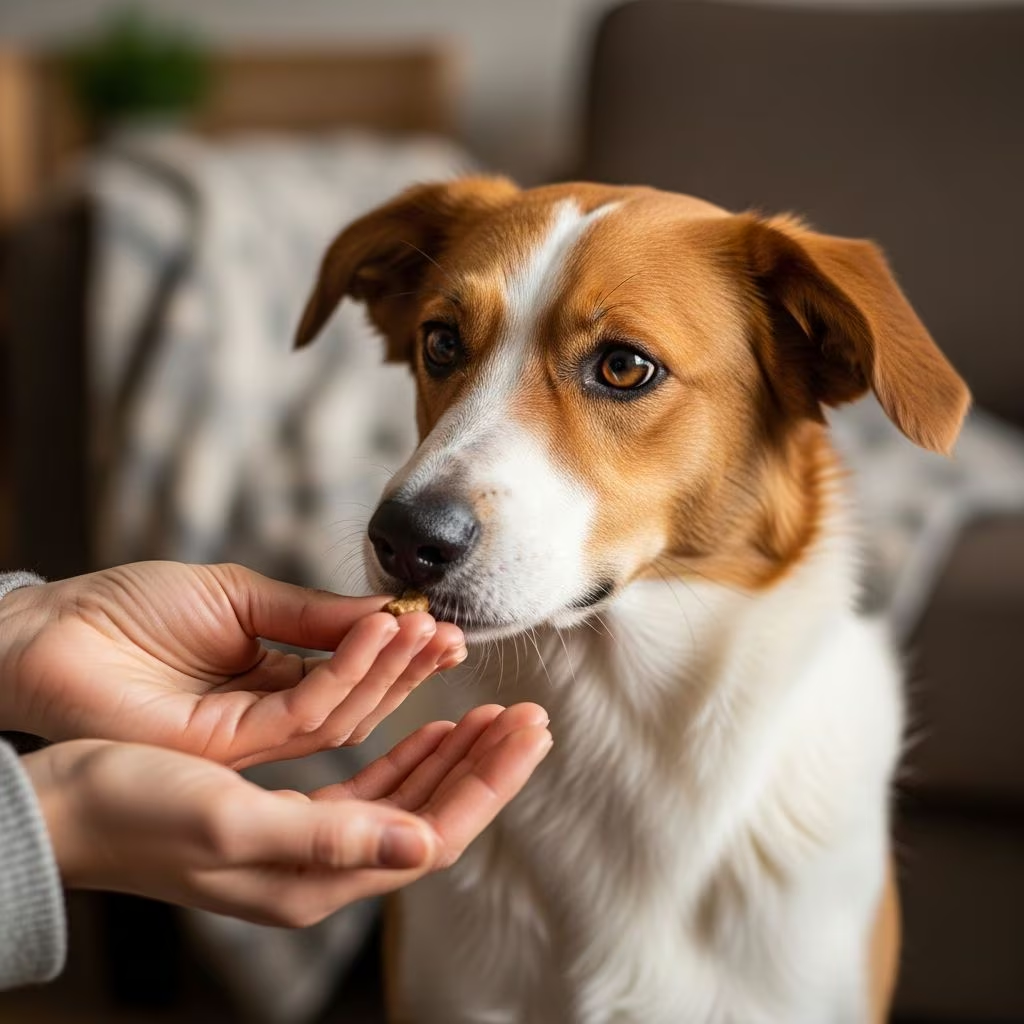
Adopting a fearful dog can be one of the most rewarding experiences a pet owner can have. However, it requires patience, understanding, and commitment to help your new companion overcome their anxiety and learn to trust people and their new environment. Whether your dog experienced trauma, neglect, or simply lacked early socialization, the journey to helping them feel safe and secure is achievable with the right approach.
Understanding Fearful Dogs
Fearful dogs display significant anxiety, especially around humans, and may be more likely to exhibit fearful behavior around new people, places, and things. Some dogs are naturally timid or shy, much like some people, while others may not have had the opportunity to learn to trust people during critical developmental periods. Dogs from shelters, rescue organizations, or those rescued from cruel or neglectful situations often display these behaviors.
The good news is that fearful behavior is both treatable and manageable. Research demonstrates that appropriately designed behavioral rehabilitation programs can prove highly successful, with adoption rates reaching 99% and adopter satisfaction rates of 96%.
Before You Bring Your Dog Home
Before finalizing the adoption, take important steps to prepare for your new fearful companion:
- Meet and greet: Bring family members and pets to the shelter to see how your new dog responds to them. This helps determine potential compatibility and allows you to understand your dog’s temperament.
- Assess social compatibility: If you have other dogs at home, arrange an introduction to determine if they might get along. Some fearful dogs do best when there is at least one happy, confident dog already living in the house.
- Ask about history: Gather as much information as possible about your dog’s background, previous behavior, and any specific triggers that cause anxiety.
- Understand the commitment: Building trust with a fearful dog could be a long and difficult process, but the experience can be one of the most rewarding of your dog-owning journey.
Creating a Safe Home Environment
The first days and weeks at home are critical for your fearful dog’s adjustment. Creating a secure, controlled environment helps your dog feel safe while gradually building confidence.
The Dog-Proofed Area
Too much freedom too soon can be overwhelming and scary for a fearful dog. Instead, establish a small, dog-proofed area—a confined space where your dog can stay when you cannot supervise. This area should contain:
- Water and food bowls
- A comfortable bed or crate
- Toys and chew items
- Removal of potential hazards
Keep your dog in this confined area initially and gradually allow them to explore larger spaces as they gain confidence. Offer treats and food in this safe area to create positive associations.
First Day Introduction
Follow these steps when your dog first arrives home:
- Allow your dog time to adjust to the new environment without forcing interaction.
- Introduce them on leash to their new home, including the dog-proofed area.
- Give them a chew bone or stuffed KONG and leave them alone in the dog-proofed area for five minutes or less.
- Take away the toy until the next time they are alone in the area.
Be patient during this adjustment period. Your dog can get overwhelmed easily, so take things slowly at first.
Body Language and Communication
Your own behavior significantly impacts how your fearful dog responds to you. Being aware of your body language at all times is essential for building trust.
Proper Stance and Eye Contact
Keep a sideways stance to your dog and avoid direct eye contact, as a frontal stance and eye contact can increase fearful responses. Be sure new people coming to your home are also aware of their own body posture. A forward posture can communicate aggression to your dog and increase their fear.
Ignoring Fearful Behavior
One of the most important principles in helping a fearful dog is to ignore fearful behavior. By trying to help your dog through their fear by petting and consoling, you actually reinforce the fearful response. Instead, reward brave behavior with attention and treats.
Building Positive Associations
Helping your fearful dog develop positive associations with new people, places, and experiences is crucial for their recovery and confidence building.
Introducing New People
When strangers come to your home, give them tasty treats to offer to your dog if he chooses to come over to sniff them. If your dog chooses not to approach new people, they should simply be ignored. This approach allows your dog to take control of the interaction and approach people on their own terms.
It is important for your dog to learn that something good happens when they choose to explore novel people or things. Use high-value treats (meat, cheese, special treats) every time your dog approaches you or new people, so they learn that approaching is rewarding.
Gradual Exposure to Triggers
If your dog crouches low to the ground, stalls on walks, shakes, or cowers, avoid the worst triggers or most difficult areas initially. Try to keep your dog comfortable and relaxed by feeding them extra tasty treats or bringing their favorite toy. Gradually build positive associations with new surroundings. Most importantly, give your dog time to adjust—it could take weeks or even months before they are completely at ease in their new neighborhood.
Leash Training and Exercise
Walking and exercise present unique challenges with fearful dogs. Many were never on a leash until coming to the shelter, and they may not walk well on leash initially.
Proper Leash Equipment
Do not use a retractable leash with a fearful dog. Retractable leashes are discouraged for all dogs for safety reasons, but with fearful dogs they can create significant problems. Instead, use a standard 4-6 foot leash for controlled walking.
Building Confidence Through Exercise
If your dog is dog-friendly, arrange for them to go for walks with other dogs who will give them added confidence on the street. A confident companion dog can serve as a “helper dog,” demonstrating appropriate behaviors and providing emotional support.
Avoiding High-Risk Situations
Dog parks are discouraged for fearful dogs. Your dog is likely to be difficult to catch, and you do not know how they will respond if another dog is inappropriate with them. Stick to quiet walks in familiar neighborhoods until your dog gains more confidence.
Managing Escape and Retrieval
Fearful dogs may attempt to flee or hide. Knowing how to manage these situations safely is important.
Prevention Strategies
If your dog won’t return to you on walks and your safety training isn’t solid, use a long leash (15-25 feet, found in pet stores) so that if they won’t return to you, you can use the leash to bring them inside. Never chase your frightened dog, as this will only increase their fear and desire to escape. Chasing makes them think you’re a threat, not a helper.
Building Trust During Retrieval
Give them a chance to get to know you and trust you by giving them the chance to initiate contact with you. If they get too scared, they may bite. In the meantime, provide high-value treats every time they approach you so that they learn that coming to you is good.
Attention and Handling
Fearful dogs may not be able to handle the same level of attention as confident dogs. Be sure not to give them more attention than they can handle. Let them come to you on their own terms rather than forcing interaction.
Learning and Behavior Modification
Remember that when your dog is afraid or uncomfortable, they can’t learn. Risk-avoidance takes the place of problem-solving. Find a way to make your dog comfortable first, and then try again.
Avoiding Punishment
Never use physical punishment. It comes with serious side effects like aggression, fear, and further behavioral problems. Instead, focus on positive reinforcement and rewarding brave behaviors.
Professional Help and Rehabilitation
For dogs with severe fear, professional behavioral rehabilitation may be necessary. The ASPCA Behavioral Rehabilitation Center (BRC) in Weaverville, North Carolina, is the first and only facility dedicated to the study and rehabilitation of undersocialized, homeless dogs suffering from severe fear. The BRC has the capacity to treat 65 dogs at any given time and provides research-based training for select animal welfare groups from all over the U.S..
If your dog’s fear is severely impacting their quality of life or if you are unable to commit to the behavioral modification exercises, consult with a professional trainer or veterinary behaviorist who can provide guidance tailored to your specific situation.
Frequently Asked Questions
Q: How long does it take for a fearful dog to adjust to a new home?
A: The adjustment timeline varies by individual dog. Some dogs may begin showing progress within weeks, while others may take months to become completely comfortable in their new environment. Patience and consistency are key.
Q: Can fearful dogs be successfully adopted?
A: Yes. Research shows that properly rehabilitated fearful dogs have a 99% adoption rate and 96% adopter satisfaction rate, demonstrating that appropriate behavioral programs can be highly successful.
Q: Should I punish my fearful dog for showing anxiety?
A: No. Physical punishment should never be used as it increases fear and can lead to aggression. Instead, focus on positive reinforcement and rewarding brave behaviors.
Q: Is it safe to take a fearful dog to a dog park?
A: Dog parks are discouraged for fearful dogs. They may be difficult to catch and unpredictable around other dogs. Opt for quiet walks in familiar neighborhoods instead.
Q: What should I do if my fearful dog escapes?
A: Never chase your dog. Instead, use a long leash (15-25 feet) during walks to prevent escape. Build positive associations with coming to you by offering high-value treats.
Q: Can I use a retractable leash with my fearful dog?
A: No. Retractable leashes are discouraged for fearful dogs as they can create significant problems. Use a standard 4-6 foot leash instead for better control and safety.
References
- Program for Fearful Behavior — ASPCApro. 2024. https://www.aspcapro.org/sites/default/files/aspca_safer_adopter_fearful_behavior.pdf
- Adopting a Fearful Dog – Pet Care Tips — SPCA of Texas. 2024. https://spca.org/file/Adopting-a-Fearful-Dog.pdf
- Behavioral Rehabilitation of Extremely Fearful Dogs — American Board of Veterinary Practitioners. 2022. https://www.abvp.com/wp-content/uploads/2022/08/2022-09-5-Shelter-Behavioral-rehabilitation-of-extremely-fearful-dogs.pdf
- Dog Adoption Handbook — SF SPCA. 2023. https://www.sfspca.org/wp-content/uploads/2019/04/sfspca-dog-adoption-handbook-2023.pdf
- What Is a Helper Dog? — ASPCA. 2025. https://www.aspca.org/news/what-helper-dog
- Second Chances for Severely Fearful Shelter Dogs — ASPCA. 2025. https://www.aspca.org/news/second-chances-severely-fearful-shelter-dogs



