

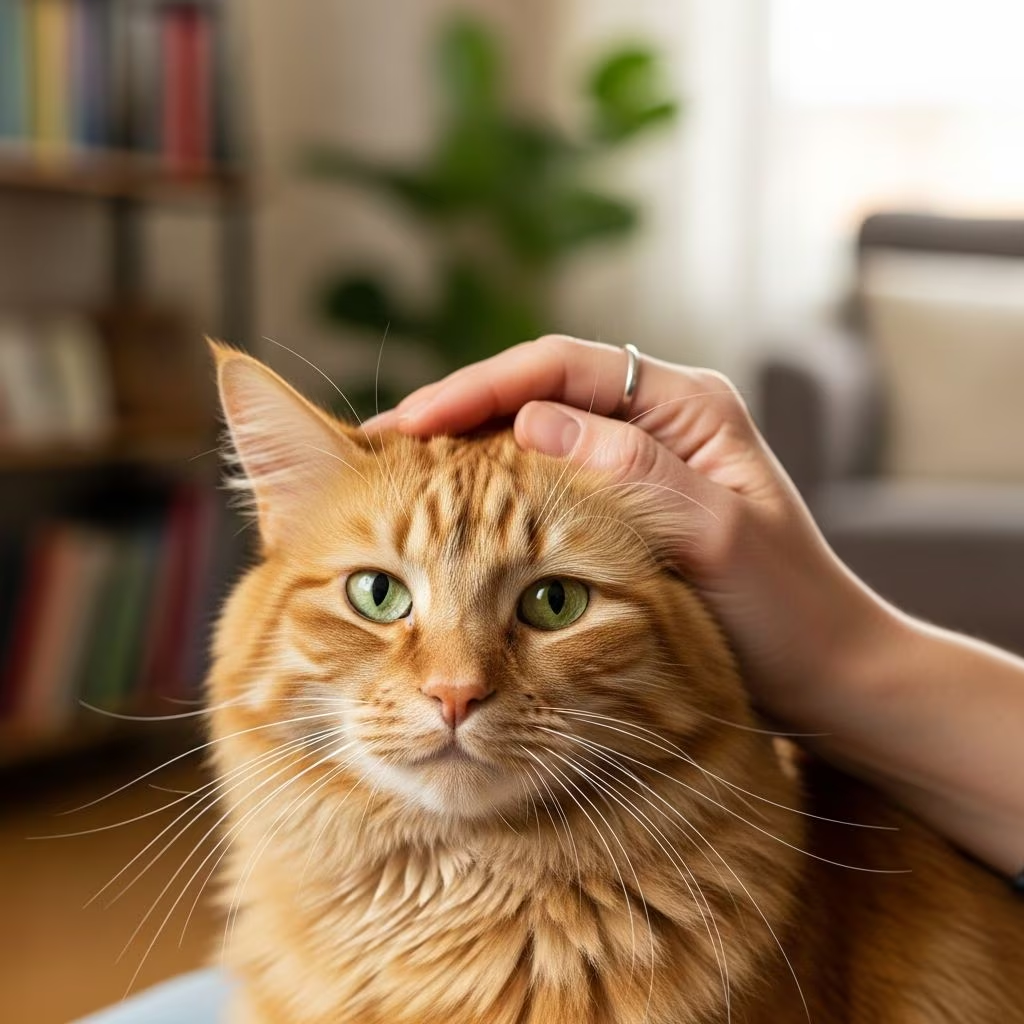
Bringing an adult cat into your home offers a unique opportunity to welcome a pet with a fully formed personality, reduced training needs, and often deeper gratitude for a second chance. Adult cats, typically those over one year old, provide companionship without the high-energy demands of kittens, making them ideal for busy households or first-time owners.
Why Choose an Adult Cat Over a Kitten?
Adult cats enter their prime years around age one and remain there until about seven, displaying stable behaviors that match your lifestyle more predictably than playful, unpredictable kittens. Unlike kittens that require constant supervision, litter training, and socialization, mature felines arrive house-trained and with clear preferences, allowing quicker bonding.
- Established Temperament: You can observe their true nature immediately, avoiding surprises as they mature.
- Lower Energy Levels: They enjoy calm routines, perfect for apartments or families with older children.
- Shelter Availability: Older cats, especially black ones, face lower adoption rates—around 10% for some—giving you a chance to rescue a deserving pet.
- Less Destructive: No chewing cords or climbing curtains; they know boundaries.
Consider breeds too: long-haired, round-faced cats tend toward laid-back vibes, while sleek, short-haired ones stay more active. This choice sets the foundation for years of harmony.
Finding the Perfect Match at a Shelter
Shelters brim with adult cats eager for homes, staffed by volunteers who know each animal intimately. Share your daily routine—work hours, family dynamics, other pets—and they’ll recommend matches.
Request meet-and-greets in playrooms where the cat roams freely. Watch interactions: Does it approach calmly, play gently, or seek affection? Involve all household members, especially kids, to gauge compatibility early and prevent returns.
| Family Type | Ideal Adult Cat Traits | Why It Works |
|---|---|---|
| Busy Professionals | Independent, low-maintenance | Enjoys alone time, self-entertains |
| Families with Kids | Patient, gentle | Tolerates noise and play without scratching |
| Multi-Pet Homes | Social, non-dominant | Integrates smoothly after slow intros |
| Seniors/Quiet Homes | Cuddly, sedentary | Matches relaxed pace, offers comfort |
Resist kitten cuteness; adults boast adorability with maturity. Prioritize temperament over looks for lasting joy.
Preparing Your Home Before Bring-Home Day
Stock essentials ahead to minimize stress. Create a sanctuary room—a quiet space with door closure—for initial decompression.
- Food and Water: Bowls for wet/dry food; start with shelter-provided type to avoid tummy upset.
- Litter Setup: One box per cat plus one extra; unscented litter in a low-sided pan.
- Comfort Zone: Scratching post, cat tree, beds, toys (wand-style for bonding).
- Carrier: Sturdy, lined for transport; acclimate cat to it pre-vet.
- Grooming Tools: Brush, nail clippers for long-haired breeds.
Ensure family commitment: Discuss rules, allergies, and responsibilities. For multi-pet homes, plan phased introductions via scent-swapping first.
The First Days: Easing the Transition
Adult cats, especially seniors (7+ years), may hide for days or weeks, needing patience amid change. Confine to sanctuary room 3-7 days or until confident—food eaten, litter used, exploring.
Establish routines: Feed at set times, even hand-delivering if hiding. Offer play sessions with interactive toys to build trust organically.
Consistency breeds security; predictable actions help felines anticipate and relax.
Signs of progress: Purring, rubbing, tail-up greetings. Expand access gradually—hallway, then rooms—watching for stress like flattened ears or hissing.
Health Essentials for Your New Companion
Schedule a vet exam within 3-7 days, bringing shelter records on vaccines, spay/neuter, and history. Expect weigh-in, vitals, physical check, and tailored plan: Flea/tick prevention, deworming, bloodwork for seniors.
Adult stages: Prime (1-7 years) needs annual checkups; middle-aged (7-10) bi-annual; seniors (11-14) or geriatric (15+) quarterly, monitoring kidneys, thyroid, arthritis.
- Vaccinations: Core ones like rabies, FVRCP; boosters per age.
- Nutrition: Age-appropriate diet; transition slowly over 7 days.
- Monitoring: Watch for lethargy, appetite loss, litter changes—early vet contact key.
Microchip registration and updates are vital for lost pets.
Building a Lasting Bond Through Enrichment
Play daily: Wand toys mimic hunting, combating boredom. Provide vertical space (shelves, trees) and hiding spots for security.
Groom weekly to strengthen ties; puzzle feeders engage minds. For seniors, soft beds ease joints.
Common Hurdles and Fixes
Challenge: Hiding/Withdrawal Solution: Patience, routine, no forcing interactions.
Challenge: Litter Issues Solution: Scoop daily, right location, vet rule-out UTI.
Challenge: Scratching Furniture Solution: Redirect to posts with catnip, trim nails.
Senior cons like shorter lifespan or health needs pale against rewards; prepare emotionally.
Frequently Asked Questions (FAQs)
Are adult cats harder to train?
No, they’re often pre-trained and adapt via positive reinforcement.
How long until my cat adjusts?
Days to weeks; seniors longer. Sanctuary method speeds it.
Can adult cats learn tricks?
Yes, with treats and consistency—focus on basics like coming when called.
Best food for adopted adults?
Match age/stage; vet-recommended for urinary or weight control.
Introducing to dogs?
Slow: Separate scents, supervised meets, equal attention.
Adopting an adult cat transforms lives with mutual devotion. Thoughtful prep ensures thriving for years.
References
- What to Expect When Adopting an Adult Cat — Hill’s Pet Nutrition. 2023. https://www.hillspet.com/cat-care/new-pet-parent/adopting-an-adult-cat
- The Pet Parent’s Guide to Adopting an Older Cat — Lemonade. 2023. https://www.lemonade.com/pet/explained/adopting-older-cat/
- Cat Adoption Checklist — American Humane Society. 2023. https://www.americanhumane.org/public-education/cat-adoption-checklist/
- Adult Cat Adoption Guide — Pasadena Humane. 2023. https://pasadenahumane.org/adult-cat-adoption-guide/
- A New Owner’s Guide to Adopting a Cat — Grove Collaborative. 2023. https://www.grove.co/blog/cat-adoption-guide



