

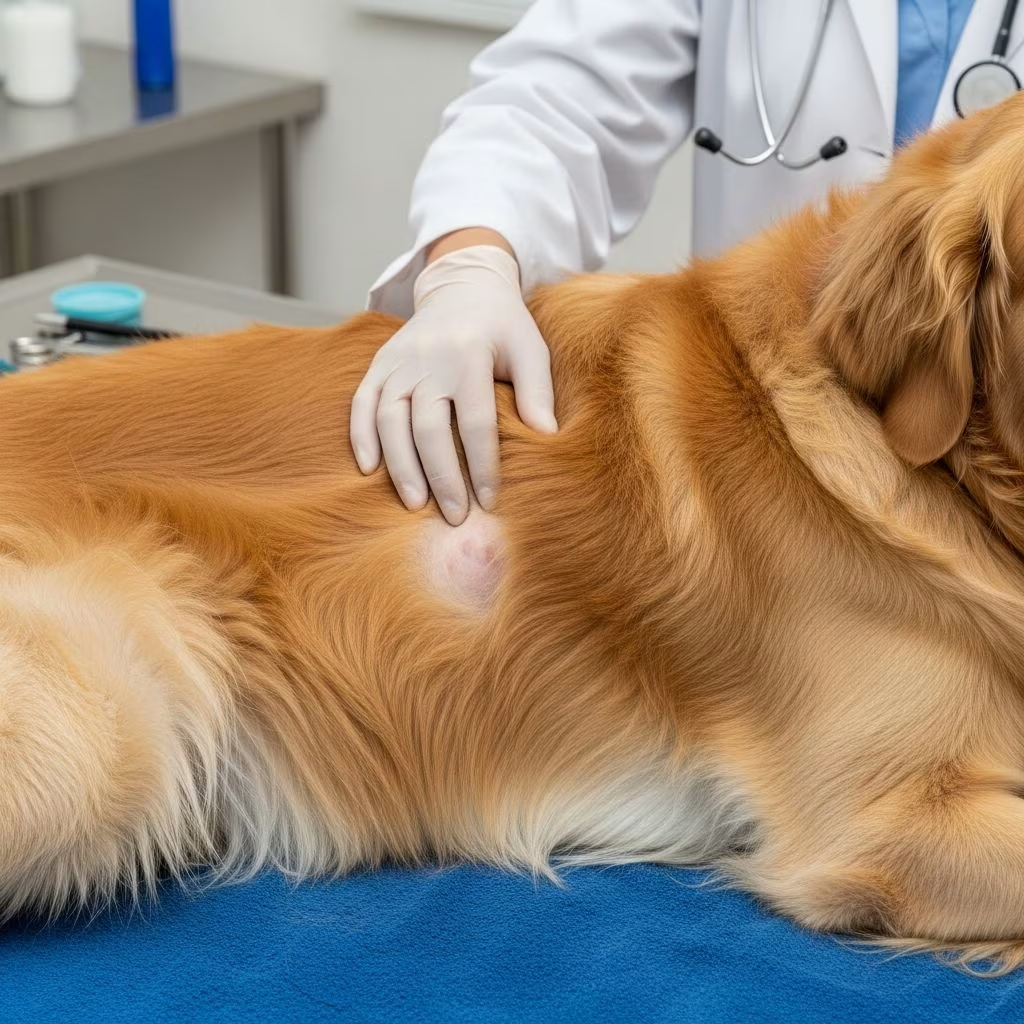
Understanding Adipose Lipoma Tumors in Dogs
Adipose lipoma tumors are among the most common types of tumors found in dogs, representing a significant portion of skin and subcutaneous growths in veterinary medicine. These fatty tumors are benign in nature, meaning they do not spread to other parts of the body or metastasize. Understanding what adipose tumors are, how they develop, and what treatment options are available can help dog owners make informed decisions about their pet’s health and wellbeing.
Lipomas are soft, slow-growing lumps composed of fat cells that develop beneath the skin. They typically appear as movable masses that can be felt during physical examination. Most commonly, these tumors develop on the trunk of the body and near the tops of the legs, though they can appear virtually anywhere on a dog’s body. While benign in nature, lipomas can still cause concern for pet owners and may require treatment depending on their size, location, and impact on the dog’s quality of life.
What Are Adipose Tumors?
Adipose tumors are growths that originate from fat tissue in dogs. The term “adipose” refers to fatty tissue, and these tumors represent an abnormal accumulation and replication of fat cells at a faster rate than normal. Lipomas are the most common form of adipose tumor and are characterized by their benign nature, slow growth pattern, and generally minimal impact on a dog’s overall health.
There are several types of adipose tumors that veterinarians recognize, each with different characteristics and treatment considerations. Understanding the differences between these types is essential for determining the appropriate treatment approach and predicting outcomes.
Types of Adipose Tumors
Simple Lipomas: These are the most common and benign form of adipose tumors. Simple lipomas are well-defined, encapsulated masses that remain localized and do not infiltrate surrounding tissues. They typically have an excellent prognosis and respond well to surgical removal.
Infiltrative Lipomas: Less common than simple lipomas, infiltrative lipomas are more difficult to treat because they intertwine with surrounding tissues and do not shell out as a single unit during removal. These tumors may recur after surgical intervention and often require more extensive surgical approaches.
Diffuse Lipomatosis: This condition involves the development of multiple lipomas throughout the body, affecting multiple areas simultaneously. Certain breeds, such as Norwegian Elkhounds and Lhasa Apsos, are predisposed to this generalized form of the disease.
Liposarcomas: These are rare malignant tumors derived from fatty tissue. Unlike benign lipomas, liposarcomas have the potential to recur and may require aggressive treatment including surgery, radiation therapy, and chemotherapy. They are more common in older male dogs and have been noted more frequently in Shetland Sheepdogs and Beagles.
Who Is At Risk? Breeds and Risk Factors
While adipose tumors can develop in any dog, certain factors increase the likelihood of their formation. Understanding these risk factors can help pet owners take preventive measures and monitor their dogs more carefully.
Certain dog breeds show a higher predisposition to developing lipomas and other adipose tumors. Doberman Pinschers, Labrador Retrievers, Miniature Schnauzers, and mixed-breed dogs are among the most commonly affected. For infiltrative lipomas specifically, Labrador Retrievers appear to be particularly susceptible. Norwegian Elkhounds and Lhasa Apsos are at increased risk for developing diffuse lipomatosis, characterized by multiple tumors across the body.
Beyond breed predisposition, several other factors contribute to adipose tumor development. Age plays a significant role, as lipomas occur far more frequently in older dogs. The prevalence increases substantially in middle-aged and senior dogs. Obesity is another critical risk factor, with overweight dogs experiencing a higher incidence of fatty tumors. Interestingly, lipomas occur approximately twice as frequently in female dogs as in males, suggesting hormonal influences may play a role in tumor development.
Symptoms and Clinical Signs
Most dogs with lipomas show minimal to no symptoms, particularly when the tumors are small or located in non-problematic areas. However, pet owners should be aware of the potential signs that may indicate a developing adipose tumor or complications from an existing growth.
The primary sign of lipoma development is the appearance of a soft, movable lump beneath the skin. These lumps are typically round or oval in shape and move freely when manipulated. Most lipomas rarely cause discomfort unless they grow quite large. Pet owners may discover these lumps during grooming or petting sessions.
In some cases, dogs may show behavioral signs related to lipomas. If a lipoma develops in a location that interferes with normal movement, such as in the armpit or axillary region of the front legs, affected dogs may show subtle lameness or altered gait. Some dogs find developing tumors annoying and may attempt to scratch, rub, or bite at them, leading to self-trauma and potential secondary infection.
Large lipomas may occasionally develop complications. Ulceration and bleeding are rare but can occur. In very large tumors, tissue death or necrosis may develop, causing yellow discoloration of the fat and potentially toxic effects that make the animal unwell. However, these complications are uncommon and typically occur only when tumors reach significant sizes.
Diagnosis of Adipose Tumors
Proper diagnosis is essential for distinguishing lipomas from other types of tumors that may feel similar but require different treatment approaches. Veterinarians employ several diagnostic methods to confirm the presence of adipose tumors and determine their specific type.
Physical Examination
The initial diagnostic step involves a thorough physical examination and palpation of the mass. Veterinarians assess the size, consistency, mobility, and location of the growth. Lipomas typically feel soft and movable, which helps distinguish them from other tumor types. However, physical examination alone is not sufficient for definitive diagnosis, as other tumors can feel similar.
Fine Needle Aspiration (FNA)
Fine needle aspiration is a minimally invasive diagnostic technique that involves inserting a small needle into the mass to collect cells for microscopic examination. This procedure provides a cytological assessment of the cells present in the tumor. FNA is relatively quick, causes minimal discomfort, and can be performed in most veterinary clinics. However, while useful for initial assessment, FNA results are less detailed and reliable than other diagnostic methods.
Biopsy and Histopathology
Histopathology represents the most definitive diagnostic method for confirming adipose tumor type and determining treatment approach. This involves obtaining tissue samples from the tumor, either through needle biopsy or complete surgical excision, and sending them to a specialized laboratory where a veterinary pathologist examines specially prepared and stained tissue sections under a microscope.
The histopathology report provides crucial information about whether a tumor is benign or malignant, how aggressively it may behave, and the likelihood of local recurrence or distant spread. This information guides treatment recommendations and helps establish realistic prognosis expectations.
Diagnostic Imaging
For certain cases, particularly those involving infiltrative lipomas or suspected malignant tumors, diagnostic imaging such as ultrasound or CT scans may be recommended. These imaging techniques help visualize the extent of tumor infiltration into surrounding tissues and assist in surgical planning. Imaging is especially valuable for tumors located in complex anatomical regions or when infiltration is suspected.
Treatment Options for Adipose Tumors
Treatment approaches for adipose tumors vary depending on the tumor type, size, location, and impact on the dog’s quality of life. Several treatment options are available, ranging from conservative management to aggressive surgical intervention.
Observation and Watchful Waiting
For many dogs with simple lipomas, particularly those that are small and not causing functional impairment, treatment may not be necessary. Since lipomas typically grow slowly and many eventually reach a plateau in size, many veterinarians and pet owners adopt a “watch-and-wait” philosophy. Regular monitoring allows early detection of any changes in growth rate or development of complications. However, owners should be aware that untreated lipomas left for extended periods may eventually grow too large to remove safely or may develop complications.
Surgical Removal
Surgical excision remains the treatment of choice for lipomas that require intervention. For simple lipomas, surgical removal is typically curative, with tumors rarely recurring after complete excision. The procedure is relatively straightforward for simple lipomas, which often shell out as a single unit with minimal tissue trauma. Small incisions are typically sufficient for removal, and recovery is usually rapid with minimal complications.
However, surgical complexity increases for certain tumor types and locations. Infiltrative lipomas present greater surgical challenges because they intertwine with surrounding tissues and do not shell out cleanly. These tumors require wide surgical excision to remove all tumor cells and surrounding involved tissue. Similarly, tumors located in anatomically complex regions, such as the armpit, require more careful surgical planning to avoid damaging important structures.
Radiation Therapy
Radiation therapy may be recommended for malignant adipose tumors or infiltrative lipomas that are difficult to remove completely. This treatment delivers targeted radiation to tumor cells to inhibit their growth and spread. Radiation therapy may be used alone or in combination with surgical intervention for more aggressive tumors.
Combination Therapy
For liposarcomas and other aggressive adipose tumors, veterinarians may recommend a combination approach involving surgery, radiation therapy, and potentially chemotherapy. The specific combination depends on the tumor’s extent, aggressiveness, and individual patient factors. Combination therapy offers the best chance of controlling aggressive malignant tumors.
Systemic Medications
For animals with generalized lipomatosis affecting multiple areas of the body, oral retinoid medications may help manage the condition. These medications work systemically to help control fatty tumor development and growth throughout the body.
Weight Management and Prevention
While the underlying cause of adipose tumor development is not fully understood, making prevention strategies somewhat speculative, appropriate weight control appears to reduce the likelihood of developing these tumors. Since obesity is a significant risk factor for lipoma development, maintaining a healthy body weight through proper nutrition and regular exercise is recommended.
Staying up to date with routine veterinary care is essential for early tumor detection. Regular physical examinations allow veterinarians to identify small tumors early, maximizing long-term outcomes and treatment options. Early detection can prevent tumors from growing to sizes where removal becomes difficult or complications develop.
Prognosis and Recovery
Prognosis for adipose tumors varies depending on the tumor type. Simple lipomas have an excellent prognosis, with dogs often returning to normal activities quickly after surgical removal. These benign tumors rarely recur after complete excision, though new lipomas may develop in other body areas.
Infiltrative lipomas, diffuse lipomatosis, and liposarcomas present more challenging prognosis situations. These tumors are more difficult to treat, and recurrence is not uncommon. However, further surgical intervention is successful in preventing recurrence or additional spread in more than half of infiltrative lipoma cases.
For dogs undergoing surgical treatment, recovery is typically straightforward. Most dogs experience minimal discomfort and return to normal activities within days to weeks, depending on the extent of surgical intervention. Proper post-operative care, including wound management and activity restriction as recommended by the veterinarian, promotes optimal healing.
Frequently Asked Questions
Q: Are lipomas cancerous?
A: No, simple lipomas are benign, non-cancerous tumors. They do not spread to other parts of the body. However, liposarcomas, which are rare malignant adipose tumors, are cancerous and require more aggressive treatment.
Q: Can lipomas be prevented?
A: While the exact cause is not fully understood, maintaining a healthy weight through proper nutrition and exercise, combined with regular veterinary check-ups for early detection, represents the best approach to reducing lipoma risk.
Q: Do lipomas always need to be removed?
A: No, many lipomas do not require treatment if they are not causing functional impairment or secondary complications. A watch-and-wait approach is often appropriate, though regular monitoring is important.
Q: What is the recovery time after lipoma removal surgery?
A: Most dogs recover quickly from lipoma removal surgery, typically within days to weeks depending on the extent of the procedure. Your veterinarian will provide specific post-operative care instructions.
Q: Can lipomas grow back after removal?
A: Simple lipomas rarely recur after complete surgical removal. However, new lipomas may develop in other areas of the body, and infiltrative lipomas have a higher recurrence rate.
Q: Are certain dog breeds more prone to lipomas?
A: Yes, Doberman Pinschers, Labrador Retrievers, Miniature Schnauzers, and mixed-breed dogs show higher predisposition. Female dogs and older, overweight dogs are also at increased risk.
References
- Lipomas and Liposarcomas in Dogs — Merck Veterinary Manual. 2024. https://www.merckvetmanual.com/dog-owners/skin-disorders-of-dogs/tumors-of-the-skin-in-dogs
- Lipomas in Dogs — Cornell University College of Veterinary Medicine, Riney Canine Health Center. 2024. https://www.vet.cornell.edu/departments-centers-and-institutes/riney-canine-health-center/canine-health-information/lipomas-dogs
- Fatty Tissue Tumors (Lipomas) in Dogs — Vetster. 2024. https://vetster.com/en/conditions/dog/fatty-tissue-tumors-lipomas
- Adipose (Lipoma) Tumors in Dogs — Aurora Animal Clinic. June 2022. https://www.auroraanimalclinic.com/resources/blog/june-2022/adipose-(lipoma)-tumors-in-dogs
- Lipomas in Dogs — PetCure Oncology. 2024. https://petcureoncology.com/lipomas-in-dogs/
- Fatty Tumor (Lipoma) in Dogs — West Gate Veterinary Hospital. June 2024. https://www.westgatevet.com/site/blog/2024/06/15/lipomas-dog



