Adequan for Dogs: Joint Health Solutions
Discover how Adequan can help your dog maintain mobility and comfort
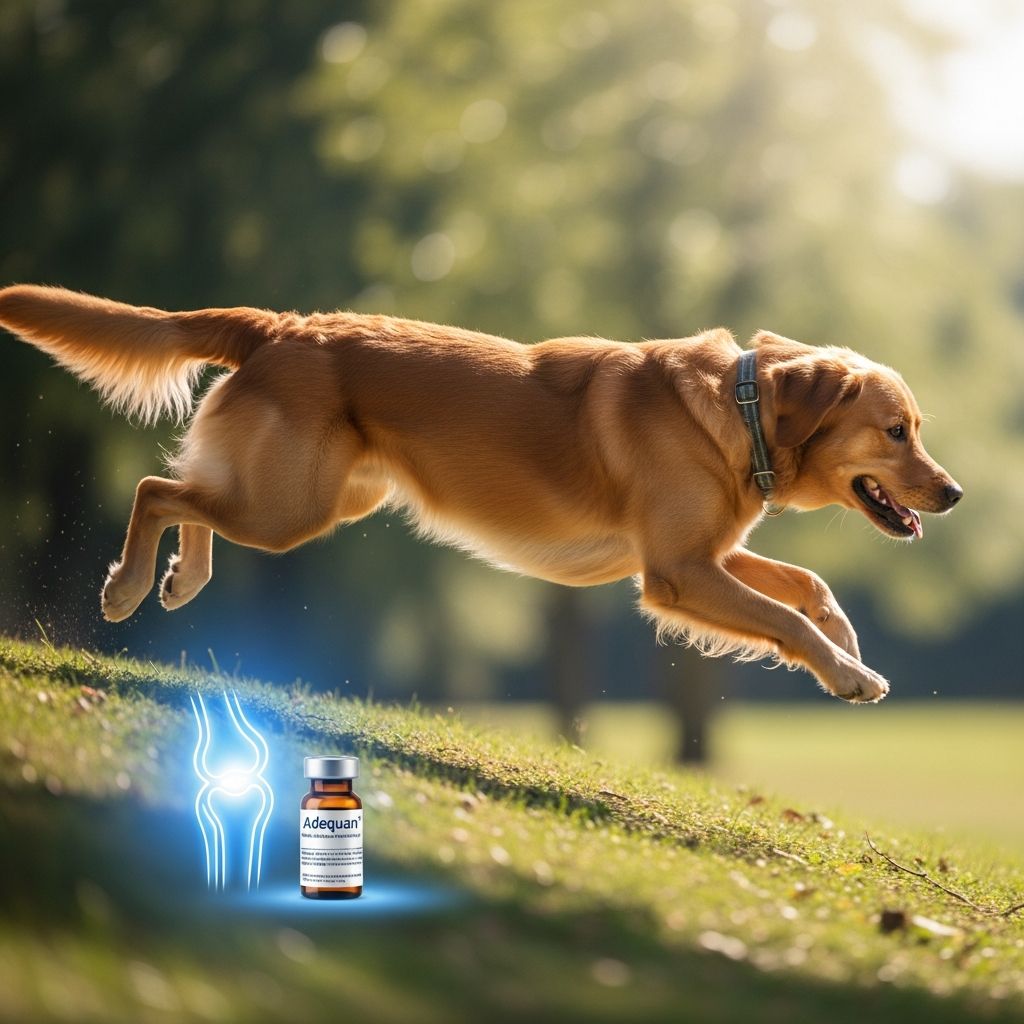
As our canine companions age, joint deterioration becomes an increasingly common concern for pet owners. Osteoarthritis and other degenerative joint conditions can significantly impact a dog’s quality of life, limiting their ability to play, exercise, and enjoy daily activities. Fortunately, veterinary medicine offers several treatment options to address these challenges, with Adequan Canine representing a significant advancement in managing joint disease in dogs.
Unlike conventional pain management approaches that merely mask symptoms, Adequan takes a fundamentally different approach by targeting the underlying mechanisms of joint deterioration. This injectable medication has emerged as a game-changing option for pet owners seeking to preserve their dog’s mobility and comfort throughout their senior years.
Understanding the Science Behind Joint Deterioration
To appreciate how Adequan functions, it’s essential to understand the complex structures within your dog’s joints. Joints are sophisticated mechanical systems where multiple components work together to enable smooth, pain-free movement. The articular cartilage serves as a protective cushioning layer at the ends of bones, allowing them to glide smoothly against one another. Synovial fluid fills the joint spaces, providing lubrication similar to oil in an engine.
When osteoarthritis develops, this delicate balance deteriorates. The synovial fluid becomes thinner and less effective at lubrication. Cartilage begins to soften and lose its structural integrity, compromising its ability to cushion the forces applied during movement. As the condition progresses, cartilage may fissure and expose the underlying bone, resulting in pain with every step. This progressive nature of the disease means early intervention can make a substantial difference in a dog’s long-term mobility.
The Therapeutic Mechanism of Adequan Canine
Adequan Canine contains polysulfated glycosaminoglycan (PSGAG), a compound that mirrors naturally occurring substances your dog’s body produces for cartilage development and maintenance. When administered as an intramuscular injection, Adequan works through multiple simultaneous mechanisms to address joint deterioration:
- Cartilage Protection: Adequan binds to existing glycosaminoglycans within the joint cartilage matrix, preventing further degradation and helping maintain the structural integrity of this crucial cushioning tissue.
- Enzyme Inhibition: The medication blocks the release of destructive enzymes that break down cartilage components, slowing the progression of joint damage.
- Inflammation Reduction: By decreasing levels of prostaglandin E2 and other inflammatory proteins in the synovial fluid, Adequan helps reduce joint inflammation associated with osteoarthritis.
- Lubrication Enhancement: Adequan increases concentrations of hyaluronic acid in synovial fluid, restoring the viscous, lubricating properties necessary for smooth joint movement.
- Cartilage Rebuilding: The medication stimulates anabolic enzymes that promote the production of hyaluronic acid, collagen, and proteoglycans—the essential building blocks your dog’s body uses to construct healthy cartilage.
This multi-faceted approach distinguishes Adequan from conventional pain medications. Rather than simply relieving discomfort, Adequan addresses the fundamental disease process, potentially slowing or even reversing the progression of joint deterioration.
FDA Approval and Clinical Evidence
Adequan Canine stands as the only FDA-approved, disease-modifying osteoarthritis drug specifically designed for canines. This distinction reflects rigorous clinical testing and demonstrated efficacy in managing joint disease. Clinical field trials involving 51 dogs with 71 affected limbs showed statistically significant improvements in range of motion and orthopedic scores among dogs receiving Adequan compared to placebo-treated controls.
Responder dogs—those showing more than 30 percent improvement over baseline measurements in all evaluated limbs—demonstrated the medication’s potential to substantially impact canine mobility. The joints evaluated in these studies included hips, stifles (knee equivalent), shoulders, hocks, and elbows, covering the most common sites affected by osteoarthritis in dogs.
Conditions Treated With Adequan
While most commonly prescribed for osteoarthritis and degenerative joint disease, veterinarians may recommend Adequan for various orthopedic conditions affecting canine joint health:
- Hip dysplasia and its progressive consequences
- Elbow dysplasia, a developmental joint disorder
- Luxating patella (knee cap dislocation)
- Traumatic arthritis from injury or surgery
- Post-injury joint damage from ACL tears or other ligament injuries
In each of these conditions, Adequan’s ability to promote joint lubrication, reduce inflammation, and renew cartilage components can help preserve function and minimize pain.
Risk Factors for Joint Disease in Dogs
Understanding which dogs face elevated risk for joint disease can help owners make informed decisions about early intervention with Adequan. Several factors increase susceptibility to osteoarthritis:
- Age: Joint disease can begin within a dog’s first year of life but becomes increasingly prevalent with advancing age.
- Genetic Predisposition: Certain breeds show higher incidence of hip dysplasia, elbow dysplasia, and other inherited joint conditions.
- Weight Management: Excess weight places additional stress on joints, accelerating cartilage deterioration.
- Orthopedic History: Previous injuries or surgeries can alter joint mechanics, leading to abnormal wear patterns.
- Activity Level: High-impact activities combined with poor conditioning can contribute to joint stress.
Treatment Protocol and Administration
Adequan Canine must be administered via intramuscular injection by a licensed veterinarian. The medication enters the bloodstream and crosses the synovial membrane into the joint fluid, where it diffuses into the articular cartilage to deliver its therapeutic effects.
A typical treatment protocol involves a series of injections administered over several weeks. Veterinarians generally recommend initiating Adequan at the first signs of degenerative joint disease rather than waiting until advanced stages develop. This proactive approach allows the medication to slow disease progression before significant cartilage loss occurs, potentially preventing the severe pain and mobility restrictions associated with advanced osteoarthritis.
Adequan Within a Comprehensive Arthritis Management Plan
While Adequan represents a significant advancement in joint disease treatment, optimal results typically emerge when it’s incorporated into a multimodal approach addressing multiple aspects of joint health:
- Nutritional Supplementation: Joint supplements containing glucosamine, chondroitin, or omega-3 fatty acids can complement Adequan’s effects
- NSAIDs: Non-steroidal anti-inflammatory drugs may be prescribed alongside Adequan for pain management and inflammation control
- Weight Management: Maintaining optimal body weight reduces stress on affected joints
- Exercise Modification: Low-impact activities like swimming maintain fitness while minimizing joint stress
- Physical Therapy: Therapeutic exercises and massage can improve mobility and muscle support around joints
- Environmental Adjustments: Orthopedic bedding, ramps, and other modifications reduce strain on compromised joints
This comprehensive approach recognizes that joint disease management requires attention to multiple factors affecting canine mobility and comfort.
Distinguishing Adequan From Symptom-Based Treatments
A critical distinction exists between how Adequan functions compared to traditional pain management medications. Adequan is not a painkiller—it does not directly reduce pain sensation. Instead, it addresses the underlying pathology causing pain by slowing cartilage breakdown and promoting healthier joint structures.
This disease-modifying approach means that benefits may develop gradually over a series of injections as the medication works to stabilize joint structures and reduce inflammation. Some owners notice improvements in their dog’s mobility and comfort levels after completing a full treatment course, while others observe more subtle but meaningful changes in activity levels and willingness to move.
Early Intervention Advantages
The progressive nature of osteoarthritis means that early treatment initiation offers distinct advantages over waiting until advanced stages develop. By beginning Adequan therapy at the first signs of degenerative joint disease, owners may prevent severe symptoms that substantially restrict their dog’s quality of life.
Once cartilage deterioration reaches advanced stages, treatment options become more limited. Starting Adequan early provides the best opportunity to slow disease progression and potentially extend the years during which your dog can remain active and comfortable. Veterinarians emphasize that protecting cartilage before it wears away irreversibly represents the most effective strategy for long-term joint health.
What Dog Owners Should Know
| Aspect | Details |
|---|---|
| Active Ingredient | Polysulfated glycosaminoglycan (PSGAG) |
| Administration Method | Intramuscular injection by licensed veterinarian |
| FDA Status | Only FDA-approved canine DMOAD of its kind |
| Onset of Action | Gradual, typically noticeable after treatment series |
| Primary Mechanism | Slows cartilage loss, promotes joint health |
| Best Timing | Early intervention at first signs of joint disease |
Frequently Asked Questions
Does Adequan actually rebuild joints?
Adequan works to renew damaged cartilage by stimulating the production of cartilage-building components rather than literally rebuilding joints. It slows degeneration and supports the body’s natural cartilage repair processes, but the specific mechanisms aren’t completely understood.
How quickly does Adequan work?
Adequan is not an immediate pain reliever. Benefits develop gradually over a series of injections as the medication accumulates in joint tissues and works to modify the disease process. Most dogs show noticeable improvements after completing an initial treatment course.
Can Adequan be used preventively?
Veterinarians may recommend Adequan for dogs with genetic predisposition to joint disease or high-risk breeds, though this should be determined through professional veterinary consultation.
Is Adequan safe for all dogs?
Adequan is generally well-tolerated, though individual dogs may respond differently. Your veterinarian will evaluate your dog’s specific health status before recommending treatment.
How long do effects last?
Effects are maintained through continued treatment protocols. Your veterinarian will establish an appropriate injection schedule based on your dog’s response and condition severity.
Moving Forward With Joint Health
Joint disease represents a significant concern for dogs and their owners, but modern veterinary medicine offers effective management strategies. Adequan Canine represents a meaningful advancement in addressing the underlying pathology of osteoarthritis rather than simply managing symptoms. By understanding how this medication works, recognizing risk factors, and implementing early intervention, owners can help preserve their dog’s mobility and quality of life throughout their senior years.
Consulting with your veterinarian about whether Adequan might benefit your dog—particularly if you’ve noticed early signs of joint stiffness or reduced mobility—allows you to make informed decisions about your pet’s joint health. Combined with comprehensive arthritis management strategies, Adequan can help your dog continue enjoying the active lifestyle they deserve.
References
- Adequan for Dogs: Don’t Just Treat Arthritis, Slow it Down — Toe Grips. 2024. https://toegrips.com/adequan-for-dogs/
- Adequan® Canine (polysulfated glycosaminoglycan) — Treatment and Prevention — Boehringer Ingelheim Animal Health. 2024. https://adequancanine.com/for-veterinarians
- Adequan Canine for Dogs (Polysulfated Glycosaminoglycan) — PetMD. 2024. https://www.petmd.com/pet-medication/adequan-polysulfated-glycosaminoglycan
- Adequan for Dogs: Does It Actually Rebuild Joints? — Austin Canine Rehabilitation. 2024. https://www.austincaninerehab.com/blog/adequan
- Treatment for Dogs With Arthritis | Adequan® Canine — Boehringer Ingelheim Animal Health. 2024. https://www.adequancanine.com
- Adequan Canine Injectable Osteoarthritis for Dogs — PetCareRx. 2024. https://www.petcarerx.com/adequan-canine/13110
Similar Articles







Read full bio of medha deb