

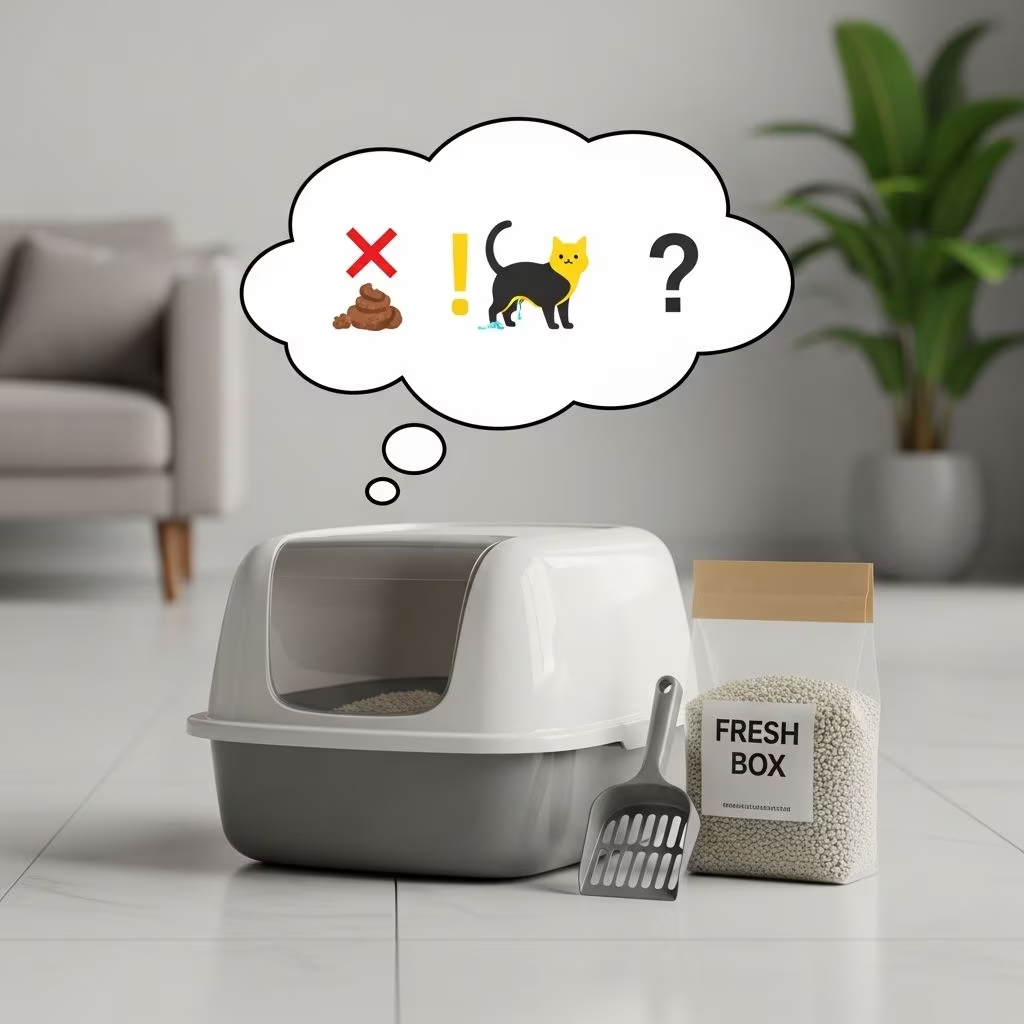
Litter box problems are among the most common reasons cats are surrendered to shelters, but most can be resolved with patience, veterinary guidance, and environmental adjustments. Cats naturally prefer to eliminate in clean, private spots, mimicking their wild burrowing instincts. When they avoid the litter box, it often signals an underlying medical issue, stress, or dissatisfaction with the box setup itself. This guide covers diagnosis, prevention, and targeted solutions to get your cat back on track.
Is It a Litter Box Problem or Urine Marking?
Distinguishing between **inappropriate elimination** and **urine marking** is crucial, as each requires different approaches. Inappropriate elimination involves your cat depositing normal amounts of urine or feces in the wrong place, often due to medical or litter box aversions. Urine marking, by contrast, is a communication behavior where cats spray small amounts of urine, typically on vertical surfaces, to signal territory. Marking is more common in unneutered males but can affect any cat under stress.
- Signs of inappropriate elimination: Large puddles of urine on horizontal surfaces like floors or beds; feces outside the box; consistent avoidance of the litter box.
- Signs of urine marking: Small sprays of urine on walls, furniture, or objects; often higher up; accompanied by backing up and quivering tail.
Observe patterns: If your cat still uses the box sometimes, it’s likely aversion rather than marking. A professional behaviorist or vet can help differentiate if unclear.
Medical Problems First
Always rule out health issues before assuming behavioral causes. Conditions like urinary tract infections (UTIs), bladder stones, kidney disease, diabetes, arthritis, or gastrointestinal disorders can make elimination painful, leading cats to avoid the box. Cats with mobility issues from age or injury may struggle to access high-sided boxes.
Schedule a vet exam immediately, including urinalysis, bloodwork, and fecal tests. Symptoms include straining, blood in urine, frequent small voids, vocalizing during elimination, or eliminating beside the box. Treatment resolves the issue in most cases, restoring box use.
Litter Box Setup: The Foundation of Success
A cat-friendly litter box setup prevents many problems. Follow these evidence-based guidelines synthesized from veterinary and humane society recommendations.
Number of Boxes
The rule is simple: **one litter box per cat, plus one extra**. In a one-cat home, provide two boxes; for three cats, four boxes. Boxes must be in different locations—adjacent boxes count as one. Multi-story homes need boxes on every level for accessibility.
- Two boxes benefit single cats, as many prefer separate spots for urine and feces.
- Add extra during transitions like new pets or moves.
Litter Box Type and Size
Choose open, uncovered boxes unless your cat prefers enclosed ones—hooded boxes trap odors and feel confining, especially in multi-cat homes. Avoid self-cleaning models with motors that startle cats.
Standard boxes suit most, but large cats or sprayers need bigger options. DIY solutions work well:
| Issue | Solution |
|---|---|
| Too small for large cats | Use low-sided Rubbermaid container with cut-out entry. |
| High sprayers | Deep container with taller sides (cut entry hole). |
| Senior cats/arthritis | Low-entry, extra-large senior boxes or storage bins. |
Litter Type and Depth
Cats are particular: Offer clumping vs. non-clumping, clay, sand, or crystal litters to test preferences. Fine, soft litters mimic preferred soft surfaces like laundry; coarse ones deter digging. Fill to 2-4 inches deep—experiment shallow for hard-surface lovers.
- Avoid scented litters, plastic liners (crinkly/noisy), and harsh cleaners—cats’ noses are 14x more sensitive.
- If cat uses laundry, switch to fine clumping litter 1.5-3 inches deep.
Cleaning Routine
Scoop solids and clumps daily; dump, wash with mild dish soap, and refill weekly. Unscented soap prevents repulsion. Dirty boxes are the top aversion cause—cats seek ‘clean’ alternatives like laundry.
Ideal Location
Place boxes in quiet, low-traffic spots with multiple escape routes—no dead-ends. Avoid near food/water, washers/dryers (noises/vibrations), or high-activity areas. For multi-cat homes, spread out to reduce competition.
- Multi-floor: One per level.
- Problem area: Temporarily place a box where accidents occur, then gradually move.
Solving Existing Problems
If medical issues are cleared, troubleshoot systematically.
Step 1: Make Accidents Unappealing
Block access to soiled areas (close doors). Clean thoroughly with enzymatic cleaners to erase scents—cats return to marked spots. Cover with foil, plastic, or furniture temporarily.
Step 2: Optimize Box Preferences
Introduce one change at a time: new litter in an extra box, relocate slightly (inches daily), or swap box type. Monitor for 1-2 weeks.
- Cat digs briefly then leaves? Box too dirty/small/lidded.
- Eliminates beside box? Substrate aversion—try varied litters.
Step 3: Address Stress and Behavior
Stress from changes (moves, new pets, schedules) triggers issues. Provide vertical space, pheromones (Feliway), and play. For marking, neuter/spay reduces incidence by 90%.
In multi-cat homes, ensure resources prevent bullying: separate feeding, extra boxes, and consult behaviorists for tensions.
Prevention Strategies
Proactive habits minimize risks:
- Maintain n+1 boxes forever.
- Daily scoops, weekly deep cleans.
- Don’t change litter abruptly.
- Kittens: Train early with shallow boxes, praise use.
- Seniors: Low-entry boxes, pain management.
Monitor habits: Track voids/frequency for early illness detection.
Frequently Asked Questions (FAQs)
Why is my cat peeing outside the litter box but pooping in it?
This suggests urinary-specific issues like UTI or litter aversion for urination (e.g., coarse litter). Vet check first, then try softer litter in one box.
How do I transition my cat to a new litter?
Mix 75% old with 25% new, gradually increase over 1-2 weeks. Add a side-by-side box with new litter.
What if my cat won’t use the box after a move?
Stress-induced; place boxes in used spots initially, use pheromones, and confine to one room with amenities until settled.
Can declawed cats have litter box issues?
Yes, pain from coarse litter—use paper pellets or soft shreds. Vet for pain relief.
How many boxes for 2 cats?
Three: one per cat plus one extra, in separate quiet locations.
References
- Cat: Litter Box Problems — The Vets Animal Hospital. Accessed 2026. https://www.thevetsanimalhospital.com/wp-content/uploads/2016/02/cat_litter-box-problems.pdf
- Litter Box Problems — San Francisco SPCA. Accessed 2026. https://www.sfspca.org/resource/litter-box-problems/
- Litter Box Problems – Treating & Reducing Cat Inappropriate Urination — BC SPCA. 2017. https://spca.bc.ca/wp-content/uploads/Litter-box-problems-treating-and-reducing-cat-inappropriate-elimination.pdf
- Solving Litterbox Problems — Montgomery County Animal Services (courtesy Richmond SPCA). Accessed 2026. https://www.montgomerycountymd.gov/animalservices/Resources/Files/Solving%20Litterbox%20Problems%20PDF(1).pdf
- Solving Litterbox Issues — Wisconsin Humane Society. Accessed 2026. https://www.wihumane.org/behavior/ask-the-experts/cat-behavior/solving-litterbox-problems
- Urine Marking in Cats — ASPCA. Accessed 2026. https://www.aspca.org/pet-care/cat-care/common-cat-behavior-issues/urine-marking-cats



