

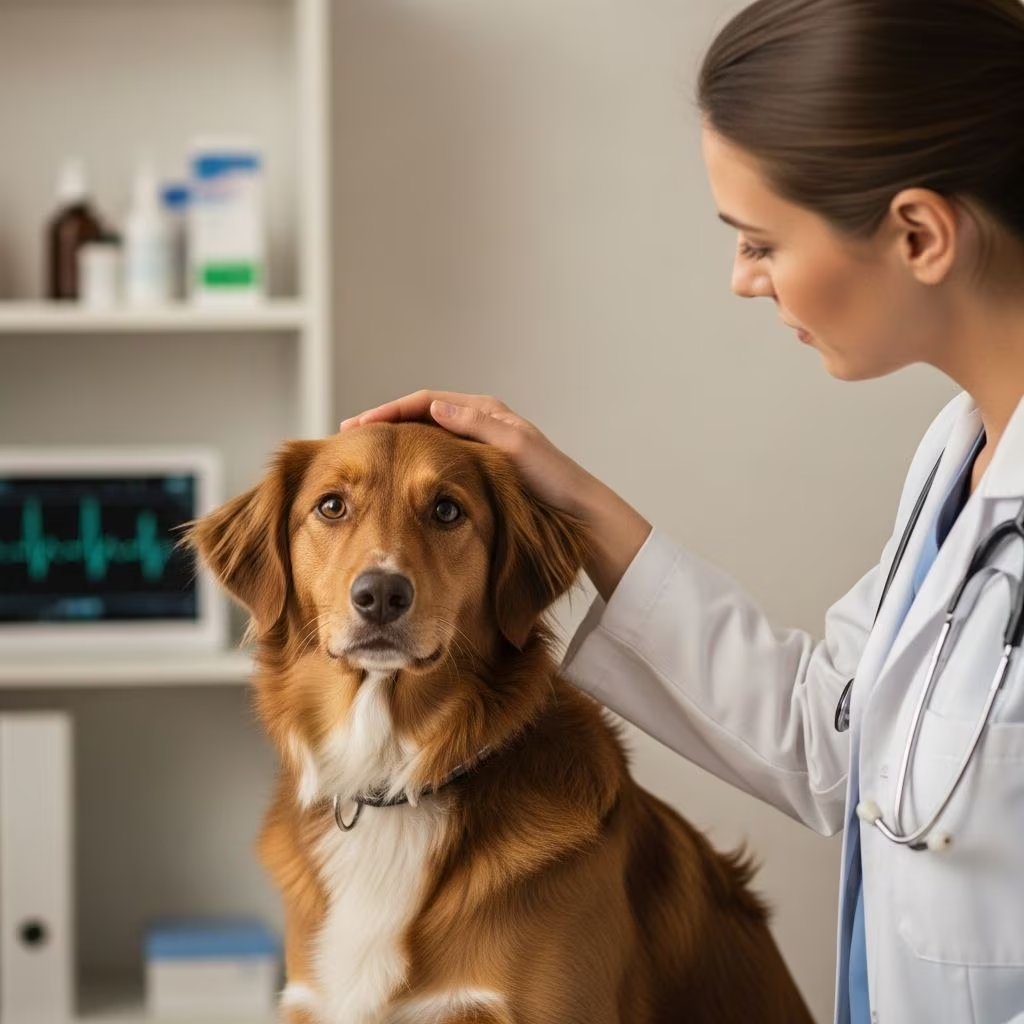
What You Need to Know About This Endocrine Disorder
Addison’s disease, medically known as hypoadrenocorticism, represents one of the more challenging endocrine disorders affecting canines today. This condition develops when a dog’s adrenal glands fail to produce adequate amounts of essential hormones, specifically cortisol and aldosterone. The adrenal glands, small but crucial organs located near the kidneys, are responsible for producing these hormones that regulate critical bodily functions including stress response, blood pressure, glucose metabolism, and electrolyte balance.
Understanding this disease is vital for pet owners because early recognition and consistent treatment dramatically improve outcomes. Dogs diagnosed with Addison’s disease can live normal, fulfilling lives when provided with appropriate medical management and monitoring. However, without treatment or during periods of inadequate care, this condition can escalate into a life-threatening emergency.
Identifying Risk Factors and Susceptible Populations
While Addison’s disease can develop in any dog regardless of age or sex, certain patterns emerge in veterinary practice. The condition predominantly affects younger to middle-aged dogs, with approximately 70 percent of cases occurring in female canines. This gender predisposition suggests hormonal factors may play a role in disease development.
Several dog breeds demonstrate significantly higher incidence rates, indicating genetic susceptibility factors. Breeds particularly vulnerable to developing Addison’s disease include:
- Great Danes and other large breed dogs
- Standard Poodles and related spaniel breeds
- Portuguese Water Dogs
- German Shepherds and Rottweilers
- Newfoundlands and Leonbergers
- Nova Scotia Duck Tolling Retrievers
- West Highland White Terriers and Bearded Collies
If your dog belongs to one of these breeds, maintaining heightened awareness of potential symptoms becomes especially important. Regular veterinary check-ups and open communication with your veterinarian about any behavioral or physical changes can aid in early detection.
Understanding the Underlying Causes
Addison’s disease develops through two primary pathways, classified as primary and secondary disease. Primary Addison’s disease, accounting for the majority of cases, occurs when the immune system mistakenly attacks and damages the adrenal gland tissue. This autoimmune response progressively destroys the gland’s ability to produce necessary hormones.
Secondary Addison’s disease, though less common, develops following specific damage to the adrenal glands. Potential causes include trauma, infections, tumors, or medications that interfere with normal adrenal function. Understanding which type your dog has helps inform treatment approaches and long-term management strategies.
Recognizing Symptoms and Clinical Presentations
Addison’s disease presents a wide spectrum of symptoms that can vary considerably between individual dogs. The insidious nature of this condition lies in its gradual onset, with many dogs showing only mild, nonspecific signs initially. Pet owners often mistake early symptoms for simple lethargy or minor digestive upset.
Common mild to moderate symptoms include:
- General lethargy and decreased activity levels
- Loss of appetite or reluctance to eat
- Unexplained weight loss despite normal feeding
- Vomiting and diarrhea, often intermittent
- Excessive thirst and increased urination
- Muscle weakness and trembling
- Depression and behavioral changes
- Intolerance to cold temperatures
These symptoms often wax and wane, disappearing temporarily before returning, which can delay diagnosis. Some dogs experience a pattern of seeming to recover briefly before declining again. This cyclical presentation occurs because the adrenal glands produce diminishing hormone levels inconsistently.
Acute crisis symptoms requiring immediate veterinary attention include:
- Severe vomiting and diarrhea with possible blood
- Collapse or loss of consciousness
- Severe dehydration despite water availability
- Irregular or weak pulse
- Pale mucous membranes
- Seizures
- Extreme shock symptoms
An Addisonian crisis represents the acute decompensation of untreated or inadequately managed disease. During this emergency state, the dog’s blood electrolytes become severely imbalanced, blood pressure drops dangerously, and blood glucose plummets. Without immediate intensive veterinary intervention, an Addisonian crisis can rapidly become fatal.
Diagnostic Procedures and Testing
Diagnosing Addison’s disease requires a systematic approach combining clinical observation with specific laboratory testing. Because symptoms mimic numerous other conditions, veterinarians must maintain high clinical suspicion to identify Addison’s disease appropriately.
Initial diagnostic work typically begins with a routine blood profile and urinalysis. These tests often reveal abnormalities including elevated kidney values, low sodium and chloride levels, elevated potassium, low blood glucose, and anemia. However, these findings alone cannot confirm Addison’s disease, as many conditions produce similar patterns.
The definitive diagnostic test is the ACTH (adrenocorticotropic hormone) stimulation test. This test involves drawing an initial blood sample to measure baseline cortisol levels, followed by an injection of synthetic ACTH hormone. A second blood sample collected 30-60 minutes later measures the adrenal glands’ response to this stimulation. In healthy dogs, the adrenal glands respond to ACTH stimulation by producing elevated cortisol. Dogs with Addison’s disease show little to no cortisol response, confirming the diagnosis.
Veterinarians may also perform additional imaging studies such as abdominal ultrasound to assess adrenal gland appearance and rule out other conditions. Some cases involve checking cortisol levels throughout the day to establish baseline hormone patterns.
Treatment Approaches and Medication Options
Once diagnosed, Addison’s disease requires lifelong management through hormone replacement therapy. While the condition cannot be cured, it can be effectively controlled with appropriate medications, allowing dogs to enjoy normal lifespans and quality of life.
Treatment consists of two main medication categories addressing the two hormone deficiencies: glucocorticoid replacement (replacing cortisol) and mineralocorticoid replacement (replacing aldosterone).
Glucocorticoid Replacement: Oral prednisone or prednisolone serves as the primary glucocorticoid replacement. Initial doses typically begin at 0.5 mg/kg administered twice daily. Following stabilization, doses are gradually reduced to the minimum effective maintenance level, often around 0.5 mg/kg once daily. Doses may require adjustment based on individual response and life circumstances. Dogs experiencing stress from travel, illness, or surgery may need temporary dose increases.
Mineralocorticoid Replacement: Two primary options exist for mineralocorticoid replacement. Fludrocortisone (Florinef) is an oral medication requiring daily administration. The newer and increasingly preferred option is desoxycorticosterone pivalate (DOCP), marketed under brand names Percorten-V and Zycortal. DOCP is administered as an intramuscular injection every 25 days or every 3-4 weeks depending on individual patient response. Many owners prefer DOCP for its less frequent dosing and more consistent hormone levels.
In emergency situations where an Addisonian crisis occurs, treatment priorities shift dramatically. Initial stabilization involves aggressive intravenous fluid therapy using appropriate crystalloid solutions to correct dehydration, shock, and electrolyte imbalances. High-dose glucocorticoids are administered intravenously. Additional supportive care may include supplemental glucose, medications to control vomiting and diarrhea, gastroprotectants, and occasionally blood transfusions for severe anemia from gastrointestinal bleeding.
Recovery Timeline and Monitoring Requirements
Most dogs receiving prompt treatment for Addison’s disease show remarkable improvement within 24 hours. Appetite typically returns, energy levels increase, and overall demeanor improves noticeably. Dogs recovering from an Addisonian crisis may require 3-5 days of hospitalization before stabilization allows safe discharge.
Following initial diagnosis and treatment, veterinary recheck examinations and blood work become essential. Rechecks approximately one month after diagnosis help ensure medication dosages appropriately control the disease. Subsequent routine rechecks maintain medication effectiveness and detect any complications early.
Long-term management success depends primarily on owner compliance with medication schedules. Skipping doses or delaying DOCP injections without veterinary approval risks precipitating another crisis. Most dogs settle into stable routines on consistent medication regimens, requiring only periodic monitoring.
Long-Term Prognosis and Quality of Life
The long-term outlook for dogs with Addison’s disease is remarkably positive with appropriate treatment. Research indicates median survival times of 4-5 years or longer from diagnosis, with most dogs succumbing to unrelated causes rather than complications of Addison’s disease itself.
With consistent medication and proper monitoring, Addison’s disease dogs participate fully in normal activities including play, exercise, travel, and social interactions. Quality of life remains excellent provided owners maintain medication consistency and schedule regular veterinary check-ups.
The critical factor determining prognosis is whether owners can commit to lifelong medication administration and monitoring. Dogs whose owners follow medical recommendations closely experience excellent outcomes. Conversely, dogs whose owners neglect medications or skip appointments face recurring crises and potentially fatal outcomes.
Nutritional Considerations and Lifestyle Management
While medication forms the foundation of Addison’s disease management, nutritional support and lifestyle adjustments enhance overall wellness. A balanced, high-quality diet supports the immune system and general health. Some dogs benefit from consistent feeding schedules, which also helps stabilize blood glucose levels.
Minimizing stressors where possible helps reduce the physiological demands on already-compromised adrenal function. This may include maintaining consistent daily routines, providing a calm home environment, and avoiding unnecessary disruptions. However, Addison’s dogs should not become isolated or overly restricted; normal exercise and socialization remain important.
Environmental considerations include protecting sensitive dogs from extreme temperature changes. Some Addison’s dogs demonstrate increased cold sensitivity, so providing warm shelters during winter months proves beneficial.
Emergency Preparedness for Addison’s Dogs
Owners of dogs with Addison’s disease should develop emergency plans addressing medication continuity. Maintaining sufficient medication supplies, knowing emergency veterinary clinic locations, and informing veterinarians about the condition ensures rapid appropriate care if crises occur during travel or unexpected situations.
During stressful events such as surgery or boarding, communication with veterinarians allows appropriate medication adjustments. Most surgical procedures require temporary prednisone dose increases to help the body manage surgical stress.
Frequently Asked Questions About Canine Addison’s Disease
Is Addison’s disease hereditary in dogs?
While specific genetic predisposition exists in certain breeds, Addison’s disease is not directly inherited in a simple genetic pattern. The autoimmune component suggests genetic susceptibility combined with environmental triggers.
Can Addison’s disease be prevented?
Currently, no proven prevention strategies exist for Addison’s disease. Regular veterinary monitoring of at-risk breeds may enable earlier detection when subtle symptoms appear.
How frequently should medication be adjusted?
Initial adjustments typically occur during the first month following diagnosis. Subsequent adjustments depend on individual response. Most dogs stabilize on consistent doses requiring only annual or biennial adjustments.
What triggers Addisonian crises?
Inadequate medication, stress, illness, surgery, or trauma can precipitate crises. Skipping DOCP injections represents the most common preventable trigger.
Can dogs with Addison’s disease have normal lifespans?
Yes, many dogs with Addison’s disease live normal lifespans with proper treatment, often dying from unrelated causes at advanced ages.
Moving Forward With Your Dog’s Diagnosis
Receiving an Addison’s disease diagnosis for your dog understandably causes concern, but modern treatment options enable excellent outcomes. Working closely with your veterinarian, maintaining consistent medication schedules, and monitoring your dog’s health ensures the best possible quality of life. Most dogs adapt quickly to their medication routines, and owners report that managing Addison’s disease becomes routine after initial adjustment periods. Your commitment to your dog’s care directly impacts their wellbeing and longevity.
References
- Understanding Addison’s Disease in Pets: A Guide for Pet Owners — Gregory Veterinary Clinic. 2024. https://www.gregoryvetclinic.com/post/understanding-addison-s-disease-in-pets-a-guide-for-pet-owners
- Addison’s Disease in Dogs: Symptoms and More — PetMD. 2024. https://www.petmd.com/dog/conditions/endocrine/addisons-disease-dogs-symptoms-and-more
- Management of hypoadrenocorticism (Addison’s disease) in dogs — National Center for Biotechnology Information. 2024. https://pmc.ncbi.nlm.nih.gov/articles/PMC6055912/
- Addison’s Disease in Dogs | VCA Animal Hospitals — VCA Animal Hospitals. 2024. https://vcahospitals.com/know-your-pet/addisons-disease-in-dogs-overview
- Addison Disease (Hypoadrenocorticism) in Animals — Merck Veterinary Manual. 2024. https://www.merckvetmanual.com/endocrine-system/the-adrenal-glands/addison-disease-hypoadrenocorticism-in-animals



