
Herbivore Nutrition: Adaptations for Plant-Based Diets
Understanding digestive adaptations and nutritional strategies in herbivorous animals.
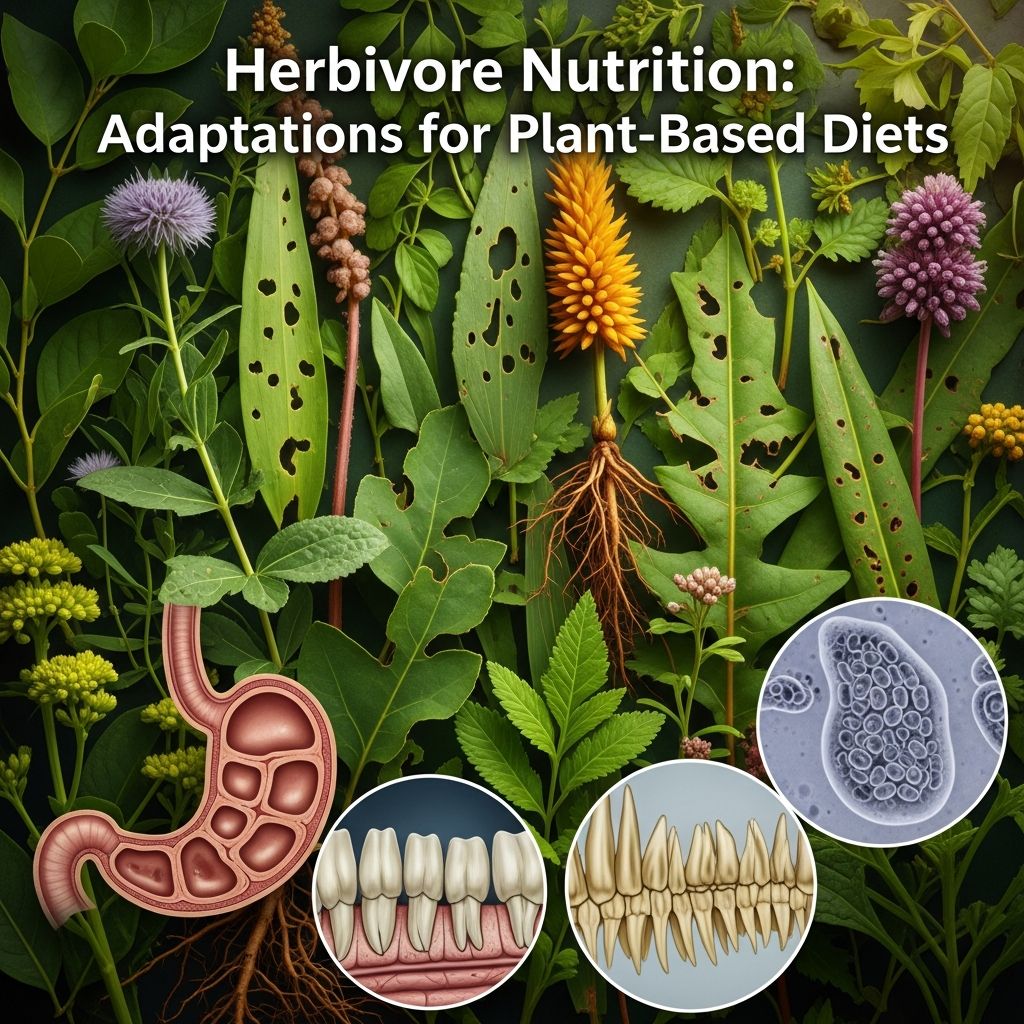
Herbivores represent a diverse group of animals that have evolved remarkable physiological and anatomical adaptations to survive exclusively on plant material. Unlike carnivores that consume nutrient-dense flesh, herbivores must process fibrous, often difficult-to-digest plant matter to extract sufficient nutrients for survival and reproduction. These adaptations span their digestive systems, tooth structure, feeding behaviors, and metabolic processes, allowing them to thrive in ecosystems worldwide. Understanding herbivore nutrition is essential for veterinary professionals, animal nutritionists, and wildlife managers responsible for maintaining optimal health in these species.
Anatomical Adaptations for Herbivory
The most visible adaptations in herbivores are found in their dentition and facial structure. Herbivores possess specialized tooth arrangements that reflect their feeding ecology and dietary requirements. Grazing herbivores such as cattle and horses have evolved wide, flat-crowned molars specifically designed for grinding tough plant materials, grass, tree bark, and lignin-containing substances. These teeth continuously erupt throughout the animal’s life to compensate for the constant wear caused by abrasive plant fibers.
The jaw structure of herbivores also differs significantly from carnivores. Herbivorous mammals typically exhibit a heterodont dentition pattern, meaning they possess different types of teeth—incisors, canines, premolars, and molars—each specialized for distinct functions in food processing. The incisors are designed for grasping and cutting vegetation, while the molars and premolars perform the grinding action necessary to break down plant cell walls. Additionally, herbivores possess powerful masticator muscles and specialized jaw joints that facilitate the extensive grinding motions required for effective plant material comminution.
Digestive System Specializations
The most significant adaptations in herbivores occur within their digestive systems. These systems have evolved dramatically different strategies to process plant material, with the two primary mechanisms being ruminant digestion and hindgut fermentation. Both strategies rely on microbial fermentation to break down complex plant carbohydrates that the herbivore’s own enzymes cannot digest.
Ruminant Digestion
Ruminants, including cattle, deer, sheep, and giraffes, possess a four-chambered stomach consisting of the rumen, reticulum, omasum, and abomasum. This complex stomach design allows ruminants to consume large meals rapidly in a short timeframe—an adaptation that reduces their vulnerability to predators while grazing. The food is initially swallowed without thorough mastication and enters the rumen, where it undergoes fermentation by billions of microorganisms including bacteria, protozoa, and fungi. These microbes produce cellulase and other enzymes that break down cellulose and hemicellulose, converting plant material into volatile fatty acids (VFAs) such as acetate, propionate, and butyrate.
Following fermentation in the rumen, partially digested food is regurgitated back into the mouth for additional chewing, a process known as rumination or “chewing the cud.” This secondary mastication further reduces particle size and increases surface area for microbial fermentation. The re-chewed material is then swallowed again and passes through the remaining stomach chambers for further digestion and nutrient absorption in the small and large intestines. This remarkable system enables ruminants to derive substantial energy and nutrients from fibrous plant material that would otherwise be indigestible.
Hindgut Fermentation
Non-ruminant herbivores such as horses, elephants, rhinoceroses, rabbits, and rodents employ a different fermentation strategy called hindgut fermentation. These animals possess simpler, single-chambered stomachs similar to humans, but they compensate with a dramatically enlarged cecum and colon—the hindgut. Following gastric digestion in the stomach and enzymatic digestion in the small intestine, partially digested plant material enters the cecum, where microbial fermentation occurs.
Hindgut fermenters must consume considerably larger volumes of food compared to ruminants to extract adequate nutrients from plant material. This is because fermentation occurs after the small intestine, resulting in lower overall digestive efficiency. However, this system offers advantages including the ability to consume a wider variety of plants and the capacity for rapid food transit, which allows hindgut fermenters to maintain higher feeding rates.
Nutritional Requirements of Herbivores
Despite their diverse digestive strategies, all herbivores share fundamental nutritional requirements that must be met through appropriate dietary management. Understanding these requirements is critical for maintaining optimal health, growth, reproduction, and productivity in herbivorous animals.
Energy Requirements
Energy, derived primarily from carbohydrates and volatile fatty acids produced through rumen fermentation and dietary fats, represents the most critical nutritional component for herbivores. The energy density of herbivorous diets is typically lower than carnivorous diets, necessitating large feed intakes to meet maintenance and production requirements. Environmental factors such as ambient temperature significantly influence energy requirements, with animals in cold climates requiring increased caloric intake to maintain body temperature and support metabolic functions.
Protein and Amino Acid Needs
Protein requirements in herbivores are supplied through dietary sources and microbial protein synthesized within the digestive tract. In ruminants, bypass protein—dietary protein that escapes rumen fermentation and is absorbed intact in the small intestine—becomes increasingly important during high-production states such as lactation. Sources of bypass protein include fish meal, blood meal, dried brewer’s grains, and soybean meal. The amino acid composition of dietary protein significantly influences its nutritional value, with methionine and lysine often being limiting amino acids in plant-based diets.
Fiber Requirements
Dietary fiber serves multiple critical functions in herbivore nutrition. Physically, fiber is necessary to maintain adequate rumen fill and stimulate rumination, the regurgitation and re-chewing process essential for optimal digestive function. Biochemically, fiber fermentation produces acetate, a volatile fatty acid that serves as a precursor for milk fat synthesis in lactating animals. Inadequate fiber intake can result in reduced rumination, impaired digestive function, and decreased milk fat production in dairy animals.
Mineral and Vitamin Requirements
Herbivores require appropriate levels of macro and micro minerals including calcium, phosphorus, magnesium, potassium, sodium, chloride, iron, copper, zinc, manganese, cobalt, and selenium. The calcium-to-phosphorus ratio is particularly important, as excessive phosphorus can inhibit calcium absorption and lead to mineral imbalances. Vitamin requirements include both fat-soluble vitamins (A, D, E, K) and water-soluble vitamins (B complex vitamins), with vitamin A being a common deficiency in herbivores consuming poor-quality forage.
Feeding Strategies and Plant Selection
Herbivores demonstrate remarkable flexibility in their feeding strategies, which can be broadly categorized as grazing, browsing, or mixed-feeding approaches. Grazers, including cattle and most antelope species, derive at least 90% of their forage from grasses. Browsers, such as giraffes and moose, preferentially consume leaves, bark, and twigs from trees and shrubs. Mixed-feeders, including goats and certain deer species, opportunistically consume both grasses and browse depending on seasonal availability and nutritional demands.
Herbivore diet selection reflects sophisticated nutritional knowledge and represents an important evolutionary adaptation. Many herbivores consume diverse plant species to balance their nutrient intake and reduce exposure to plant secondary metabolites—defensive chemical compounds that plants produce to discourage herbivory. This feeding strategy requires herbivores to recognize nutritional differences among plant species and adjust their consumption accordingly, a phenomenon known as nutrient balancing.
Plant Defense Mechanisms and Herbivore Counteradaptations
Plants produce numerous defensive compounds including alkaloids, tannins, glucosinolates, and other secondary metabolites that deter herbivory. Herbivores have evolved multiple strategies to overcome these plant defenses and safely consume protected plant material. Some herbivores produce enhanced quantities of saliva that can neutralize certain plant defensive compounds, reducing their effectiveness. Others have evolved the capacity to detoxify specific plant alkaloids through hepatic metabolism, allowing them to consume plants that would be toxic to other herbivore species.
Certain herbivores maintain symbiotic relationships with gut microorganisms that provide essential nutrients or enzymatic capabilities absent in the host animal. For example, some insects harbor specialized bacteria in their digestive tract that synthesize amino acids lacking in their sap-based diet. This microbial supplementation represents a crucial survival strategy for herbivores consuming nutritionally incomplete plant materials.
Life Stage Nutritional Considerations
Neonatal and Pre-Ruminant Calves
Young herbivores, particularly ruminants like cattle calves, are born with functionally incompetent rumens and must initially consume milk rather than plant material. During the pre-ruminant phase, calves require high-quality milk replacer containing milk-based proteins rather than vegetable-based proteins, which are poorly digested at this life stage. Crude protein levels of 18-30% and fat content of 15-25% are appropriate for milk replacers, with higher protein and fat levels supporting optimal growth and development.
The transition to solid food consumption occurs gradually over several weeks. Beginning at approximately three days of age, calves can be offered starter grain and water to promote rumen development. Grain consumption stimulates production of volatile fatty acids, particularly butyric and propionic acids, which lower rumen pH and promote growth of essential microorganisms. Adequate high-quality forage must be provided during this period to maintain rumen fill and stimulate rumination behavior, essential for proper rumen development.
Weaning and Post-Weaning Nutrition
Following a transition phase of 3-4 weeks, calves develop functional rumens capable of digesting dry feed and can be completely weaned from milk at 7-8 weeks of age. Post-weaning diets consist of grain and water for 1-2 weeks, after which forages such as hay are gradually introduced. Social housing in small groups of 6-8 calves helps reduce stress during the weaning transition. Consistency in grain type is critical during regrouping to minimize digestive upset and promote continued rumen development.
Cold Weather Considerations
Environmental temperature significantly impacts herbivore nutritional requirements. During cold weather, calves and adult herbivores require increased caloric intake to maintain body temperature and support metabolic functions. Strategies to improve energy status in cold conditions include increasing caloric density of liquid diets, supplementing with additional fat, or increasing feeding frequency. Concurrently, reducing energy losses through environmental management—including provision of adequate dry bedding, windbreak protection, calf jackets, and supplementary heat—proves essential for maintaining health and growth rates.
Special Feeding Programs
Colostrum Management
Newborn herbivores depend on colostrum for passive transfer of immunoglobulins, particularly IgG, which provide critical disease protection during early life. Traditional colostrum feeding delivers minimum levels of 100 grams of IgG per feeding. Modern alternatives include colostrum replacement products—powdered formulations that provide consistent, disease-pathogen-free sources of immunoglobulins at costs ranging from $25-30 per dose. These replacement products offer convenience and precise IgG dosing while eliminating risks of disease transmission associated with raw colostrum.
Starter Grain Programs
Effective calf starter grain should contain 21-23% crude protein on a dry matter basis with molasses content of 5-8% to enhance palatability and encourage consumption. Calves should be offered starter grain beginning at three days of age, with daily replacement of uneaten grain to maintain freshness and prevent spoilage. Simultaneous provision of free-choice fresh water promotes water intake and rumen development, critical for transitioning from liquid to solid feed consumption.
Frequently Asked Questions
Q: What is the primary difference between ruminant and hindgut fermentation?
A: Ruminants possess a four-chambered stomach where fermentation occurs before the small intestine, allowing bacterial breakdown of plant material before nutrient absorption. Hindgut fermenters have simple stomachs similar to humans, but possess enlarged ceca and colons where fermentation occurs after the small intestine, resulting in lower digestive efficiency but allowing consumption of more diverse plant materials.
Q: Why do herbivores require so much fiber in their diet?
A: Dietary fiber maintains rumen fill, stimulates rumination, and when fermented produces volatile fatty acids including acetate, which serves as a precursor for milk fat synthesis in lactating animals. Inadequate fiber intake impairs digestive function and reduces productivity.
Q: How do herbivores overcome plant defensive compounds?
A: Herbivores employ multiple strategies including producing enhanced saliva quantities to neutralize plant defenses, evolving hepatic detoxification capacity for specific alkaloids, and maintaining symbiotic relationships with gut microorganisms that provide essential nutrients or enzymatic capabilities.
Q: What are bypass proteins and why are they important?
A: Bypass proteins escape rumen fermentation and are absorbed intact in the small intestine. They become increasingly important during high-production states such as lactation, when microbial protein synthesis alone cannot meet amino acid requirements.
Q: How should energy intake be adjusted for calves in cold weather?
A: Cold weather energy requirements can be addressed through increased feeding volumes, additional daily feedings, supplemental fat addition, selection of higher-energy-density liquid diets, and environmental management including bedding, windbreaks, and supplementary heat to reduce energy losses.
References
- Nutrition: Herbivores – Veterinary Preventive Medicine — University of Minnesota PressBooks. 2024. https://pressbooks.umn.edu/vetprevmed/chapter/chapter-11-nutrition-herbivores/
- The Behavior and Diet of Herbivores — Garden Route Safari Camp. 2024. https://gardenroutesafaricamp.com/the-behavior-and-diet-of-herbivores/
- Herbivore — Wikipedia Contributors. 2024. https://en.wikipedia.org/wiki/Herbivore
- Herbivory Definition, Adaptations & Examples — Study.com. 2024. https://study.com/learn/lesson/herbivory-overview-adaptations.html
- Small Mammal Herbivores Part 1: Digestive System Adaptations — Veterinary Nursing Journal. 2022. https://www.magonlinelibrary.com/doi/pdf/10.12968/vetn.2022.13.7.312
- Differences in Digestive System Between Herbivores, Carnivores and Omnivores — Kiezebrink. 2024. https://www.kiezebrink.eu/en/knowledge-base-zoos/differences-in-digestive-system-between-herbivores-carnivores-and-omnivores
- Animal Nutrition Handbook — Auburn University College of Agriculture. 2014. https://agriculture.auburn.edu/wp-content/uploads/2021/12/Anmal-Nutrition-Handbook-2014-3rd-Rev-Chiba.pdf
Similar Articles








Read full bio of Sneha Tete


