

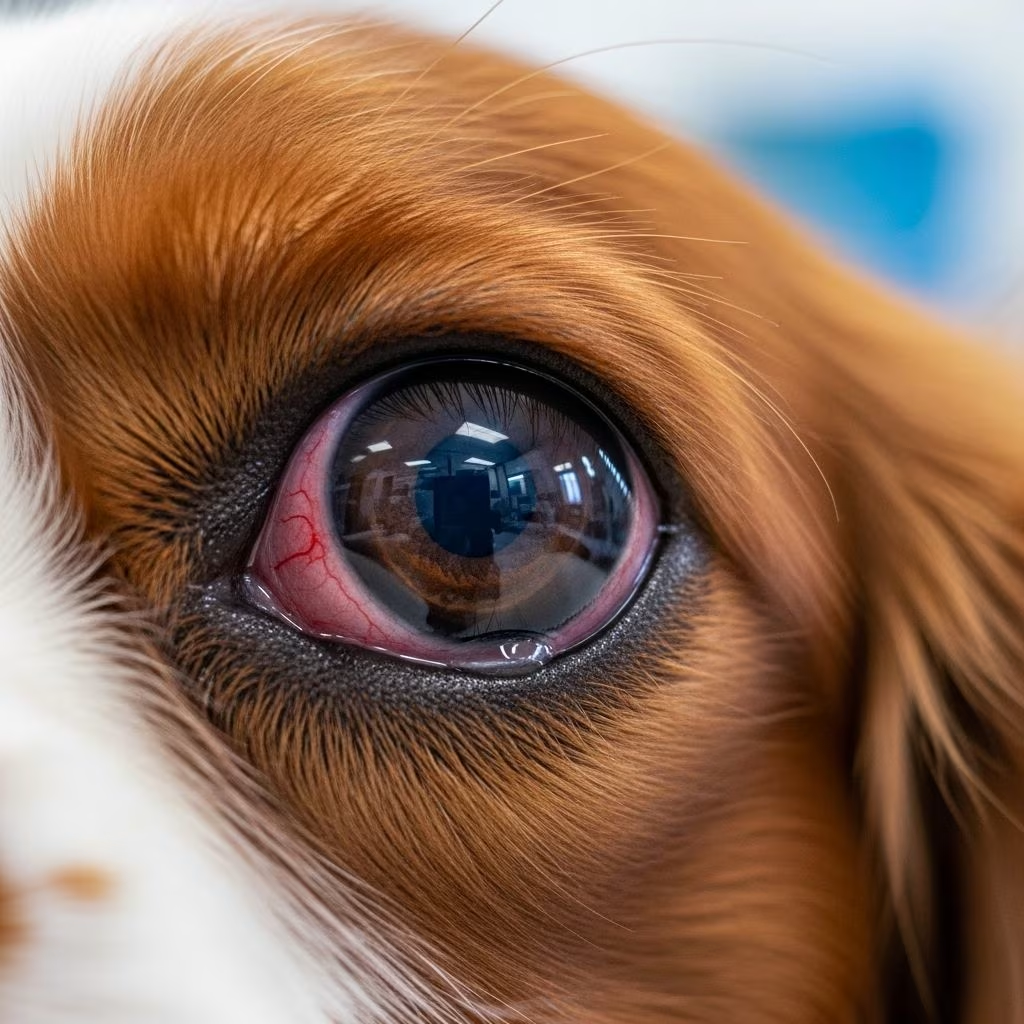
Acute glaucoma represents a veterinary crisis in small animals, particularly dogs and cats, where intraocular pressure (IOP) surges rapidly, threatening irreversible vision loss within hours. Prompt identification and intervention are essential to mitigate optic nerve damage and restore normal eye function.
Understanding the Pathophysiology
Glaucoma arises from impaired drainage of aqueous humor, the fluid nourishing the eye’s anterior structures. Unlike humans, small animals experience this solely through outflow obstruction, never excess production. In primary forms, genetic defects in the iridocorneal angle (ICA)—the drainage pathway—lead to gradual then explosive pressure buildup. Secondary cases stem from uveitis, lens displacement, tumors, or trauma blocking flow.
Pressure exceeding 40-50 mm Hg compresses retinal vessels and optic nerve fibers, causing ischemia and cell death. Acute episodes spike IOP abruptly, while chronic progression allows adaptive changes like globe enlargement (buphthalmos).
High-Risk Breeds and Genetic Factors
Certain dog breeds face heightened susceptibility due to inherited ICA malformations known as goniodysgenesis. Commonly affected include:
- Basset Hound
- Cocker Spaniel (American and English)
- Beagle
- Boston Terrier
- Shar-Pei
- Siberian Husky
- Samoyed
- Toy and Miniature Poodle
Cats rarely develop primary glaucoma; theirs is typically secondary to chronic inflammation. Terriers, Chinese Crested, and Shar-Pei risk lens luxation, a frequent secondary trigger.
Recognizing Acute Onset Symptoms
Owners often notice sudden behavioral shifts: pawing at the eye, squinting, or head pressing. Key clinical indicators include:
- Episcleral venous congestion and conjunctival redness
- Corneal cloudiness or edema (blue haze) from endothelial dysfunction
- Dilated, fixed pupil unresponsive to light
- Loss of menace response and pupillary light reflex
- Proptosis or globe enlargement in prolonged cases
In mild elevations, pupils may appear normal or miotic if uveitis coexists. Cats show subtler signs, like third eyelid protrusion.
Differentiating Acute from Chronic Glaucoma
| Feature | Acute Glaucoma | Chronic Glaucoma |
|---|---|---|
| IOP Level | >40-50 mm Hg sudden rise | Persistently elevated, adaptive changes |
| Vision Potential | Salvageable if treated fast | Irreversibly lost |
| Eye Appearance | Red, hazy cornea, normal size | Buphthalmos, lens luxation, corneal scars |
| Duration | Hours to days | Weeks to months |
History aids distinction: acute cases present emergently; chronic ones evolve unnoticed. Vision may return post-IOP normalization in acute phases, unlike chronic optic atrophy.
Diagnostic Protocols
Diagnosis hinges on tonometry, measuring IOP via applanation (TonoVet) or rebound (Tono-Pen) devices. Normal canine IOP is 10-25 mm Hg, feline 10-20 mm Hg; values decline with age. Any red eye warrants measurement.
Gonioscopy evaluates ICA patency, vital for primary vs. secondary differentiation. Ultrasonography detects lens luxation or tumors. Fluorescein staining rules out ulcers, and Schirmer tear tests assess concurrent sicca. Uveitis suspicion arises if IOP is normal despite inflammation, signaling outflow block.
Emergency Treatment Strategies
Treat as a vision-saving imperative: target IOP reduction below 30 mm Hg swiftly. Sequence includes:
- Immediate IOP lowering: Prostaglandin analogs (latanoprost 1 drop q8-12h) enhance uveoscleral outflow, dropping IOP 50% in hours. Contraindicated in uveitis.
- Carbonic anhydrase inhibitors: Topical dorzolamide or brinzolamide (q8h) curb aqueous production; systemic acetazolamide if needed, cautiously for renal risks.
- Beta-blockers: Timolol (q12h) reduces production; avoid in asthmatics.
- Mannitol hyperosmotic: IV 1-2 g/kg over 20 min draws fluid osmotically; repeat if refractory.
- Topical atropine: Relaxes ciliary muscle, aids outflow; miotic in uveitis cases.
Prepare the eye: lavage with povidone-iodine, anesthetize, stabilize globe if sedated. Address causes—refer lens luxations surgically.
Long-Term Management Approaches
Medical therapy falters over time in primary glaucoma; escalate frequencies or combine drugs. Monitor IOP weekly initially, then monthly.
Surgical interventions for vision preservation:
- Laser cycloablation: Transscleral or endoscopic photocoagulation destroys ciliary processes, curbing production. Endocyclophotocoagulation (ECP) excels, delaying blindness.
- Shunts: Ahmed or Baerveldt implants bypass ICA.
- Intraocular filtration: Creates drainage fistulas.
For blind, painful eyes: enucleation, evisceration with prosthesis, or chemical ablation (gentamicin injection) eliminates discomfort.
Prognosis and Owner Counseling
Acute cases treated within 12-24 hours boast 50-70% vision salvage; delays doom outcomes. Primary glaucoma demands lifelong vigilance; educate on breed risks, early signs, and compliance. Annual ophthalmic exams for predisposed breeds detect goniodysgenesis pre-onset.
Complications include corneal ulceration, uveitis flares, and cataract formation. Holistic care integrates pain control (NSAIDs) and anti-inflammatories.
FAQs
What should I do if my dog suddenly has a red, cloudy eye?
Seek emergency veterinary care immediately—measure IOP to confirm glaucoma and start therapy.
Can glaucoma be cured in pets?
No cure exists, but early management controls IOP, preserving vision long-term.
Are there home remedies for pet glaucoma?
No; only vet-prescribed drops and procedures are effective. Delays risk blindness.
How often should at-risk breeds get eye checks?
At least annually, more if redness or vision changes appear.
Is surgery always needed?
Not initially; meds suffice early, but surgery often becomes necessary for control.
Preventive Measures for At-Risk Pets
Genetic screening identifies goniodysgenesis carriers. Avoid breeding affected lines. Routine tonometry in predisposed breeds catches elevations pre-acutely. Prompt uveitis or trauma treatment averts secondary forms.
References
- Acute Glaucoma: A True Emergency — Today’s Veterinary Practice. 2023. https://todaysveterinarypractice.com/ophthalmology/acute-glaucoma-dogs-cats/
- Glaucoma in Dogs — VCA Animal Hospitals. 2024. https://vcahospitals.com/know-your-pet/glaucoma-in-dogs
- Clinical Considerations With Glaucoma — University of Illinois College of Veterinary Medicine. 2014-04. https://vetmed.illinois.edu/wp-content/uploads/2014/04/Glaucoma-Considerations.pdf
- Diagnosis and treatment of glaucoma — VetBloom. 2023. https://vetbloom.com/diagnosis-and-treatment-of-glaucoma/
- Glaucoma — Cornell University College of Veterinary Medicine. 2024. https://www.vet.cornell.edu/departments-centers-and-institutes/riney-canine-health-center/canine-health-topics/glaucoma
- Glaucoma in Your Pet — MedVet. 2024. https://www.medvet.com/glaucoma-in-your-pet/
- Glaucoma Fact Sheet — Davies Veterinary Specialists. 2023. https://www.vetspecialists.co.uk/fact-sheets-post/glaucoma-fact-sheet/



