

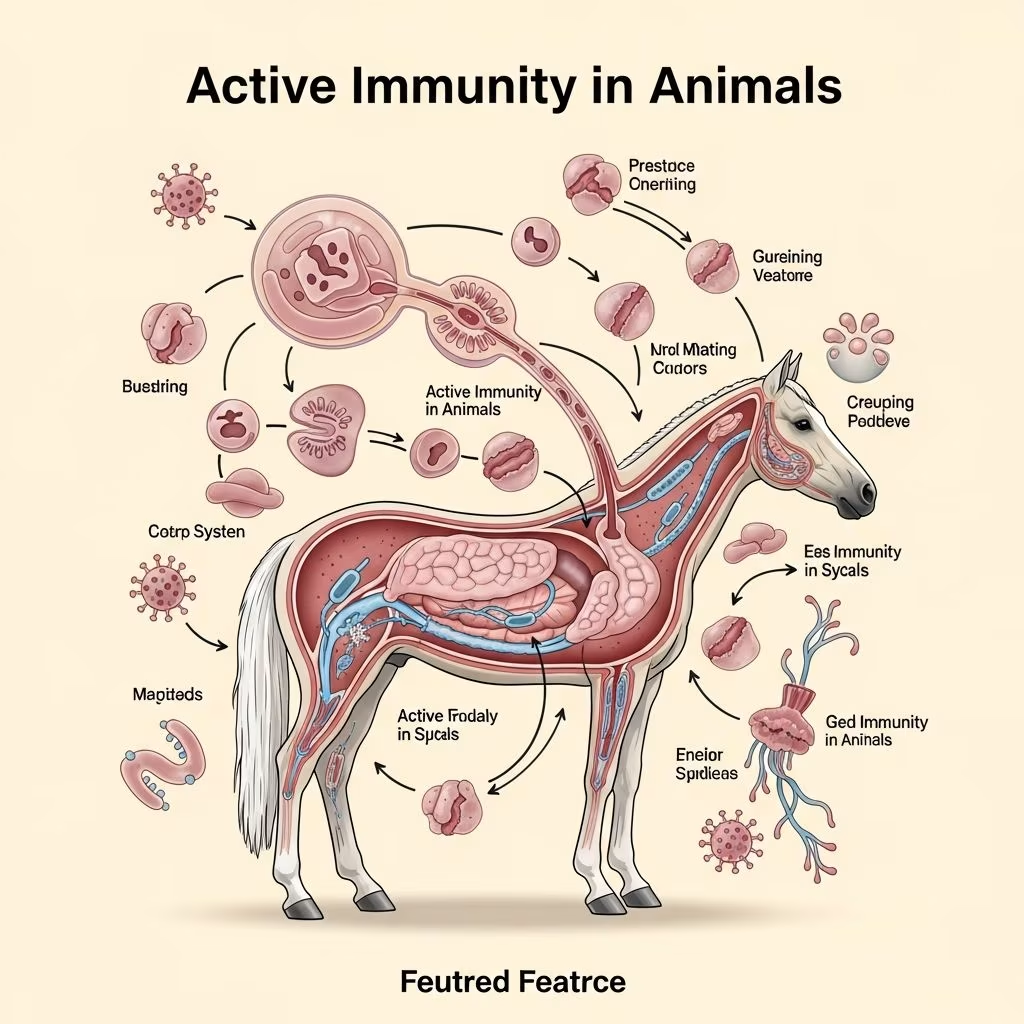
Active immunity equips animals with enduring protection against diseases by triggering their own immune systems to produce memory cells and specific responses to pathogens. Unlike temporary passive measures, this process fosters long-term humoral and cell-mediated defenses through natural exposure or vaccination.
Foundations of the Animal Immune System
The immune system in animals comprises innate and adaptive components, with active immunity relying primarily on the adaptive arm. Innate defenses provide immediate but non-specific barriers, while adaptive responses generate tailored antibodies and T-cells that remember antigens for future encounters. In vertebrates like mammals and birds, B-lymphocytes produce immunoglobulins, and T-lymphocytes orchestrate cellular attacks.
Humoral immunity involves soluble antibodies that neutralize extracellular threats, whereas cell-mediated immunity targets infected or abnormal cells. Both converge in active immunity, creating immunological memory that accelerates responses upon re-exposure, often preventing clinical disease even if infection occurs.
Natural Pathways to Active Immunity
Animals acquire active immunity naturally through subclinical or clinical infections. For instance, surviving a viral outbreak primes the system for lifelong resistance in many cases. However, this method carries risks of illness, death, or transmission, making it impractical for herd management or companion animals.
- Exposure to wild pathogens builds species-specific resistance, as seen in beef calves developing responses to bovine viruses post-infection.
- Genetic factors influence efficacy; studies on calves show heritable traits affecting antibody production and vaccine responsiveness.
- Environmental stressors like poor nutrition can impair natural immune priming, underscoring the need for controlled interventions.
Vaccine-Induced Active Immunity: Core Principles
Vaccines mimic infection without causing disease, delivering antigens to stimulate memory B- and T-cells. This results in rapid, robust protection upon challenge, reducing infection severity, viremia, and spread.
Key vaccine traits include safety, immunogenicity, stability, and cost-effectiveness. Ideal formulations confer strong, prolonged immunity with minimal doses, ideally via mucosal or systemic routes matching natural exposure.
| Vaccine Goal | Characteristics |
|---|---|
| Rapid Onset | Triggers cytokines and interferons within days for early protection. |
| Duration | Years of memory in core vaccines; boosters for waning responses. |
| Safety | No reversion to virulence; minimal adverse effects. |
| Efficacy | Blocks infection or disease; herd immunity threshold met. |
Categories of Veterinary Vaccines
Vaccines are classified by antigen preparation, influencing safety, potency, and duration.
Inactivated Vaccines
These use killed pathogens or subunits, safe for immunocompromised animals but often requiring adjuvants for robust responses. They induce primarily humoral immunity, suitable for bacterial toxins like tetanus.
- Examples: Clostridium vaccines for ruminants.
- Pros: No replication risk.
- Cons: Shorter duration; multiple boosters needed.
Modified Live Vaccines
Attenuated pathogens replicate mildly, eliciting balanced humoral and cellular immunity with rapid onset via innate activation.
- Examples: Canine distemper, feline panleukopenia.
- Advantages: Single-dose longevity; mimics natural infection.
- Cautions: Avoid in pregnant or young animals due to shedding potential.
Recombinant and Subunit Vaccines
Engineered antigens, like viral vectors or DNA plasmids, offer precision. They target specific epitopes, reducing side effects.
- DNA vaccines encode antigens for endogenous production.
- Viral vectored: Use harmless viruses to deliver genes, as in poultry Marek’s disease vaccines.
Next-Generation Innovations
Emerging nucleic acid vaccines and nanoparticle deliveries enhance mucosal immunity, crucial for respiratory pathogens. Plant-based expression systems lower production costs for livestock.
Strategic Vaccination Programs
Core vaccines protect against ubiquitous threats (e.g., rabies, parvovirus), while non-core address regional risks (e.g., leptospirosis). Timing considers maternal antibodies, which interfere in neonates.
In calves, colostrum-derived passives wane by 3-6 months, ideal for initial doses. Adults require boosters every 1-3 years based on titer monitoring.
- Puppies/kittens: Maternal antibody interference necessitates protocols at 6-8 weeks, repeated.
- Livestock: Pre-weaning priming maximizes lifetime protection.
- Herd strategies: Staggered dosing achieves 80-90% coverage for herd immunity.
Challenges and Limitations in Active Immunization
Not all diseases yield effective vaccines. Antibody-enhanced infections occur in lentiviruses like equine infectious anemia, where vaccines exacerbate pathology.
Immunosuppression from stress, age, or comorbidities reduces responses. Genetic variability affects outcomes; heritability studies in calves estimate moderate inheritance for IBRV responses.
| Challenge | Mitigation |
|---|---|
| Maternal Interference | Delay dosing; use intranasal for mucosal bypass. |
| Short Duration | Intramuscular boosters; titer checks. |
| Adverse Events | Species-matched antigens; pharmacovigilance. |
| Cost/Access |
Monitoring Vaccine Effectiveness
Serology measures antibody titers, but cellular immunity assays are advancing. Correlates of protection vary: antibodies block viruses, T-cells clear intracellular pathogens.
Field trials assess reduction in disease incidence. Post-vaccination surveillance tracks breakthroughs, informing updates.
Active Immunity in Production Animals
Livestock vaccination boosts growth, cuts antibiotic use, and enhances food safety. Poultry flocks receive Marek’s and Newcastle vaccines at hatcheries for near-100% protection.
Cattle programs target respiratory complexes (e.g., BRSV, PI3), administered pre-shipment to reduce morbidity.
Companion Animal Vaccination Advances
Pets benefit from lifestyle-tailored protocols. Experimental active immunization explores osteoarthritis via immune modulation, activating anti-inflammatory pathways.
Core panels (rabies, distemper) are legally mandated; lifestyle vaccines cover travel risks.
Future Horizons in Veterinary Vaccines
Precision vaccinology uses genomics for universal platforms. mRNA tech, adapted from human successes, promises rapid deployment against emerging threats.
Personalized dosing via biomarkers optimizes schedules, minimizing over-vaccination.
Frequently Asked Questions (FAQs)
What distinguishes active from passive immunity?
Active immunity is self-generated and long-lasting via memory cells; passive is borrowed (e.g., colostrum) and temporary.
Can over-vaccination harm animals?
Rare hypersensitivity occurs; titer-based protocols prevent unnecessary doses.
Are vaccines 100% effective?
No, but they dramatically lower disease risk and severity.
How soon after vaccination is protection achieved?
7-14 days for antibodies; innate responses faster in live vaccines.
Do vaccines prevent carrier states?
Often reduce shedding, aiding herd control.
References
- Colostrum Antibodies, Egg Antibodies and Monoclonal Antibodies in Veterinary Use — National Center for Biotechnology Information (PMC). 2020-03-15. https://pmc.ncbi.nlm.nih.gov/articles/PMC7123268/
- Vaccines in Veterinary Medicine: A Brief Review of History and Technology — National Center for Biotechnology Information (PMC). 2020-03-20. https://pmc.ncbi.nlm.nih.gov/articles/PMC7124274/
- Active Immunity in Animals — MSD Veterinary Manual. 2023-01-01. https://www.msdvetmanual.com/pharmacology/vaccines-and-immunotherapy/active-immunity-in-animals
- Active Immunization That Takes Care of Your Pet’s Health — Xeptiva. 2024-06-10. https://www.xeptiva.com/protective-shield-8203active-immunization-that-takes-care-of-your-pets-health.html
- Inheritance of Active and Passive Immunity in Beef Calves — University of Nebraska-Lincoln DigitalCommons. 1980-01-01. https://digitalcommons.unl.edu/hruskareports/93/



