

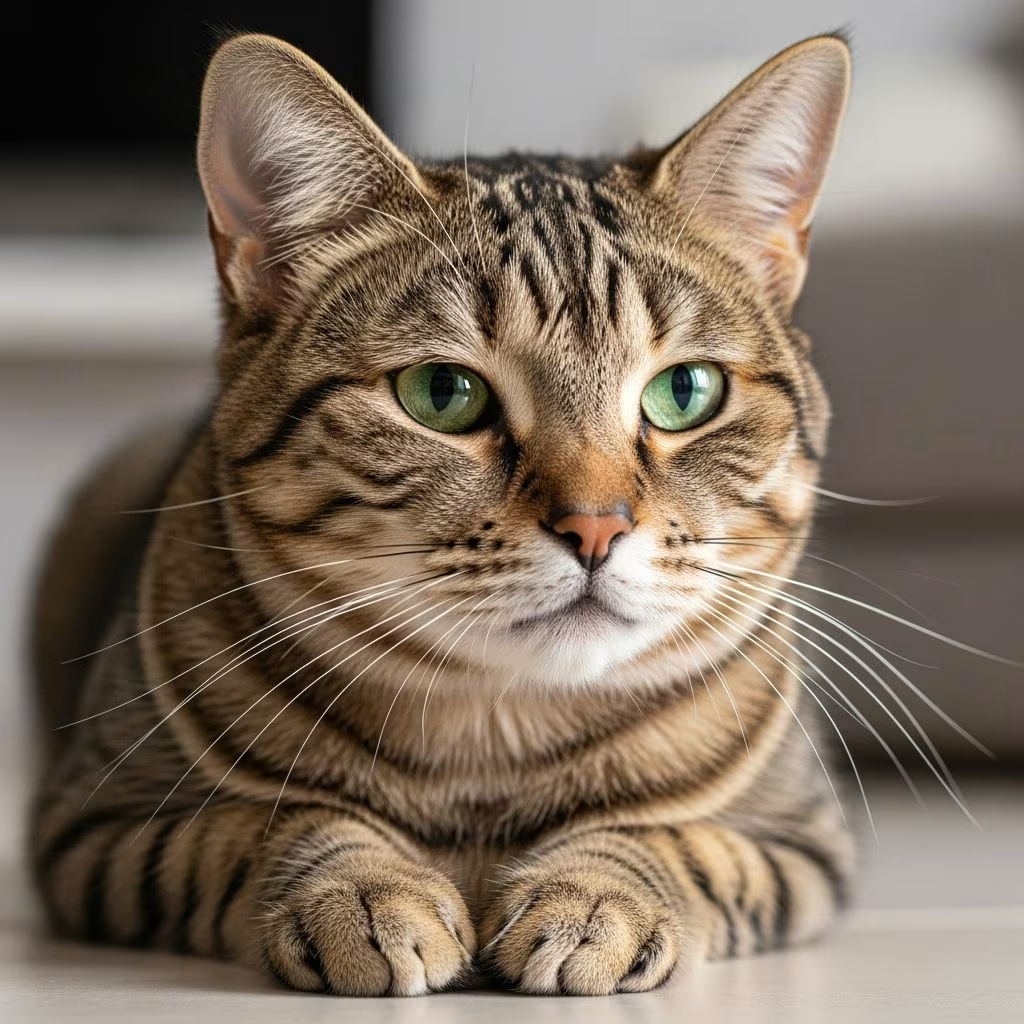
Acromegaly represents a uncommon yet serious endocrine disorder in cats, primarily driven by excessive production of growth hormone (GH) from pituitary gland tumors. This condition often masquerades as difficult-to-control diabetes mellitus, leading to delayed recognition and management. Cats affected by acromegaly exhibit a range of systemic changes due to the anabolic effects of GH and insulin-like growth factor 1 (IGF-1), impacting everything from body size to organ function.
Understanding the Root Cause: Pituitary Dysfunction
The anterior pituitary gland, nestled at the base of the brain, normally regulates growth through controlled GH release. In acromegaly, functional adenomas—benign tumors—disrupt this balance, causing unchecked GH secretion. Unlike humans, where acromegaly typically arises post-puberty, feline cases often coincide with middle age, around 8-12 years, predominantly in neutered males.
GH excess stimulates IGF-1 production in the liver, promoting tissue overgrowth. This duo fuels musculoskeletal expansion, visceral enlargement, and metabolic disruptions, particularly severe insulin resistance. Prevalence estimates suggest 10-25% of cats with poorly regulated diabetes harbor acromegaly, underscoring its relevance in feline endocrinology.
Recognizing the Signs: From Subtle to Striking
Early detection hinges on vigilance, as symptoms evolve gradually over months to years. Initial presentations mimic type 2 diabetes: excessive thirst (polydipsia), urination (polyuria), and hunger (polyphagia). Unlike typical diabetic cats that lose weight, acromegalic felines paradoxically gain lean mass, a hallmark clue.
- Metabolic Indicators: Uncontrolled blood glucose despite escalating insulin doses (up to 2-4 U/kg BID), persistent hyperglycemia.
- Skeletal Alterations: Enlarged paws (“clubbed” appearance), broadened skull with prominent forehead, lower jaw protrusion (prognathia inferior), widened interdental spaces.
- Organomegaly: Enlarged liver, kidneys, heart; palpable abdominal masses.
- Respiratory Issues: Noisy breathing (stridor) from soft tissue overgrowth in pharynx/larynx.
- Mobility Problems: Lameness from arthropathy or diabetic neuropathy.
Advanced cases reveal cardiac hypertrophy, hypertension, and neurological deficits like lethargy or blindness if the tumor compresses brain structures.
Diagnostic Pathway: Confirming the Suspected
No standalone test exists; diagnosis integrates history, exams, labs, and imaging. Begin with ruling out confounders like hyperthyroidism or Cushing’s disease via thyroid/ cortisol panels.
| Diagnostic Step | Purpose | Key Findings |
|---|---|---|
| Serum IGF-1 Assay | Screening Tool | Elevated >1000 ng/mL (reference <700); species-specific assays essential. |
| Growth Hormone Measurement | Confirmatory | Levels >10 ng/mL post-glucose suppression failure. |
| Abdominal/Thoracic Radiographs | Supportive | Organomegaly, cardiomegaly, pulmonary changes. |
| CT/MRI of Pituitary | Definitive | Macroadenoma visualization (94% sensitivity). |
| Echocardiography | Cardiac Assessment | Left ventricular hypertrophy, diastolic dysfunction. |
High IGF-1 prompts imaging; CT excels for bony changes, MRI for soft tissue detail. False negatives occur with microadenomas, but combined GH/IGF-1 testing boosts accuracy.
Complications: Multi-Organ Impact
Acromegaly’s reach extends beyond endocrinology. Cardiovascular remodeling leads to hypertrophic cardiomyopathy, murmurs, arrhythmias, and heart failure. Kidneys suffer glomerulosclerosis, proteinuria, azotemia. Respiratory obstruction risks aspiration pneumonia. Joint degeneration causes chronic pain, while diabetes accelerates neuropathy.
Owners report insidious progression: a once-svelte cat bulks up, paws splay, face coarsens, breathing labors—all amid fridge-raiding binges.
Treatment Strategies: Managing the Unmanageable
Goals: normalize GH/IGF-1, stabilize glucose, palliate symptoms. No cure exists; multimodal therapy offers control.
- Insulin Therapy: High-dose glargine or detemir (2-6 U BID), frequent monitoring to combat resistance.
- Medical Options: Somatostatin analogs (pasireotide) or dopamine agonists (cabergoline) show promise in trials, reducing GH by 50% in responders.
- Radiation Therapy: Stereotactic or fractionated RT shrinks tumors in 70-80%, normalizes IGF-1 in 40-60%; diabetes remits in subsets.
- Surgical Hypophysectomy: Rarely performed due to risks; reserved for specialized centers.
- Supportive Care: ACE inhibitors for hypertension/cardiomyopathy, pain relief, dietary management.
Prognosis varies: untreated survival <2 years from complications; treated cats achieve 2-5 years with quality life.
Living with Acromegaly: Owner Guidance
Monitor weight, appetite, gait, breathing weekly. Home glucose curves guide insulin tweaks. Annual cardiac/renal checks vital. Enriched environments mitigate neurological changes. Nutritional balance prevents obesity atop muscle gain.
Research Frontiers: Emerging Insights
Ongoing studies refine IGF-1 cutoffs, validate RT protocols. Genetic markers for predisposition probed. Novel GH receptor antagonists eyed for therapy.
Frequently Asked Questions (FAQs)
What triggers acromegaly in my cat?
Primarily pituitary adenomas; no clear environmental/genetic triggers identified.
Can acromegaly be reversed?
Tumor debulking via radiation may normalize hormones, but full reversal rare; management focuses on control.
Is surgery an option?
Hypophysectomy possible but high-risk; radiation preferred.
How do I afford diagnostics?
Seek veterinary specialists; payment plans or grants available for endocrine cases.
Does breed matter?
No predisposition; common in domestic shorthairs.
References
- Feline Acromegaly: An Essential Differential Diagnosis — National Center for Biotechnology Information (PMC). 2024. https://pmc.ncbi.nlm.nih.gov/articles/PMC10845472/
- Feline acromegaly: The keys to diagnosis — dvm360. 2015-01-01. https://www.dvm360.com/view/feline-acromegaly-keys-diagnosis
- Acromegaly in Cats — Merck Veterinary Manual. 2023. https://www.merckvetmanual.com/endocrine-system/the-pituitary-gland/acromegaly-in-cats
- Acromegaly in Cats — MSD Veterinary Manual. 2023. https://www.msdvetmanual.com/endocrine-system/the-pituitary-gland/acromegaly-in-cats
- Excessive Growth Hormone (Somatotropin) in Cats — PetMD. 2023. https://www.petmd.com/cat/conditions/musculoskeletal/c_ct_acromegaly
- Radiation Oncology: Feline Acromegaly, Pituitary tumors in cats — North Carolina State University College of Veterinary Medicine. 2023. https://hospital.cvm.ncsu.edu/services/small-animals/cancer-oncology/radiation-oncology/feline-acromegaly-pituitary-tumors-in-cats/
- Growth Hormone and IGF-1 in Cats — Michigan State University Veterinary Diagnostic Laboratory. 2023. https://cvm.msu.edu/vdl/laboratory-sections/endocrinology/growth-hormone-and-igf-1-in-cats



