

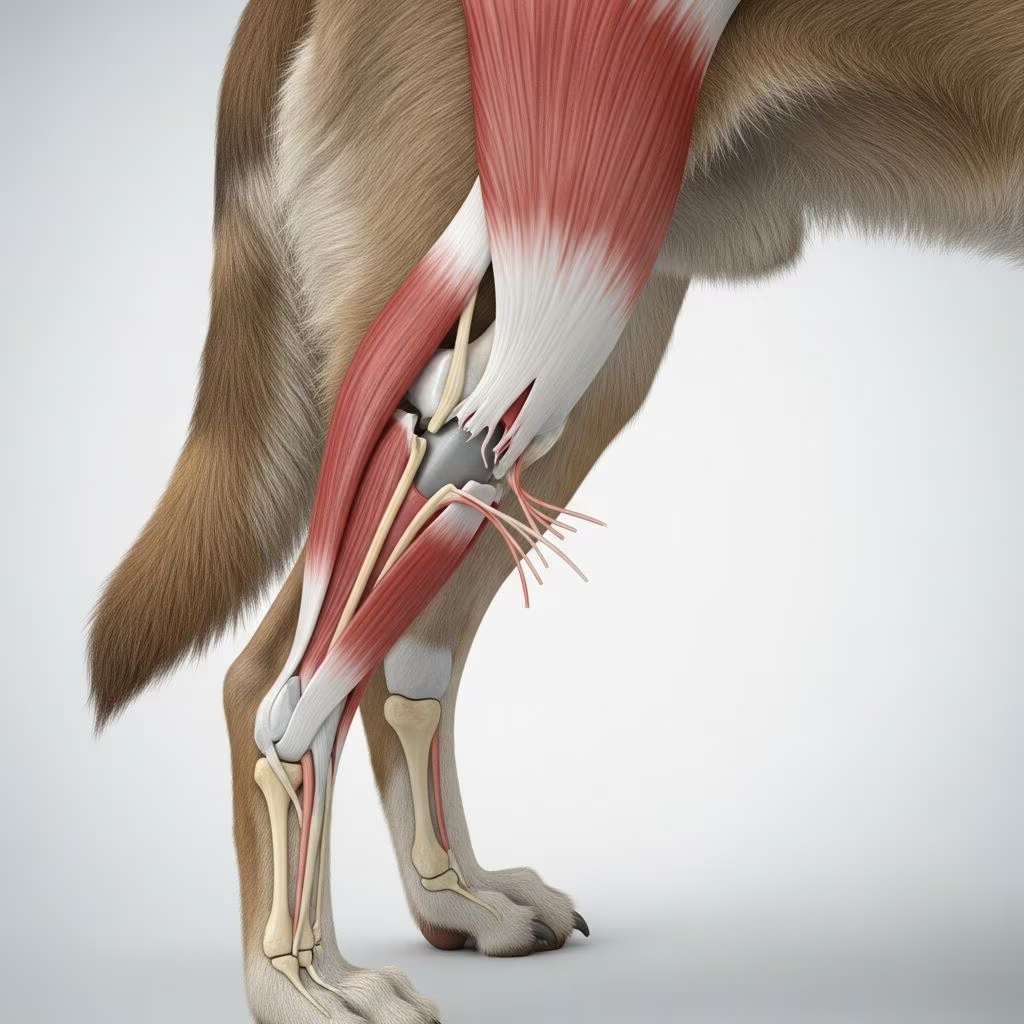
Understanding the Anatomy of the Canine Achilles Tendon
The Achilles tendon in dogs represents a sophisticated biomechanical structure essential for normal movement and weight-bearing activities. This complex system comprises five distinct tendons working in coordinated fashion to enable proper hock (ankle) function. Among these components, the gastrocnemius tendon and the superficial digital flexor tendon carry the greatest functional responsibility. The gastrocnemius tendon serves as a primary extensor of the hock joint, allowing dogs to stand upright on their toes—the characteristic tippy-toe stance natural to canines.
When functioning properly, this tendon complex attaches to the calcaneus, or heel bone, transmitting muscular force that elevates the foot and enables the pushing-off motion required for running and jumping. The superficial digital flexor tendon components work synergistically to maintain proper toe position and digit flexibility. Understanding this anatomical foundation helps explain why injuries to this structure produce such dramatic changes in a dog’s mobility and posture.
Classification of Achilles Tendon Injuries
Veterinary professionals classify Achilles tendon injuries using a grading system that reflects the extent of structural damage. This classification helps determine appropriate treatment protocols and predicts recovery timelines.
Grade Distinctions
- Mild Grade Injuries (Grade 1): These represent minor inflammation or mild strain of the tendon complex without significant fiber disruption
- Moderate Grade Injuries (Grade 2): Characterized by partial tearing of tendon fibers, these injuries compromise some structural integrity while maintaining partial function
- Severe Complete Ruptures (Grade 3): Total disruption of all tendon fibers within the Achilles complex, resulting in complete loss of normal function
Partial ruptures most commonly involve isolated gastrocnemius tendon tearing while the superficial digital flexor remains intact. Complete ruptures, which are less common, usually result from acute traumatic events such as lacerations or significant blunt force trauma.
Recognizing Clinical Manifestations
Dogs experiencing Achilles tendon injuries present with distinctive clinical signs that vary according to injury severity. Pet owners should familiarize themselves with these presentations to seek timely veterinary evaluation.
Indicators of Partial Tendon Disruption
When the gastrocnemius tendon tears while the superficial digital flexor remains functional, characteristic postural changes emerge. The affected hock appears partially dropped, and the toes curl downward in what veterinarians term a “bear claw stance” or crab claw position. This curling occurs because the intact superficial digital flexor attempts to compensate by maintaining heel elevation, inadvertently creating tension on the toe flexors.
Additional signs accompanying partial ruptures include:
Lameness or favoring of the affected limb, reluctance to bear full weight, swelling around the injury site, and mild pain upon palpation. Dogs may exhibit increased attention to the injured area through excessive licking or chewing.
Presentation of Complete Tendon Ruptures
When all five components of the Achilles tendon complex rupture, the clinical presentation becomes unmistakable. The hock drops completely, causing the dog to walk on a flat foot rather than maintaining the normal elevated stance on the toes. This flattened, human-like gait represents a plantigrade stance and dramatically affects the dog’s mobility. Additionally, complete ruptures prevent normal digit extension, resulting in severely curled toes and a distinctly abnormal appearance when the dog attempts to ambulate.
Dogs with complete ruptures typically demonstrate:
- Non-weight bearing lameness or severe reluctance to place weight on the affected limb
- Swelling and inflammation around the hock region
- Visible contracture (shortening) of the gastrocnemius muscle as it tightens without opposing tendon tension
- Signs of pain, though sometimes surprisingly minimal in acute cases
- Inability to stand or walk normally
Identifying Predisposing Factors and Causes
Achilles tendon injuries in dogs arise from multiple etiological pathways, ranging from acute traumatic events to chronic degenerative processes. Understanding these causative factors helps pet owners recognize at-risk situations.
Traumatic Injury Mechanisms
Acute injuries typically result from sudden, forceful events. Lacerations represent the most common cause of complete ruptures, occurring when sharp objects contact the tendon area directly. Falls from heights, being struck by vehicles, entanglement in fencing, or stepping on broken glass can all precipitate sudden tendon failure. These injuries often occur during normal daily activities when dogs push off with the limb while the foot remains planted, creating excessive hock flexion.
Degenerative and Overuse Pathways
Many Achilles tendon injuries develop gradually through chronic degradation rather than acute trauma. Repetitive stress, particularly in athletic dogs engaged in running or jumping activities, causes microtrauma that weakens tendon structure over time. This degenerative process appears linked to long-term wear and mechanical stress that alters the tendon’s organizational architecture.
Breed and Age Susceptibility
Large sporting and working breed dogs demonstrate substantially higher incidence rates. The Labrador retriever, Doberman pinscher, and English setter breeds show particular predisposition. These conditions typically manifest in dogs aged five years and older, suggesting that accumulated degenerative changes play a significant role in injury development. Overweight dogs face elevated rupture risk due to increased stress on supporting structures.
Diagnostic Approach and Imaging Modalities
Accurate diagnosis requires systematic evaluation combining physical examination with advanced imaging techniques. Veterinarians employ a stepwise diagnostic approach to confirm Achilles tendon injuries and assess severity.
Physical Examination Findings
During clinical examination, veterinarians assess hock positioning by attempting passive flexion. With complete ruptures, the hock can be flexed to an unnatural degree, beyond normal physiologic range. Palpation of the tendon region may reveal defects or discontinuities, though swelling and the protective tendon sheath can obscure findings. Careful inspection of overlying skin may identify lacerations, bruising, or other trauma evidence.
Radiographic Evaluation
Plain radiographs (X-rays) of the affected hock serve important diagnostic functions. These images help exclude fractures or other bone pathology that might mimic tendon injuries. Radiographs frequently reveal soft tissue swelling around the tendon and may demonstrate tendon thickening. In chronic degenerative cases, mineralization or calcification of the tendon appears as bright spots within the tendon tissue. Avulsion of the gastrocnemius tendon from its calcaneal attachment may be directly visualized.
Ultrasonographic Imaging
Ultrasound provides exceptional detail for tendon assessment. This modality excellently identifies the precise location and nature of tears within the tendon complex. Torn tendons appear as defects or disruptions in the normally uniform echogenicity of the tendon tissue. Experienced ultrasonographers can determine whether injuries involve single components or complete structures.
Magnetic Resonance Imaging
MRI offers the most comprehensive soft tissue visualization, revealing internal tendon damage with exceptional clarity. Complete ruptures appear with characteristic hyperintensity (brightness) in damaged areas compared to normal tendon tissue. MRI also reveals fluid accumulation within the tendon sheath and can identify muscle belly tears near the stifle joint.
Treatment Approaches and Intervention Strategies
Treatment selection depends upon injury severity, chronicity, and the dog’s overall health status. Veterinarians may employ surgical repair, conservative management, or combination approaches.
Surgical Repair Protocols
Complete ruptures and many severe partial ruptures require surgical intervention. The surgical procedure involves precisely reattaching or repairing the torn tendon components. Surgeons typically suture the tendon together, restoring structural integrity and functional capacity. Following surgical repair, the limb requires immobilization using a cast or external fixator device to prevent movement and allow healing.
Post-Operative Immobilization
Following surgical repair, dogs typically wear a protective cast for approximately two months. This immobilization period allows the tendon to develop sufficient scar tissue and new collagen cross-links to support weight-bearing. The inner padding requires replacement every two weeks to maintain proper support and prevent pressure sore development.
Conservative Management Options
Mild to moderate partial ruptures may respond to conservative therapy combining strict rest, pain management, and supportive devices. Extended confinement prevents reinjury during the healing phase. Anti-inflammatory medications reduce pain and swelling, facilitating comfort during recovery.
Emerging Treatment Modalities
Newer therapeutic approaches including stem cell treatments show promise for tendon regeneration and healing acceleration. These advanced modalities may complement or enhance traditional surgical and conservative approaches in select cases.
Post-Operative Care and Monitoring
Successful recovery depends critically upon meticulous post-operative management and early detection of complications.
Cast Care Requirements
Cast maintenance demands consistent attention to prevent pressure sores and infection. Pet owners should watch carefully for signs indicating cast complications:
- Increased dog attention to the cast area through excessive chewing, licking, or pawing
- Foul odors emanating from within the cast
- Discharge seeping through the cast material
- Swelling above or below the cast indicating pressure accumulation
Activity Restriction During Healing
Dogs require strict confinement during the immobilization period to prevent cast displacement and reinjury. Exercise should be severely limited to brief leash walks for elimination purposes only. Jumping, running, climbing stairs, and unsupervised play must be strictly prevented.
Monitoring for Complications
Pet owners should maintain vigilant observation for infection signs including heat, swelling, drainage, or fever. Pain that worsens rather than improves should prompt immediate veterinary evaluation, as it may indicate improper healing or cast complications.
Long-Term Outcome Expectations
With appropriate surgical repair and diligent post-operative care, most dogs achieve substantial functional recovery. The timeline extends beyond the initial cast period, with complete remodeling of the healing tendon continuing for months. Some dogs regain full pre-injury function, though mild lameness or activity limitations may persist. Rehabilitation exercises supervised by veterinary professionals can optimize recovery and restore strength.
Frequently Asked Questions
Can dogs recover from Achilles tendon ruptures without surgery?
Mild partial ruptures may heal with conservative treatment involving strict rest and immobilization. However, complete ruptures and severe partial tears typically require surgical intervention to restore normal function. Conservative management alone usually results in persistent lameness and functional limitation.
How long does recovery take after Achilles tendon surgery?
Initial immobilization with a cast typically lasts approximately two months. However, complete functional recovery extends over several additional months as the tendon remodels and regains strength. Most dogs show significant improvement within three to four months, though full recovery may take six months or longer.
What breeds are most susceptible to Achilles tendon injuries?
Large sporting and working breeds show highest predisposition, particularly Labrador retrievers, Doberman pinschers, and English setters. These injuries typically affect middle-aged to older dogs, usually five years of age or older.
Can Achilles tendon injuries be prevented?
While some injuries result from unpredictable trauma, owners can reduce degenerative injury risk by maintaining appropriate weight, providing controlled exercise rather than excessive jumping or running, and avoiding overexertion in athletic dogs. Regular veterinary check-ups allow early detection of degenerative changes.
Will my dog have permanent lameness after recovery?
With appropriate surgical repair and rehabilitation, many dogs regain substantial or complete function. However, some permanent mild lameness or activity limitation may persist in individual cases. The outcome depends upon injury severity, surgical technique, post-operative care quality, and individual healing capacity.
Conclusion
Achilles tendon ruptures represent serious injuries requiring prompt veterinary evaluation and typically surgical intervention. Recognition of the distinctive clinical signs—particularly the characteristic dropped hock and curled-toe stance—enables rapid diagnosis. Advanced imaging modalities provide detailed injury assessment, guiding appropriate treatment selection. With modern surgical techniques and dedicated post-operative care, most dogs achieve functional recovery and return to reasonable activity levels, though the process demands patience and consistent owner commitment throughout the extended healing period.
References
- Achilles’ Tendon Rupture / Gastrocnemeus Tendon Rupture — Animal Surgical Center. Accessed February 2026. https://www.animalsurgicalcenter.com/achilles-tendon-rupture-/-gastrocnemeus-tendon-rupture
- Achilles’ Tendon Avulsion and Inflammation — MVS Vets. Accessed February 2026. https://www.mvsvets.co.uk/pet-owners/achilles-tendon-avulsion-and-inflammation/
- Achilles Tendon Injury In Dogs, Symptoms And Treatments — Stem Cells Safari. Accessed February 2026. https://stemcellsafari.com/conditions-treated/inflammatory-disorders/achilles-tendon-injury/
- Achilles Tendon Rupture — TopDog Health. Accessed February 2026. https://topdoghealth.com/library/orthopedic-condition/articles/achilles-tendon-rupture/
- Dog Achilles Tendon Injury | Canine Hock | Support Brace — Pawopedic. Accessed February 2026. https://www.pawopedic.com/achilles-tendon-rupture
- Achilles Tendon Injury & Surgery in Dogs / Canines — Harvard Veterinary Services. Accessed February 2026. https://www.hvsevet.com/blog/28/achilles-tendon-injury-surgery-in-dogs-canines
- Achilles Tendon Injuries in Dogs – Symptoms, Causes, Diagnosis — Wag Walking. Accessed February 2026. https://wagwalking.com/condition/achilles-tendon-injuries



