

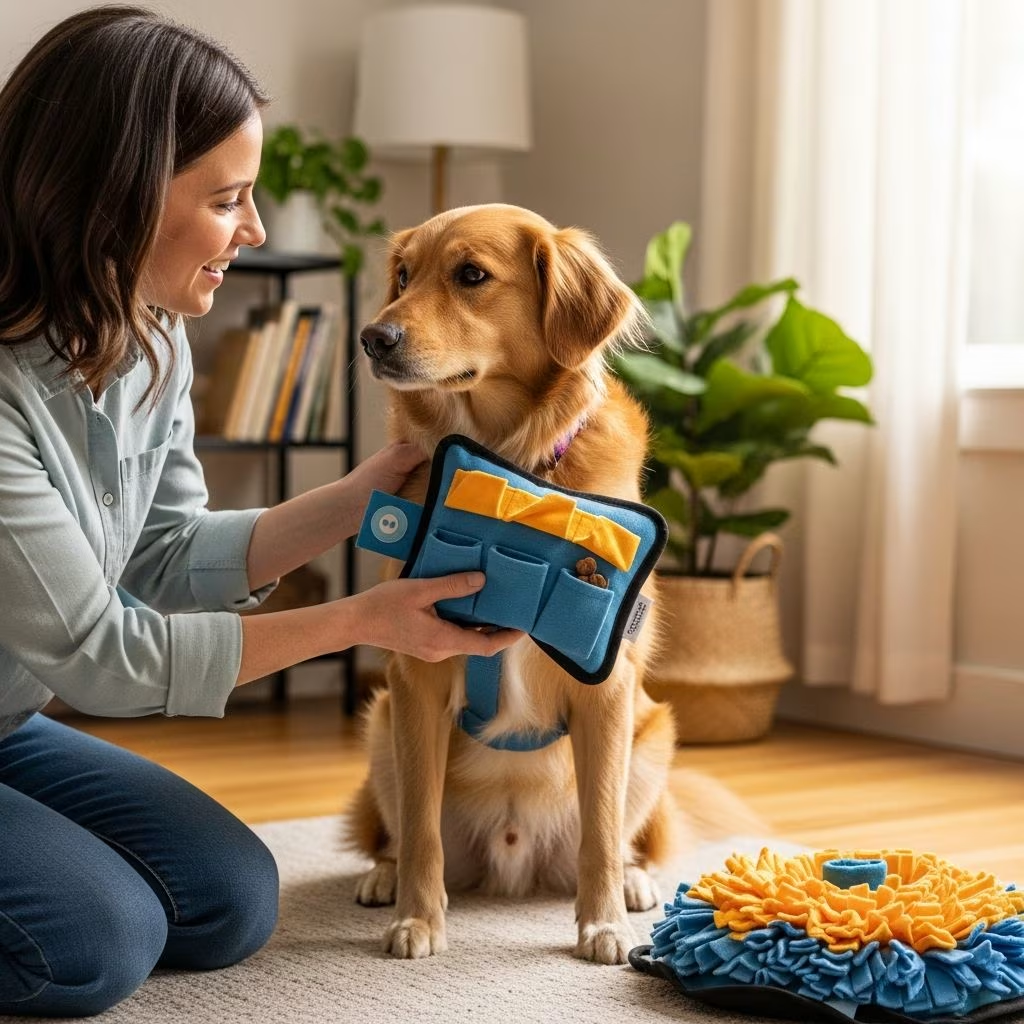
Keeping your dog physically and mentally stimulated is essential for their health and happiness, especially when your own mobility is restricted due to injury, age, or chronic conditions. Fortunately, numerous games can provide your canine companion with exercise and enrichment while allowing you to participate from a stationary position. These activities leverage your dog’s natural instincts for chasing, retrieving, sniffing, and problem-solving, ensuring they stay active indoors or in small outdoor spaces.
Why Adapted Games Matter for You and Your Dog
Dogs require regular physical activity to maintain muscle tone, joint health, and cardiovascular fitness. When traditional walks or fetch become challenging for the handler, alternative games prevent boredom, reduce destructive behaviors, and strengthen the human-dog bond. Mental stimulation is equally vital, as it tires dogs out comparably to physical exertion, according to veterinary recommendations for pets with mobility constraints.
These games are scalable: start simple for puppies or seniors, and increase complexity as your dog masters them. Always prioritize safety by using non-slip surfaces, soft toys, and short sessions to avoid overexertion.
Stationary Tug Challenges
Tug-of-war is a timeless favorite that requires minimal movement from you. Sit or stand in place while your dog pulls on a durable rope toy, fleece strip, or rubber tugger. This game taps into their prey drive, building strength in the neck, shoulders, and jaws.
- Select toys with handles for easy grip without bending.
- Use cues like “take it” and “drop it” to teach impulse control.
- End sessions positively by initiating the game, ensuring your dog doesn’t demand play.
For variety, incorporate rules: release the toy 10 times in a row for a treat jackpot. This low-impact activity works well on-leash during short outdoor stops or indoors on carpeted floors.
Vertical Fetch Variations
If stairs are available, transform them into a fetch arena. Position yourself at the base and toss a ball or soft toy upward. Your dog sprints up to retrieve it, then bounds down to return it, repeating for 10-15 throws per session.
This method minimizes your steps while maximizing your dog’s cardio. For safety:
| Setup | Benefits | Safety Tips |
|---|---|---|
| Bottom of stairs | Easy access, low risk | Use carpeted stairs |
| Long hallway | Indoor alternative | Avoid slick floors |
| Deck steps | Outdoor option | Secure railings |
Over time, this hones retrieving skills, as dogs learn precise drops to continue the fun.
Bouncing Prey Simulations
Create a thrilling chase with a tethered ball, known as a “floppy ball” game. Attach a tennis ball to a sturdy rope or bungee cord, securing the other end to a post or holding it loosely. Wave, drag, or bounce it erratically to mimic fleeing prey.
Your dog leaps and pounces while you remain seated. Key techniques:
- Wiggle side-to-side to build anticipation.
- Sudden jerks upward evade grabs, extending play.
- Practice “out” commands by freezing motion until release.
Ideal for sandy beaches or grassy yards to cushion jumps, this game satisfies high-drive dogs without you running.
Scent-Based Treasure Hunts
Harness your dog’s superior sense of smell with hide-and-seek hunts. Hide treats or toys in accessible spots like under blankets, in boxes, or within snuffle mats placed nearby.
- Start with obvious hides while giving verbal hints like “hotter” (excited tone when close) or “colder” (calm tone when far).
- Progress to rooms or yards, using kibble trails.
- For immobile dogs, scatter treats on a mat beside them.
This mental workout burns energy equivalent to a long walk, enhancing focus and reducing anxiety.
Puzzle and Problem-Solving Toys
Interactive feeders and puzzles dispense treats as rewards for nudging, pawing, or nosing compartments. Place them on a table or floor within arm’s reach.
Popular options include:
- Beginner level: Wobble bowls that roll to release food.
- Intermediate: Sliding panels or lift flaps.
- Advanced: Multi-step mazes.
Supervise initially to prevent frustration, starting with high-value soft treats. These toys promote cognitive health, vital for aging dogs.
Balance and Surface Challenges
Set up a “texture trail” using household items. Arrange pillows, towels, foam mats, and low hurdles like pool noodles in a short path.
Encourage your dog to navigate from your seated position with cheers or target sticks. This improves proprioception (body awareness) without high jumps.
- Keep paths under 10 feet.
- Use treats to lure through new textures.
- Repeat daily for confidence building.
Adapt for indoors: “Floor is lava” where safe islands prevent “falls.”
Cup Shell Games for Attention
A simple magic trick: Rub three cups with treat scent, then hide a morsel under one while your dog watches. Shuffle slowly and let them paw the correct cup.
This sharpens observation and memory. Variations:
| Level | Shuffles | Treat Size |
|---|---|---|
| Easy | 1-2 | Large |
| Medium | 3-5 | Medium |
| Hard | 6+ | Small |
Trick Training from a Chair
Teach spins, paws, or “find it” using lures or clicks. Stationary obedience builds reliability and mental fatigue.
- Use a clicker for precise timing.
- Short 5-minute sessions, multiple times daily.
- Chain tricks into routines for added challenge.
Customizing Games for Your Dog’s Needs
Consider breed, age, and energy level. High-drive herders excel at tugs; scent hounds love hunts. Monitor for joint strain, consulting vets for arthritis cases.
Combine games: Follow tug with a puzzle cooldown. Track progress in a journal to note favorites.
Common Challenges and Solutions
- Dog ignores toys: Pair with mealtime kibble.
- Overexcitement: Insert “settle” breaks.
- Limited space: Use vertical elements like walls for bounces.
Frequently Asked Questions
Can these games tire out a high-energy dog?
Yes, combining physical and mental elements provides comprehensive exercise, often more effective than solo walks.
Are tug games safe for all dogs?
Generally yes, but avoid with aggression histories; teach solid drop cues first.
What if my dog has mobility issues too?
Opt for stationary puzzles and scent mats placed accessibly.
How often should we play?
Three 10-15 minute sessions daily, adjusting for your dog’s response.
Do I need special equipment?
Mostly household items; invest in durable tugs and puzzles for longevity.
References
- Brain Games for Senior Pets with Mobility Issues — Pooler Vet. 2023. https://poolervet.com/brain-games-senior-pets/
- Fun, Cognitive Training Games to Make Your Dog Smarter — American Kennel Club (AKC). 2024-10-15. https://www.akc.org/expert-advice/training/fun-cognitive-training-games-for-dogs/
- 10 Fun Brain Games for Dogs — Purina. 2025-01-20. https://www.purina.com/articles/dog/behavior/play/brain-games-for-dogs
- Canine DIY Enrichment — ASPCA. 2024. https://www.aspca.org/pet-care/dog-care/canine-diy-enrichment
- Dog Games To Play if You Are Physically Impaired — Whole Dog Journal. 2019-02-05. https://www.whole-dog-journal.com/training/tricks_games_sports/dog-games-to-play-if-you-are-physically-impaired/



