
Acanthocephalus Parasites in Swine: Pathology and Management
Understanding proboscis worm infections in pig farming and effective control strategies
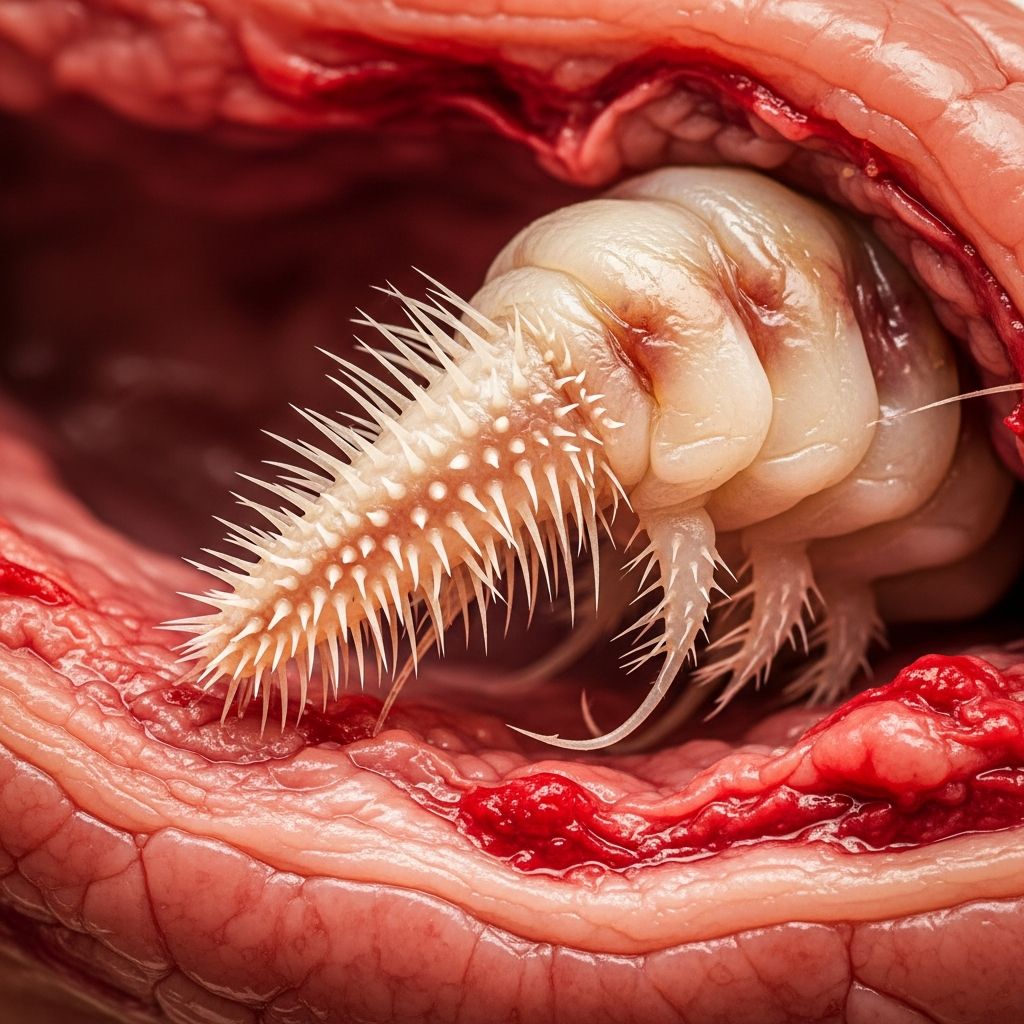
Parasitic infections represent a significant challenge in swine production, affecting growth rates, feed efficiency, and overall herd health. Among the diverse array of gastrointestinal parasites affecting pigs, acanthocephalans—commonly referred to as proboscis worms or thorny-headed worms—constitute an often-overlooked but clinically important group of helminthic pathogens. Macracanthorhynchus species, particularly M. hirudinaceus, have emerged as parasites of concern in both domesticated and feral pig populations worldwide, requiring veterinary attention and proactive management strategies.
Biological Characteristics and Life Cycle Dynamics
The acanthocephalans that infect swine possess distinctive morphological features that differentiate them from other intestinal parasites commonly encountered in pig production systems. Unlike roundworms, these parasites are characterized by the presence of a specialized attachment organ—a spiny, retractable proboscis—which serves as the primary mechanism for anchoring to the intestinal mucosa. This proboscis, lined with rows of recurved hooks, penetrates deep into the jejunal wall tissues, creating a firm attachment point that distinguishes acanthocephalans from other parasitic nematodes.
The adult parasites typically measure between 4 to 40 centimeters in length, with brown-colored, embryonated eggs measuring approximately 90–110 × 50–65 micrometers. These eggs possess three distinct embryonic envelopes, a characteristic feature used in parasitological identification. The transmission cycle involves indirect development, necessitating intermediate hosts to complete the parasitic lifecycle.
The lifecycle of Macracanthorhynchus species depends critically on beetle intermediate hosts. Pigs acquire infection through oral consumption of infected beetle grubs or adult beetles containing the infective stage cystacanth, which subsequently develops into mature male and female parasites within the pig’s intestinal tract. The prepatent period—the interval between infection and egg shedding—typically spans 8 to 12 weeks in swine, after which patent infections produce eggs that contaminate environmental sources.
Tissue Damage and Inflammatory Responses
The pathological consequences of acanthocephalus infections extend beyond simple mechanical irritation of the intestinal mucosa. The attachment mechanism itself initiates a pronounced inflammatory cascade within the host tissues. At the site where the proboscis penetrates the intestinal wall, a granulomatous inflammatory response develops, characterized by the accumulation of immune cells and inflammatory mediators. This inflammatory process results in the formation of distinct nodules around the attachment site, which typically measure approximately 5 millimeters in diameter and become surrounded by hyperemic-hemorrhagic halos visible on the serosa surface.
Histopathological examination of infected tissue reveals severe architectural disruption of normal intestinal organization. The parasite’s hooks penetrate through the mucosa and submucosa, extending into the muscular layer beneath. This penetration causes significant damage to the intestinal villi and their epithelial lining, compromising nutrient absorption capacity. The mucosal surface overlying the attachment site demonstrates central umbilication with slight elevation, marking the location of parasite anchorage.
While the intestinal wall typically maintains sufficient structural integrity to prevent frank perforation in most cases, the inherent risk exists due to the proboscis length relative to jejunal wall thickness. When perforation does occur, the inflammatory response usually seals the defect through fibrin deposition and granulation tissue formation, preventing dissemination of intestinal contents. However, failure of this containment mechanism can precipitate fatal peritonitis—a life-threatening complication requiring immediate veterinary intervention.
The inflammatory process typically requires approximately one month to resolve following removal or death of the parasite, during which the nodular lesions gradually regress and normal tissue architecture begins restoration.
Clinical Manifestation and Disease Expression
A paradoxical feature of acanthocephalus infections in swine is the frequent absence of observable clinical signs, particularly in light to moderate infections. Many infected pigs maintain normal activity, appetite, and growth despite harboring parasitic infections. This subclinical presentation creates diagnostic challenges, as infected animals may not trigger clinical suspicion in typical herd observations.
When clinical manifestations do emerge, they typically remain nonspecific, complicating differential diagnosis. Common clinical signs associated with symptomatic infections include enteritis, peritonitis, diarrhea, progressive malnutrition, and abdominal pain. Severe infections may result in marked growth retardation and emaciation as the inflammatory lesions compromise nutrient absorption and the parasite consumes nutrients intended for the host.
Heavy parasite burdens, documented as high as 19 specimens in single pigs, amplify the likelihood of clinical disease manifestation. The cumulative effect of multiple proboscis attachments creates extensive areas of mucosal damage and inflammation, substantially reducing the functional absorptive surface of the small intestine. This scenario becomes particularly problematic in young, growing pigs where nutritional demands peak.
Diagnostic Challenges and Identification Methods
Definitive antemortem diagnosis of acanthocephalus infections presents significant practical challenges within production veterinary medicine. The primary diagnostic approach involves fecal examination to detect parasitic eggs; however, Macracanthorhynchus eggs exhibit poor floating characteristics in conventional salt solutions commonly employed in veterinary diagnostics. Standard flotation techniques frequently fail to recover eggs due to the eggs’ density properties, resulting in false-negative diagnoses.
When fecal examination is attempted for suspected acanthocephalus infections, modification of standard protocols becomes necessary. Sediment examination using flotation solutions of low specific gravity improves recovery rates compared to conventional high-density salt solutions. This modification requires deliberate protocol adjustment and specific awareness that standard fecal flotation may yield false-negative results.
Postmortem diagnosis offers superior diagnostic certainty. Upon necropsy examination, pathologists can directly observe characteristic nodules on the external intestinal serosa, corresponding precisely to internal sites of parasite attachment. These gross lesions appear as small nodules with surrounding hemorrhagic halos, visually distinctive during routine postmortem inspection. Sectioning of affected intestinal segments reveals the embedded parasites within the mucosal lesions, confirming diagnosis. Histopathological examination of nodular tissue demonstrates the inflammatory architecture and characteristic parasitic structures.
Treatment Protocols and Pharmacological Efficacy
Fortunately, effective pharmacological options exist for treating acanthocephalus infections in swine. Ivermectin has demonstrated consistent efficacy against Macracanthorhynchus species, with documented success rates approaching 100% when administered at therapeutic concentrations. The typical therapeutic protocol involves ivermectin administration at a dosage of 100 micrograms per kilogram body weight incorporated into medicated feed rations.
Research has also explored alternative anthelmintic agents, including lefluronomide, though ivermectin remains the most extensively validated and widely utilized therapeutic option in clinical practice. The effectiveness of ivermectin reflects its broad-spectrum activity against multiple parasitic classes, making it valuable for treating mixed infections frequently encountered in swine herds.
Practical considerations regarding treatment administration favor medicated feed approaches due to ease of implementation within existing feeding systems, reduced animal handling stress, and cost-effectiveness relative to individual animal treatment protocols. The systemic circulation achieved through oral administration ensures adequate drug concentrations at intestinal sites where parasites reside.
Prevention and Environmental Management Strategies
Control of acanthocephalus infections fundamentally relies upon preventing pigs’ exposure to contaminated environments and infected beetle intermediate hosts. The strategic approach differs between housing systems, reflecting the biological reality that transmission requires consumption of infected beetles or beetle larvae.
For pigs maintained in confinement facilities or small runs, regular and frequent removal of fecal material reduces environmental contamination and minimizes intermediate host populations. Manure management protocols should prioritize prompt removal of feces before beetle larvae can develop from contaminated fecal matter. This approach requires consistent labor investment but effectively breaks the transmission cycle within controlled environments.
For pigs with access to outdoor pastures or extensive farming systems, complete avoidance of contaminated pastures presents the most effective control strategy. Identifying and excluding pigs from previously contaminated lots interrupts transmission, though this may require substantial land management resources in integrated farming operations. Pasture rotation systems, where feasible, allow for natural die-off of intermediate host populations before reintroduction of susceptible animals.
In operations where pig-to-pasture contact cannot be completely eliminated, supplementary control measures may include beetle population management through environmental treatments or physical barriers that limit direct contact between pigs and contaminated soil areas.
Zoonotic Considerations and Public Health Implications
Beyond direct economic impacts on swine production, Macracanthorhynchus hirudinaceus carries potential zoonotic significance. While humans and carnivores rarely acquire infections through normal exposure, they may serve as accidental definitive hosts, particularly in individuals with heightened exposure to infected pigs or beetle populations. This zoonotic potential becomes particularly relevant in regions where extensive pig farming occurs in or near residential areas and parks where human activity overlaps with pig farming operations.
The documented presence of M. hirudinaceus in wildlife populations, particularly wild boars in Mediterranean regions, extends the parasite’s geographic distribution and creates potential reservoir populations that may transmit infections to domestic animals through shared environmental contamination.
Frequently Asked Questions
- How can I determine if my pigs have acanthocephalus infections?
- Diagnosis requires fecal examination (with sediment analysis rather than standard flotation), postmortem inspection revealing nodules on the intestinal serosa, or histopathological confirmation. Clinical signs are nonspecific, so laboratory confirmation is essential.
- Is ivermectin the only effective treatment?
- Ivermectin represents the most validated and widely used treatment option, with documented 100% efficacy at therapeutic doses. Lefluronomide has shown promise in limited studies but lacks extensive field validation compared to ivermectin.
- Can acanthocephalus infections spread between pigs in confinement?
- Direct pig-to-pig transmission does not occur. Transmission requires consumption of infected beetles, so risk depends on beetle access to confined animals. Proper manure management and facility maintenance minimize beetle populations.
- What is the recovery timeline after treatment?
- Following successful parasite removal, inflammatory lesions typically require approximately one month for complete regression and resolution of tissue damage.
- Should I treat asymptomatic infected pigs?
- Yes, treatment is warranted even in asymptomatic infections to prevent potential complications, eliminate parasites before severe disease develops, and reduce environmental contamination.
Integration with Comprehensive Herd Health Programs
Management of acanthocephalus infections should be integrated into broader swine herd health protocols rather than viewed as isolated parasitic events. Routine fecal examinations, particularly in herds with pasture access or previous contamination history, facilitate early detection. Producer education regarding the parasite’s transmission cycle empowers managers to implement appropriate environmental controls and biosecurity measures.
Vaccination programs, housing improvements, and nutritional management strategies that support immune function contribute to comprehensive disease prevention. When infections do occur, prompt diagnosis followed by appropriate pharmacological intervention minimizes production losses and prevents complications.
The apparent contradiction between clinical significance and frequent subclinical presentation necessitates a proactive rather than reactive management philosophy. Recognition that apparently healthy pigs may harbor significant parasitic infections justifies inclusion of parasitic disease surveillance within routine herd health monitoring protocols.
References
- Macracanthorhynchus sp in Pigs – Digestive System — Merck Veterinary Manual. 2025. https://www.merckvetmanual.com/digestive-system/gastrointestinal-parasites-of-pigs/macracanthorhynchus-sp-in-pigs
- A Neglected Parasite: Macracanthorhynchus hirudinaceus, First Official Report in Italy — Frontiers in Veterinary Science. 2021. https://www.frontiersin.org/journals/veterinary-science/articles/10.3389/fvets.2021.659306/full
- Macracanthorhynchus spp. Guidelines — Companion Animal Parasite Council. https://capcvet.org/guidelines/macracanthorhynchus-spp/
- DPDx – Acanthocephaliasis — Centers for Disease Control and Prevention. https://www.cdc.gov/dpdx/acanthocephaliasis/index.html
- Human Acanthocephaliasis: a Thorn in the Side of Parasite Diagnostics — Journal of Clinical Microbiology. https://journals.asm.org/doi/10.1128/jcm.02691-20
Similar Articles








Read full bio of medha deb


