

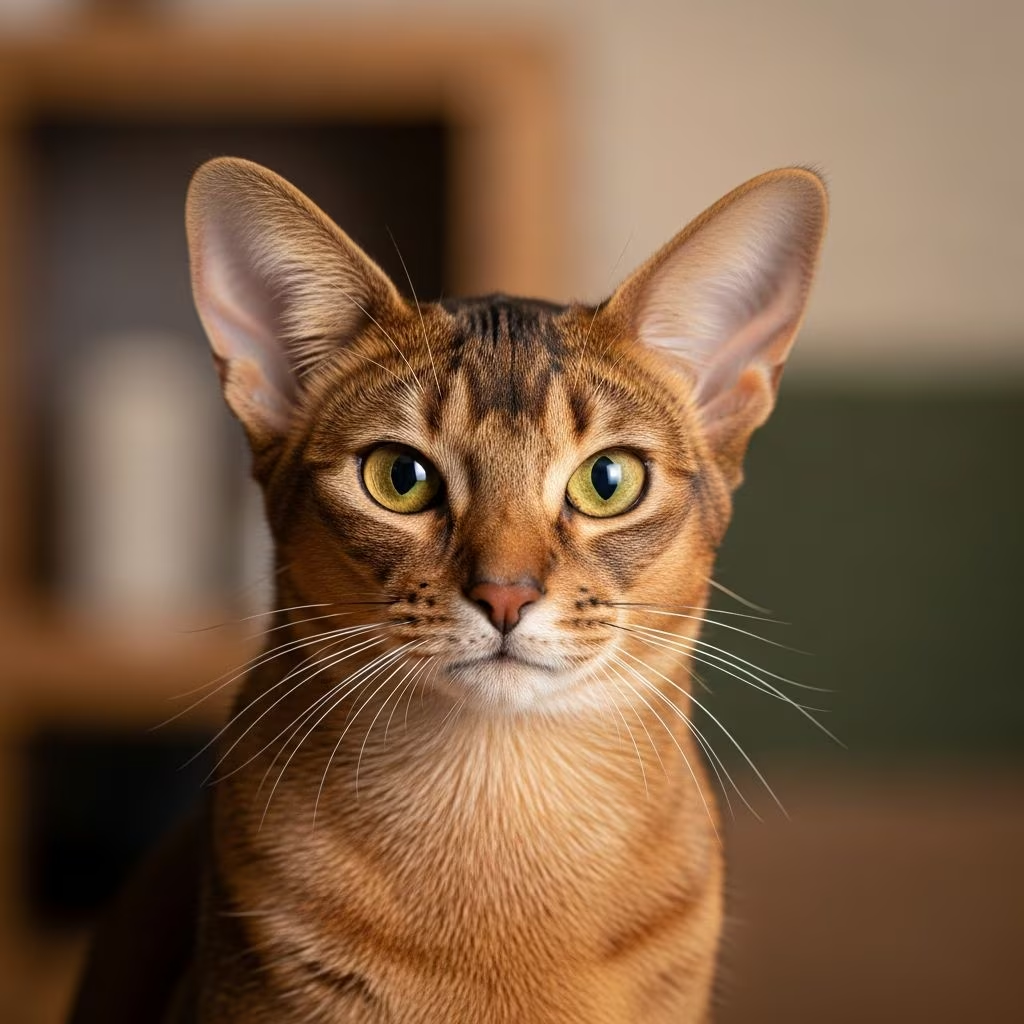
The Abyssinian cat, often called the Aby, is one of the oldest and most distinctive cat breeds, renowned for its athletic build, ticked coat, and boundless energy. These cats resemble wild felines with their lithe bodies and curious nature, making them ideal for active households seeking a playful companion.
Abyssinian Cat Overview
Abyssinians are medium-sized cats weighing 8-12 pounds (3.6-5.4 kg) and standing 8-10 inches (20-25 cm) tall at the shoulder, with some sources noting heights up to 12-16 inches. They possess a slender yet muscular frame, long legs, and a graceful, elongated body that gives them a supermodel-like elegance. Their short, fine coat features a unique ticked pattern where each hair has multiple bands of color, creating a shimmering effect that darkens along the spine and tail.
Kittens are born with dark fur that lightens over months, sometimes up to two years, revealing their vibrant adult colors: ruddy (burnt sienna ticked with black), red, blue, fawn, or sorrel. Large, almond-shaped eyes in gold, green, or hazel gleam with intelligence, framed by alert, forward-tilted ears. This breed’s wildcat appearance and lively demeanor make them stand out among domestic cats.
History of the Abyssinian Cat
Despite their name suggesting Egyptian origins, Abyssinians likely trace back to cats imported from India or Southeast Asia to Britain in the 19th century. The breed standard was established in 1882, with the first Aby, Zula, exhibited at London’s Crystal Palace. Genetic studies reveal no direct link to ancient Egyptian cats, but their ticked coats resemble those of wild African felines like the African wild cat.
The breed faced near extinction after World War II due to import restrictions and disease but was revived through selective breeding. Today, recognized by major organizations like The Cat Fanciers’ Association (CFA), Abyssinians thrive as a popular show and companion breed. Their ancient allure persists, captivating fanciers with their regal poise.
Abyssinian Cat Personality & Temperament
Abyssinians are the epitome of feline energy, often dubbed the “Energizer Bunny” of cats for their constant motion—jumping, climbing, and exploring every nook. Highly intelligent and inquisitive, they solve problems like puzzles and demand interaction, following owners room-to-room with dog-like loyalty.
While not typical lap cats, they crave affection, gently pawing for attention if ignored. Their soft, chirpy voices express needs, and they thrive in social settings, coexisting well with other cats, dogs, and children. Independent yet extroverted, Abyssinians suit experienced owners providing enrichment like interactive toys and high perches. They bird-watch from windowsills and perch on desks, inserting themselves into family life.
- Sociable and people-oriented
- Playful and athletic
- Curious explorers
- Affectionate but active
- Vocal in a quiet, melodic way
Abyssinian Kitten
Abyssinian kittens burst with energy from day one, tumbling and pouncing in playful antics. Born dark-coated, their fur lightens to reveal ticked patterns by maturity. Early socialization is key; expose them to household sounds, people, and pets to nurture their friendly nature.
Weaning around 8 weeks, they grow rapidly, reaching adult size by 1-2 years. Provide kitten-specific food rich in protein for muscle development, tall scratching posts for climbing, and puzzle toys for mental stimulation. Their curiosity can lead to mischief, so kitten-proof homes with secure cabinets and cords. Spay/neuter by 4-6 months to curb behaviors and health risks.
Abyssinian Cat Size & Weight
| Attribute | Male | Female | Notes |
|---|---|---|---|
| Weight | 9-12 lbs (4-5.4 kg) | 6-10 lbs (2.7-4.5 kg) | Average 8-12 lbs overall |
| Height | 10-16 inches | 8-14 inches | Shoulder height |
| Length | Medium-long body | Medium-long body | Lithe and graceful |
Males are typically larger, but all Abyssinians maintain a slim, athletic build without excess bulk.
Grooming & Coat Care for Abyssinian Cats
The Abyssinian’s short, silky coat requires minimal care—a weekly brush or chamois rub distributes oils and reduces shedding. Their coat resists matting due to the ticked structure. Bathing is rare unless soiled; use cat-safe shampoo.
Check ears weekly for wax, trim nails biweekly, and brush teeth 2-3 times weekly with pet toothpaste to prevent periodontal disease. Their tufted ears may collect debris, so gentle cleaning prevents infections. Low-maintenance grooming suits busy owners.
Abyssinian Cat Health Problems
Generally robust, Abyssinians live 9-15 years, sometimes longer. Predispositions include:
- Pyruvate kinase deficiency (PKD): Genetic anemia affecting red blood cells; DNA test kittens.
- Progressive retinal atrophy (PRA): Leads to blindness; genetic screening available.
- Dental disease: Common in breeds; regular care mitigates.
- Patellar luxation: Kneecap dislocation in active cats.
Annual vet checkups, vaccinations, and parasite prevention ensure longevity. Feed premium diet balancing protein and nutrients for energy.
Abyssinian Cat Care & Feeding
Provide high-protein, grain-free food mimicking their active lifestyle—2/3 to 1 cup daily, split into meals. Fresh water always; fountains appeal to their playful side. Enrichment is crucial: cat trees, window perches, laser toys, and foraging puzzles prevent boredom.
Daily 30-60 minutes play mimics hunting. They adapt to indoor life but benefit from safe outdoor enclosures. Litter training is instinctive; use unscented clumping litter. Monitor weight to avoid obesity in less active adults.
Abyssinian Cat Lifespan & Life Stages
Average lifespan: 12-15 years with care. Stages:
- Kitten (0-1 year): Explosive growth, high energy.
- Adult (1-7 years): Peak athleticism.
- Senior (8+ years): Moderate activity; joint supplements aid mobility.
Regular health screens detect issues early.
Training Your Abyssinian Cat
Intelligent Abyssinians excel in training. Use clicker methods for tricks like sit, fetch, or leash walking. Positive reinforcement with treats works best; sessions short (5-10 minutes). Harness training enables safe outdoor adventures. Litter training and scratching post use come naturally.
Are Abyssinian Cats Good with Children & Other Pets?
Yes, their gentle, playful nature suits families. Supervise young kids due to size differences. They bond with dogs and cats in multi-pet homes, enjoying playmates. Early introductions foster harmony.
Abyssinian Cat Colors
Recognized colors:
- Ruddy: Burnt sienna ticked black.
- Red/Sorrel: Cinnamon ticked chocolate.
- Blue: Blue-gray ticked deeper blue.
- Fawn: Light cream ticked beige.
Uniform ticking essential for show quality.
Frequently Asked Questions (FAQs)
Are Abyssinian cats hypoallergenic?
No, but low-shedding coats produce less dander.
Do Abyssinian cats like to be alone?
No, they crave companionship and dislike solitude.
How much exercise do Abyssinian cats need?
Daily vigorous play; 30-60 minutes minimum.
Can Abyssinian cats go outside?
Prefer supervised or enclosed areas due to curiosity.
Are Abyssinian cats vocal?
Moderately; soft chirps and trills.
References
- Abyssinian – The Cat Fanciers’ Association — CFA. Accessed 2026. https://cfa.org/breed/abyssinian/
- Abyssinian Cat Breed – Hill’s Pet Nutrition — Hill’s Pet. Accessed 2026. https://www.hillspet.com/cat-care/cat-breeds/abyssinian
- Abyssinian cat – Wikipedia — Wikipedia. Accessed 2026. https://en.wikipedia.org/wiki/Abyssinian_cat
- Abyssinian Cat Breed Information | Purina UK — Purina. Accessed 2026. https://www.purina.co.uk/find-a-pet/cat-breeds/abyssinian
- 8 Fascinating Facts About the Abyssinian Cat – Rover.com — Rover. Accessed 2026. https://www.rover.com/blog/abyssinian-cats/



