

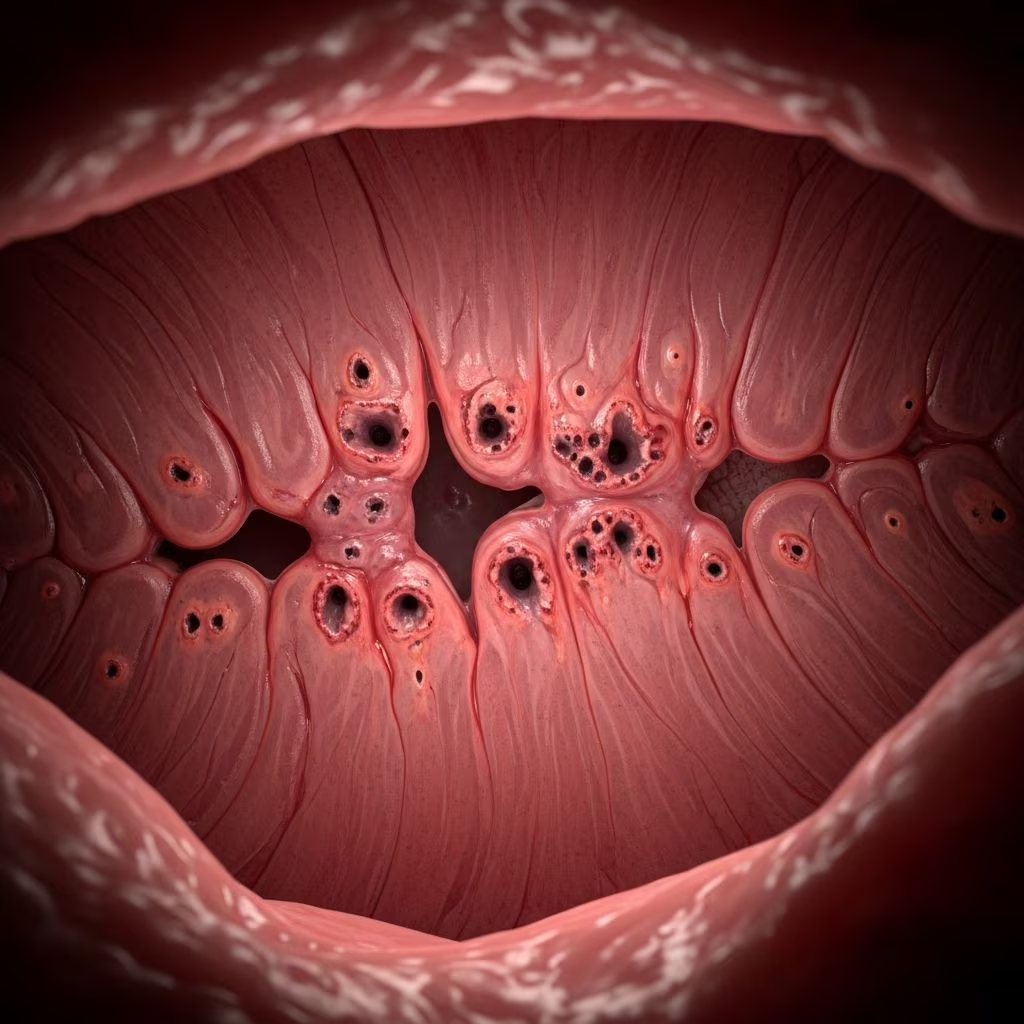
Abomasal ulcers represent a significant digestive disorder in cattle, affecting the true stomach known as the abomasum. These ulcers can range from superficial erosions to deep perforations, leading to a spectrum of clinical outcomes from mild discomfort to life-threatening emergencies. Understanding this condition is crucial for cattle producers and veterinarians aiming to maintain herd productivity and welfare.
Understanding the Abomasum and Ulcer Formation
The abomasum functions as the gastric stomach in ruminants, secreting hydrochloric acid and enzymes to break down proteins. Ulcers develop when the protective mucosal barrier is compromised, allowing acid to erode the lining. Unlike superficial erosions confined to the mucosa, true ulcers penetrate deeper layers, including the submucosa and potentially the muscularis, heightening risks of hemorrhage or perforation.
Pathophysiology involves a delicate balance between aggressive factors like hyperacidity and defensive mechanisms such as mucus production and epithelial renewal. Disruptions from various stressors tip this balance, initiating ulcer development primarily in the pyloric region due to mechanical irritation or bile reflux.
Risk Factors and Epidemiology
Multiple factors contribute to abomasal ulceration. Prolonged inappetence elevates abomasal pH acidity, while stress elevates cortisol, suppressing mucus secretion and mucosal repair. Nutritional imbalances, notably copper deficiency, weaken vascular integrity and immune responses. High-concentrate diets in early lactation dairy cows correlate with increased incidence, alongside metabolic issues like ketosis.
Non-steroidal anti-inflammatory drugs (NSAIDs) inhibit prostaglandins essential for mucosal protection, exacerbating vulnerability. Concurrent diseases, including lymphosarcoma, and bacterial overgrowth (e.g., Clostridium perfringens, E. coli) further predispose animals. Calves, particularly veal operations, face higher risks from aggressive feeding practices causing milk overflow and bacterial colonization.
Prevalence varies: 0.2-5.7% in beef calves, 32-76% in veal calves, and 1-2.6% in dairy cows. Peak occurrences align with early postpartum periods, underscoring periparturient stress as a key trigger.
- High-risk groups: Early lactation dairy cows, young calves, stressed or ill animals.
- Environmental contributors: Coarse feeds, weather-induced feed intake drops.
Clinical Manifestations Across Ulcer Types
Abomasal ulcers are classified into four types based on depth and complications:
| Type | Description | Key Signs |
|---|---|---|
| 1 | Non-perforating, minimal hemorrhage | Subtle anorexia, reduced rumen motility, stale feces |
| 2 | Erosive with significant bleeding | Melena (tarry black feces), anemia, tachycardia, milk yield drop |
| 3 | Perforating with localized peritonitis | Abdominal pain, fever, partial anorexia, rumen atony |
| 4 | Perforating with diffuse peritonitis | Septic shock, recumbency, bruxism, rapid death |
Type 1 ulcers often go unnoticed or mimic indigestion. Type 2 presents with pale mucous membranes, weakness from blood loss, and positive fecal occult blood. Type 3 involves fibrinous adhesions and moderate pain, while Type 4 manifests as acute emergencies with dehydration, abdominal distension, and shock within 24 hours.
Common signs include depressed demeanor, scanty/melena feces, colic (56% cases), tachycardia, tachypnea, and sudden production declines in lactating animals. Rectal exams reveal pasty black feces, caecal dilatation, and pain on palpation.
- Behavioral: Kicking at flanks, teeth grinding, frequent lying.
- Systemic: Dehydration, sunken eyes, elevated temperatures in severe cases.
Diagnostic Approaches
Diagnosis combines history, clinical exams, and targeted tests. History often reveals recent illness, feed changes, or NSAID use. Physical findings include reduced rumen sounds, right-sided pain, and positive wither pinch tests.
Laboratory assessments show anemia (low PCV, hemoglobin), neutrophilia, lymphopenia, and elevated fibrinogen. Fecal occult blood confirms gastrointestinal bleeding; differentiate from intussusception via PCV trends (decreased in ulcers).
Ultrasound detects thickened abomasal walls or free fluid; exploratory laparotomy confirms in ambiguous cases. Differentiate from traumatic reticuloperitonitis, hardware disease, or displacements via localized signs and response patterns.
- Initial screening: PCV, fecal occult blood, CBC.
- Imaging: Ultrasonography for peritonitis or masses.
- Invasive: Surgery for definitive typing.
Treatment Protocols
Treatment targets ulcer type, concurrent issues, and complications. Supportive care includes fluids for dehydration, blood transfusions for severe anemia.
Pharmacologically, broad-spectrum antibiotics combat secondary infections, antacids/protectants (sucralfate) neutralize acid and coat mucosa. Avoid further NSAIDs. For Type 3/4, surgical intervention like omentopexy or abomasotomy may be necessary, though prognosis worsens.
Calves respond to oral kaolin-pectin and antibiotics. Monitor milkers closely post-therapy, as subclinical cases benefit from rest and diet adjustment.
- Medical: Antibiotics, antacids, nutrition support.
- Surgical: For perforations; high risk in field settings.
- Prognosis: Favorable for Types 1-2 (70-90% survival), grave for Type 4 (<20%).
Prevention Strategies for Herd Health
Proactive management minimizes incidence. Ensure balanced nutrition with adequate fiber and copper supplementation. Gradual diet transitions prevent acidosis. Reduce stress via consistent handling, weather protection, and prompt illness treatment.
Limit NSAID use; monitor high-risk periods like calving. In calves, controlled feeding avoids overflow. Regular health checks catch early signs, enhancing outcomes.
- Feed management: Avoid excesses, promote rumen health.
- Monitoring: Fecal checks, production tracking.
- Herd protocols: Vaccination, parasite control.
Impact on Production and Economics
Untreated ulcers slash milk yields (up to 78% drop), cause weight loss, and elevate mortality. Economic losses stem from culls, treatments, and reduced fertility. Early intervention preserves productivity, underscoring vigilance in commercial operations.
FAQs
What causes abomasal ulcers in cattle?
Multifactorial: stress, low feed intake, copper deficiency, NSAIDs, bacterial factors.
How do you recognize an abomasal ulcer early?
Look for melena, mild colic, anemia signs, sudden production dips.
Is surgery always needed for abomasal ulcers?
No; medical therapy suffices for non-perforating types, surgery for perforations.
Can abomasal ulcers be prevented in dairy herds?
Yes, through nutrition, stress reduction, and monitoring periparturient cows.
What is the outlook for cattle with perforating ulcers?
Poor for diffuse peritonitis (Type 4); better with early localized detection (Type 3).
References
- Abomasal ulceration in Cows (Bovis) — Vetlexicon. 2023. https://www.vetlexicon.com/bovis/alimentary/articles/abomasal-ulceration/
- Abomasal Ulcers in Cattle — Purdue Animal Disease Diagnostic Laboratory. 1996-01-01. https://www.addl.purdue.edu/newsletters/1996/winter/catulcers.shtml
- Primary type 3 abomasal ulceration in cattle and buffalo — PMC – NIH. 2023-06-15. https://pmc.ncbi.nlm.nih.gov/articles/PMC10291524/
- Abomasal ulcers in cattle (Proceedings) — DVM360. 2019. https://www.dvm360.com/view/abomasal-ulcers-cattle-proceedings
- Abomasal Ulcer — Veterinary Handbook. 2023. https://www.veterinaryhandbook.com.au/Diseases.aspx?diseasenameid=10



