

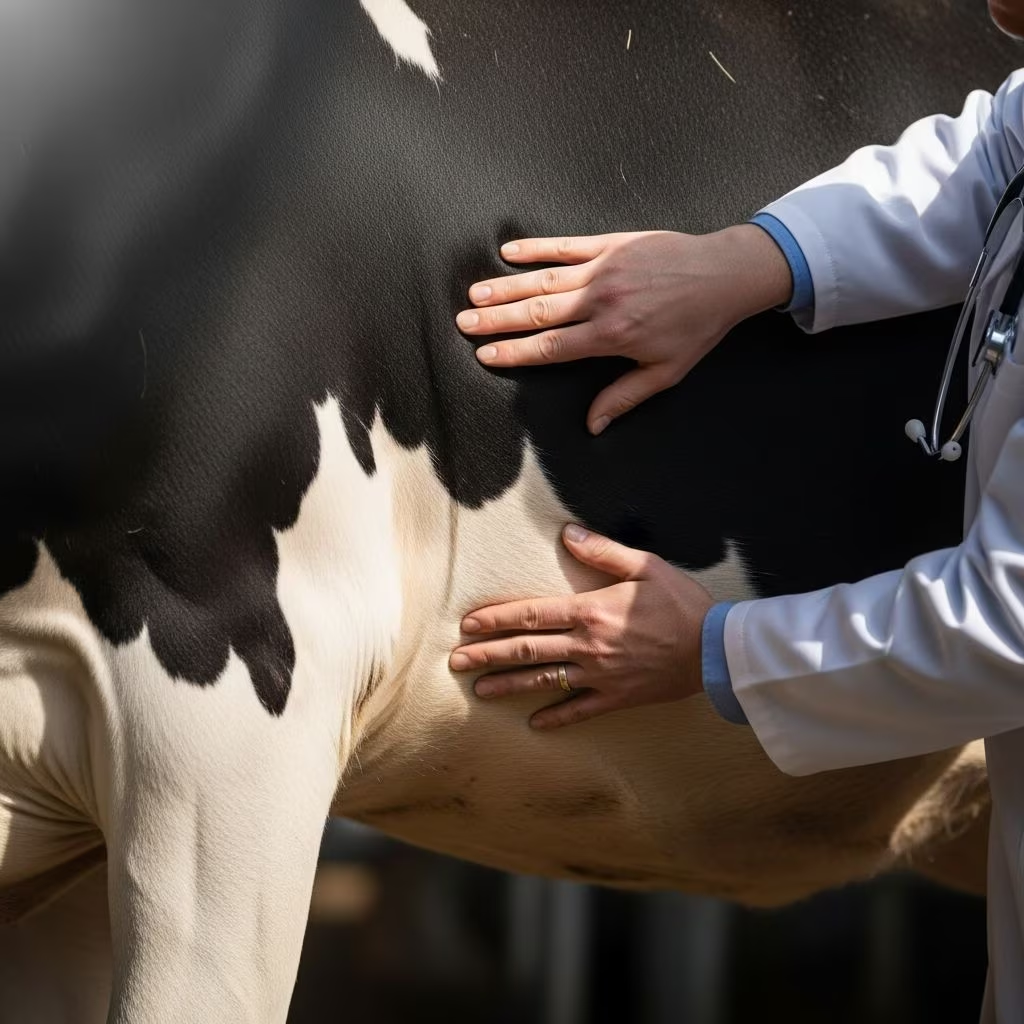
The abomasum, often called the ‘true stomach’ in ruminants, plays a critical role in digestion by secreting acid and enzymes to break down proteins. In dairy cattle, particularly high-producing breeds like Holsteins, this organ can shift from its normal position on the ventral abdomen, leading to conditions known as left displaced abomasum (LDA), right displaced abomasum (RDA), or more severely, abomasal volvulus. These disorders disrupt normal rumen function, reduce milk yield, and pose significant economic challenges to dairy operations.
Anatomy and Normal Function of the Abomasum
In healthy cattle, the abomasum rests on the floor of the abdominal cavity, slightly to the right of the midline, between the rumen and intestines. It receives partially digested material from the reticulum and omasum, where hydrochloric acid and pepsin facilitate protein hydrolysis. Gas and fluid dynamics within the abomasum maintain its position through buoyancy and peritoneal attachments.
Post-calving physiological changes, including reduced rumen fill and increased intra-abdominal space, create opportunities for displacement. High-grain diets exacerbate this by promoting abomasal atony (reduced motility), allowing gas accumulation that lifts the organ. Understanding this anatomy is foundational for grasping why displacements occur predominantly in early lactation dairy cows.
Types of Abomasal Disorders
Left Displaced Abomasum (LDA)
LDA is the most prevalent form, accounting for the majority of cases, typically occurring within the first month post-calving. The abomasum shifts dorsally between the rumen and left abdominal wall, trapping gas and fluid due to kinking of the pylorus and reticulum-omasum junction. This leads to fermentation stasis and secondary ketosis.
Right Displaced Abomasum (RDA) and Volvulus
RDA involves the abomasum moving cranially along the right flank, often above the omasum. Unlike LDA, RDA frequently progresses to volvulus—a 180° to 540° twist—causing vascular compromise, necrosis, and rapid deterioration. RDA cases spread over the first three months post-calving but carry higher mortality.
| Condition | Typical Timing | Severity | Common Progression |
|---|---|---|---|
| LDA | 1-4 weeks post-calving | Mild to moderate | Secondary ketosis |
| RDA | 1-12 weeks post-calving | Moderate | May lead to volvulus |
| Abomasal Volvulus | Variable, acute | Severe | Shock, necrosis |
Contributing Risk Factors
Several interconnected factors heighten susceptibility:
- Periparturient metabolic stress: Negative energy balance, hypocalcemia, and ketosis reduce abomasal tone.
- Dietary imbalances: Excessive concentrates relative to forage, lack of long fiber, and rapid post-calving ration changes promote atony.
- Body condition: Overconditioned cows (BCS >3.5) at calving face higher risks due to fat deposition hindering organ fixation.
- Management issues: Twin births, retained placenta, metritis, limited feed bunk space, and first-lactation stress in heifers.
- Breed and production: High-yielding dairy breeds are predisposed.
Proactive transition cow management mitigates these risks significantly.
Recognizing Clinical Signs
Early detection hinges on vigilant monitoring. LDA presents subtly: cows exhibit depression, selective refusal of grain while consuming roughage, and a 20-50% milk drop within days. Additional signs include ketotic breath, scant feces, and a ‘ping’ sound on simultaneous auscultation-percussion of the left paralumbar fossa.
RDA and volvulus manifest more dramatically with colic, tachycardia (>100 bpm), abdominal distension, diarrhea or constipation, and dehydration. Volvulus cows show shock: sunken eyes, cold extremities, recumbency, and mortality within 24-48 hours if untreated.
Diagnostic Approaches
Veterinary confirmation is essential to differentiate from ketosis, hardware disease, or vagal indigestion. Key diagnostics include:
- Auscultation-percussion: High-pitched ‘ping’ over displacement site.
- Ultrasonography: Visualizes gas-filled abomasum location.
- Clinical pathology: Ketones, electrolytes, hematocrit for dehydration/shock.
- Exploratory laparotomy: Definitive for volvulus in emergencies.
Prompt vet involvement maximizes recovery odds.
Treatment Options: From Conservative to Surgical
Treatment urgency correlates with condition severity. LDA responds well to intervention (90% success), while RDA/volvulus demands immediacy (lower prognosis).
Conservative Methods
Suitable for early LDA: Cast the cow right lateral, roll to dorsal, allowing abomasum to ‘float’ back. Success ~50%, high relapse. Toggling (abomasal fixation via percutaneous device) boosts efficacy to 80%. Supportive care includes propylene glycol for ketosis, calcium, fluids (20-40L isotonic), and NSAIDs like flunixin.
Surgical Interventions
Gold standard for permanence:
- Omentopexy: Suture omentum to abdominal wall via left flank incision (LDA preferred).
- Abomasopexy: Direct abomasal attachment, right flank for RDA.
- Endoscopic techniques: Deflation and fixation, less invasive.
Post-op: Antibiotics, fluids, monitoring. Economic return often 5:1 via milk recovery.
Prevention Strategies for Dairy Herds
Prevention outperforms treatment:
- Optimize dry cow/transition rations: 28-32% NDF, gradual concentrate increase.
- Maintain BCS 3.0-3.25 at calving.
- Ensure 30″ feed bunk space, minimize grouping stress.
- Treat hypocalcemia, RP/metritis promptly.
- Monitor high-risk cows (twins, overconditioned) closely post-calving.
Prognosis and Economic Impact
LDA prognosis: Excellent (85-95% return to production). RDA: Guarded (70-80%). Volvulus: Poor if >360° torsion. Untreated cases cost $200-500/head in lost milk, cull value. Surgical ROI justifies investment.
Frequently Asked Questions (FAQs)
What causes abomasal displacement in cows?
Primary drivers are post-calving space creation, hypocalcemia, high-grain diets, and metabolic stress.
How do I know if my cow has LDA?
Look for reduced milk, grain refusal, ketosis signs, and left-sided ‘ping’.
Is rolling the cow effective?
Yes for early LDA (~50% success), but surgery prevents relapse.
Can abomasal volvulus be prevented?
Yes, via balanced transition feeding and metabolic monitoring.
What is the best treatment for RDA?
Immediate right-flank surgery with abomasopexy.
Long-Term Herd Management Recommendations
Implement routine health checks in the first 30 days post-calving. Track incidence rates; >5% signals management flaws. Collaborate with vets for tailored protocols. Advances like rumen sensors aid early detection.
References
- Displaced Abomasums – NADIS — NADIS. 2023. https://www.nadis.org.uk/disease-a-z/cattle/displaced-abomasums/
- Signs & Treatment of a Displaced abomasum – Cowsmo — Cowsmo. 2022. https://cowsmo.com/news/signs-treatment-displaced-abomasum/
- Displaced Abomasum in Cattle – The Cattle Site — The Cattle Site. 2023. https://www.thecattlesite.com/diseaseinfo/211/displaced-abomasum-in-cattle
- Displaced Abomasum – MU Extension — University of Missouri Extension (.edu). 2021. https://extension.missouri.edu/publications/g7701
- Abdominal emergencies in cattle – Vet Times — Vet Times. 2024. https://www.vettimes.com/news/vets/livestock/abdominal-emergencies-in-cattle-clinical-signs-diagnosis-and-treatment-strategies
- Left Displacement of the Abomasum — Mississippi State University College of Veterinary Medicine (.edu). 2016 (authoritative veterinary presentation). https://www.vetmed.msstate.edu/sites/www.vetmed.msstate.edu/files/presentations/6.24.16%20Left%20Displacement%20of%20the%20Abomasum%20%20(Alan%20Smith).pdf



