

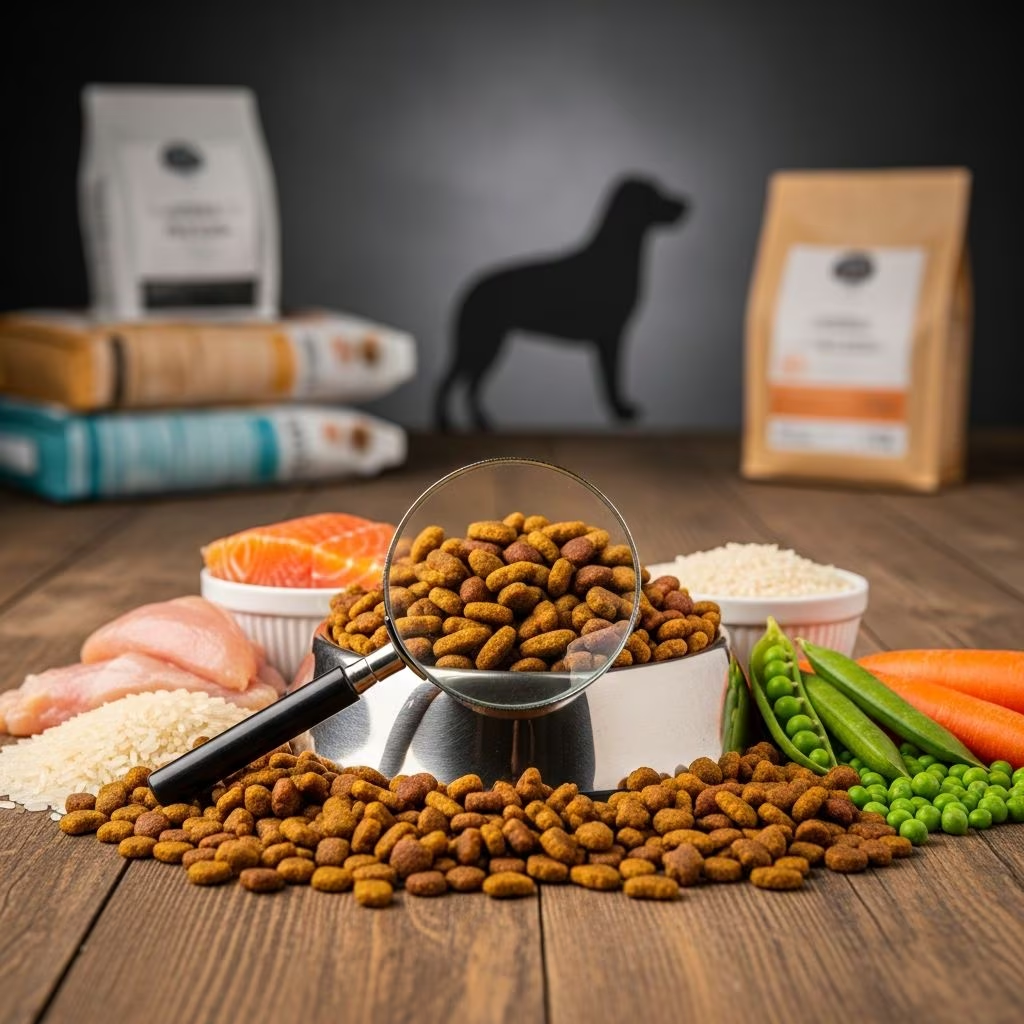
Choosing the right dog food is crucial for your pet’s health, vitality, and longevity. The Association of American Feed Control Officials (AAFCO) sets the benchmark for pet food quality in the United States, ensuring products meet minimum nutritional standards for dogs at various life stages. These guidelines help pet owners identify foods labeled as “complete and balanced,” meaning they provide all essential nutrients in appropriate amounts. Understanding AAFCO standards empowers you to make informed decisions, avoiding undernourished or imbalanced diets that could lead to health issues like obesity, malnutrition, or developmental problems.
Understanding AAFCO and Its Role in Pet Nutrition
AAFCO is a non-profit organization comprising state and federal regulatory officials who establish uniform standards for animal feeds, including dog food. Unlike the FDA, which regulates labeling and safety, AAFCO focuses on nutritional adequacy. Their guidelines are voluntary but adopted by most states and pet food manufacturers, appearing on labels as claims like “complete and balanced for adult maintenance” or “for growth.” These statements are backed by feeding trials or lab analysis meeting AAFCO nutrient profiles.
AAFCO categorizes dog food needs by life stage: puppies (growth), adults (maintenance), and gestation/lactation (reproduction). This ensures diets match physiological demands, such as higher protein for growing pups or moderated fat for seniors. Compliance is verified through two methods: formulation (meeting calculated nutrient levels) or testing (feeding studies on target animals), with the latter considered more rigorous.
Essential Nutrients Defined by AAFCO Guidelines
Dogs require six core nutrient classes: proteins, fats, carbohydrates, vitamins, minerals, and water. AAFCO specifies minimum (and sometimes maximum) levels on a dry matter (DM) basis, adjusting for moisture in kibble (about 10%) versus wet food (75-85%). Here’s a breakdown:
- Proteins: Build and repair tissues, produce enzymes and hormones. AAFCO mandates 22.5% DM minimum for growth/reproduction and 18% DM for adults, derived from high-quality sources rich in 10 essential amino acids like arginine, lysine, and methionine. Animal proteins excel in bioavailability, though balanced plant sources can suffice.
- Fats: Primary energy source (2.25x calories of protein/carbs), aid nutrient absorption, support skin/coat health. Minimums are 8.5% DM for growth and 5.5% DM for maintenance, with essential fatty acids like linoleic acid (omega-6) required. Sources include chicken fat, fish oil, and vegetable oils.
- Carbohydrates: No strict minimum, but provide energy, fiber for digestion, and gut health. Dry foods often contain 30-60% carbs from grains like rice or oats, which dogs digest well. Fiber (crude 2-5%) promotes regular bowels and microbiome balance.
- Vitamins & Minerals: Critical for metabolism, immunity, bone health. Examples: calcium/phosphorus (1:1 to 2:1 ratio), vitamin A, zinc. AAFCO lists precise levels to prevent deficiencies or toxicities.
Decoding Dog Food Labels: Key Sections Explained
Labels are your roadmap to nutritional quality. Start with the guaranteed analysis, listing minimum crude protein (e.g., 22% min for puppies), fat (8-12% for adults), fiber (2-5%), and moisture. Convert to dry matter for comparison: subtract moisture percentage from 100, then recalculate (e.g., 10% protein at 10% moisture = 11.1% DM).
Ingredients are listed by weight pre-cooking; first five often comprise 80%+ of the recipe. Look for named meat meals (e.g., “chicken meal”) over vague “meat by-products.” The nutritional adequacy statement confirms AAFCO compliance and feeding directions tailored to weight/activity.
| Life Stage | Min Protein (DM %) | Min Fat (DM %) | Max Fiber (DM %) | Key Benefits |
|---|---|---|---|---|
| Growth/Puppies | 22.5 | 8.5 | <30 | Muscle/skeletal development |
| Adult Maintenance | 18 | 5.5 | <30 | Energy, lean body condition |
| Gestation/Lactation | 22.5 | 8.5 | <30 | Reproduction support |
| Senior | 18-23 | 8-15 | <30 | Joint health, metabolism |
| Active/Working | 25-30 | 15-25 | <25 | Endurance, recovery |
Tailoring Diets to Life Stages and Special Needs
Puppies need calorie-dense food (up to 2-3x adult needs) with elevated protein/fat for rapid growth. Transition gradually over 7-10 days to avoid tummy upset. Adults require steady maintenance; adjust portions by weight/activity—e.g., 3-6 lb dog: ⅓-½ cup/day; 60-100 lb: 3-4½ cups.
Seniors benefit from joint-supporting glucosamine, moderated calories to combat slower metabolism. Active breeds like Labs demand higher energy (25-30% protein), while weight management formulas emphasize lean protein (25-30%) with low fat (8-12%). Special diets for allergies or kidney issues must still meet AAFCO profiles or vet-formulated equivalents.
Comparing Food Types: Dry, Wet, and Raw Options
- Dry Kibble: Economical, convenient; 30-60% carbs for crunch/texture. Shelf-stable but ensure dental claims are realistic.
- Wet/Canned: High moisture (75-85%) aids hydration; higher protein/fat, palatable for picky eaters. Costlier per calorie.
- Fresh/Raw: Minimally processed; must be AAFCO-tested to avoid bacterial risks. Ideal for customized nutrition.
Hybrid feeding (e.g., kibble toppers) enhances variety while maintaining balance.
Common Pitfalls and How to Avoid Them
Beware of unsubstantiated claims like “human-grade” without AAFCO backing. Excess protein (>30% DM) offers no benefit and strains kidneys in some dogs. Grains aren’t villains—dogs thrive on digestible sources like barley. Always weigh your dog monthly and adjust calories: ideal body condition allows ribs palpation without visibility.
Frequently Asked Questions (FAQs)
What does “AAFCO complete and balanced” mean?
It guarantees the food supplies 100% of AAFCO nutrient minimums for specified life stages, verified by trials or formulation.
Can I mix dog foods?
Yes, if each meets AAFCO for the same purpose and you calculate totals. Consult a vet for precision.
Is grain-free better?
Not necessarily; many grain-free foods use high-carb alternatives and link to heart issues (DCM). Stick to AAFCO-approved.
How much to feed my dog?
Follow label guidelines, adjusted for age/activity. Example: 30-50 lb adult: 1¾-2⅔ cups/day.
Should I consult a vet for diet changes?
Always, especially for health conditions. Board-certified nutritionists excel for custom plans.
Practical Tips for Optimal Dog Nutrition
1. Prioritize foods with AAFCO statements for your dog’s stage.
2. Read labels critically: focus on first ingredients and analysis.
3. Monitor weight, stool, energy; tweak as needed.
4. Hydrate: fresh water always, especially on dry food.
5. Treats under 10% calories; choose AAFCO-compliant.
By aligning with AAFCO standards, you’ll fuel your dog’s best life—vibrant, strong, and happy. Regular vet checkups refine choices for breed-specific or medical needs.
References
- Dog Nutrition: Guide to Dog Food Nutrients — PetMD. 2023. https://www.petmd.com/dog/nutrition/evr_dg_whats_in_a_balanced_dog_food
- Nutritional Requirements of Small Animals — Merck Veterinary Manual. 2024. https://www.merckvetmanual.com/management-and-nutrition/nutrition-small-animals/nutritional-requirements-of-small-animals
- Understanding Basic Dog Nutrition: A Complete Guide for Pet Parents — Buddy Sweets. 2023. https://www.buddysweets.com/post/understanding-basic-dog-nutrition-a-complete-guide-for-pet-parents
- Feeding Chart For Dogs: A Complete Guide — Darwin’s Pet. 2024. https://www.darwinspet.com/blogs/transitioning/feeding-chart-for-dogs-a-complete-guide
- Nutrition Guidelines — WSAVA. 2023. https://wsava.org/global-guidelines/global-nutrition-guidelines/



