

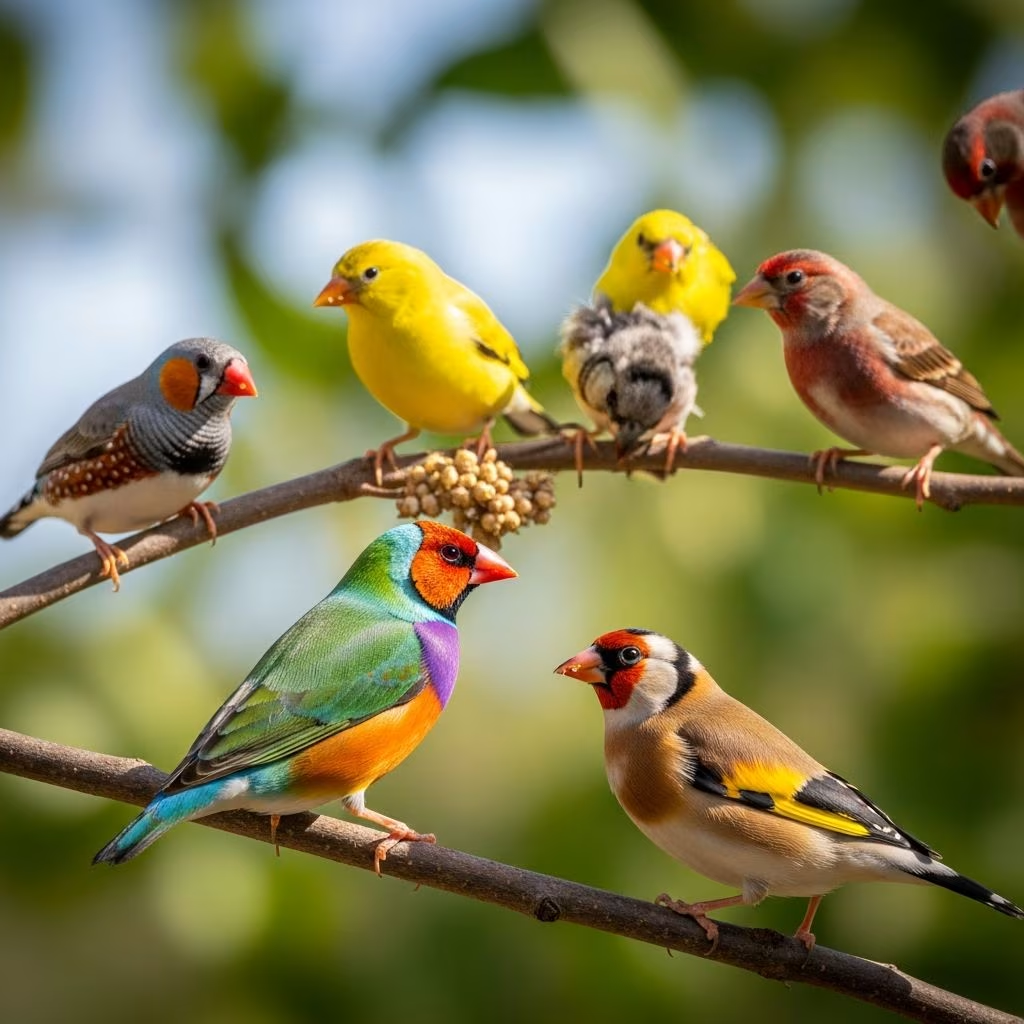
A Look at Finches: Understanding These Colorful Songbirds
Finches are among the most popular and recognizable birds in the world, captivating bird enthusiasts with their vibrant plumage, cheerful songs, and engaging behaviors. These small, compactly built birds belong to the family Fringillidae and are known for their distinctive conical beaks and often brilliant coloring. Whether you encounter them in the wild or consider them as potential pets, finches offer a fascinating window into avian diversity and adaptation. From the striking yellow American Goldfinch to the rosy-hued House Finch, these birds demonstrate remarkable variety in appearance and lifestyle. Understanding finches means exploring their unique biological characteristics, the various species available, their dietary needs, natural behaviors, and the specific care requirements for those kept in captivity.
Understanding Finch Characteristics
Finches possess several distinctive characteristics that define them as members of the Fringillidae family. These defining traits have evolved over millions of years to help finches thrive in diverse environments across the globe. Recognizing these characteristics helps both bird watchers and potential pet owners understand what makes finches unique and well-suited to their ecological niches.
Physical Appearance and Build
Finches are small, compactly built birds ranging in length from 10 to 27 centimeters (3 to 10 inches). Their bodies are characterized by a short neck, relatively large head, and short legs combined with strong feet designed for gripping branches and seed heads. Most finches have notched or forked tails that aid in maneuverability during flight. Despite their small size, finches possess a sturdy, muscular build that belies their apparent delicacy. Their compact frame allows them to navigate through dense vegetation and cling to thin branches and plant stems while foraging. The proportions of their bodies reflect millions of years of evolution optimized for their seed-eating lifestyle and arboreal habits.
The Distinctive Conical Beak
Perhaps the most recognizable feature of finches is their heavy, conical bill. These stout, triangular beaks are wider at the base and taper to a sharp point, making them perfectly designed for crushing seed hulls. The beak’s structure includes a groove in the upper mandible where finches can wedge seeds to hold them in place while they apply crushing force. This specialized adaptation allows finches to access nutrition that many other birds cannot utilize. The conical shape represents one of nature’s most efficient seed-cracking tools, enabling finches to process hard seeds from grasses, weeds, pine cones, and cultivated plants. Different finch species may have slight variations in beak size and shape, with some species possessing notably larger or smaller beaks suited to their particular food sources, such as the Red Crossbill’s uniquely overlapping mandibles.
Plumage and Coloration
Finch plumage displays remarkable variety in coloration across different species. Many finches sport vibrant colors, with the most common hues being yellow, red, and orange. Some species display stunning combinations of these colors, while others feature blue or green patches. However, not all finches are brightly colored; some species possess protective coloration with drab, streaky brown or gray feathers that help them blend into their natural habitats. Many finches exhibit sexual dimorphism, meaning males and females display different plumage colors, with males typically showing more vivid coloring during breeding season. Some species, such as the American Goldfinch, undergo significant plumage changes between seasons, appearing bright and distinctive in spring and summer but becoming duller during winter months.
Flight and Behavior
True finches have a characteristic bouncing flight pattern typical of small passerines, alternating bouts of rapid wing flapping with gliding on closed wings. This flight style, combined with their short legs and powerful feet, makes them exceptional climbers and foragers. Rather than feeding on the ground like many bird species, finches prefer to forage by clinging and climbing on branches in trees and shrubs, or even hanging from smaller plants like thistles. Most finches form monogamous breeding pairs and are highly social birds, often traveling in flocks known as a “charm of finches.” They communicate through various vocalizations, and many species are excellent singers, which has made certain finches popular as cagebirds throughout history.
Common Finch Species in North America
North America is home to numerous finch species, each with unique characteristics and habitat preferences. Understanding these species helps bird watchers and potential pet owners appreciate the diversity within the finch family.
House Finch
The House Finch (Haemorhous mexicanus) stands as the most adapted finch species to urban areas in North America. Males display distinctive rosy-hued heads, breasts, and backs, with the remainder of their bodies appearing pale brown with sparrow-like streaks. Females are brown-grey with similar streaking patterns. Their range extends across most of the United States, including Hawaii, and Mexico. House Finches are vegetarians with extraordinary commitment to their diet; seeds, buds, fruit, and foliage comprise 97 percent of their year-round diet. Eastern House Finches have evolved longer and pointier wings than their western counterparts, a trait better suited to long flights and more northern climates where migration is necessary, while western finches tend to remain resident year-round.
American Goldfinch
The American Goldfinch (Spinus tristis) is easily recognizable with its striking yellow and black plumage. During spring breeding season, males display bright canary yellow coloring with jet black foreheads and black wings with white stripes. Females display similar patterns but with less vibrant plumage and lack the glossy black forehead patch. In winter, both males and females appear duller, with yellow-brown or brown plumage. These tiny finches, measuring approximately 4.5 inches (12 centimeters) in length, are among the most commonly seen finches at tube feeders throughout the continental United States and are beloved by bird watchers for their cheerful appearance and engaging behavior.
Gray-Crowned Rosy Finch
Gray-Crowned Rosy Finches (Leucosticte tephrocotis) exhibit variable habits and habitats across their wide range. These small finches inhabit regions from the shorelines of Alaska and Canada to high mountain slopes, deserts, and arctic tundra of western North America. During winter, they travel as far south as northern Arizona but predominantly remain in high-elevation areas. They feature distinctive gray heads with black foreheads and chins, brown chests and backs, and striking pink coloration on their underbellies and wings.
Red Crossbill
The Red Crossbill (Loxia curvirostra) possesses the most unique bill shape among North American finches. Their bills feature overlapping mandibles with the top extending opposite from the bottom, a specialized adaptation that allows them to pry open coniferous cone scales and extract seeds with their long tongues. These medium-sized finches display beautiful russet-orange plumage and prefer mixed conifer forests in the Western United States, Canada, and Alaska.
Dietary Needs and Feeding Behaviors
Understanding finch dietary requirements is essential for anyone interested in attracting these birds to their yards or considering them as pets. Finches have evolved specialized feeding behaviors adapted to their seed-based diet.
Seed-Based Diet
Finches are primarily granivores, birds specialized for eating seeds. Their diet consists mostly of seeds and fruits, making them among the most vegetarian songbirds compared to other species. This seed-based diet is what enables finches to survive and thrive in cold climates where other birds might struggle. Finches obtain seeds from grasses, weeds, pine cones, and various plants throughout their habitats. Their heavy conical bills are perfectly adapted for cracking open seed hulls that would be inaccessible to other bird species.
Supplementary Nutrition
While seeds form the primary diet of adult finches, many species supplement their diet with insects throughout the year. During nesting season, this becomes especially important, as nestlings are unable to crack seeds themselves and are typically fed insects by their parents. This protein-rich diet supports rapid growth and development in young birds. Even species considered strict vegetarians may include some insect matter in their diets, particularly during breeding season when nutritional demands increase.
Foraging Behavior
Finches employ distinctive foraging behaviors suited to their body structure and beak design. Rather than foraging on the ground like many other songbirds, finches forage by clinging and climbing on branches in trees and shrubs or even on small plants like thistles. Their short, strong legs and powerful feet enable them to grip securely while extracting seeds. Finches often forage in social groups, traveling as nomadic flocks through woodlands, grasslands, and urban areas, communicating with chattering calls as they move.
Finch Hardiness and Adaptation
One of the most remarkable characteristics of finches is their exceptional hardiness, enabling them to thrive in diverse and sometimes harsh environments.
Year-Round Presence
The seed-based diet allows finches to survive and thrive during winter months when other birds must migrate. You’ll see finches year-round, either at feeders or in chattering flocks foraging in woodlands, grasslands, and urban areas. The Common Redpoll exemplifies finch hardiness, living year-round near the Arctic Circle. In winter, these tiny birds make tunnels in the snow where they roost to keep warm on subzero nights. This remarkable adaptation demonstrates how finches’ dietary specialization has enabled them to colonize and persist in extreme environments.
Evolutionary Strategies
Research has identified several finch strategies that correspond with different environments. The “barbarian” strategy involves gregarious behavior, nomadic flocking, and high reproductive rates with minimal sexual dimorphism. This strategy works well in challenging environments like boreal forests of North America and Eurasia. The Common Redpoll, European Goldfinch, and Pine Siskin exemplify this strategy, traveling in nomadic flocks and often producing multiple broods annually. Other strategies favor different environmental conditions, reflecting millions of years of evolutionary refinement.
Nesting and Reproduction
Finches display fascinating reproductive behaviors that reflect their monogamous breeding system and social structure. Most finch species form monogamous breeding pairs, with both males and females participating in nest construction and chick-rearing. Their basket-shaped nests are typically built in trees, though some species construct nests in bushes, between rocks, or on similar substrates. The nesting season and brood frequency vary by species and environmental conditions, with some species raising multiple broods annually while others produce only one.
Finches as Pets: Care Requirements
For those considering finches as pets, understanding their specific care requirements ensures healthy, happy birds.
Housing and Environment
- Provide spacious cages allowing for flight and exercise, as finches are active birds
- Include natural perches of varying diameters to exercise feet and promote grip strength
- Maintain appropriate temperature ranges, typically 65-75°F
- Ensure 12-14 hours of daylight or artificial light daily
- Position cages away from kitchen areas due to cooking fumes
Nutrition for Captive Finches
- Provide high-quality finch seed mixes as the dietary foundation
- Include fresh fruits and vegetables daily for vitamins and minerals
- Offer small amounts of protein sources like mealworms or specialized pellets
- Provide clean, fresh water daily
- Supplement with cuttlebone or mineral blocks for calcium
Social Needs
Finches are social birds that typically thrive in groups rather than solitary conditions. Most finch species should be kept in pairs or small flocks to provide appropriate social interaction and mental stimulation. Housing compatible species together can create a vibrant, active aviary environment that mimics their natural social structures.
Attracting Wild Finches to Your Yard
Creating an environment that attracts finches enhances backyard bird watching experiences and supports local bird populations.
Feeder Setup
- Install tube feeders specifically designed for finches
- Use nyjer seed (thistle seed) to attract goldfinches and siskins
- Provide sunflower seed feeders for larger finch species
- Keep feeders clean and filled regularly during fall and winter
- Space multiple feeders to reduce competition and aggressive behavior
Natural Food Sources
- Plant native trees and shrubs that produce seeds finches prefer
- Allow some flowers to go to seed rather than deadheading
- Avoid pesticides that eliminate insect food sources for breeding birds
- Maintain areas with grasses and weeds that produce seeds
Frequently Asked Questions
Q: What is the main difference between finches and other songbirds?
A: The primary difference is their specialized conical beaks designed for cracking seeds, combined with a diet consisting almost exclusively of seeds and berries, making them among the most vegetarian songbirds.
Q: Can finches survive winter without migration?
A: Yes, many finch species remain year-round in cold climates. Their seed-based diet allows them to find food throughout winter, and some species like the Common Redpoll have evolved remarkable adaptations like snow tunneling for roosting.
Q: What size cage do pet finches need?
A: Finches need spacious cages allowing adequate flight space and exercise. The larger the cage, the better, with minimum dimensions varying by species but generally requiring more space than smaller caged birds.
Q: Do all finches have colorful plumage?
A: No, while many finches display vibrant colors including yellow, red, and orange, some species have protective coloration with drab brown or gray streaked plumage that helps them blend into their habitats.
Q: Can different finch species be housed together?
A: Some compatible species can be housed together in appropriately sized aviaries, but compatibility depends on species, temperament, and available space. Consult species-specific care guides before attempting mixed-species housing.
Q: What do young finches eat before they can crack seeds?
A: Nestlings are typically fed insects by their parents, as young birds cannot yet crack hard seeds themselves. This protein-rich diet supports rapid growth and development during the critical early weeks.
References
- Finches in North America: A Complete Guide — Nest Box Live. Accessed 2025-11-28. https://nestboxlive.com/blog/finches-in-north-america-a-complete-guide/
- 10 Fun Facts about the House Finch — National Audubon Society. Accessed 2025-11-28. https://www.audubon.org/magazine/10-fun-facts-about-house-finch
- Meet the Finches: Common Traits of these Colorful Birds — Lyric Bird Food. Accessed 2025-11-28. https://www.lyricbirdfood.com/birding-hub/behavior/meet-the-finches-common-traits-of-these-colorful-birds/
- Finch | Characteristics, Species, & Facts — Britannica. Accessed 2025-11-28. https://www.britannica.com/animal/finch
- Finches – Fringillidae — The Science of Birds. Accessed 2025-11-28. https://www.scienceofbirds.com/blog/finches-fringillidae
- Finch — Wikipedia. Accessed 2025-11-28. https://en.wikipedia.org/wiki/Finch



