

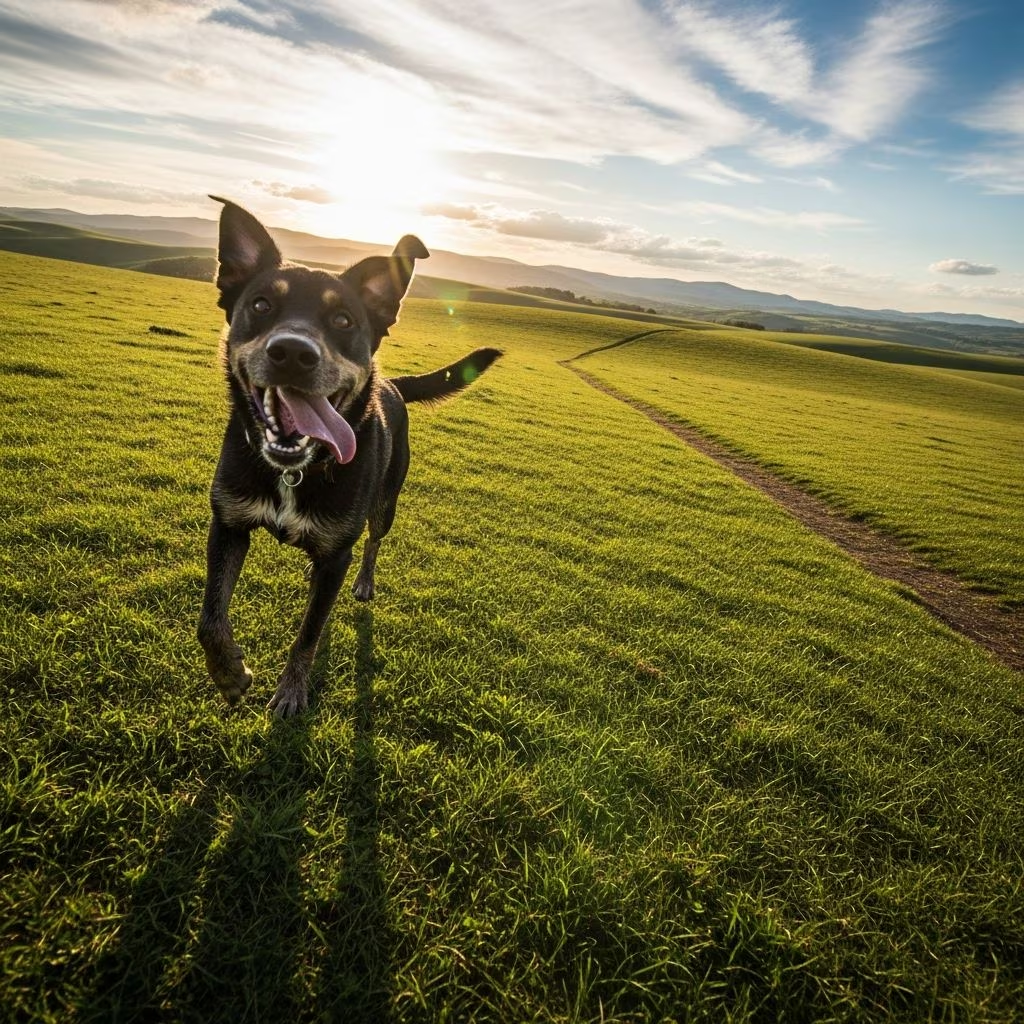
8 Sure-Fire Ways to Tire Your Dog Out
A tired dog is often a well-behaved dog. When your canine companion gets adequate physical and mental exercise, they’re less likely to engage in destructive behaviors like excessive barking, chewing, or jumping. Beyond behavior management, regular exercise is essential for your dog’s overall health and wellness. Lack of proper exercise can lead to serious health issues such as obesity, diabetes, and joint problems. Understanding the best ways to tire out your dog ensures they stay happy, healthy, and mentally fulfilled. This guide explores eight proven methods to keep your pup engaged and exhausted in all the right ways.
Why Exercise Matters for Your Dog
Before diving into specific activities, it’s important to understand why exercise is so crucial for your dog’s wellbeing. Exercise helps dogs maintain a healthy weight, promote optimal cardiovascular health, strengthen bones, joints, and muscles, and even boost the immune system. It also plays a significant role in their mental health. When dogs don’t receive enough physical activity, they may experience weight gain, restlessness, and excessive chewing or destructive behaviors. Additionally, mental stimulation through exercise can help reduce anxiety and improve your dog’s overall quality of life.
The amount of exercise your dog needs varies based on several factors, including breed, age, health status, and personality. Small or low-energy breeds might only need 30 minutes of exercise a day, while other pups could sometimes require two hours or more. Understanding your individual dog’s needs is the first step in creating an effective exercise routine.
1. Fetch and Retrieving Games
One of the most classic and effective ways to tire out your dog is through fetch. This simple game engages your dog’s natural instincts, provides cardiovascular exercise, and can be adapted to different energy levels and environments. Whether you’re playing in your backyard, at a local park, or on a beach, fetch is an accessible activity that most dogs love.
To maximize the benefits of fetch, consider varying the distances and types of fetch games. You can use balls, frisbees, or special retrieval toys to keep your dog interested. For dogs that are less interested in traditional fetch, try hiding toys or treats around your yard and encouraging them to search and retrieve items. This combination of physical activity and mental engagement will effectively tire out even the most energetic dogs.
2. Running and Trail Walking
For high-energy dogs or athletic breeds, running alongside you is an excellent way to provide intense exercise. Whether you’re jogging in your neighborhood or trail running in nature, running with your dog provides both improved fitness and health benefits for your canine companion. Running helps make dogs lean and stronger, which is great for their joints and long-term health.
If your dog isn’t accustomed to running, start slowly and gradually build endurance. Dogs can suffer from muscle strains, joint pain, and fatigue if they’re overexerted. Begin with shorter distances and slower paces, then increase intensity over time. Trail walking offers the added benefits of varied terrain and mental stimulation from new scents and environments. Most dogs benefit from one to two walks daily, but this varies based on breed, age, health, and environment.
3. Swimming and Water Activities
Swimming is an excellent low-impact exercise that’s particularly beneficial for dogs with joint issues or those carrying extra weight. Water activities provide intense physical exercise while being easier on the joints compared to running on hard surfaces. Many dogs enjoy swimming, whether in pools, lakes, or oceans, and it’s an activity that engages virtually every muscle group.
Older dogs, in particular, may benefit from water-based exercise. As dogs age, they may need to burn off energy through short exercise bursts, but they may need it to be walking through knee-deep water versus running through a field. This modified approach allows senior dogs to maintain fitness while protecting their aging joints. Always supervise your dog during water activities and ensure they wear appropriate safety gear like a dog life jacket if needed.
4. Agility Training and Obstacle Courses
Agility training combines physical exercise with mental stimulation, making it an incredibly effective way to tire out your dog. Setting up simple obstacle courses in your backyard with jumps, tunnels, weave poles, and platforms challenges your dog both physically and mentally. This type of structured play also strengthens the bond between you and your dog as you work together.
You can start with basic obstacles and gradually increase difficulty as your dog becomes more confident and skilled. Agility training not only provides excellent exercise but also builds your dog’s confidence and coordination. The mental engagement required for learning agility commands adds another layer of stimulation, ensuring your dog is thoroughly tired by the end of a training session.
5. Interactive Toys and Puzzle Games
Mental stimulation is just as important as physical exercise for tiring out your dog. Interactive toys and puzzle games force your dog to think, problem-solve, and work for rewards. Hide treats in puzzle toys, use sniff mats for scent work, or engage your dog with toys that dispense food as they play. These activities keep your dog mentally engaged and provide a different type of exhaustion than purely physical exercise.
Your dog needs variety to stay engaged. Fetch is great, but give them options like agility training, scent work, and interactive toys. Rotating through different types of mental stimulation prevents boredom and keeps your dog challenged. Even 15-20 minutes of focused puzzle-solving can leave your dog significantly more tired than a casual walk.
6. Scent Work and Tracking Activities
Dogs have an incredible sense of smell, and scent work activities tap into this natural ability. Hide treats or toys around your home or yard and encourage your dog to find them. This natural foraging behavior engages both the mind and body, creating a satisfying form of exercise. You can make scent work more challenging by hiding items in increasingly difficult locations or creating scent trails for your dog to follow.
Scent work is particularly valuable for dogs that may be less interested in traditional fetch or running. It’s an activity that can be adjusted for any age, size, or fitness level, and it provides mental stimulation that physical exercise alone cannot offer. A 30-minute scent work session can leave your dog as tired as an hour-long walk, if not more so.
7. Dog Sports and Classes
Enrolling your dog in organized sports or training classes provides structured exercise, social interaction, and mental stimulation. Whether it’s dock diving, flyball, obedience classes, or reactive dog training, these organized activities challenge your dog in multiple ways. They also help build confidence, improve manners, and provide a community of dog owners to connect with.
Structured classes provide several benefits beyond just physical exercise. Your dog learns new skills, receives positive reinforcement, and experiences social interaction with other dogs. The combined physical and mental demands of dog sports make them an excellent choice for tiring out even the most energetic dogs.
8. Play Dates and Socialization
Playing with other dogs is one of the most effective ways to tire out your pup. Dog play dates allow for unstructured, high-energy play sessions where your dog can interact, chase, and wrestle with canine playmates. This type of play is incredibly physically demanding and provides social enrichment at the same time. Physical and mental stimulation through play with other dogs also helps limit the potential for behavioral issues at home.
If your dog doesn’t have access to regular playmates, consider visiting dog parks, arranging play dates with friends’ dogs, or hiring a dog walker who provides group walking services. The social aspect of play dates combined with the intense physical activity makes this one of the most effective tiring strategies available.
Creating an Effective Exercise Routine
The key to successfully tiring out your dog is creating a balanced routine that combines different types of exercise. Mix high-intensity activities like running or agility with mental stimulation like puzzle toys and scent work. Consider your dog’s individual needs, age, breed, and health status when designing their routine.
If your dog hasn’t been very active lately, avoid jumping straight into long or intense activities. Instead, ease them back into a routine gradually, increasing duration and intensity over time. This gradual approach is the safest way to build endurance and keep them healthy.
Signs Your Dog May Need More Exercise
Understanding when your dog needs more activity is crucial. Weight gain, sleepless nights, and behavior changes such as excessive barking may be indicators that your pup is lacking exercise. Some dogs may adopt attention-seeking habits when they’re in need of more physical activity. If you notice these signs, consider increasing the frequency or intensity of exercise sessions.
FAQs About Tiring Out Your Dog
Q: How much daily exercise does my dog need?
A: Exercise needs vary by dog, considering breed, age, health, and personality. Small or low-energy breeds might need 30 minutes daily, while high-energy dogs could require two hours or more. Consult with your veterinarian to determine the right amount for your specific dog.
Q: Is it safe to exercise my puppy intensively?
A: No. A puppy’s growing bones can be at greater risk for joint or skeletal problems if the wrong type of exercise is introduced too early, especially in large breeds. Provide shorter, more frequent exercise opportunities where the puppy can set the pace with what they are comfortable with.
Q: Can I over-exercise my dog?
A: Yes. Dogs can suffer from muscle strains, joint pain, and fatigue if they’re overexerted. Always increase exercise gradually, especially if your dog hasn’t been active recently. Monitor your dog for signs of exhaustion or injury.
Q: What’s the best type of exercise for senior dogs?
A: Senior dogs benefit from low-impact activities like swimming through knee-deep water, gentle walks, and mental stimulation through puzzle toys. They still need activity to maintain healthy weight and cardiovascular health, but it should be adjusted for their physical limitations.
Q: How can mental exercise help tire out my dog?
A: Mental stimulation through puzzle toys, scent work, and training can be just as tiring as physical exercise. A 20-30 minute session of focused mental activity can leave your dog as exhausted as a longer physical workout.
Q: Is playing with other dogs enough exercise?
A: While play dates are excellent for exercise and socialization, they work best as part of a varied routine. Combine dog play dates with other activities to ensure your dog gets a well-rounded exercise program addressing different types of fitness needs.
References
- 7 Signs Your Dog Isn’t Getting Enough Exercise — Chewy Education. 2025. https://www.chewy.com/education/dog/general/signs-your-dog-isnt-getting-enough-exercise
- How Much Exercise Does a Dog Need? — Chewy Education. 2025. https://www.chewy.com/education/dog/health-and-wellness/how-much-exercise-does-a-dog-need
- Crate to 5K: How to Safely Run with Your Dog — Chewy Education. 2025. https://www.chewy.com/education/dog/training-and-behavior/how-to-run-with-dog
- How Often Should You Walk Your Dog? — Chewy Education. 2025. https://www.chewy.com/education/dog/health-and-wellness/how-often-should-you-walk-your-dog
- Senior Dog Exercise: What’s Right For Your Pup? — Chewy Education. 2025. https://www.chewy.com/education/dog/health-and-wellness/senior-dog-exercise



