

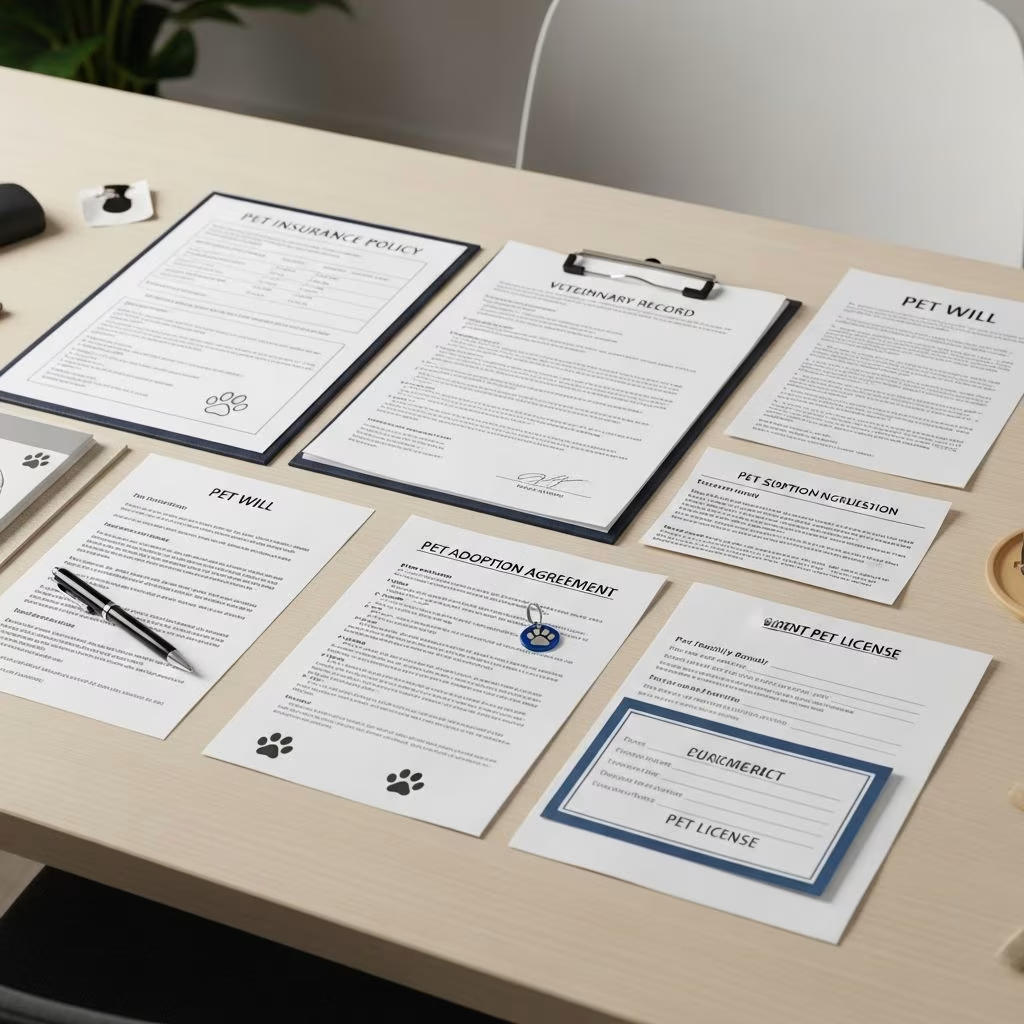
8 Documents Every Pet Parent Should Have
Pet ownership comes with significant responsibilities that extend far beyond daily feeding and playtime. In today’s digital world, while most information is stored electronically, there remains a critical need for tangible, shareable documents that establish your pet’s identity, protect their health, and safeguard their future. Every responsible pet parent should maintain a comprehensive collection of essential documents that serve multiple purposes—from veterinary care to legal protection and emergency preparedness.
Whether you’re a new pet owner or have had pets for years, having these eight crucial documents organized and easily accessible can make all the difference in protecting your furry family member’s wellbeing and ensuring they receive proper care in any situation.
1. Rabies Certificate or Waiver
The rabies vaccination is one of the most critical health documents your pet can have. Dogs and cats typically receive a physical tag after rabies vaccination is administered, but the actual certificate proving vaccination is equally important. This document serves as official proof that your pet has received protection against this deadly disease.
The frequency of rabies vaccinations varies significantly from state to state, and some states have different requirements for puppies and kittens versus adult animals. According to the American Veterinary Medical Association (AVMA), certain states are beginning to provide exemptions for vaccination requirements if medically necessary, as determined by a veterinarian. If your pet qualifies for such an exemption due to health concerns, ensure that the rabies waiver is a document you keep easily accessible alongside your other pet records.
Having your rabies certificate readily available is essential for:
– Traveling across state lines- Boarding your pet at facilities- Visiting pet-friendly hotels or resorts- Legal compliance with local ordinances- Emergency veterinary care documentation
2. Latest Vaccine Records
While your veterinarian maintains complete records of your pet’s vaccination history in their paper and electronic files, you should maintain your own copies. These records are far more than just administrative paperwork—they’re essential documents that determine your pet’s access to many services and experiences.
Current vaccination records are typically required for:
– Admission to pet-friendly hotels and resorts- Entry into pet expos and specialized pet events- Boarding facilities and daycare centers- Training classes and socialization programs- Travel to certain destinations- Moving across state lines
Additionally, if your pet receives an annual blood titer level—a test showing the levels of certain vaccines within the bloodstream—keep this document at your disposal as well. This is particularly important for pets with potential vaccine sensitivities or those requiring customized vaccination schedules. Your vaccination records should include dates of administration, vaccine types, veterinarian signature, and clinic contact information.
3. Proof of Ownership
While many pet owners never anticipate needing to prove ownership of their beloved companion, circumstances can arise where this documentation becomes critically important. Proof of ownership establishes your legal right to your pet and becomes essential in unexpected situations.
Situations where proof of ownership matters include:
– Custody disputes following divorce or separation- Disputes with roommates or co-owners- Recovery efforts if your pet is lost or stolen- Legal proceedings or insurance claims- Estate planning and inheritance matters
Valid proof of ownership can take several forms, including AKC (American Kennel Club) registration records, microchip registration documentation in your name, adoption papers with your name listed as the owner, veterinary records showing ownership, or notarized ownership agreements. If you share your pets with another person, whether a spouse, partner, or roommate, ensure that ownership is clearly and explicitly defined in writing. This protects both parties and ensures clarity regarding who has legal rights to the pet if circumstances change.
4. Trust Documentation
Many pet parents never consider what happens to their beloved companions if something unexpected occurs. A trust document is one of the most important but often overlooked documents a pet owner can create. Unlike a traditional will, which has numerous legal pitfalls and loopholes when pet wellbeing is considered, a trust provides legally enforceable protection for your pet’s future.
A properly established pet trust should clearly outline:
– Who will care for your pet if you cannot- Detailed care instructions and preferences- Specific funds allocated for your pet’s care and expenses- Distribution of money to the designated caregiver- Backup caregivers in case the primary choice is unavailable- Your pet’s medical history and behavioral information- End-of-life care preferences
The crucial distinction is that a trust is legally enforceable, meaning the caregiver is contractually obligated to follow your wishes and can access designated funds for your pet’s care. A will, by contrast, provides instructions that are often not enforceable in court cases concerning pet custody and care. Only documents that are prepared accurately and properly executed before your passing provide the legal protection your pet deserves.
5. License Documentation
Many pet owners are unaware that numerous states and municipalities require dogs and cats to be licensed. These requirements exist to help track pet ownership, ensure vaccination compliance, and facilitate the return of lost pets. In addition to the standard tag that most states issue for your pet to wear, you should maintain any document sent by your state or county regarding licensing.
Your pet license documentation should include:
– License number- Issue date and expiration date- Your name and contact information- Your pet’s name, breed, and description- Renewal reminders and information- Instructions for reporting changes in ownership or address
Keeping your pet’s license current is not only legally required in many jurisdictions, but it also serves as important documentation if your pet is found or if you need to prove ownership. License numbers can be cross-referenced with your pet’s microchip information to facilitate quick reunification if your pet becomes lost.
6. Photographs of Your Pet
In our modern age of smartphones and digital photography, it’s easy to accumulate thousands of photos on our devices. However, having a current printed photograph of your pet is an invaluable document that can prove critical in emergency situations. Additionally, keeping a photograph of yourself with your pet is equally important.
High-quality pet photographs should include:
– Clear, full-body shots showing your pet’s size and distinctive features- Close-up images clearly showing your pet’s face- Photos highlighting any unique markings, scars, or identifying characteristics- Images taken from multiple angles- Recent photos (within the last few months)- Professional-quality glossy prints, ideally 5×7 or larger
While cell phones are excellent for capturing spontaneous moments, having printed copies is essential because digital devices may not be immediately available in an emergency. If your pet goes missing, a high-quality printed photograph dramatically increases the chances of recovery by helping neighbors, shelter workers, and animal control officers quickly identify your specific pet. A clear photo of you with your pet also helps verify ownership and demonstrates your relationship to your pet.
7. Medical Records and Health Documentation
Beyond vaccination records, maintaining comprehensive medical documentation is essential for your pet’s health management and emergency care. These records should include more than just the basics—they should provide a complete picture of your pet’s health history.
Your pet’s medical file should contain:
– Complete physical examination records from each vet visit- Diagnosis and treatment documentation for any health conditions- Medication prescriptions and dosage instructions- Surgical records if applicable- Allergy information and sensitivities- Dental care records and any extractions- Blood work and laboratory test results- X-rays or imaging reports- Emergency treatment records- Behavioral or behavioral medication documentation
Having these records easily accessible ensures that emergency veterinarians can provide immediate, informed care without waiting for records from your regular veterinarian. This is particularly important if you’re traveling or if an emergency occurs after business hours when your vet’s office is closed.
8. Microchip Registration and Information
A microchip is a tiny electronic device implanted under your pet’s skin that stores your contact information. However, the microchip is only useful if it’s properly registered with current information. Your microchip documentation should include the microchip number, the registration company name, your current contact information, and any password or login details needed to access or update your information.
Critical microchip information to document:
– Microchip identification number- Microchip company name and contact information- Registration password or PIN- Your current phone number and email- Your home address- Emergency contact information- Your backup contact details- Pet’s name and description
Update your microchip registration whenever you change your phone number, email address, or move to a new residence. Many lost pets are found and scanned for microchips, but if the registration information is outdated, reunification becomes impossible. Keep a physical copy of your microchip information with your other pet documents, and consider keeping an additional copy with a trusted friend or family member.
Emergency Contact Information Document
Beyond the eight essential documents already discussed, creating a comprehensive emergency contact information sheet brings everything together. This document should include contact information for multiple emergency scenarios and ensure that anyone caring for your pet in an emergency has all necessary information.
Your emergency information document should include:
– Your primary veterinarian’s name, address, phone number, and hours- Nearest emergency veterinary hospital’s contact information- After-hours emergency vet services in your area- Poison control contact information for your country- Your personal contact information and backup contacts- Contact information for a trusted neighbor or local friend- Pet poison helpline number- Names and numbers of family members who know your pet’s routine
Organizing Your Pet Documents
Having all these documents is only half the battle—they must be organized in a way that makes them easily accessible in an emergency. Consider creating both physical and digital copies of all critical documents.
Organization strategies include:
– Create a dedicated pet folder or binder with clear tabs for each document type- Scan all documents and store digital copies in a secure cloud service- Create a password-protected digital folder on your computer- Keep a physical copy in your home safe or safety deposit box- Provide copies to trusted family members or friends- Update documents regularly and remove outdated information- Keep emergency documents easily accessible, not hidden away
Frequently Asked Questions
Q: How often should I update my pet’s documents?
A: Vaccination records, medical records, and microchip information should be updated immediately after each veterinary visit. License information should be reviewed annually for renewal dates. Photographs should be updated every six months to ensure current representation of your pet’s appearance.
Q: What should I do if I lose my pet’s original documents?
A: Contact your veterinarian to request duplicates of medical records, vaccination records, and microchip information. Contact your state or local animal control office for duplicate license documentation. If you have microchip records with the registration company, request reprints of that documentation.
Q: Do I need both printed and digital copies of my pet’s documents?
A: Yes, maintaining both formats is ideal. Digital copies provide backup and accessibility from anywhere, while printed copies are essential for situations where internet access is unavailable or in true emergencies where you need immediate, tangible documentation.
Q: Who should have access to my pet’s emergency information?
A: At minimum, family members living in your household should know where your pet documents are located. It’s also beneficial to provide copies to a trusted friend or neighbor who could access your home in case of your absence or emergency.
Q: Are electronic pet records enough, or do I need physical copies?
A: While electronic records are convenient and important for backup, physical copies are essential. Many facilities require printed documentation, and if you’re traveling or in an emergency situation, immediate access to physical documents without internet connectivity is crucial.
References
- 8 Documents Every Pet Parent Should Have — Chewy. https://www.chewy.com/education/cat/general/pet-parenting-pet-lovers-8-documents-every-pet-parent-should-have
- Pet Vaccination Guidelines and AVMA Standards — American Veterinary Medical Association (AVMA). https://www.avma.org/resources/pet-owners/petcare/vaccination
- The Ultimate Pet Sitter Checklist: Essentials and To-Dos — Trusted House Sitters. https://www.trustedhousesitters.com/blog/owners/pet-sitting-animal-supplies-checklist/
- New Pet Parent Checklist: First Steps After Adoption — Helping Paws Veterinary Hospital. https://hpvets.com/newpetchecklist/
- Pet Parents’ Dog Sitter Checklist — VEG. https://www.veg.com/post/pet-parents-dog-sitter-checklist
- How To Take Care of Dogs: A Pet Parent Checklist — PetMD. https://www.petmd.com/dog/general-health/how-to-take-care-of-dogs-pet-parent-checklist



